Are you interested in #scicomm? We are looking for new volunteers to help us organise the festival in #Vienna and #Graz🤗🤗 Join us at: [email protected]
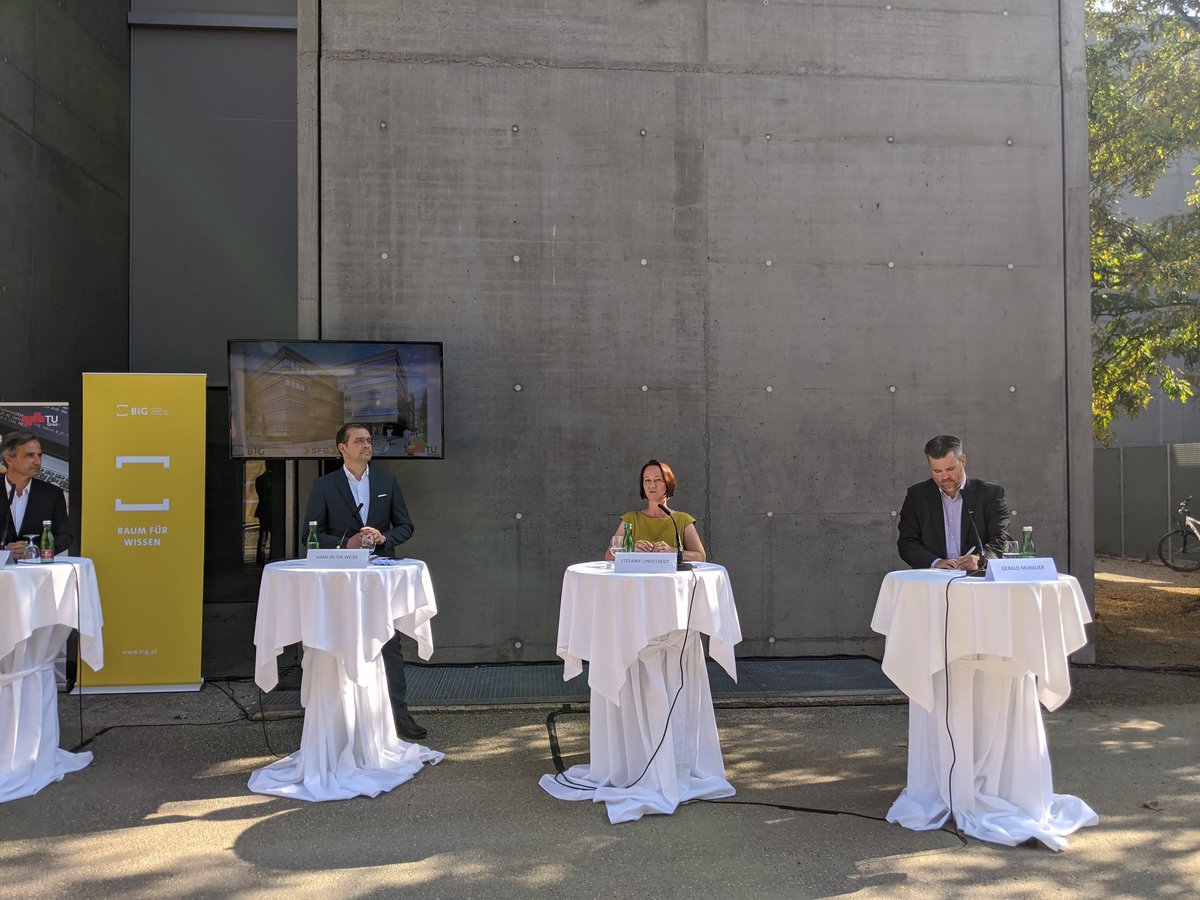
Addition to Campus Inffeldgasse: "With the Data House and the SAL building, our Campus Inffeldgasse will be expanded by two important buildings" says Harald Kainz, Rector of Graz University of Technology.
https://t.co/7o6jdpBlLi
#bigdata#artificialintelligence
(3/3). Finally, I will show that learning can also be used in combination with discrete energy minimization problems, leading to state-of-the-art results in stereo, optical flow, and segmentation.
Happy 100 Followers Day! 🥳 We're currently enjoying the sunny autumn weather in Graz and looking forward to Thomas Pock's talk on 'Variation Modeling Meets Learning' in the One World IMAGINE seminar tomorrow at 4pm CEST. https://t.co/l5RAW4WgVO
(2/3). numerical approximation by learning the "best" discretization within a class of consistent discretizations. I will then show how such models can be further extended and improved to provide state-of-the-art results for a number of important image reconstruction problems.
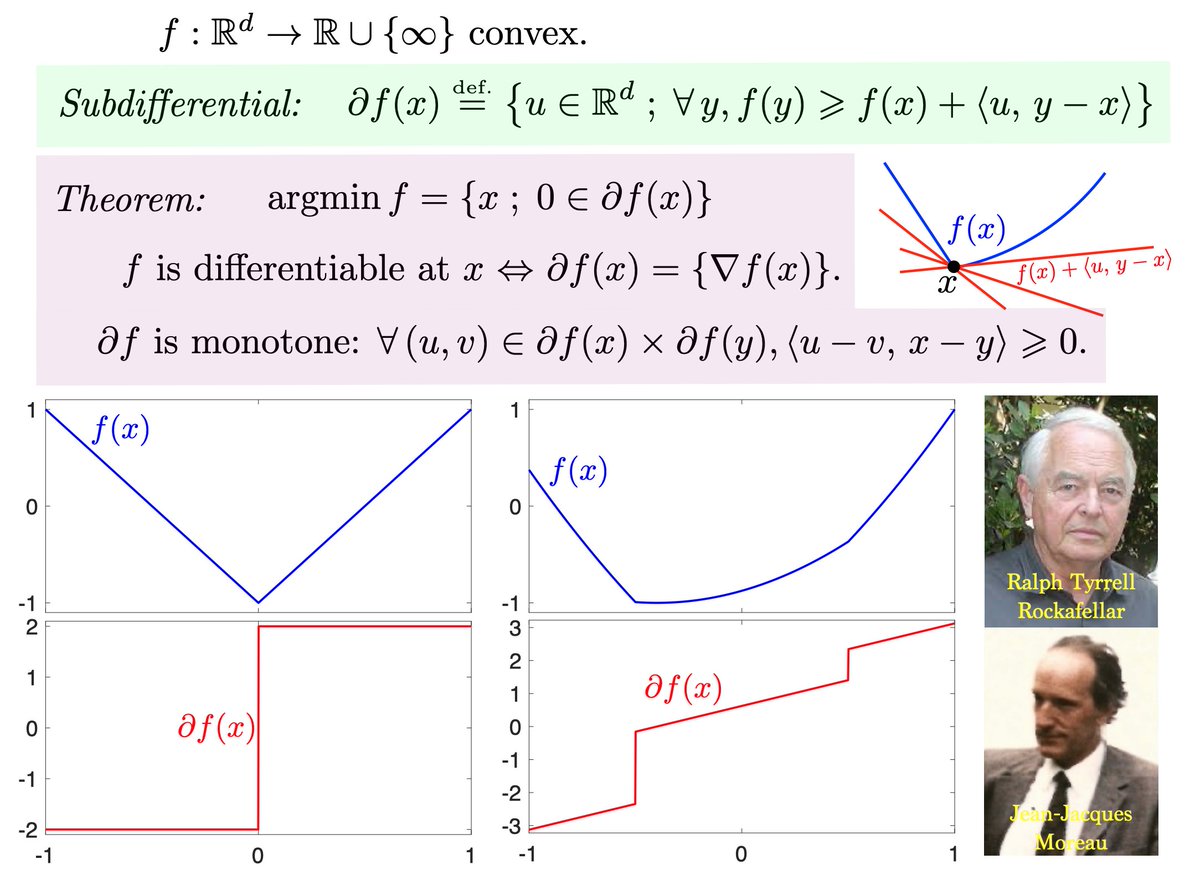
The subdifferential is the set of slopes bellow the graph of a convex function. It is a set-valued monotone map. Generalize the gradient to non-smooth functions. The most fundamental tool of non-smooth convex analysis. https://t.co/67NrI8twB2
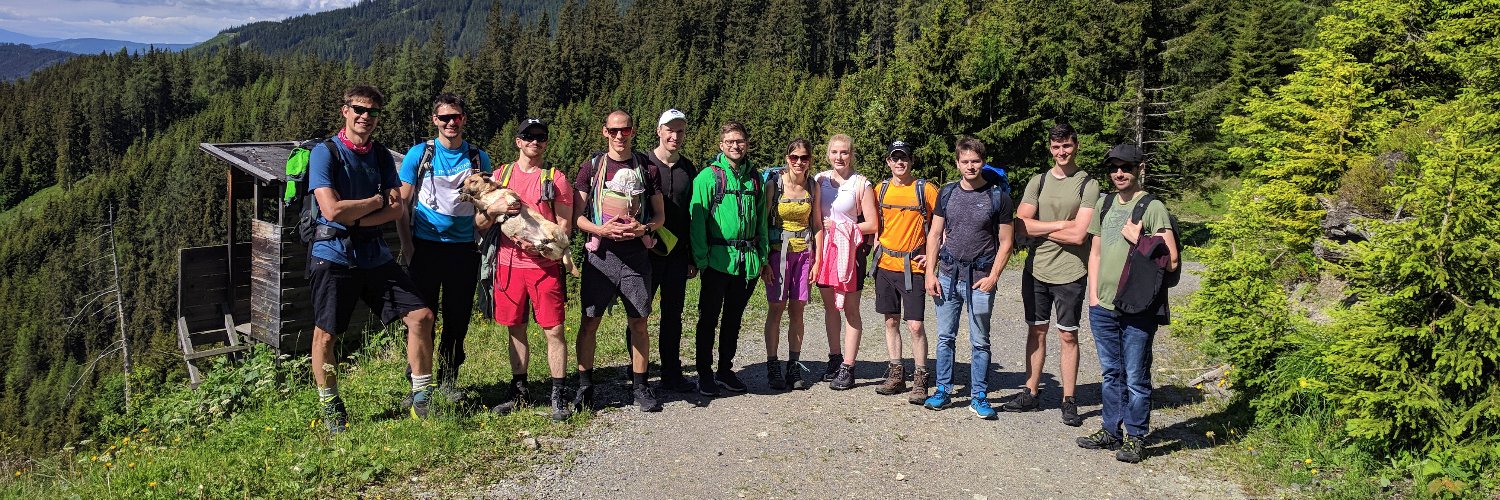
can we finally please get over these prejudices of computer scientists and basements?!... here are some impressions of our gamelab hiking workshop... ;-)
@tugraz@tugraz_csbme@GameLabGraz
We have a great line of speakers including Rebecca Willett (U Chicago), @StefanoErmon (Stanford), @rchlwrdmath (UT Austin), Victor Lempitsky (Skoltech)
Peyman Milanfar (Google), Thomas Pock (TU Graz)
Larry Zitnick (Facebook). Send in your best works! 2/2
We are organizing a 2020 NeurIPS Workshop on Deep Learning and Inverse Problems: https://t.co/fTGWSJXmo2
Submission deadline: October 2, 2020
The session is being co-organized by @HeckelReinhard , Paul Hand, Lenka Zdeborova, Rich Baraniuk and myself. 1/2
Should computers be allowed to make decisions that heavily impact people's lives, such as medical diagnoses? Some interesting thoughts by @cjbfordogs https://t.co/tvgaKbXK07
We're happy that the #oneworldseminars are back from the summer break! On Wednesday, 16 September, at 4pm CEST, Thomas Pock will give a talk on 'Variation modeling meets learning' in the One World IMAGINE seminar https://t.co/l5RAW4WgVO. Hope to see you there virtually! 😊
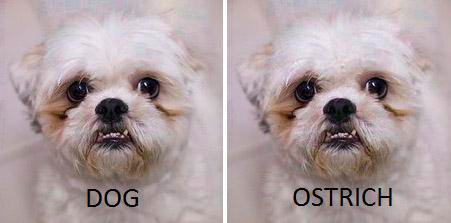
Image recognition algorithms are far advanced, but they can still sometimes be tricked - remove a few pixels and the dog becomes an ostrich! https://t.co/aWYtm9NiH0
Five open positions for tenure track profs in Information, Communication & Computing (including all of CS), Human & Biotechnology (including all of Biomedical Engineering), and three other fields. Please apply! https://t.co/njOUtaJlKd @tugraz@tugraz_csbme
2 x post-doctoral Research Associate positions in Machine Learning for Precision Mental Health at the University of Cambridge in collaboration with @CambridgeCMIH@CamImaging Exciting opportunity to work in a multidisciplinary project https://t.co/eNMSiZCCnu