Warren Buffett's advice for students interested in business.
(1) "I definitely think you ought to learn all the accounting you can by the time you're in your early 20s. Accounting is the language of business.
That doesn't mean it's a perfect language. You have to know the limitations of that language. I would advise you to learn accounting."
(2) "Work at a number of businesses. There's nothing like seeing how a business operates to build your judgment in the future about businesses."
(3) "I would talk business with people who are in business and find out what they think makes their operation tick and where they have problems and why. Just sop it up every place you can."
🎙️ Budget allocations vs. disbursements: Prof. @gift_mugano unpacks why the numbers on paper don't tell the full story.
"Why is it that they don't disburse on time and in full the amount of money they've allocated? So the budget has become like a religious process? Where we allocate and the money is not disbursed."
🎙️ The gap between budget allocations, overspending in certain votes, and what actually reaches key sectors on the ground:
Prof. @gift_mugano:
Reallocations & overspending: Some sectors exceed 100% of their votes while the overall budget still looks balanced on paper - "zindakupa, zindakutorera" (giving with one hand and taking back with the other).
"Imagine what would happen in this country if the Minister of Finance disburses even that 1.3 billion equivalent, which is 9.9%, going to health sector, buying drugs, going to clinics, this country would be smiling."
📽️ Watch Part 1 and Part 2 of our Budget Review @baba_nyenyedzi and @GeorgeNhewe sit down with Prof. @gift_mugano to discuss what the budget means for Zimbabwe.
The board does not develop the business strategy. That is the executive team’s responsibility. The board has three distinct roles: agreeing on the problems the strategy must address, validating the proposed strategy, and overseeing execution.
First, before executives develop the strategy, the board and management must agree on the priority problems and challenges the organisation needs to address. Executives would normally propose these priorities, drawing on their understanding of the business. Board members can challenge them, add others, or remove those they consider less important. The outcome must be an agreed set of priorities that gives management a clear basis for developing the strategy. Without this agreement, executives may produce a strategy that addresses different problems from those the board considers critical.
Second, the board must assess whether the proposed strategy offers a credible response to the problems previously agreed. There is no guarantee at this stage that a strategy is “correct”. A strategy rests on hypotheses about what will work, and these must be tested. The board should therefore scrutinise the underlying assumptions, the feasibility of the choices, and the evidence supporting them. Its responsibility is to establish whether the strategy is sufficiently credible to pursue and whether management has a sound approach to testing its critical assumptions.
Third, the board must oversee execution through regular progress reports, supported by its committees. This oversight should examine whether agreed actions are being implemented, whether the intended results are emerging, and whether the assumptions underpinning the strategy still hold. Where the evidence challenges those assumptions, the board must hold management accountable for responding.
The board and management can meet in a workshop format to agree on the problems to be solved and, later, to scrutinise and validate the proposed strategy. However, those discussions should preserve clear accountability: executives develop the strategy; the board validates it, approves it, and oversees its execution.
@ipcconsultants
"...the dams as an economy philosophy is the real game in town which can help us to mitigate against climate change but what is missing is the need to desilt the dams and the need for infrastructure ...." @gift_mugano@obertjiri@MoLAFWRD_Zim#Iirrigation#agriculture#NACE
🎙️ In our latest episode: @baba_nyenyedzi, @dziya_mya, & @GeorgeNhewe discuss Zimbabwe's agricultural ecosystem: from land prep costs to economies of scale, 2027 National Budget, mining windfalls & global political shifts.
Sponsored by @fincentcapital
https://t.co/4yh2qbIxcS
Farming in Zimbabwe is a high-stakes capital game.
In our latest episode, @baba_nyenyedzi, @dziya_mya and @GeorgeNhewe break down the financial realities of land preparation and why economies of scale are non-negotiable for success.
🎙️ @dziya_mya shares from the ground level: Preparing just a few hectares costs between $600 and $700 per hectare without your own machinery. As @baba_nyenyedzi notes: "The only way yields start improving is economies of scale. It has to be funded."
@GeorgeNhewe: Shares why he steers clear of grain farming, noting the extreme capital, precision, and expertise required to turn a profit.
📺 Watch the full episode on Zimbabwe's agricultural ecosystem and the 2027 national budget.
I am pleased to share that Cabinet considered and approved the Financial Sector Development Strategy: 2026-2030.
This is in line with Government’s thrust to transform Zimbabwe’s financial sector into a robust, inclusive and competitive financial engine for economic growth.
I am happy to report that our financial sector, encompassing banking, insurance, pension and capital markets, remains safe and sound, underpinned by adequate capitalisation and low non-performing loans.
We have made notable progress under the Second Republic. Bank deposits have grown from about US$2 billion in 2017 to about US$7 billion in 2026, a clear sign of growing confidence in the sector.
The Financial Sector Development Strategy: 2026-2030 will anchor our next phase of reforms. We will focus on:
Fostering financial sector deepening; improving efficiency; enhancing stability; strengthening financial infrastructure; promoting the growth of capital markets; enhancing financial inclusion and financial literacy; promoting financial innovation; and maintaining policy consistency.
A robust and well-developed financial sector is critical to mobilising long-term savings, channelling national savings to productive sectors, and facilitating economic growth, investment and job creation towards the attainment of Vision 2030.
We will continue to build a well-regulated financial system capable of supporting our national development agenda.
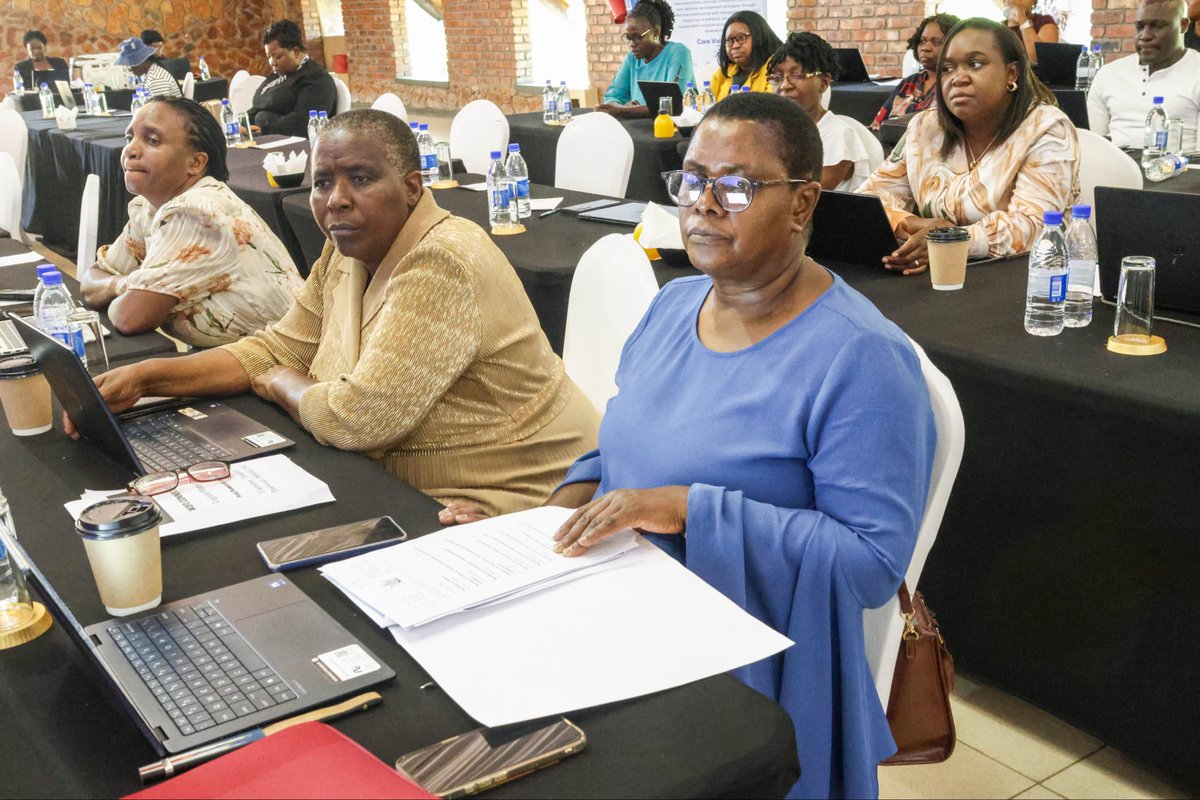
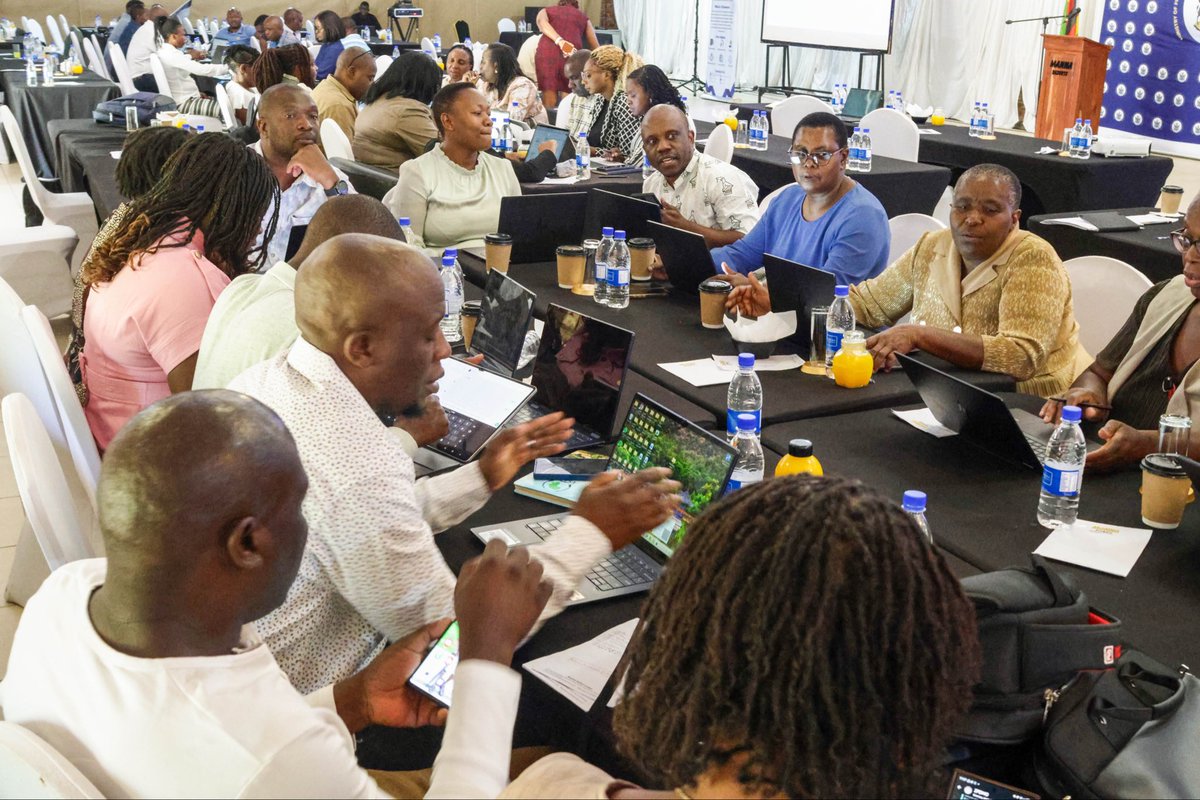
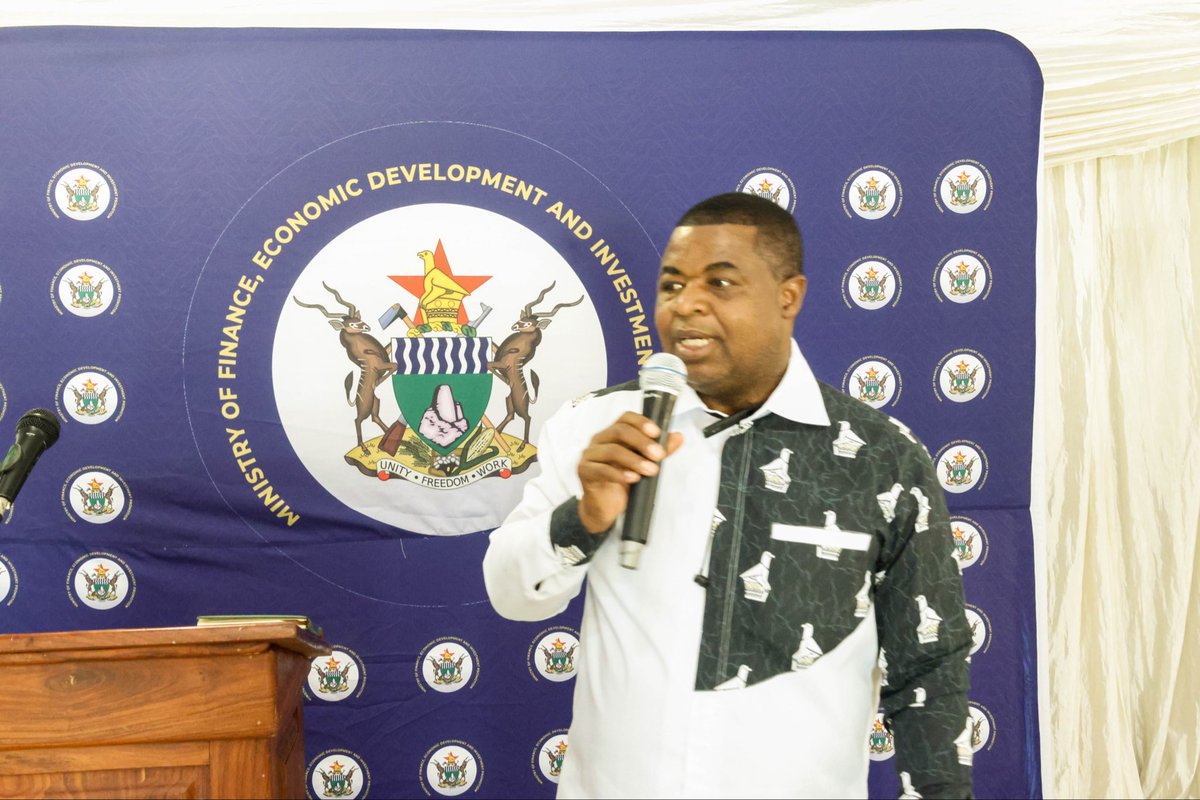
The Ministry of Finance is this week convening a five-day Strategic Planning Workshop to review its 2026 performance and chart the course for 2027.
Bringing together Ministry management, programme teams, facilitators and resource persons, the workshop is assessing achievements, implementation gaps and lessons learnt while aligning the Ministry’s vision, mission, mandate, policies and priorities with the national development agenda.
Discussions will focus on leadership direction, programme strategies, performance indicators, risk management and the development of the 2027 Strategic Plan, Annual Plan and Performance Contracts.
A key message guiding the deliberations is that every decision made at Treasury has a human face and a national consequence.
As highlighted during the recent 2027 Pre-Budget Seminar, millions of Zimbabweans depend on the Ministry’s decisions, from resource allocation to the timely execution of Government programmes. Officials have therefore been challenged to approach their responsibilities with diligence, accountability, urgency and a people-centred mindset.
The workshop is expected to produce the 2026 Programme Performance Reports, refined strategic priorities, 2027 programme indicators, draft planning documents and Performance Contracts for the Minister, Deputy Minister and Permanent Secretary.
The ultimate objective is to translate lessons from 2026 into clear, measurable priorities and effective implementation strategies for 2027, strengthening institutional performance and ensuring that public resources deliver tangible outcomes for Zimbabweans.
#ZimTreasury #StrategicPlanning