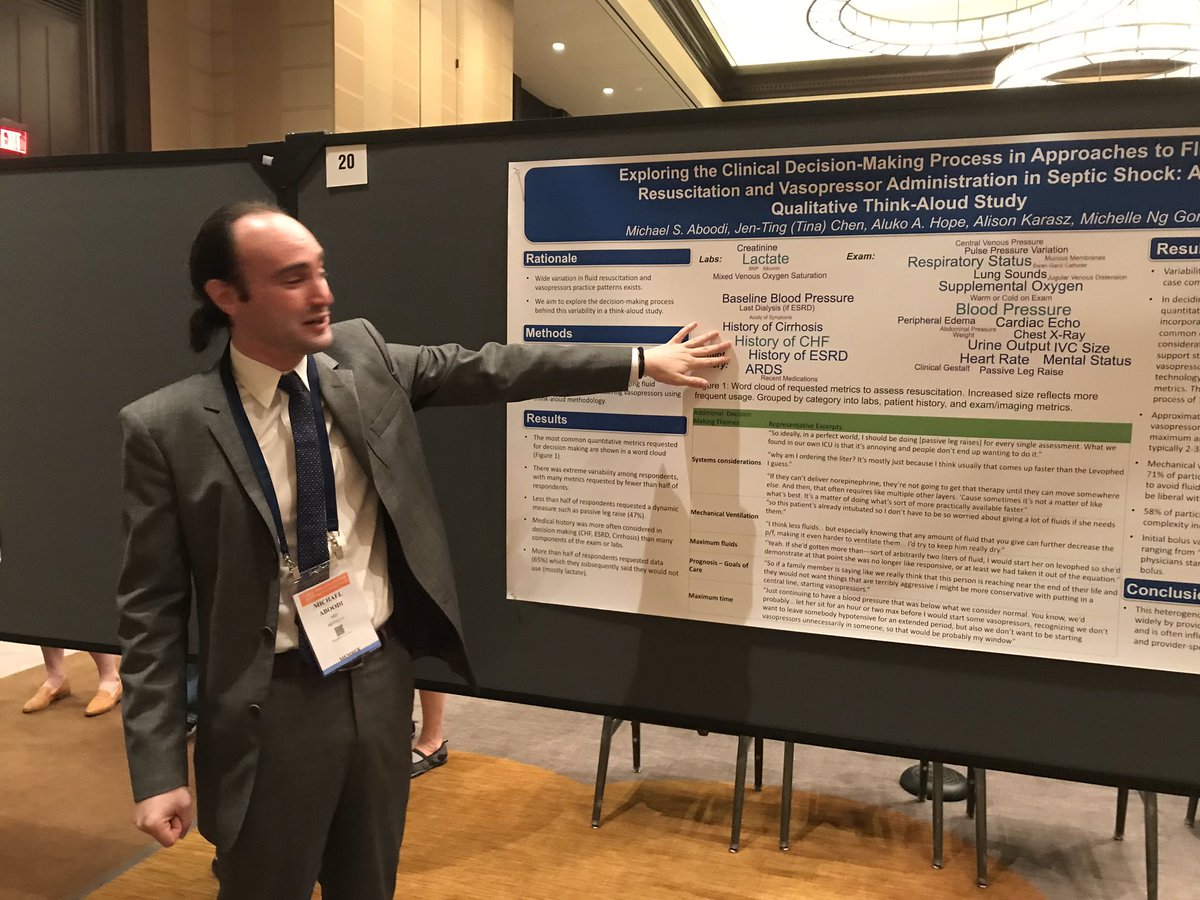
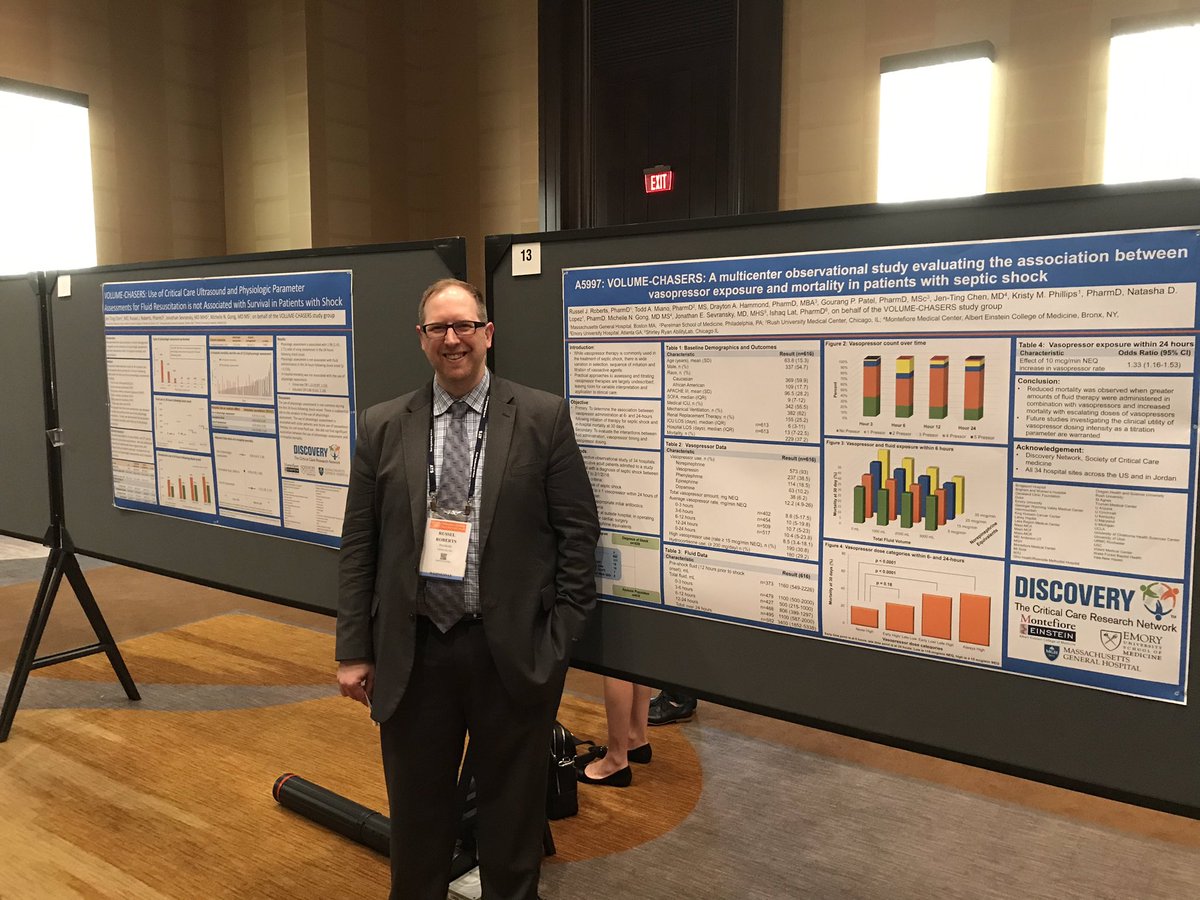
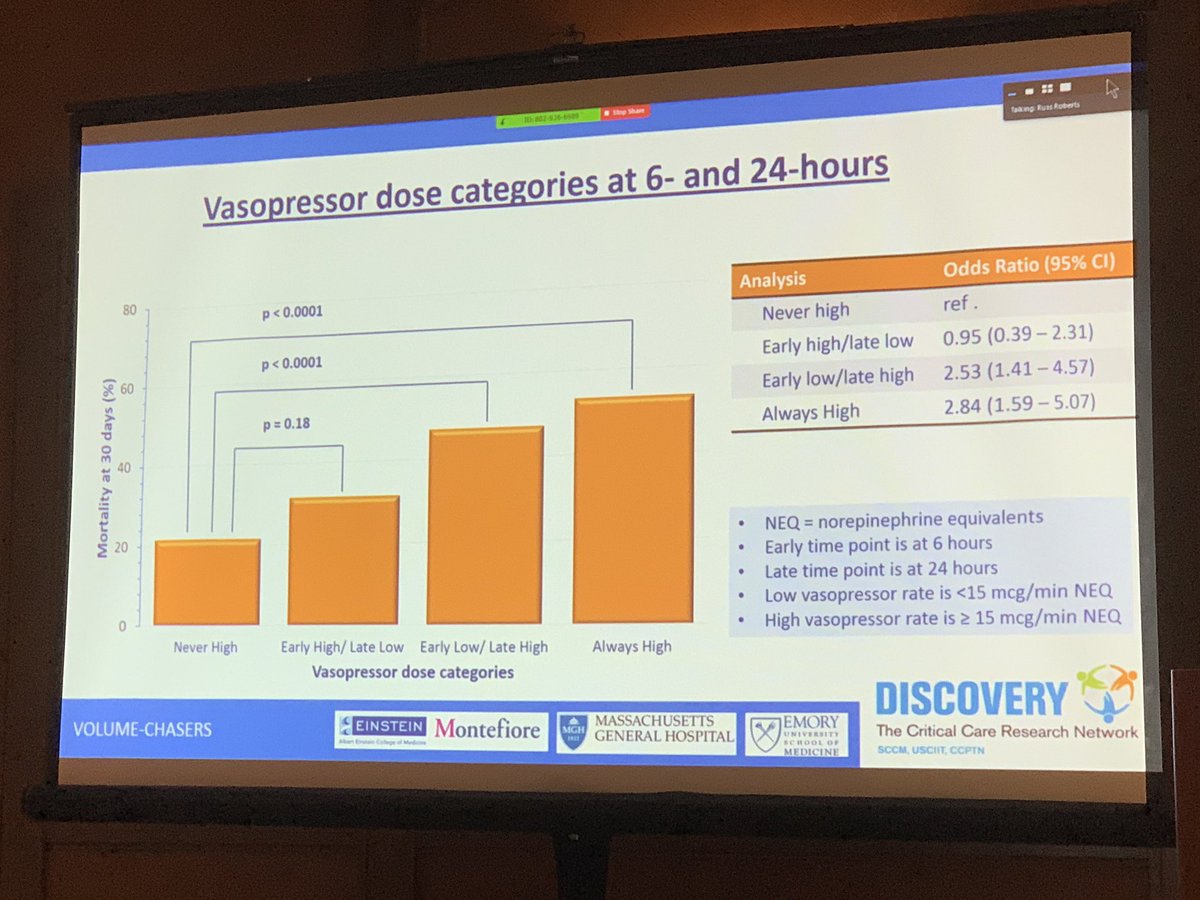
Thank you so much for all the participating sites to answer an important question on shock resuscitation. We aimed to describe what usual care really is when managing shock! https://t.co/iUwJkTx9c8 @SlurpeeRx @kianoushbk@NidaQadirMD@ChuckCairns
Thank you to all the participating sites! Top 5 enrolling: Mayo, UCLA, UAriazona, Mt Sinai NY, and UMichigan! @kianoushbk@NidaQadirMD@ChuckCairns Drs Mathews and Park! and 34 participating sites
Thank you to all the participating sites! Top 5 enrolling: Mayo, UCLA, UAriazona, Mt Sinai NY, and UMichigan! @kianoushbk@NidaQadirMD@ChuckCairns Drs Mathews and Park! and 34 participating sites
Critical care ultrasound as the most commonly use method of physiologic assessment in shock is still only performed on 31% of the patient in our cohort. (CVP 13%)
Unintended Consequences; Fluid Resuscitation Worsens Shock in an Ovine Model of Endotoxemia | American Journal of Respiratory and Critical Care Medicine | Articles in Press https://t.co/E4SQf4VmJx
"Because some evidence indicates that a sustained positive fluid balance during ICU stay is harmful (33–37), fluid administration beyond initial resuscitation requires careful assessment of the likelihood that the patient remains fluid responsive."
https://t.co/bLeJKeJ3Dz