Retired Investment Banker with the passion towards the markets. Stocks, options, verticals spreads, iron condors and all of those fun things. #thetagang🇺🇸🇨🇦
If you don’t grasp options & greeks, you’re missing a core understanding of markets.
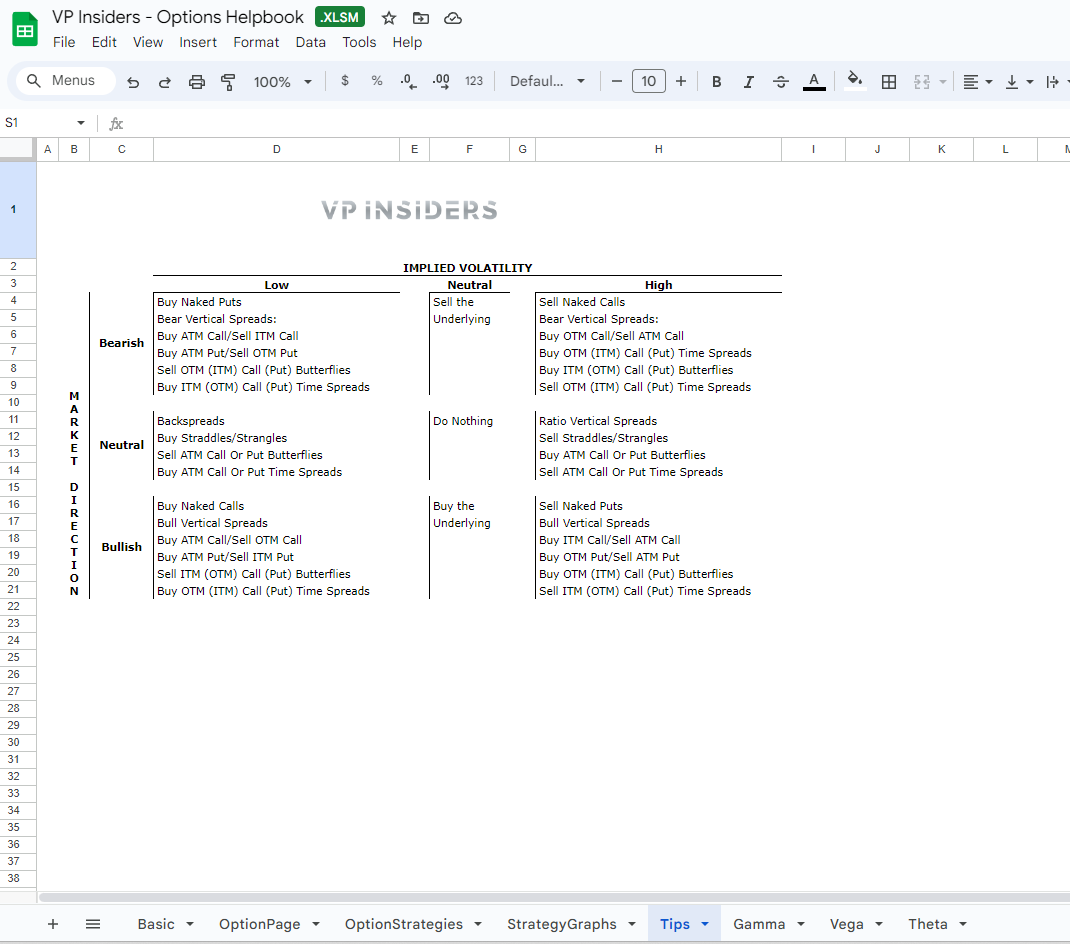
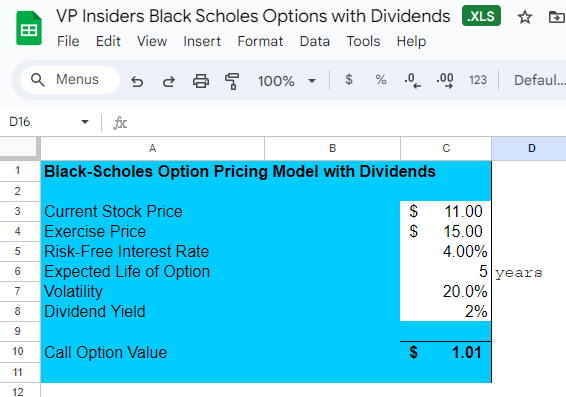
Comment below if you want the Excel file.
Here are 5 key points:
1) The Basics
An option gives you the right to buy or sell a stock at a predetermined price.
For instance, if a stock is trading at $10 and you hold a call option with a strike price of $12 and one year to expiration, that option has value.
But how much?
2) The Black-Scholes Equation
The Black-Scholes model offers the primary answer.
It accounts for two forces in an option's value:
Negative force: Time decay (Theta) decreases the option’s value.
Positive force: Stock price movement (convexity, combining Gamma, volatility, and price) increases the option's value.
The insight is that the negative impact of time decay must always balance out the positive impact of price convexity.
3) The Black-Scholes Formula
The formula provides an exact calculation of call/put option values by estimating the probability that the option ends up profitable and multiplying it by the difference between the expected stock value and the strike price.
This method aligns Black-Scholes with the expected value calculation.
4) The Greeks
The Greeks show how an option's value changes with various inputs:
Delta: Change in option value for a move in stock price.
Gamma: Change in Delta as the stock price shifts.
Vega: Change in option value for a 1% change in volatility.
Theta: Change in option value per day as time passes.
There are also higher-order Greeks, which capture more complex sensitivities.
5) Strategies, Extensions, and Limitations
Investors fall into two groups:
Those making directional bets on fundamentals or events.
Those trading against them, like market makers, vol traders, and more.
Options are versatile and are a metaphor for many financial strategies:
Credit investors and merger arbs sell puts.
Venture capital and biotech investors buy calls.
Though Black-Scholes and other models have their limitations, understanding how volatility interacts with time and market conditions is crucial.
As always, mastering the fundamentals, being clear on the math, and acknowledging limitations is key.
That’s it for now—drop a comment if you want the Excel.
Alright enough is enough, opening $TSLA short here. Pcall and fire aim, along with squeeze firing exhaustion.
Shares short + married puts.
Goal to exit this trade is end of January/beginning of February.
Alright enough is enough, opening $TSLA short here. Pcall and fire aim, along with squeeze firing exhaustion.
Shares short + married puts.
Goal to exit this trade is end of January/beginning of February.
$UBER stock has outlived its utility and may have carved a multi year high at 85.
A 30 dollar stock and may be even 10 if Musk delivers the FSD by 2027.
Uber’s current price-to-earnings (P/E) ratio stands at 35.97, significantly above the market average. If investor sentiment turns bearish or growth decelerates, the P/E ratio could compress closer to industry norms (15-20), which would justify a lower stock price near $30.