My brother’s friend drives a Tesla. This is 3 videos of the same accident. The Tesla, on self drive, sees the approaching car coming from behind at excessive speed and moves out of the way. Driver of speeding car was killed. Amazing technology @elonmusk.
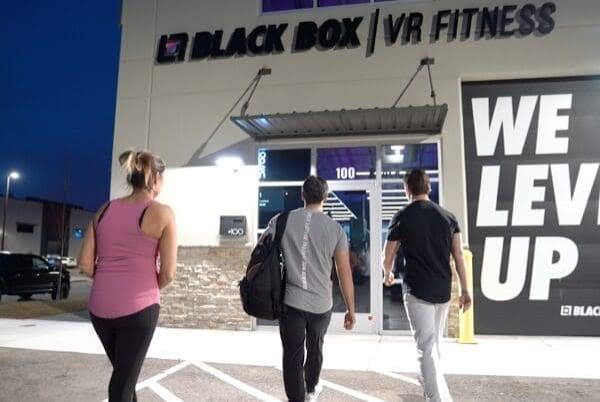
@MetaVRDevs We can't wait to update our VR gym with these! These photos are from our current experience. A better, lighter, more comfortable headset will help immensely. Changing lives!
Imagine explaining to your newly rejuvenated parents (who would otherwise have died of old age) that you once opposed the very technology that helped reverse their aging and wanted to slow it down because you didn’t like AI generated pictures.
I'm new at social media and must be missing it. Where do I find where @gabriel_zucman responded to any of the AI allegations? Like these:
The most damning finding is the extreme one-directional bias: 97% of major and moderate errors with a clear direction overstate the papers’ claims.
https://t.co/AjlJw72Vbc
Across the 138 papers audited, the AI (independent runs by Claude Opus 5.5 and GPT-6 Astra, followed by an adjudicator) identified 2,035 problems, of which 147 were graded serious enough to change a headline number. Of the major/moderate ones with a directional effect, the breakdown is heavily skewed:
- Inequality higher or rising faster: 188 overstate vs. 6 understate
- Rich pay low/regressive tax rates: 45 vs. 0
- Wealth or billionaire taxes raise more / work better: 133 vs. 4
- Tax evasion/offshore wealth larger: 79 vs. 1
- Higher top tax rates optimal: 37 vs. 1
- Corporate profit shifting larger: 70 vs. 1
Random or neutral methodological noise would not produce this pattern.
Critics (including Phil Magness and others who have long flagged similar issues in human reviews of Piketty-Saez-Zucman work) treat the clustering itself as the core signal.
Concrete high-profile examples include:
- The well-known “billionaires pay a lower total tax rate than the working class” claim from the 2019 book The Triumph of Injustice rests on roughly a 1-point gap; treating tax credits (EITC/CTC) the way government agencies do (and as the authors later did in their own tools) reverses the ranking.
- A 2026 California billionaire wealth-tax revenue paper’s higher estimates (extra ~$24bn from “missing” smaller billionaires) shrink substantially under alternative reconstructions from state tax data (~$5bn).
- A 2026 UK 2% minimum-tax revenue estimate of ~£10.4bn falls to ~£8bn when the paper’s own cited effective rates already paid by the ultra-rich are applied.
Zucman’s response frames the exercise as unreviewed “AI slop” timed to the California Prop 40 vote and notes that methodological choices are normal in the literature.
The audit’s defenders reply that the directional pattern matches prior human critiques and is hard to dismiss as pure noise.
@contractorkeith@DWM4444@CoFoundersNik A dad will have to see his daughter's dead mangled body TODAY because of a car accident that will happen in the next few hours.
But ContractorKeith likes to go off-roading. Sorry dad! Deal with it.