In 1982, Robin Williams did a routine as the American Flag for the Norman Lear produced tv special "I Love Liberty" created to bridge political divides - and it's one of the greatest pieces you'll see 🇺🇸
The WNBA Has a Race Problem.
For years, I have tried not to write about athletes through the lens of race.
That was intentional.
I would rather talk about basketball.
Shot-making. Toughness. Coaching. Officiating. Leadership. Poise. Professionalism.
Those are the things that should define a player.
Not skin color.
Not sexual orientation.
Not identity labels used as weapons in arguments that should have stayed on the court.
But the WNBA has reached a point where avoiding the subject no longer feels honest.
Race is now part of the conversation because too many people around the league, the media, and the fan ecosystem have made it part of the conversation.
And if the goal is truly inclusion, the league needs to understand something fast:
Inclusion cannot survive double standards.
Diversity can be beautiful when it is built on mutual respect. Different backgrounds, different stories, different communities, different life experiences. That should be a strength.
But diversity stops being a strength when it becomes a shield against accountability.
It stops being healthy when criticism of one player is called basketball analysis, while criticism of another is treated as hate.
It stops being inclusive when some people are allowed to speak in racial terms, while others are condemned for noticing the double standard.
That is where the WNBA is right now.
And it is dangerous.
This is not theoretical.
We just watched Stephen A. Smith create controversy by talking about the Lakers’ white players in a way no serious national sports voice should be comfortable talking about any race.
Then a resurfaced A’ja Wilson clip began making the rounds again. In it, Wilson appears to discuss Paige Bueckers through the lens of white privilege, then connects that same framing to Kelsey Plum.
That matters.
Because at some point, this stops being “context” and starts looking like a habit.
White players’ success keeps getting filtered through race before it gets credited to work, talent, production, discipline, and basketball excellence.
Imagine the reaction if a white WNBA star suggested a Black player’s success was mainly the product of racial advantage.
Nobody would call that brave.
Nobody would call that analysis.
They would call it what it is.
So why does the standard suddenly change when the racial direction changes?
That is the problem.
The WNBA cannot claim to be building inclusion while allowing racial resentment to masquerade as social awareness.
The recent Caitlin Clark and Alyssa Thomas incident did not create this problem.
It exposed it.
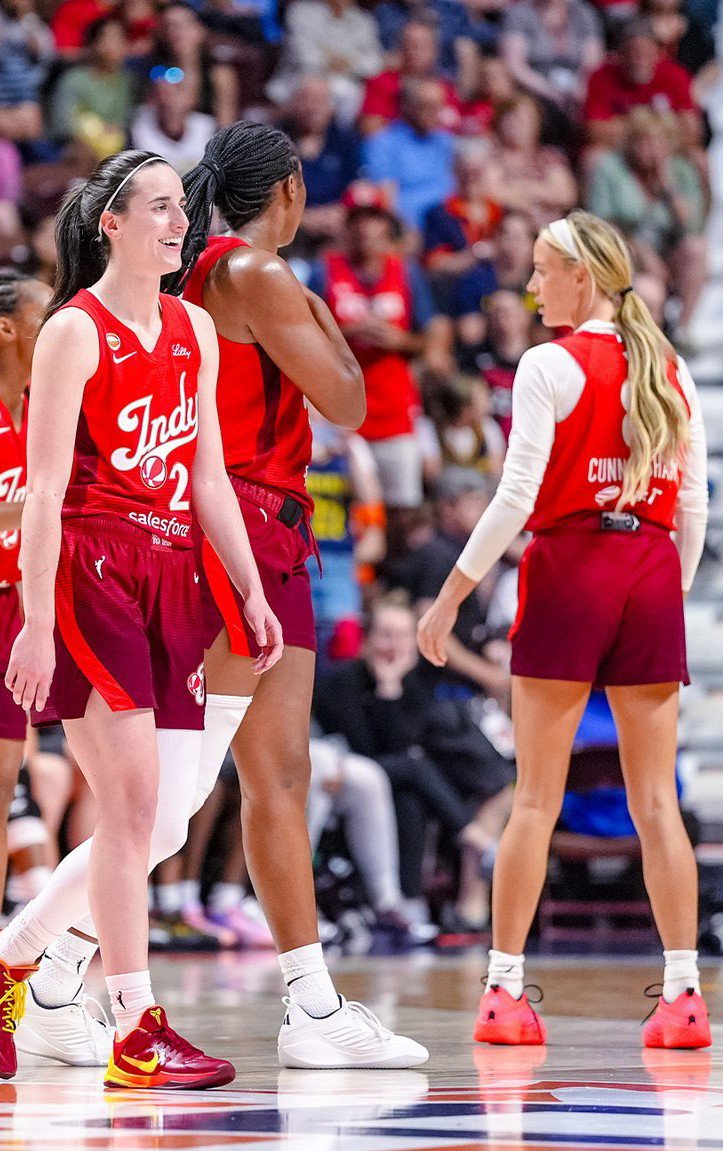
A dangerous act happened on the floor. Caitlin Clark was on the receiving end of contact the league later decided required discipline.
That should have led to a serious basketball conversation.
Was the play dangerous?
Was it handled correctly in real time?
Was the punishment enough?
What standard is the league trying to set?
Those were fair questions.
But almost immediately, the conversation shifted away from the play and toward the reaction.
Online threats. Racist messages. Death threats. Toxic fans.
All of that should be condemned.
No player should receive death threats. No family should be targeted. No person should be attacked because of race, sex, sexual orientation, or identity.
That should not be hard.
But here is where the WNBA keeps losing trust:
The league and its media ecosystem seem far more comfortable condemning the online reaction than confronting the on-court conduct that created the outrage in the first place.
Both can be wrong.
Dangerous contact can be wrong.
Racist abuse can be wrong.
Death threats can be wrong.
Media double standards can be wrong.
League silence can be wrong.
Fans are not required to ignore one wrong in order to acknowledge another.
That is the trick too many people are trying to play.
They want fans to condemn the ugliest online behavior.
Fine. We should.
But then they also want those same fans to stop asking why Caitlin Clark keeps being grabbed, hit, shoved, mocked, minimized, and physically escalated against while the league lectures everyone about “toxicity.”
That is not accountability.
That is narrative control.
And it has created a racial conversation the WNBA does not seem mature enough to handle.
Then came Stephanie White.
When asked about Caitlin Clark being on the receiving end of dangerous contact, White seemed to move almost immediately into a broader speech about hate, inclusion, and protecting the culture of the league.
Those things matter.
Hate should be condemned.
Threats should be condemned.
Racism should be condemned.
But so should dangerous contact against your own player.
That is what felt so wrong.
The league’s most important player was hit in a way that later required discipline, and somehow the public conversation quickly shifted to protecting the image of the league, defending the player who committed the act, and lecturing fans about toxicity.
That is poor leadership through misplaced priority.
And when these examples keep stacking on top of each other, fans are not wrong to ask whether “inclusion” has become less about equal respect and more about selective protection.
If a fan says something racist, call it out.
If a media member says something racist, call it out.
If a player says something racially charged, call it out.
If a coach uses “inclusion” as a shield to avoid answering a fair basketball question, call that out too.
No group gets a moral exemption.
No identity should come with permission to dehumanize someone else.
And no league can claim to be built on inclusion while allowing resentment, racial suspicion, and selective outrage to become part of its culture.
That is the uncomfortable truth.
Caitlin Clark became the center of this storm because she does not fit neatly into the story some people wanted the WNBA to tell about itself.
She is white.
She is straight.
She is from Iowa.
She brought millions of new fans.
She changed the economics of the league.
She made the WNBA impossible to ignore.
Instead of simply embracing that as a massive win for women’s basketball, too many people treated her rise like a problem that had to be explained, minimized, qualified, or morally complicated.
Why?
Why was it so hard to say she was great?
Why was it so hard to say her popularity was earned?
Why was it so hard to admit people loved watching her because she took shots nobody else took, passed with rare vision, and made basketball feel electric?
Why did so many people rush to explain her popularity through race before they could simply admit she changed the sport?
That is where the conversation started to rot.
Some people seem to believe the way to correct bias is to reverse it.
It is not.
The answer to unfair treatment is not different unfair treatment.
The answer to racial resentment is not more racial resentment pointed in the opposite direction.
The answer is one standard.
That is what sports is supposed to teach us.
The scoreboard does not ask for your race.
The ball does not care about your politics.
A great pass is a great pass.
A cheap shot is a cheap shot.
A bad call is a bad call.
A star is a star.
And a league that wants to be taken seriously has to be mature enough to say those things without running every conclusion through an identity filter.
Fans are tired of being told not to believe what they can see.
They are tired of dangerous conduct being softened as “physicality.”
They are tired of public criticism of officiating being treated more harshly than the conduct that created the criticism.
They are tired of being told the WNBA is inclusive while watching inclusion operate like a selective protection plan.
And they are tired of race being dragged into every controversy by people who then act shocked when fans respond.
This is where leadership matters.
Commissioner Cathy Engelbert has let the league drift into a racial and cultural proxy war.
The WNBA cannot keep issuing vague statements about hate while refusing to enforce a clear, equal, professional standard.
Coaches cannot hide behind cliches.
Media members cannot launder bias as moral concern.
Players cannot demand respect while refusing to extend it.
And fans cannot fight racism by becoming racist themselves.
If you see racism, call it out.
But do not answer racism with racism.
Do not reduce players to skin color.
Do not make every debate racial.
Do not take the bait.
Do not let trolls, bots, bad-faith accounts, or political grifters define what you believe about basketball.
Say the thing plainly.
That comment was racist.
That standard was unequal.
That coverage was biased.
That play was dangerous.
That explanation was dishonest.
That league response was weak.
You do not have to attack a person’s race to call out racist behavior.
You do not have to use racial language to demand equal treatment.
And you do not have to become what you are criticizing.
That is the path forward.
Less racial sorting.
More equal standards.
Less identity protection.
More player protection.
Less narrative management.
More honesty.
Less selective outrage.
More consistent accountability.
The WNBA is at a pivotal moment.
It can become a serious major sports league that welcomes everyone.
Or it can become a league where every argument becomes a racial referendum, every criticism becomes a loyalty test, and every controversy divides the audience that finally showed up.
Fans want their kids to watch players they admire without being taught to sort those players by race, sexuality, politics, or perceived victimhood.
They want to love the game.
Judge everyone by the same standard.
If the WNBA can do that, diversity becomes what it should be: a strength.
If it cannot, the league’s biggest threat will not be Caitlin Clark’s fans, internet trolls, or media criticism.
It will be the league’s own refusal to treat everyone equally while claiming equality as its highest value.
@SportsPatriotUS This is right on. I want to point out that Aj'a started all this race bating when Caitlin first entered the WNBA by stating that Caitlin's many accolades were given to Caitlin only because of "white privilege" and not because Caitlin earned or deserved them!
Today is a good day to remind you all that Caitlin Clark is not a robot,she is a human being,WNBA player of the month,3x all Star starter ,WNBA MVP candidate and the best guard in USA!. WNBA community also wants her to be the spokesperson for racism and host press conference everyday denouncing it rather actually being a basketball player. Shit is sad but true.
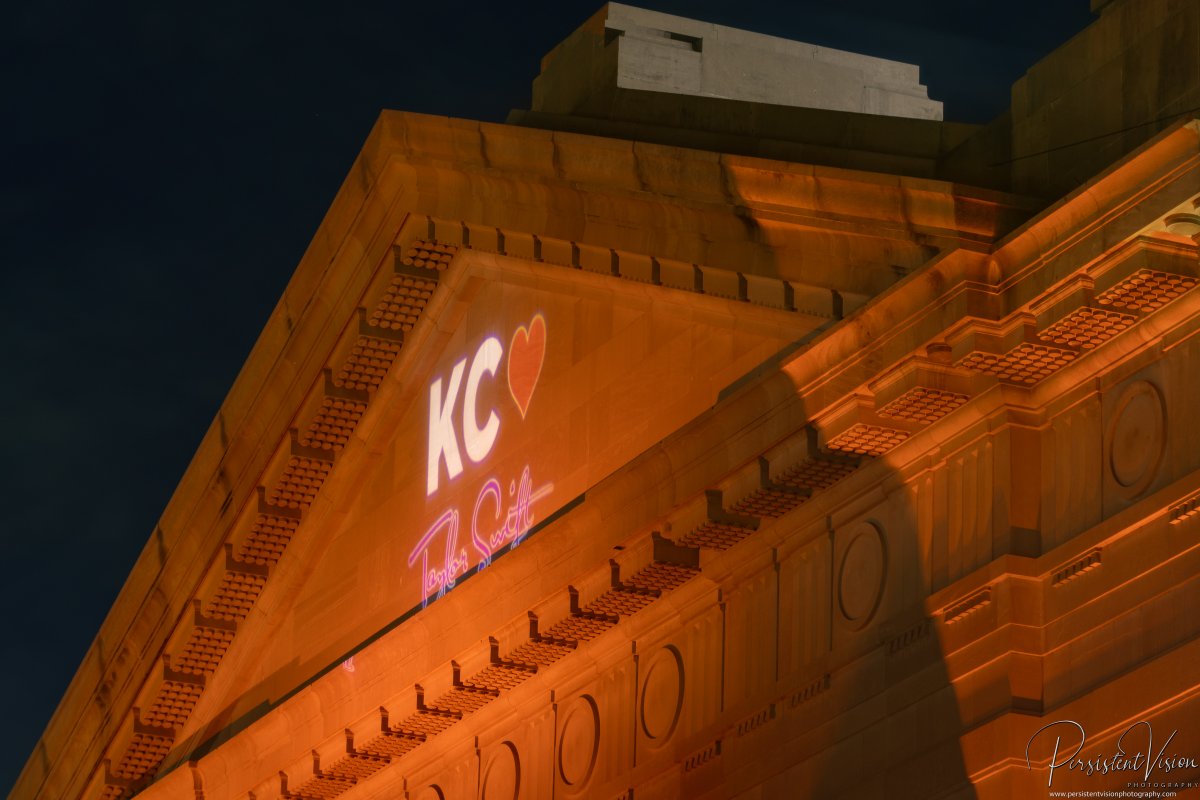
Tonight, we light up Union Station in orange and teal for Taylor Swift and red and gold for Travis Kelce.
Thank you, Travis and Taylor, for your incredible generosity today, supporting charities across the nation, including here in Kansas City, and making a lasting impact that will touch thousands of lives.
And from all of us at Union Station and throughout the Kansas City community, enjoy your special weekend. We send our congratulations and wish you every happiness together.
Tonight, the Kingdom lights shine for you. ❤️
Photos by:
Andrew McDonald, Persistent Vision Photography
Frank Perez, Perez Digital Images
Kent Auf Der Heide
Amber Dawkins Photography
Caitlin Clark on Being Invited to Taylor Swift and Travis Kelce’s Wedding:
“It’s always special to celebrate love. I’m thankful for the invitation, and I hope Taylor and Travis have the wedding of their dreams.”
Perfectly PR trained to never offend the people who make her rich lol.
Republicans and the National Police Association weaponize you.
Your friends Christine Brennan, Sophie, and Portnoy weaponize you against the W, while players get death threats. Maybe you love the narratives?