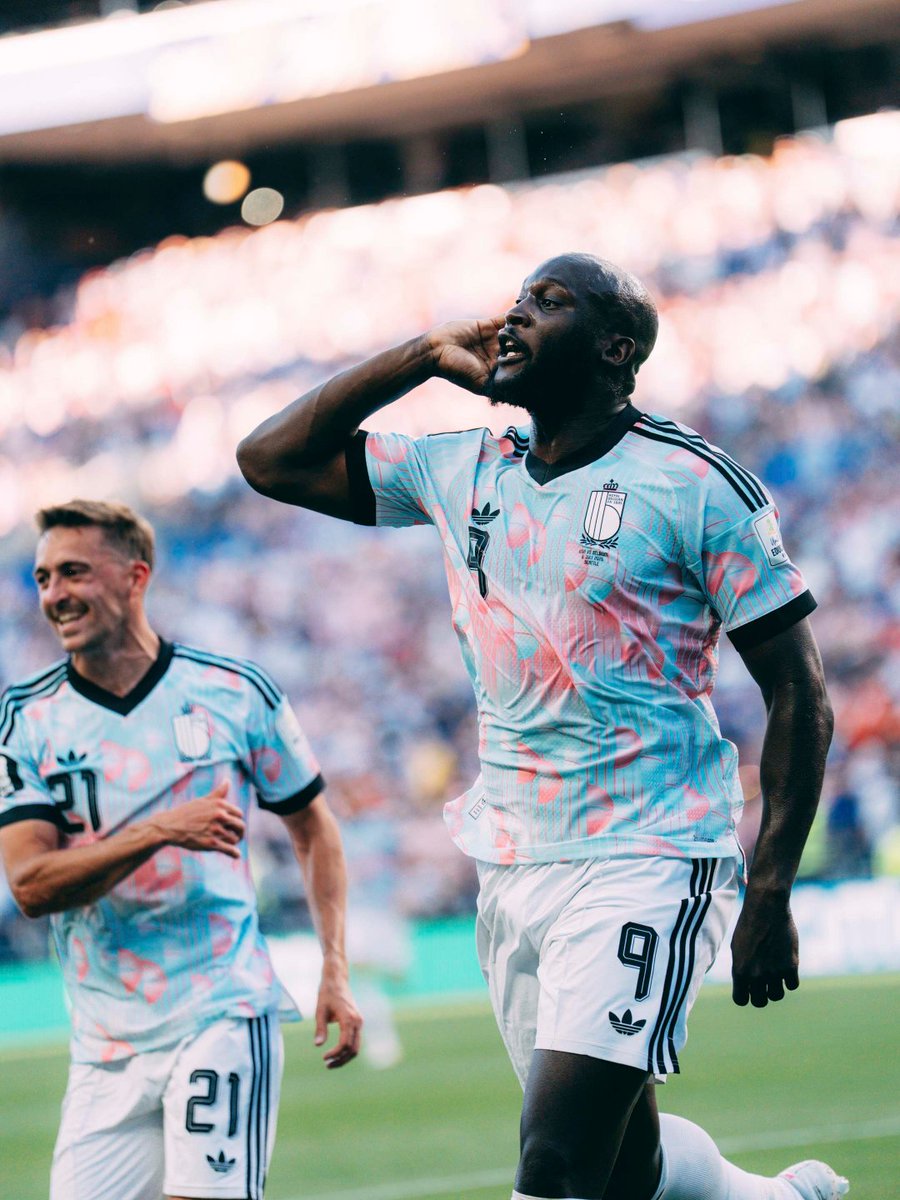
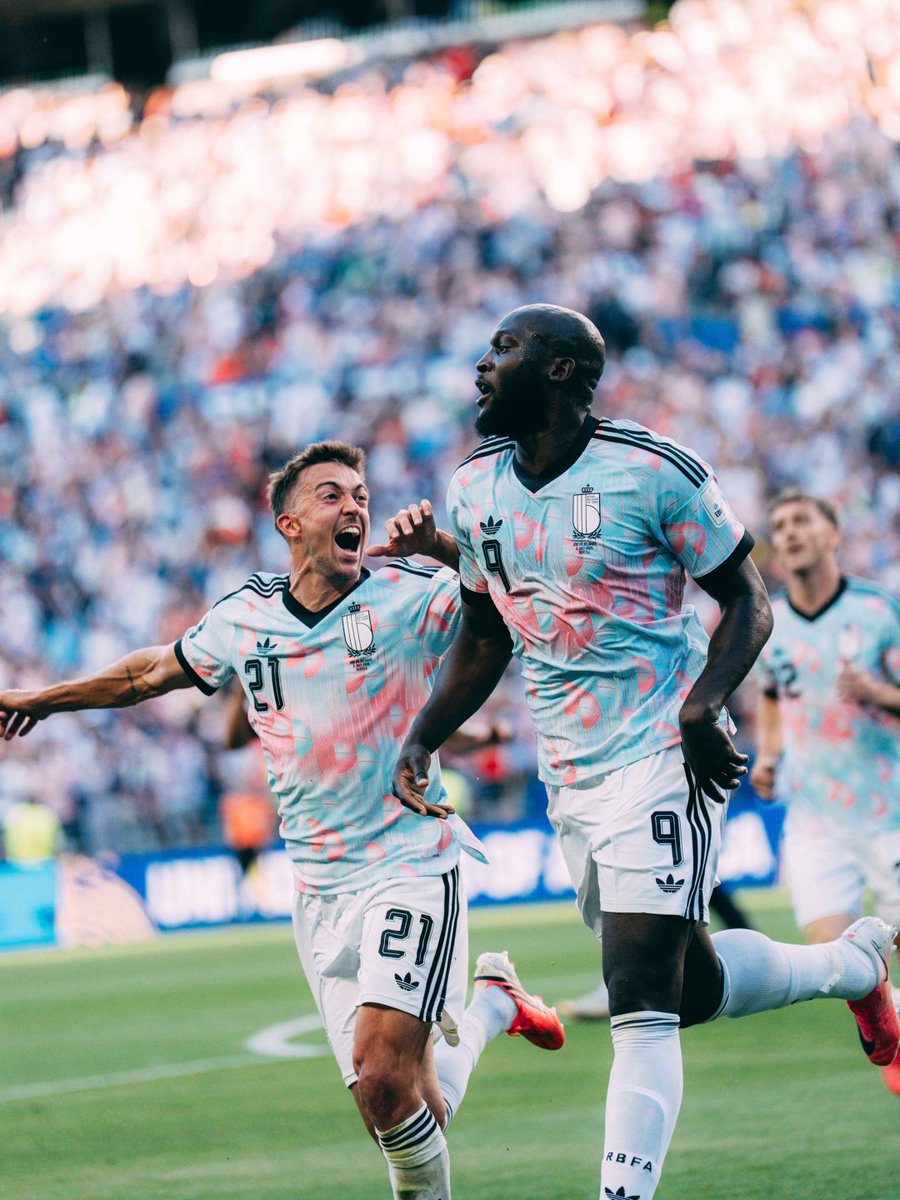
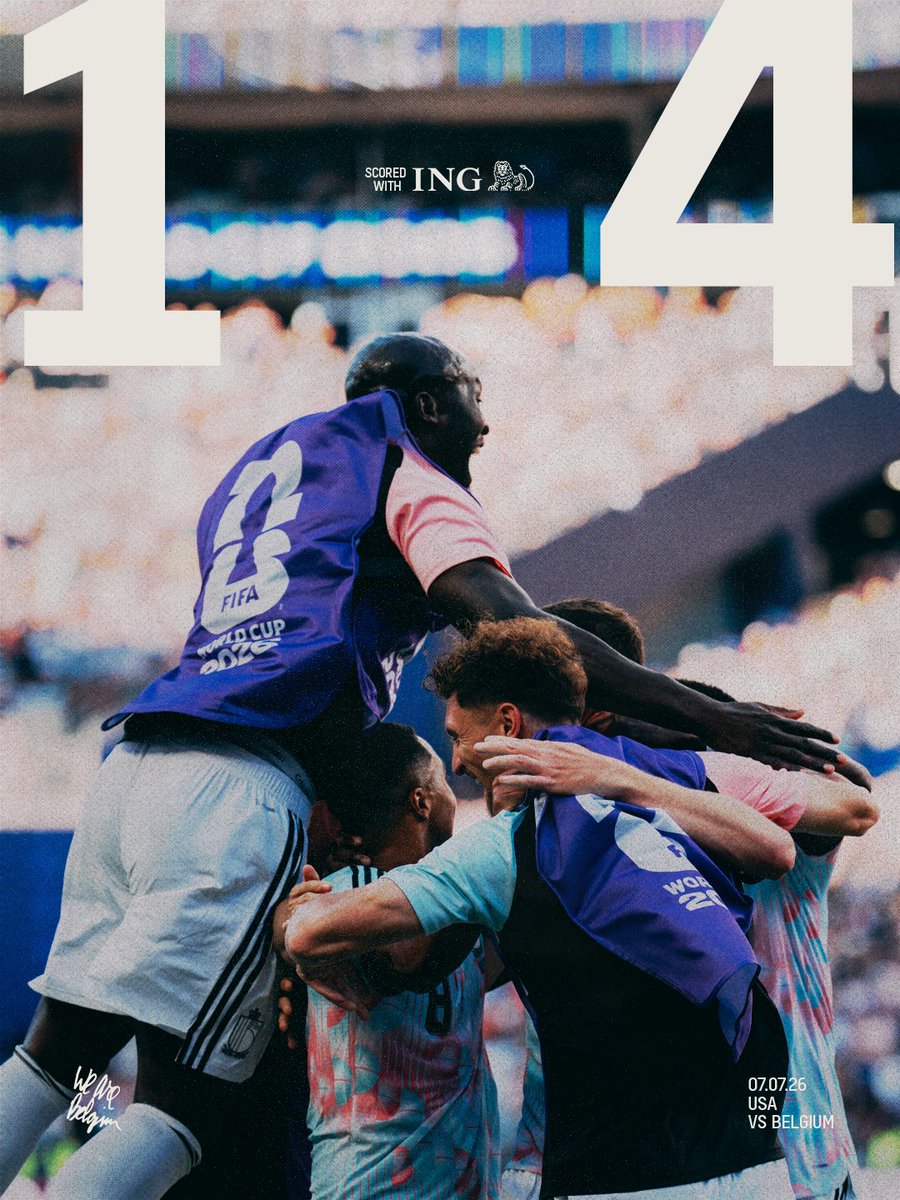
Tactique, arbitrage, fraîcheur physique... Cinq questions sur les raisons de la défaite de l'équipe de France face à l'Espagne en demi-finale de la Coupe du monde https://t.co/0CsgOAtdKF
🚨 𝗕𝗥𝗘𝗔𝗞𝗜𝗡𝗚: The Royal Belgian Football Association has released a statement in regard to Folarin Balogun being able to play against them.
"The Royal Belgian Football Association (RBFA) is astonished by FIFA's decision to declare suspended United States player Folarin Balogun eligible to play in the USA–Belgium match on Monday, 6 July at 5:00 p.m. (Seattle time)."
"FIFA bases its decision on Article 27 of the FIFA Disciplinary Code. This provision states that the FIFA Disciplinary Committee may decide to suspend the enforcement of a previously imposed disciplinary sanction."
"However, Article 66.4 of the same FIFA Disciplinary Code clearly provides that a red card (sending-off) automatically results in a suspension for the team's next match, as has been the case for all previous red cards issued during this FIFA World Cup."
"Furthermore, and irrespective of the above, the decision is in direct contradiction with the provisions of the FIFA World Cup 2026 Competition Regulations, as set out in Article 10.5:
"If a player or team official is sent off as a result of a direct or indirect red card (second caution), they will automatically be suspended from their team's subsequent match. In addition, further sanctions may be imposed."
"The automatic nature of such a suspension was also explicitly reaffirmed in FIFA World Cup 2026 Circular No. 16, which was distributed to all participating member associations on 12 May 2026."
"The same rule is reiterated at every FIFA World Cup 2026 Match Coordination Meeting prior to each match and is included in all FIFA World Cup 2026 workshop presentations.
"In order to safeguard the legitimate rights of all participating teams and to protect the fundamental principles of fair play in our sport, both at this FIFA World Cup and at future editions of the tournament, the RBFA is investigating all potential options."
REMCO EVENEPOEL BAT MATTIAS SKJELMOSE POUR GAGNER L'AMSTEL GOLD RACE ! Le Belge (26 ans) de la Red Bull-Bora-Hansgrohe parvient à dominer au sprint le Danois de la Lidl-Trek (25 ans), qui était le tenant du titre. 7e succès en 2026 pour Evenepoel. #AGR26
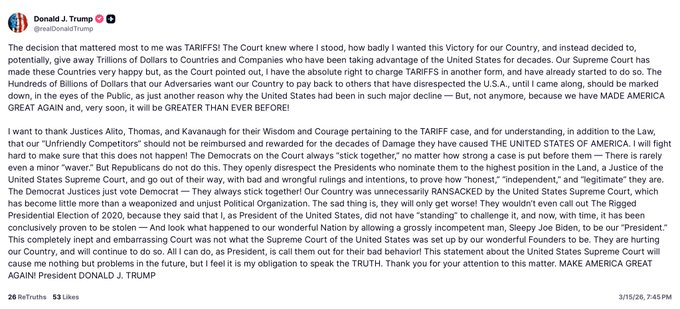
Cette nuit, Donald #Trump président des Etats-Unis, a lancé une attaque historiquement des plus virulentes contre la #CourSuprême, accusée d'être 1 organisation politique partisane, en remâchant ses accusations infondées sur l'élection de 2020. Révélateur du moment politique 1/🧵
Pixies formed 40 years ago this month when Kim Deal answered Black Francis’ ad in ‘The Boston Phoenix.’ She arrived at the audition without a bass since she’d never played one before. Joey Santiago picked “pixies” from a dictionary, suggesting Pixies In Panoply as their name.
PM Mark Carney:
It seems that every day we're reminded that we live in an era of great power rivalry, that the rules-based order is fading, that the strong can do what they can and the weak must suffer what they must. And this aphorism of Thucydides is presented as inevitable, as the natural logic
of international relations reasserting itself. And faced with this logic, there is a strong tendency for countries to go along to get along, to accommodate, to avoid trouble, to hope that
compliance will buy safety.
Well, it won't. So what are our options? In 1978, the Czech dissident Václav Havel, later president, wrote an essay called The Power of the Powerless. And in it, he asked a simple question, how did the communist system sustain itself? And his answer began with a green grocer.
Every morning, the shopkeeper places a sign in his window, workers of the world unite. He doesn't believe it. No one does.
But he places a sign anyway to avoid trouble, to signal compliance, to get along. And because every shopkeeper on every street does the same, the system persists. Not through violence alone, but through the participation of ordinary people in rituals they privately know to be false.
Havel called this living within a lie. The system's power comes not from its truth, but from everyone's willingness to perform as if it were true. And its fragility comes from the same source.
When even one person stops performing, when the green grocer removes his sign, the illusion
begins to crack. Friends, it is time for companies and countries to take their signs down. For decades, for decades, countries like Canada prospered under what we called the rules-based international order.
We joined its institutions, we praised its principles, we benefited from its predictability. And because of that, we could pursue values-based foreign policies under its protection. We knew the story of the international rules-based order was partially false, that the strongest would exempt themselves when convenient, that trade rules were enforced asymmetrically, and we knew that international law applied with varying rigour depending on the identity of the accused or the victim.
This fiction was useful, and American hegemony in particular helped provide public goods,
open sea lanes, a stable financial system, collective security, and support for frameworks for
resolving disputes. So we placed the sign in the window. We participated in the rituals, and we largely avoided calling out the gaps between rhetoric and reality.
This bargain no longer works. Let me be direct. We are in the midst of a rupture, not a transition. Over the past two decades, a series of crises in finance, health, energy, and geopolitics have laid bare the risks of extreme global integration. But more recently, great powers have begun using economic integration as weapons.