The kindest thing literature does is remind you that your peculiar little feelings have always existed. Someone, in some century, was equally confused by love, bored by society, tired of performing, and hungry for meaning.
A Stanford neuroscientist published a paper a few years ago that quietly answered one of the oldest questions in human history, and almost nobody outside his field has heard of it.
The question is why we dream. Not what dreams mean. Why they exist at all. Why your brain spends a third of its sleep hallucinating images instead of just resting like every other organ in your body.
His name is David Eagleman.
He runs a lab at Stanford. The paper is called "The Defensive Activation Theory", and the moment you read it the explanation collapses every other theory you have ever been taught about dreams.
Freud said dreams were repressed desires. He was guessing. He had no brain scans. He had no electrodes. He had a couch and a notebook and a century of credibility that nobody has been able to fully scrub off the subject since.
Modern neuroscience replaced him with the memory "consolidation theory". The idea that dreams are your brain sorting through the day, filing things away, deciding what to keep. That story is partially true. Sleep does consolidate memory. But it does not explain the single strangest thing about dreams, which is that they are almost entirely visual.
You do not dream in pure sound. You do not dream in taste. You do not dream in smell. You dream in pictures. Vivid, detailed, often impossible pictures that activate the back of your brain so hard a scientist scanning you would think your eyes were wide open.
Eagleman started from one fact almost nobody outside neuroscience knows. The brain is territorial. Every region holds its turf through constant electrical activity. The moment a region goes quiet, its neighbors start invading. They take the silent territory and reassign it to themselves.
This is called "cortical takeover", and it is not slow. It is not a long process measured in years. In experiments where adults are blindfolded, the visual cortex starts processing touch and sound within an hour. One hour of darkness, and the territory is already being annexed.
In congenitally blind people, the visual cortex is fully repurposed. It runs language. It runs hearing. It runs touch. The hardware never went unused. It was just reassigned to whoever showed up first.
Now sit with the implication of that for a second.
Every night, when you close your eyes and fall asleep, the sun has set. The planet has rotated. The visual cortex, which takes up roughly a third of your entire cortex, is suddenly receiving zero input. For eight hours. Every single night. For your entire life. And evolution has shaped your brain inside a planet that has been spinning into darkness for billions of years.
If cortical takeover happens in an hour, the visual cortex should have been lost a long time ago. Stolen by hearing. Stolen by touch. Reassigned by morning. Humans should have evolved into a species whose vision works fine during the day and then degrades every time the sun goes down because the territory keeps getting renegotiated overnight.
But that did not happen. Vision works the moment you open your eyes. Which means something is defending the territory while you sleep.
Eagleman's claim is that dreams are that defense.
Every 90 minutes through the night, a precise burst of activity fires from the brainstem into the visual cortex. Pontine-geniculate-occipital waves. PGO for short. They are anatomically aimed. They are not general arousal.
They are a targeted volley of signal launched directly at the back of the brain where vision lives. The cortex lights up as if it is receiving real images, and you experience that artificial activation as a dream. The bizarre narrative your conscious mind invents around it later is just your brain trying to make sense of the noise.
The dream is not the point. The dream is the side effect. The point is keeping the territory occupied.
The evidence for this is the part that should haunt you.
Newborns spend roughly 50% of their sleep in REM. Adults spend twenty. Old adults spend fifteen. The amount of dreaming you do tracks almost perfectly with how plastic your brain is. Newborns have the most plastic brains on earth. Their visual cortex is in the highest danger of being overrun by neighboring senses while it develops.
So evolution gave them an enormous defense budget. As you age, your brain becomes less plastic, the takeover risk drops, and the defense system scales down accordingly.
Eagleman and his co-author ran the same correlation across twenty-five primate species. The more plastic a species' brain, the higher the proportion of REM sleep. The relationship held across the entire primate family tree. Plasticity and dreaming move together. They are two halves of the same evolutionary equation.
A species that ranks higher on flexibility and learning also dreams more. A species that is born ready to walk and survive dreams less. Plasticity is the asset. Dreaming is the insurance premium.
And the prediction the theory makes is the one that quietly closes the case.
Of all your senses, only one is disadvantaged by darkness. You can still hear in the dark. You can still feel in the dark. You can still smelll and taste in the dark. The only sense that depends on light is vision. Which is exactly the sense your dreams are made of. The defense system is targeted at the only territory that is actually vulnerable while you sleep.
Memory consolidation is real. Emotional processing is real. Your brain does do those things at night. But Eagleman's argument is that those functions piggyback on a much older system whose original job was simpler and more brutal. Keep the lights on inside the visual cortex while the planet is dark, or lose it.
For thousands of years, people have asked what dreams mean. Prophets wrote about them. Poets wrote about them. Freud built a discipline on them. None of them had access to the actual answer, which is that dreams may not mean anything in the symbolic sense at all.
They may be the visible flicker of a defense system running in the background, the way a screen saver protects a monitor by keeping the pixels moving even when nobody is looking.
The strangest thing about the theory is how cleanly it explains why dreams feel so real. Your visual cortex cannot tell the difference between a PGO wave and an actual photon. It is the same hardware lighting up the same way. The cortex does its job. It builds an image. Your conscious mind, half-awake, wraps a story around it and calls it a dream.
You are not seeing your subconscious tonight. You are watching your brain defend a piece of itself from being stolen.
Every animal that has ever closed its eyes on this planet has done the same thing.
I am sick and tired of people mocking those who care about the planet. Clean air matters. Living forests matter. Healthy oceans matter. Animals matter. Biodiversity matters. Wanting a livable world for future generations should not be controversial.
High-frequency patterns in birdsong can signal safety to the brain, helping the body unwind, ease stress, and restore mental clarity.
At times, nothing soothes the mind more effectively than the quiet rhythms of the natural world.
love telling absolute strangers my favourite magnolia facts: not only did magnolias exist alongside dinosaurs, they existed BEFORE BEES! they used to be pollinated by beetles because bees simply did not exist yet!!!
“I remember touching one of the sows in those crates. She was red and big with fourteen piglets tussling off to the side. She flinched. I could feel a strange sense of horror deep inside me, but I pushed it down. I rested my hand on her back and, for one brief moment, she
In english we say : I love you
But Dostoevsky said : I do not ask for your love in return. To love you is enough. To have known you, to have felt alive in your presence-that is my greatest joy, and I will carry it with me always. You cannot imagine how much happiness you've brought into my life. You came like a light in my darkness, a warmth in my cold solitude, and for that, I will always be grateful. Even if it was but for a single moment, I have known what it is to love and be loved, and that moment will be mine forever, untouchable by time or sorrow.
The actual research is wild. Every time you push down a feeling, your brain has to choose between suppressing that emotion and recording what’s happening around you. It picks the suppression. The memory doesn’t get saved.
A 2000 Stanford study confirmed this: people told to hide their emotions while watching a film remembered far fewer details than people who just reacted naturally. Suppressing emotions uses up mental energy, and that leaves less brain power for saving new memories.
Brain scans show why. A 2012 study found that suppression quiets the hippocampus (your brain’s memory-recording center) right when it should be saving information. The two brain regions that normally team up to lock in memories stop talking to each other.
Over time it gets worse. Suppression keeps cortisol (the stress hormone) elevated, and cortisol shrinks the hippocampus. Chronically stressed people can lose 10 to 15% of its volume. Just three weeks of high cortisol can shrink the tiny connection points between brain cells by about 20%. The good news: studies show this shrinkage can partially reverse once stress levels drop. Not necessarily permanent.
A Finnish study of 1,137 older adults tracked over roughly a decade found that habitual emotion suppressors had nearly 5x the risk of developing dementia, even after controlling for genetics, smoking, obesity, and education.
There’s a better way to handle emotions that doesn’t cost you your memory. It’s called cognitive reappraisal: instead of bottling the feeling, you reframe what’s causing it. (“This meeting isn’t a threat, it’s practice.”) A 2003 Stanford/UC Berkeley study found reappraisers had more positive emotion, better relationships, and higher wellbeing. Suppressors got the opposite on every measure. And reappraisal carries zero memory cost.
The difference comes down to timing. Suppression kicks in after the emotion has already fired, so your brain is fighting its own response while simultaneously trying to record the moment. Reappraisal changes how you interpret the situation before the emotion fully activates. Same event, same person, but your hippocampus stays free to do its actual job: recording your life.
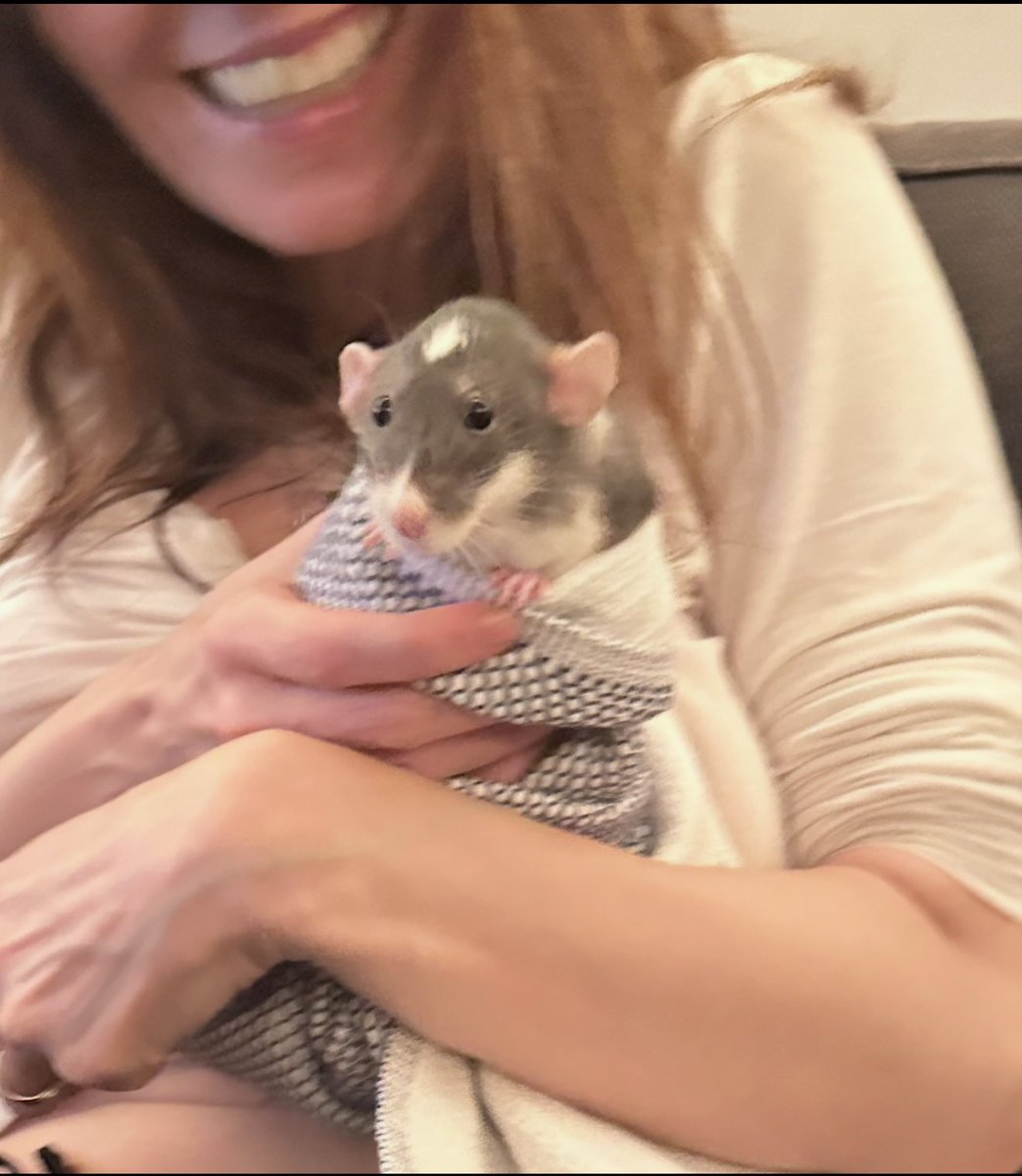
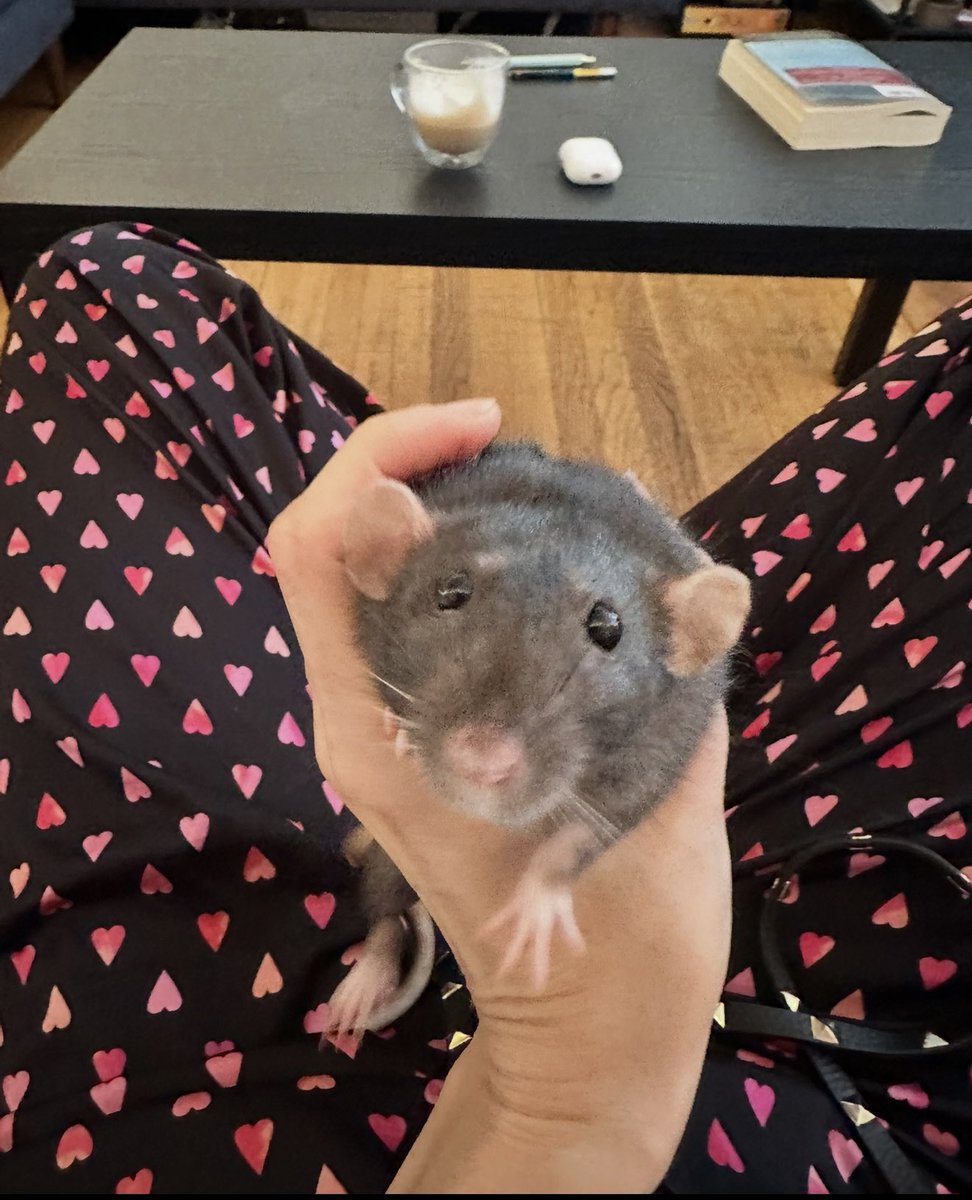
I was walking past a parking lot this evening when I saw a rat — a street rat — standing beside a box of poison. He’d just eaten from it. He knew. I couldn’t save him. And the truth is, even if I could, no one rescues a street rat. He was already lost — unwanted, unloved, invisible.
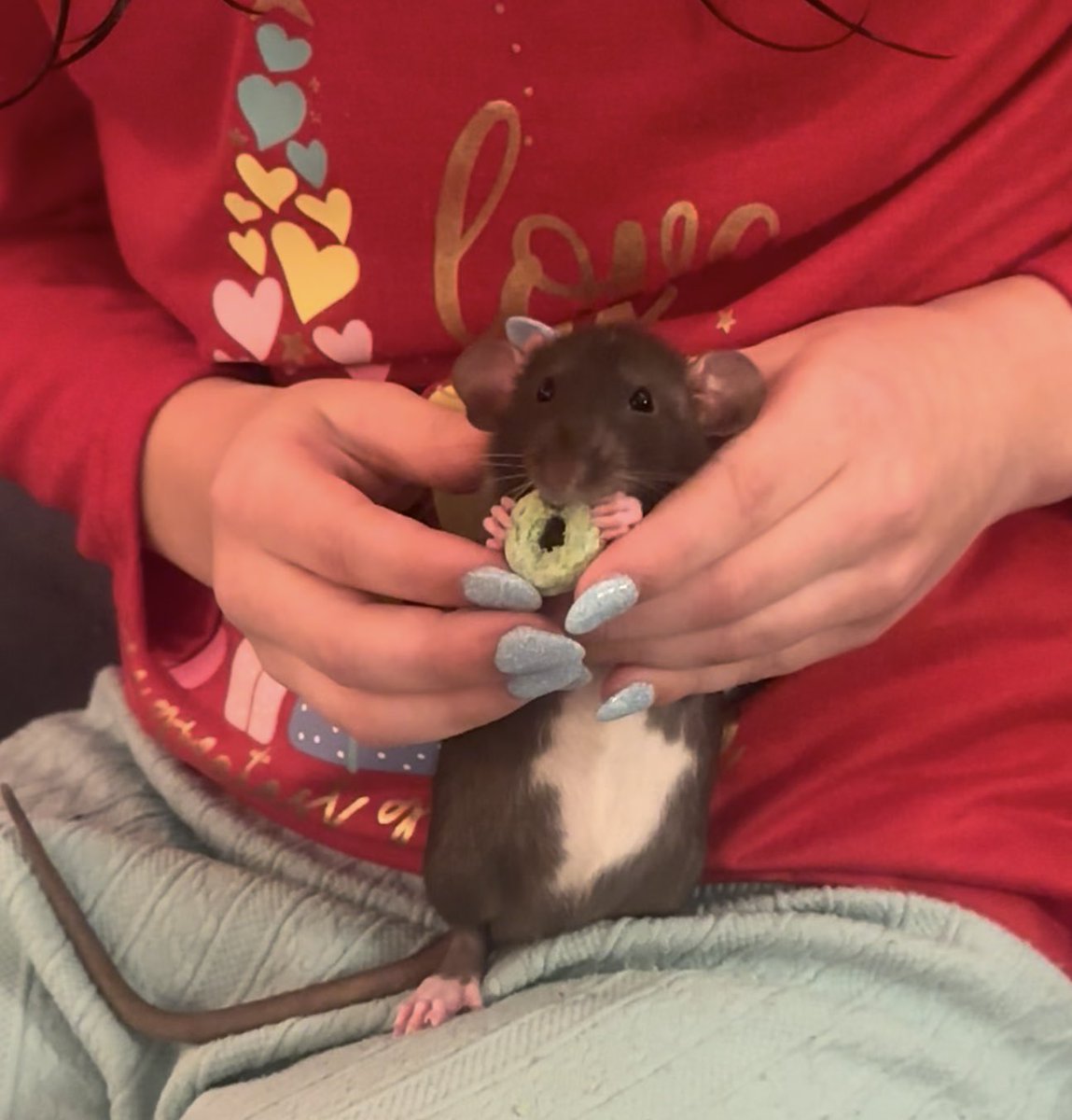
I thought of my rat, Travis — the same soft fur, the same tiny hands, the same heartbeat in a smaller chest. Travis was joy itself: playful, brilliant, gentle.
Nearly identical genes. One adored, one despised. One safe in my hands, the other dying alone on cold asphalt.
Watching him, I realized how thin the line really is — a breath, a chance, a gust of wind — between love and ruin. And I couldn’t shake the feeling that, even in this life, it could have been me.
When Franz Kafka said, "I ran from love because I knew it would destroy me. " but Fyodor Dostoevsky said, "I ran into love because I needed it to destroy who I used to be. "
Stress shortens your DNA. But one state can repair it. And it's not sleep. At the ends of your chromosomes are protective caps called telomeres. They prevent DNA from fraying. Every time a cell divides, telomeres get shorter. When they're too short, the cell dies. Scientists discovered something shocking: stress speeds up this clock dramatically. Elizabeth Blackburn won the Nobel Prize for discovering telomerase — the enzyme that repairs telomeres. For years, scientists believed it worked only in stem cells. They were wrong. Your mental and emotional state directly affects telomerase activity. Stress suppresses it. You don't age from time. You age from your state. A University of California study found that mothers caring for chronically ill children had telomeres equivalent to someone 10 years older than their peers. Stress literally cuts years off your life at the DNA level. Here's the most important part: Blackburn discovered that meditation increases telomerase activity by up to 30%. Not exercise. Not supplements.
Mental stillness.