The Brodsky lab is looking for a senior research investigator! If you have 5+ yrs post-PhD research experience, are interested in innate immunity/host-pathogen interactions & want an exciting, collaborative environment with great colleagues, please apply: https://t.co/oNLcYZsT1t
We bid farewell to @eldoles and @durstingly, two outstanding scientists and colleagues. The positive impact of their contributions, both as mentors to junior lab members and in their research projects, will be felt for years. Best of luck with the next adventure!
My lab is hiring at all levels. We are looking for talented and motivated people to work on Chlamydia-host interaction related projects. Please RT and email me directly if interested.
Please share broadly:
The BioCoRE application for the 2023-2024 school year is now live!
Prospective students can apply here:https://t.co/D9kyraZwYR
If you'd like to learn more about our program before applying, you can visit our webpage: https://t.co/8QgENKYxjr
Bittersweet day as we wish @lauren282012 a safe trip to 🇨🇦 to start her own lab at @uvic Her work on #Akkermansia genetics has been foundational. In her honor we had 🥞 and celebrated all things Canadian
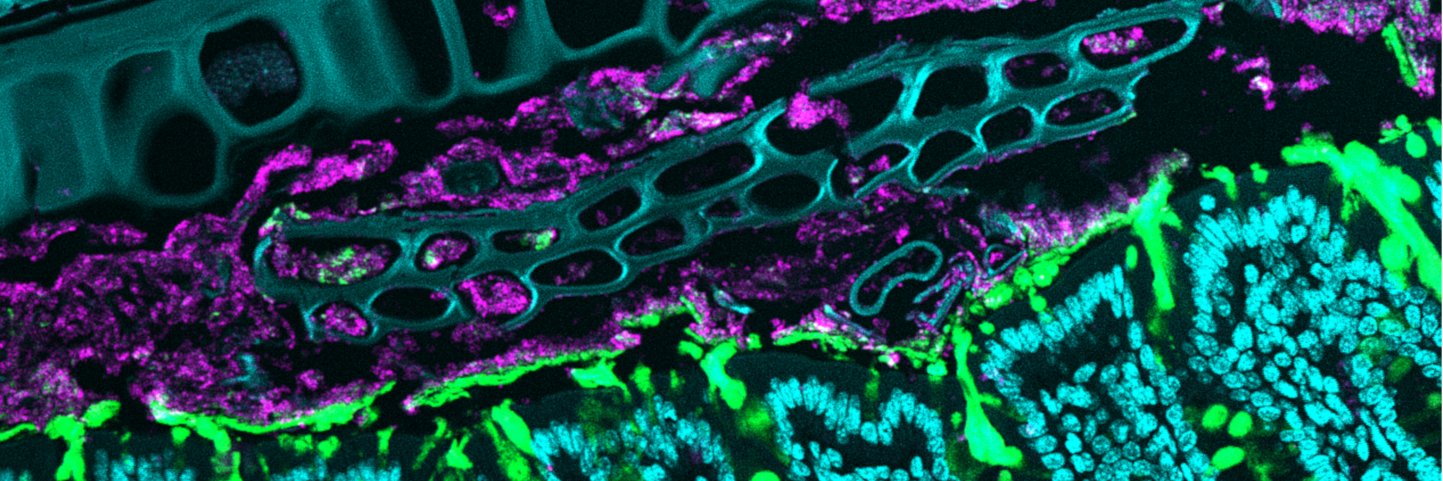
Finally! The culmination of almost 5 yrs of work by the brave Akkermaniacs team @DukeMGM. @lauren282012 developed genetics for Akkermansia, an important member of the human microbiota that was until recently considered genetically intractable https://t.co/FxbSN8a3sW
So what does this mean? It is possible that metabolites produced during mucin consumption dampen the expression of lipid metabolism genes. Whether this contributes to the positive effects of Akkermansia on metabolic health remains TBD. Lots to do but stoked that we now have tools
Finally, we asked how does the GI respond to mucin consumption by Akkermansia? We used GF mice mono-colonized with wt or Mul mutants and did RNAseq from colons. One of the strongest differences was the repression of mevalonate/cholesterol biosynthetic genes in WT Akkermansia
MUL mutants were perfectly capable of colonizing GF animals. But they failed miserably if there were other microbes around. Therefore, the ability to use mucins gives Akkermansia a competitive edge
We identified two loci encoding genes that may be distantly related to PUL systems of Bacteroides- we named these MULs for mucin utilization loci. One of the predicted proteins in one of these loci is Amuc1100, a factor previously associated with immunomodulation