VAPT findings in real life:
Customer: “Are these real?”
Us: Yes.
Customer: “Why didn’t our tool catch this?”
Us: Tools don’t think.
Customer: “Isn’t this common sense?”
Us: Exactly.
Real attackers don’t care if it’s simple or complex.
#VAPT#Pentesting#CyberSecurity#InfoSec
Most vulnerabilities are not hiding.
They are just sitting in places tools don’t look.
Business logic.
User behavior.
Trust that was never verified.
That’s where manual testing earns its keep.
#VAPT#Pentesting#CyberSecurity#InfoSec#SecurityTesting
VAPT vs Red Team often get confused.
Same tools, similar techniques, different goals.
VAPT finds weaknesses to fix, Red Team tests how far an attacker can go.
More payloads don’t equal Red Team.
Know the difference first.
#VAPT#RedTeam#CyberSecurity#Pentesting#InfoSec
A clean VAPT report does not always mean a secure system. It can also mean the testing never left the surface.
Real risk lives in logic, trust, and assumptions.
That requires thinking, not just scanning.
#VAPT#Pentesting#CyberSecurity#InfoSec#ManualTesting
Network pentesting isn’t just modules & IPs. Real issues hide in misplaced trust, legacy protocols & assumptions.
Manual testing spots relationships that shouldn’t exist. That’s where the real findings live.
#NetworkPentesting#VAPT#ManualTesting#CyberSecurity#InfoSec
Small security gaps rarely look urgent… until they turn into incidents.
Regular security testing helps you find vulnerabilities before attackers do. Waiting often means discovering risks the hard way.
#CyberSecurity#VAPT#PenTesting#InformationSecurity#RiskManagement
Your phone keeps asking you to approve a login… but you are not logging in.
That is not a glitch. That is someone trying to wear you down until you tap “Approve.”
This is called an MFA fatigue attack. Deny the requests. Change your password. Tell IT.
#CyberSecurity#MFA
Network VAPT is often treated as the simplest engagement. Run scans, check versions, move on. But networks hide history. Temporary rules that became permanent.
Trusts never removed. None of that shows up in scans. Good network VAPT requires patience, context, and restraint.
Three things you can do RIGHT NOW to boost your security
1 Enable 2FA on your email
2 Check if your data was exposed on https://t.co/K7lJLgr74t
3 Update that browser you keep ignoringTakes 5 minutes. Protects you for months.
#CyberSecurity#StaySafeOnline#InfoSec#PrivacyTips
Cloud VAPT is often taught through one console, one vendor lens. Real environments span providers.
Security is not about where a checkbox lives, but who owns the risk when things fail.
Focus on architecture and exposure, not logos
#CloudVAPT#VAPT#CloudSecurity#CyberSecurity
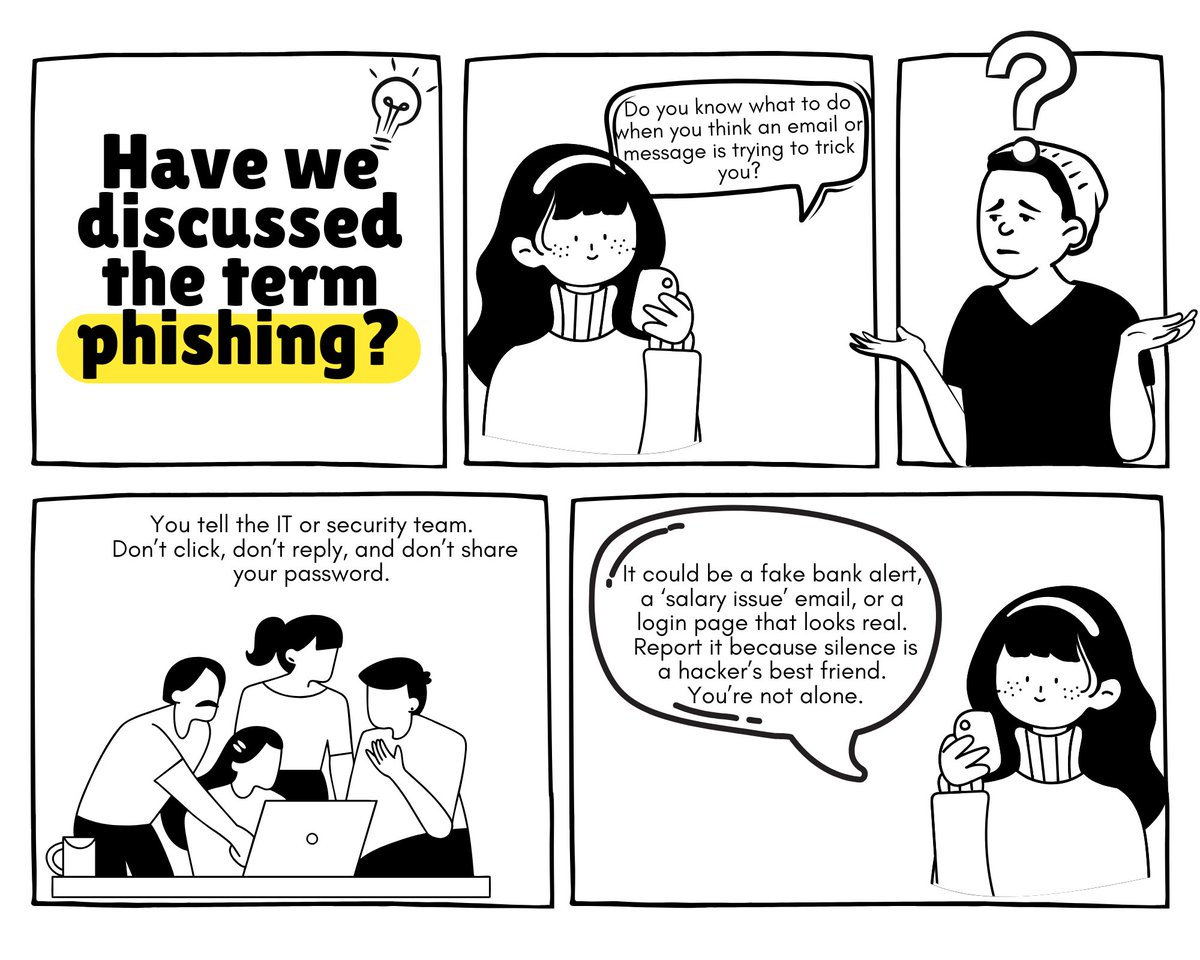
Phishing emails try to trick you with urgency and fear.
If it feels suspicious:
don’t click.
don’t reply.
don’t share your password.
Report it to IT or security. Speaking up protects everyone.
#CyberSecurity#Phishing#StaySecure#InfoSec#cybersecurity2026
Red team exercises aren't just about what attackers achieve. They test the other side:
How fast were alerts raised?
Which signals got ignored?
What did the SOC call "normal"?
When red teams succeed silently, the real finding is in your SOC dashboard.
A web scan finishes in a few hours.
Findings exported. Risk scored. Report ready.
Manual testing takes longer.
Understanding flows. Chaining small mistakes. Following logic, not URLs.
Tools are good at finding what is already known.
Humans are good at finding what was unexpected.
Red teaming is often asked for with big expectations. "Act like a real attacker." Then the constraints arrive.
No phishing.
No lateral movement.
Finish quickly.
What remains is a loud pentest with a new label.
When red teaming is boxed for comfort, it loses what makes it useful.
Most security tools answer the question:
“Is this known to be broken?”
Attackers ask a different question:
“What happens if I do this?”
Tools look for patterns.
Humans look for paths.
Simply put - scanners generate findings, manual pentesting generates stories. 👍