The Norsemen named Thursday Þórsdagr (Thor's day) in honor of the god of thunder, son of Odin.
Our modern word Thursday similarly comes from the Old English Þunresdæg (Thunder's day) and Middle English Thuresday, named for the West Germanic variant of the same deity.
Odin played a central role in creating the first humans, Askr and Embla, from two tree trunks found on a beach.
While his brothers provided form and intellect, Odin breathed 'ǫnd'—the vital breath of life and soul—into their bodies to animate them.
The Norsemen named their mid-week day Óðinsdagr (Odin's day) in honor of the high god of the pantheon.
Our modern word Wednesday itself comes from the Old English Wōdnesdæg and Middle English Wednesdei, named also for Woden, the West Germanic variant of the high god.
During Ragnarǫk, Týr faces his final destiny in a fierce singular combat against Garmr; the monstrous and bound blood-stained hound of Hel.
According to the Eddas, the two clash in an act of mutually assured destruction, ultimately slaying each other on the battlefield.
The Norsemen named Tuesday Týsdagr (Týr's day) in honor of Týr, the one-handed god of law and combat.
Stemming from the broader Germanic root Tīw, this linguistic dedication also directly survives today as the historical origin of our modern English word Tuesday.
The Valknut—composed of three interlocking triangles—is an ancient symbol frequently carved on Viking Age picture stones alongside depictions of Odin and death.
While its historical name remains unknown, its consistent context links it to the transition between life and death.
The Norsemen named Monday Mánadagr (Moon's day) in honor of Máni, the personified god of the moon.
According to the Eddas, he guides the moon’s path across the night sky to regulate the phases of time, while being relentlessly pursued by the wolf Hati.
The Norsemen named Sunday Sunnudagr (Sun's day) in honor of Sól, the personified goddess of the sun.
According to the Eddas, she drives her chariot across the sky each day, pulled by two horses while being relentlessly pursued by the wolf Skǫll.
The Norsemen took hygiene very seriously, traditionally using Saturday as their dedicated day for bathing and washing clothes, a practice called Laugardagr ('bath day').
This weekly habit was so deeply ingrained that it survives today as a modern Scandinavian word for Saturday.
Ragnar Lodbrok sought the hand of the brave shieldmaiden Lagertha after witnessing her skill on the battlefield.
To test his worth, she guarded her home with a fierce bear and hound. Ragnar slew both beasts with a spear and his hands, proving his strength and winning her over.
Odin’s eight-legged steed Sleipnir is the best of all horses, uniquely capable of galloping through the air and across the sea.
When Hermóðr rode him into Helheim, Sleipnir demonstrated his unmatched strength by leaping completely over the massive, locked gates of Helgrindr.
Vǫlva, a traveling seeress in Norse society, sought after for her absolute mastery over prophecy, spirit communication, and fate interpretation.
During communal rituals, they chanted beautiful and specific incantations known as galdr to shift realities or commune with the dead.
Heimdall is the watchman of Asgard, possessing senses acute enough to guard the bifrost bridge.
According to the Eddas, he requires less sleep than a bird, can see for leagues in total darkness, and can hear grass growing from the earth.
An absolute sentinel.
Odin’s spear Gungnir was crafted by the master artisans known as the Sons of Ivaldi.
With runes carved on the tip, the weapon was fashioned with such flawless balance that it strikes its target without fail, regardless of strength or skill.
A tool of absolute accuracy.
Frigg, wife of Odin and Queen of Asgard, resides in her own celestial hall called Fensalir.
Her high status in the Germanic pantheon was so absolute that her name remains directly embedded in languages today as the root of the word Friday.
A historic pillar of the old faith.
Find your way through rough weather with our new compass app, featuring a Vegvísir and the location of nine realms, perfect for navigating and learning: https://t.co/uBZk36o1Tw
Available on the @Google Play Store.
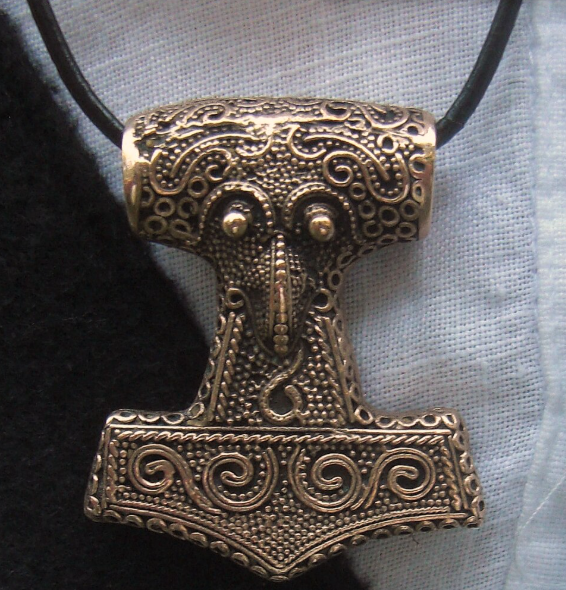
Today, Mjǫllnir is still a primary symbol of modern Heathenry, worn as a pendant and used in ritual.
Beyond an affinity for Thor, the hammer represents the religion as a whole, specifically signaling its ongoing resilience and vitality.
A symbol of identity that refuses to fade
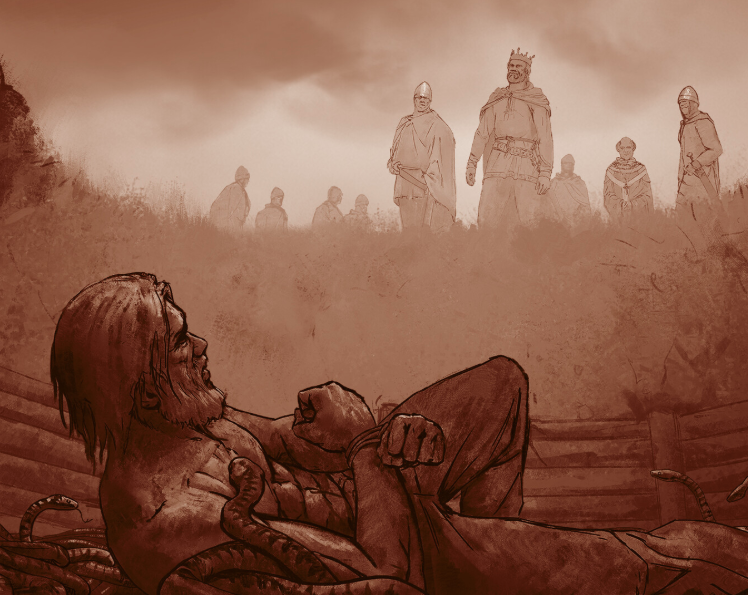
Ragnar Lothbrok, legendary Viking king, was executed in a pit of venomous snakes by an enemy king.
Leading to his inevitable, agonizing end, he refused to beg for mercy, instead spending his last breaths warning that his sons would return for vengeance.
His sons did not fail.
Hervǫr, shieldmaiden, sailed alone to a haunted island as her crew fled in fear.
She faced the dead, took her father's cursed sword; Tyrfing, and walked away with inheritance that was hers by right.
Courage isn't the absence of fear. It's advancing when everyone else turns back
Need a calendar? Our new calendar site has just dropped, it's still actively being worked on and is only a basic introduction so expect inaccuracies and changes overtime, but if you need a calendar to work with, here you go: https://t.co/hw8f0D5lbz