I'm incredibly proud of my lab's work defining the mechanism by which fragile X messenger ribonucleoprotein (FMRP) supports translation of long neurodevelopmental mRNAs - a discovery we first made in fruit fly eggs which is conserved in the mammalian brain
https://t.co/0flxz109yb
The @Neal_Lab is hiring a postdoctoral fellow to lead exciting structural and biophysical studies of membrane protein quality control!
Competitive HHMI-scale salary + cutting-edge science + a genuinely wonderful and supportive lab culture.
Please share widely with anyone who might be interested!
Here is a beautiful and important study by Eric Weischaus.
Maternal patterning in early Drosophila embryos: how much information can single maternal gradients supply? https://t.co/0AeVmVfseP
I'm incredibly proud of my lab's work defining the mechanism by which fragile X messenger ribonucleoprotein (FMRP) supports translation of long neurodevelopmental mRNAs - a discovery we first made in fruit fly eggs which is conserved in the mammalian brain
https://t.co/0flxz109yb
I should also mention that this work was done primarily by two amazing graduate students, Al Rohet Hossain and Kaicheng Ma, who I've been incredibly lucky to work with these past 5 years
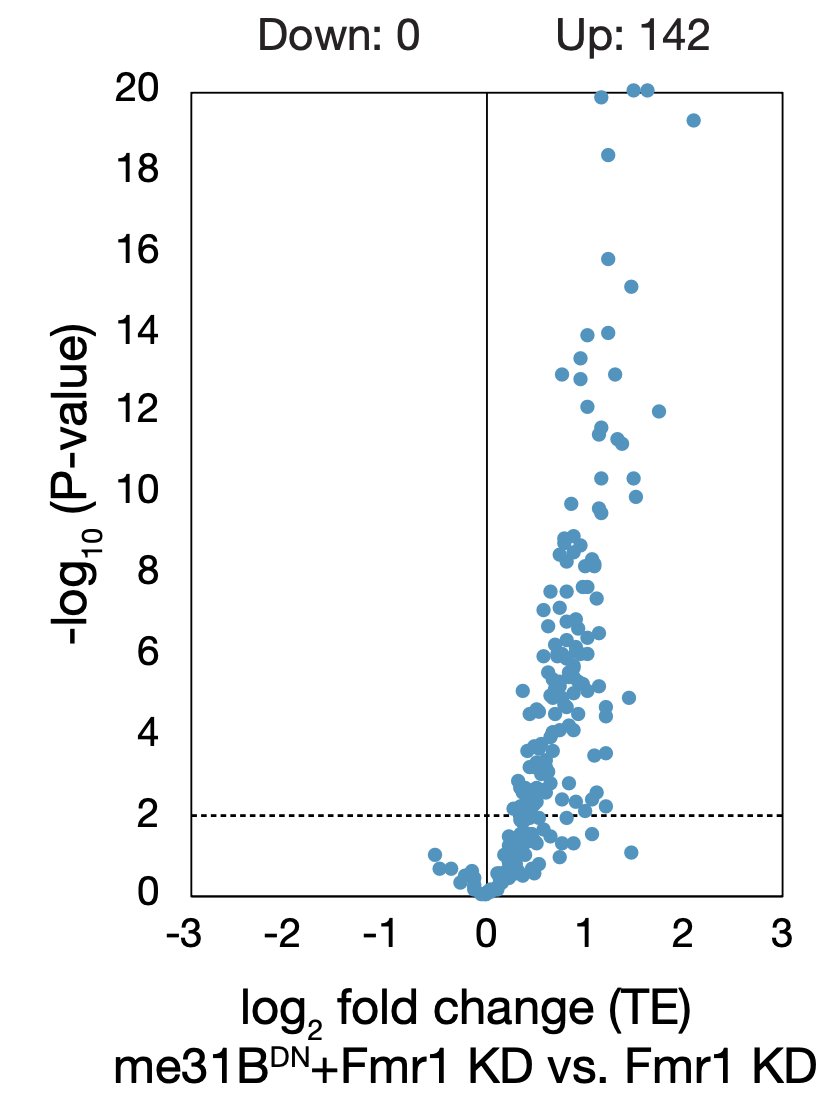
Amazingly, translation of the majority of FMRP high-binding mRNAs was rescued when we also inhibited Me31B through expression of a dominant-negative transgene, showing that excessive repression was responsible for diminished translation of FMRP target mRNAs
We are excited to move this work forward to understand the antagonistic relationship between activating stress granule-linked factors and repressive P-body proteins and to hopefully provide strategies that can benefit patients and families affected by fragile X syndrome.
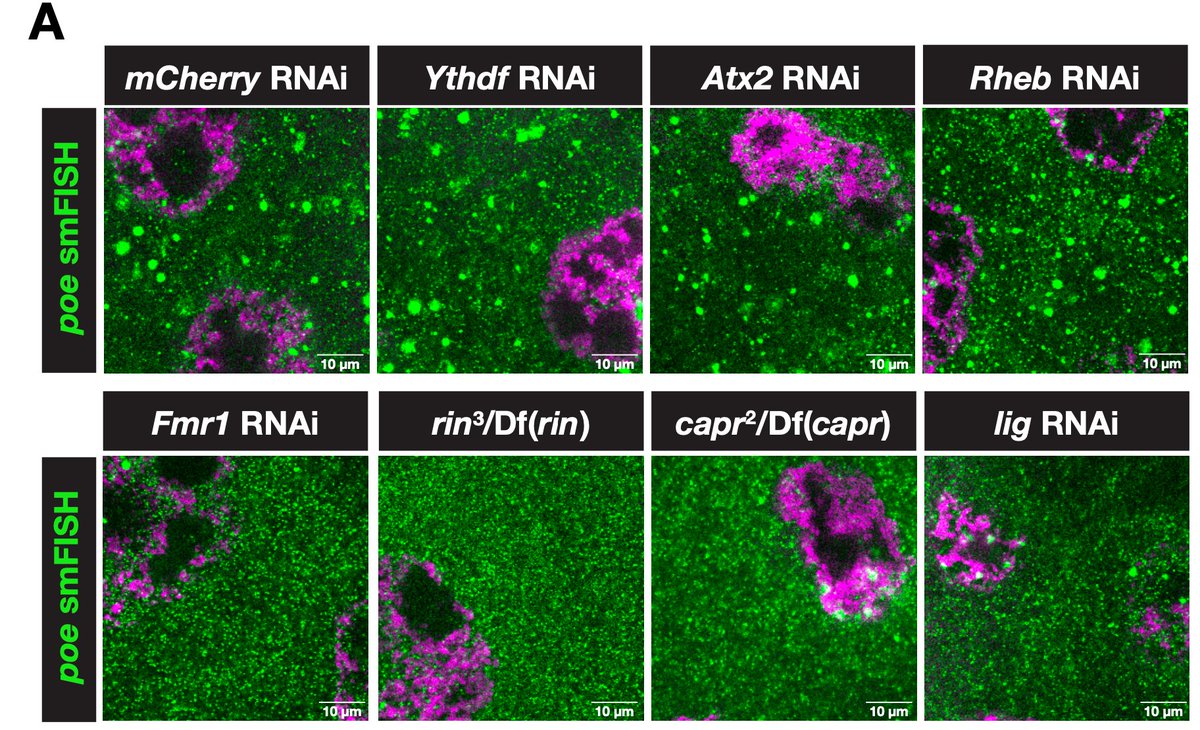
We found that FMRP didn’t do this job alone. Using a single molecule FISH based screening assay in developing egg follicles, FMRP-driven translation sites required the presence of stress granule-linked proteins whose functions remain fairly mysterious.
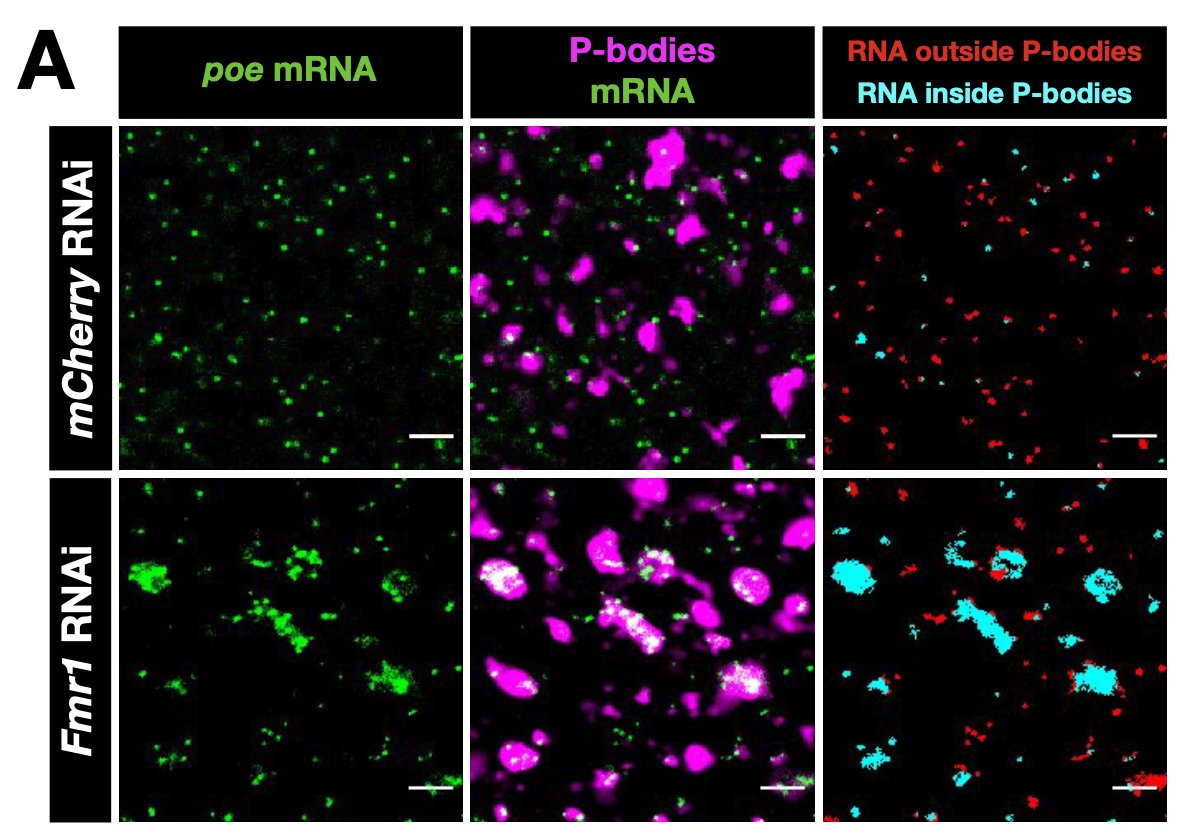
Me31B maintains mRNA silencing by coating targets in a length-dependent fashion (Götze 2017), so we wondered whether FMRP targets were especially prone to repressor binding and thus needed a special protective factor to maintain expression, and this turned to indeed be the case.
FMRP’s activity in the brain and in germ cells is essential for their proper function. In 2018 we published that the primary effect of FMRP loss was surprisingly a reduction of large proteins - the opposite of the predominant repressor model in the field.
https://t.co/tVYuO7jJDh
We now show that FMRP acts to protect long mRNA targets from repression by the central repressive factor Me31B/DDX6, which is a core RNP remodeling protein that drives formation of P-bodies.
Long mRNAs are strongly associated with disorders caused by haploinsufficiency. FMRP’s apparent job then was to get expression of these genes above haploinsufficiency thresholds. Without this activity complicated phenotypes emerge. But we had no idea how FMRP accomplished this.
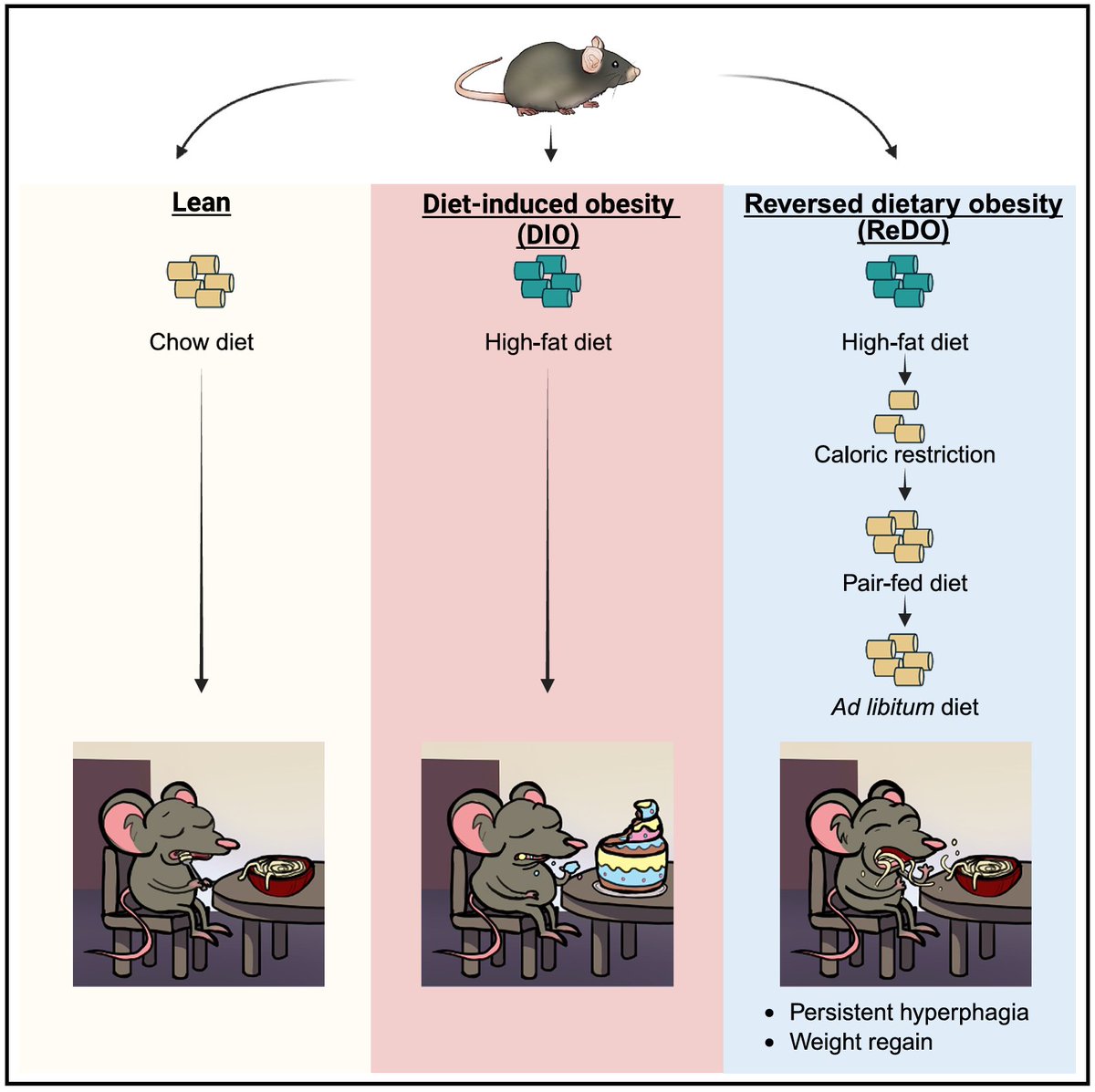
Why do many who successfully shed weight regain a substantial amount of it back? In my latest manuscript, I found that previously obese mice exhibit a persistent -- lasting at least a month -- uptick in hunger that promotes weight regain. 🔗+🧵 below (1/5)
https://t.co/v9aZOUDz4I