Professor of Molecular Therapeutics and Metabolic Biology at UC Berkeley; Departments of Molecular & Cell Biology and Nutritional Sciences & Toxicology
1/ Thrilled to share our new paper in @Nature: “CLCC1 promotes hepatic neutral lipid flux and nuclear pore complex assembly.” From our lab together with @apsarruda, led by co–first authors @alymathiowetz and @EmilyMeymand. 🥳
https://t.co/LHO31rNaxi
Our work deorphanizing MCT6 as the missing gut Lac-Phe transporter is out today @CellCellPress: local gut lactate metabolism influences gut-brain crosstalk, and also explains metformin’s effects on body weight. Congratulations to @Shuke_Xiao@alanshtung!
https://t.co/7YLTKLlL0w
Our new work by @YuyangLiu1996! Short-lived proteins are key regulators of metabolic homeostasis. By investigating their degradation, we identified TXNDC15 as a regulator of ER protein degradation and lipid homeostasis via a catalysis-independent mech. https://t.co/lVBzlXc7il
Congrats to Maia Kinnebrew and team! 🎉 Genetic screens and mechanistic follow-up reveal how fatty acid metabolism tunes membrane fluidity and accessible cholesterol pools. Happy to have contributed in a small way to this study.
https://t.co/8zizSBtYHR
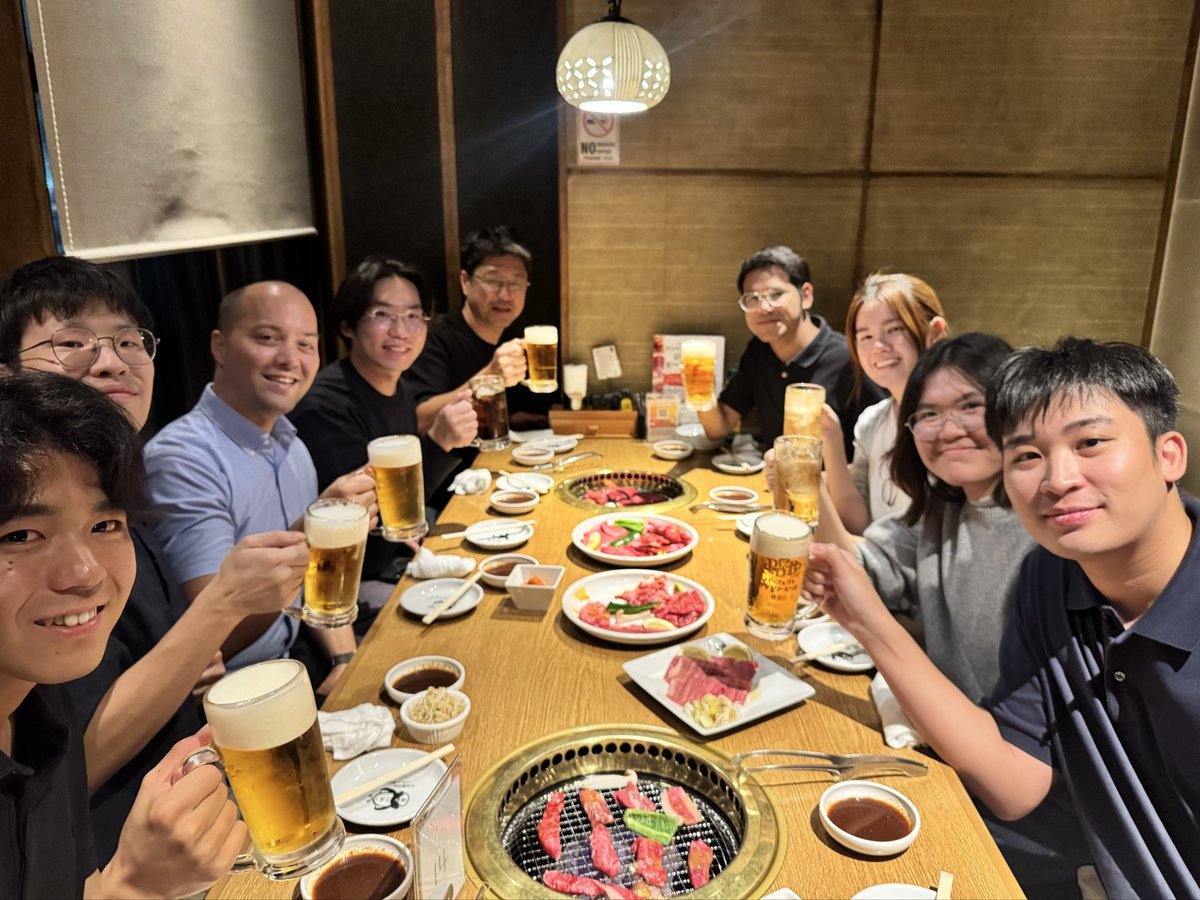
Wonderful trip to Kyushu! Thanks to Ryo Seino and the Dojindo team in Kumamoto, and Ken-ichi Yamada and his lab at Kyushu University in Fukuoka, for hosting. Enjoyed hearing about everyone’s projects, the great discussions, warm hospitality, and fantastic food!
We are honored to host Dr. Tom Vanden Berghe (University of Antwerp) for our Breakthrough Summit & Element Distinguished Lecture, 14:00–17:00, Oct 21 at Zhejiang University. His keynote: To Die or Not to Die: Targeting Ferroptosis in Disease. #Ferroptosis#ironmetabolism
Excited to share our new publication in Nature Metabolism @NatMetabolism led by the fantastic @XingxiuPan, where we uncover an unexpected connection between reductive and oxidative stress. This study contains many exciting findings, and I will be highlighting different aspects of this work in a series of posts.
One of the central conclusions is that the NADPH/NADP+ ratio is a critically underappreciated parameter in mitochondrial dysfunction.
In this study we present SaNADK, a new xenotopic tool based on the S. aureus NAD kinase, which expands the cellular NADP(H) pool nearly six-fold! Most remarkably, together with the Peter Adams lab @AdamsBioAging, we found that increasing NADP(H) levels with SaNADK alone was sufficient to reverse age-associated hepatic transcriptomic signatures linked to metabolic dysfunction and inflammation as well as liver fibrosis highlighting the profound influence of NADP(H) metabolism on cellular aging.
We also uncovered an important aspect of mitochondrial bioenergetics. We found that NADH-driven reductive stress can cause excessive reduction of the coenzyme Q pool, creating a bottleneck for multiple coenzyme Q-dependent reactions. As a consequence, electron flow through CoQ-linked systems is impaired, including DHODH activity and de novo pyrimidine biosynthesis. These findings may help explain numerous observations in the literature that have long appeared counterintuitive, namely that mild mitochondrial complex I inhibition can sometimes be beneficial.
Here is the link to the study:
https://t.co/81x6P2gwHY
Congratulations to @UCBerkeley alumnus and former faculty Robert E. Hall for winning the Nobel Prize in economic sciences, awarded for his work in developing models that can help us "reduce the economy’s peaks and troughs." https://t.co/LqcwGtlUt4
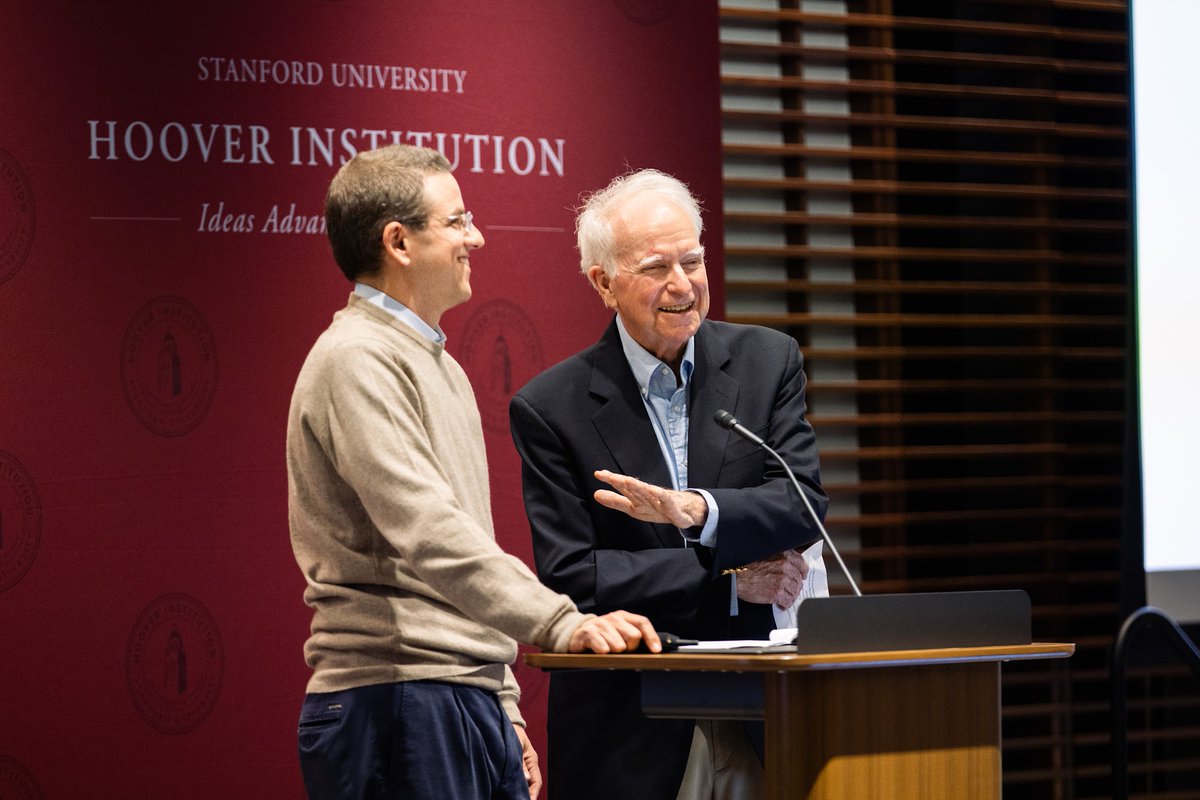
Congratulations to Robert E. Hall, winner of the 2026 Nobel Memorial Prize in Economic Sciences. The professor emeritus of economics and @HooverInst senior fellow emeritus shares the prize with Michael Woodford for developing macroeconomic models built on how households and businesses actually make decisions. Those models have helped governments and central banks time their policies to soften economic shocks.
📸: Patrick Beaudouin
New paper from our lab @IISERPune led by @aakash0308 identifying lipoprotein lipase as a neutral cholesterol ester hydrolase in mammalian tissues & cells in now online @BiochemistryACS. Thanks @ANRFIndia for funding this work.
https://t.co/q56v9Tf6zU
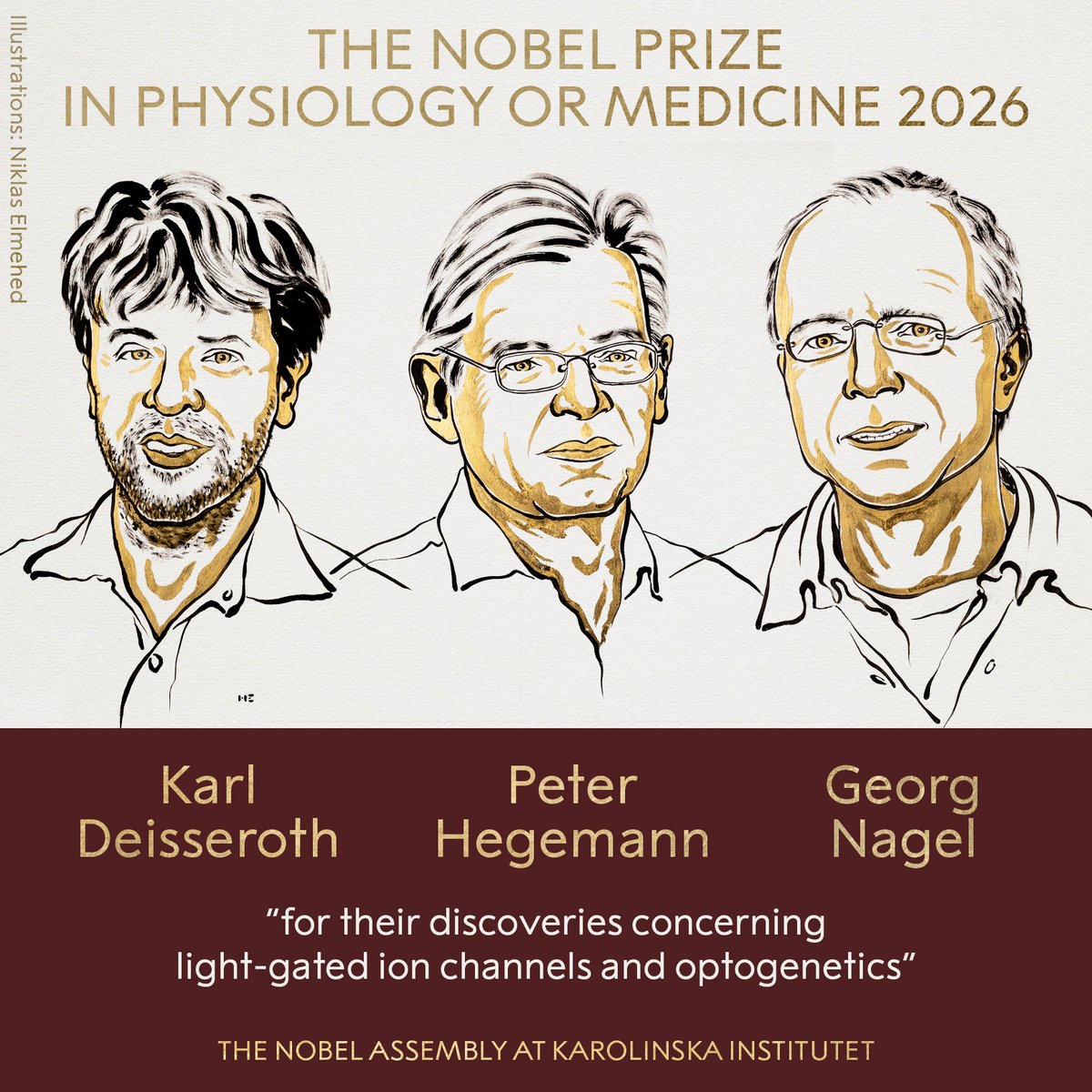
BREAKING NEWS
The 2026 #NobelPrize in Physiology or Medicine has been awarded to Karl Deisseroth, Peter Hegemann and Georg Nagel “for their discoveries concerning light-gated ion channels and optogenetics.”
Congratulations to Karl, Peter, and Georg! Another great example of how basic research - in this case, understanding how an algal cell responds to light - can have an enormous impact on our understanding of something as complex as the brain.
Remarkable Magnum Opus from @VamsiMootha & the Mitocarta Tree of Life consortium consisting of 9 back to back research papers (+2 perspectives) just released in Cell and Cell family journals:
- Characterization of mito proteomes from 6 diverse species, from Giardia to Leishmania to Arabidopsis
- Optimized methods for mito enrichment, DIA mass spec, protein correlation profiling, microscopy validation, and cryoEM analysis of native complexes
- Comparative analysis reveals dozens of proteins shared among pathogens but lost in human hosts = “pan-parasite” drug targets
- Data used to re-train ML predictor of subcellular localization => predicted mitoproteomes across hundreds of eukaryotes
- Giardia solute carrier discovered with functional validation
- Dynamic rewiring of Acanthamoeba mito proteome from aerobic to anaerobic energy production characterized
And tons more… The papers are instant landmarks and raise even more questions than they answer, paving the way for many future investigations of this fascinating organelle #mitochondria
https://t.co/yjUnnh6CI3
Today, the MitoCarta Tree of Life Consortium (MitoTOL) is releasing high-accuracy mitochondrial proteomes across diverse eukaryotes to empower studies of physiology, evolution, and disease:
https://t.co/hRt6ZG4lQP
All data can be accessed at:
https://t.co/oPFODZBQ60
3/ Here, we take the next step, using bispecific antibody degraders to therapeutically target this pathway.
LRP8 degradation reduces GPX4 and other selenoproteins, creating a vulnerability to ferroptosis.
Congrats to Fangzhu, Jim, Alex & the whole team!
1/ Happy to see this collaborative work w/ Fangzhu Zhao, @realJimWells & colleagues now published in @PNASNews!
LRP8-targeted KineTACs degrade LRP8, reduce GPX4 & other selenoproteins, and sensitize cancer cells to ferroptosis.
https://t.co/TMJGr55NPd
2/ This study builds on work from our lab and Pedro Angeli’s lab identifying LRP8 as a key regulator of selenium uptake, selenoprotein synthesis, and ferroptosis sensitivity in cancer.
Our study: PMID 35637349
Angeli lab: PMID 37435859