From MBoC: How do viruses manipulate cellular stress responses?
Researchers found that two adenovirus proteins independently control distinct steps in IRE1α signaling, challenging conventional models of how cells respond to ER stress.
https://t.co/PTNVDBs9j8
Encouraging news for graduate researchers: Senate appropriators recommend at least 2,000 new NSF Graduate Research Fellowships in FY2027 and call for greater stability and advance notice of program changes.
Read more from ASCB:
https://t.co/OWyZQNlNlN
From MBoC: Can an antifungal drug that stops fungal growth be made to kill the fungus instead?
Researchers found that deleting the aspB gene in Aspergillus fumigatus makes caspofungin fungicidal, revealing a potential target for future therapies.
https://t.co/ifIfvtc9E6
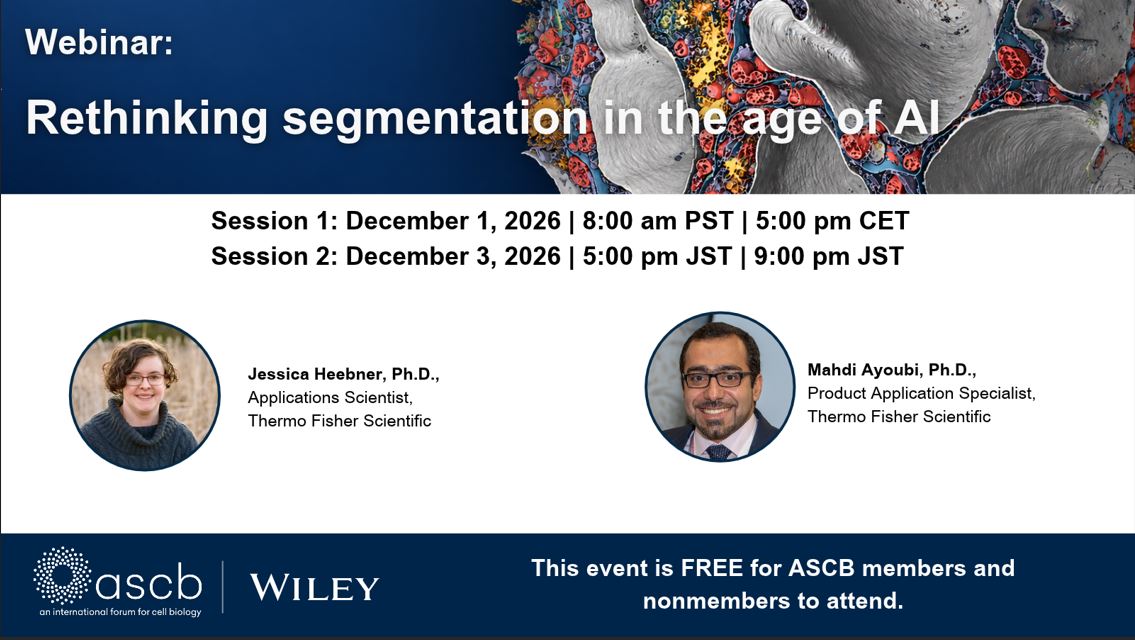
Explore AI-assisted segmentation, deep learning, and 3D microscopy analysis in ASCB's free Dec. 1 or 3 webinar. Discover how to turn imaging data into biological insights.
Register: https://t.co/l2JpqmcSeB
Encouraging news for graduate researchers: Senate appropriators recommend at least 2,000 new NSF Graduate Research Fellowships in FY2027 and call for greater stability and advance notice of program changes.
Read more from ASCB:
https://t.co/OWyZQNlNlN
From MBoC: How does mitochondrial function influence α-synuclein toxicity?
Using yeast models, researchers found that both increased respiration and respiratory dysfunction heighten cellular vulnerability to this Parkinson's-associated protein.
https://t.co/Q58u1ipfpR
From MBoC: How do cancer cells cope with DNA replication stress?
New research reveals how USP37 stabilizes TIPIN to protect replication forks, offering insights into cancer cell survival.
https://t.co/XPgajrBMq0
Congratulations to Kate Cavanaugh of UCSF, recipient of the 2026 Merton Bernfield Memorial Award, recognizing outstanding graduate students and postdoctoral researchers.
https://t.co/2974hdzFAC
From MBoC: What causes abnormal bulges in the cell nucleus?
Researchers found that transcription-driven chromatin movement contributes to nuclear blebbing, a process linked to cancer and age-related diseases.
https://t.co/nkMTzFgVx4
Explore a new approach to antibody discovery using AI.
Join Perry Wasdin, PhD, Nov. 17 at 12:00 pm ET to learn how MAGE and LIBRA-seq pair AI-driven antibody generation with high-throughput experimental discovery.
Free webinar:
https://t.co/EO4K9OGWI1
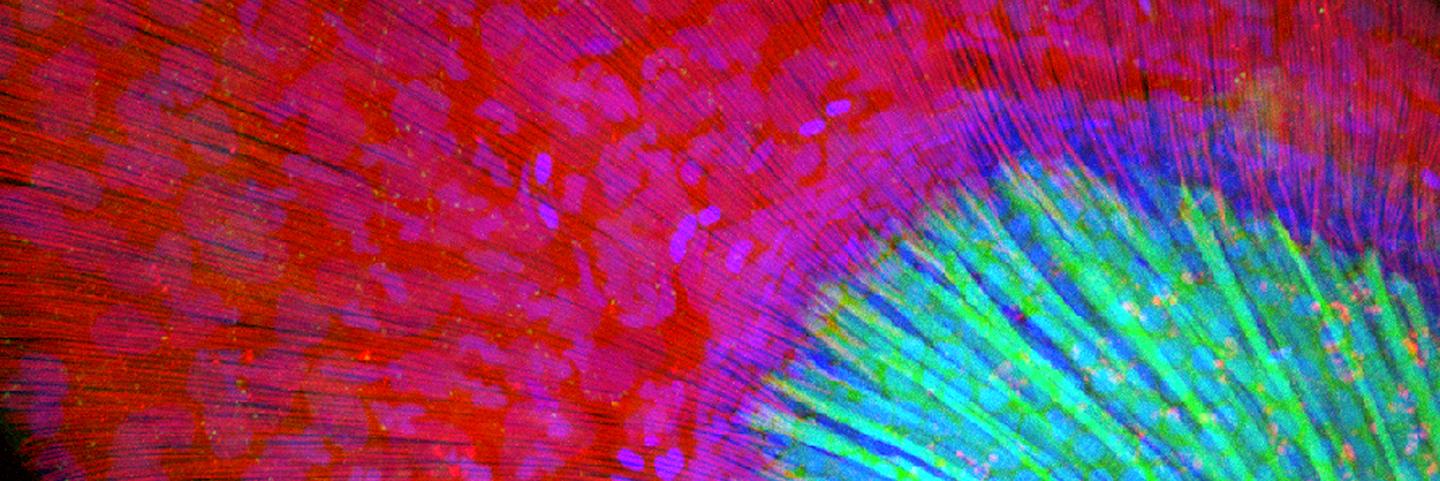
From MBoC: What keeps muscle fibers organized?
Researchers identified Uchmaz, a protein that helps maintain sarcomere structure in fruit flies. Without it, muscle organization breaks down and flight is impaired.
https://t.co/y8CBy07w8F
Have you considered inviting a member of Congress to tour your lab?
Show policymakers the research happening in their communities and how federal funding supports scientific discovery.
ASCB's guide helps you plan a visit:
https://t.co/7ethdzXwfV
Turn complex microscopy images into biological insights. Join ASCB Dec. 1 or 3 for a free webinar exploring AI-assisted segmentation, 3D visualization, and quantitative imaging.
Register: https://t.co/l2JpqmcSeB
From MBoC: How do chromosomes organize themselves in 3D?
A new review examines competing models for chromosome organization and what research on TADs and their boundaries reveals about the structure and function of the genome.
https://t.co/PD84oa3MH0
How can AI accelerate antibody discovery?
Join Perry Wasdin, PhD, Nov. 17 at 12:00 pm ET to explore how MAGE and LIBRA-seq can generate novel antigen-specific human antibodies.
Free webinar.
https://t.co/EO4K9OGWI1