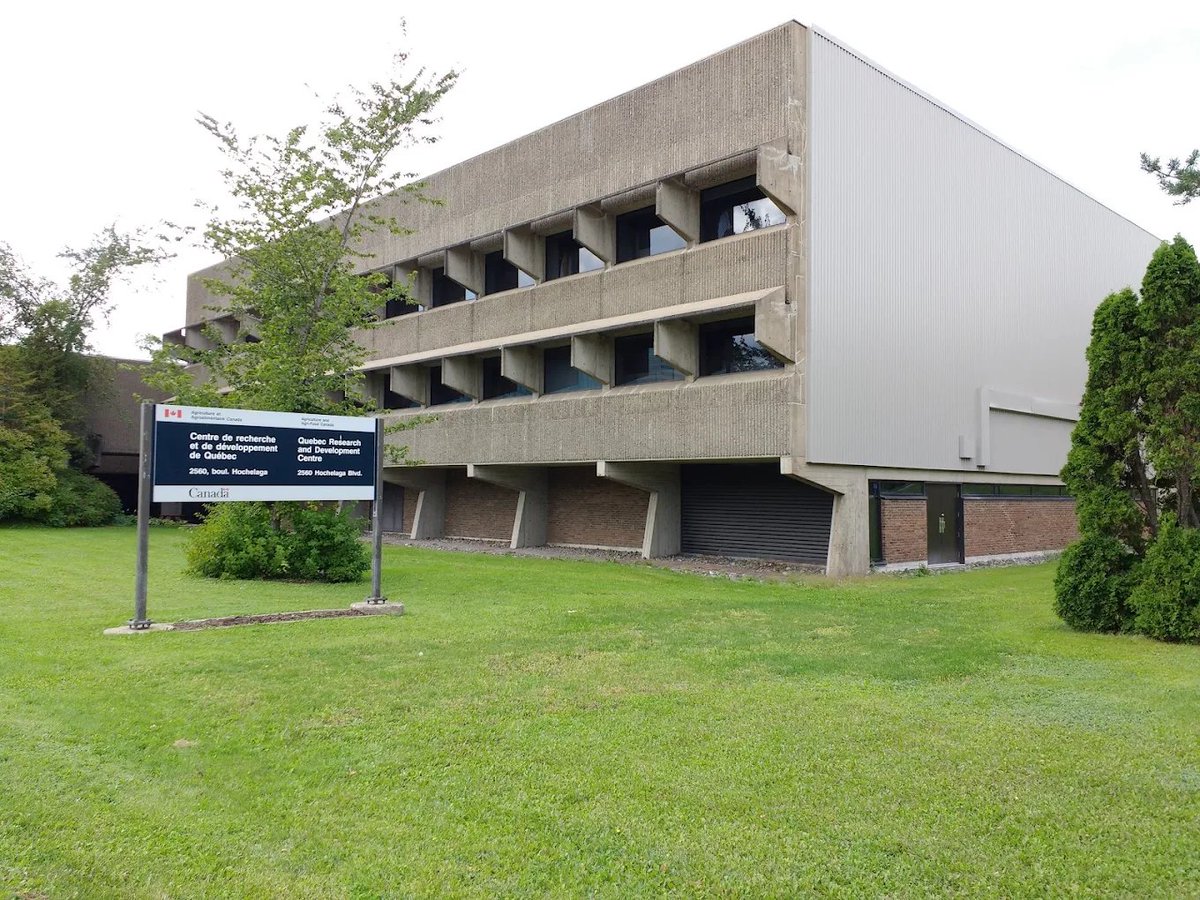
BREAKING: Agriculture and Agri-Food Canada (AAFC) is set to announce the closure of multiple federal research facilities across the country — including major centres in Quebec City (QC), Lethbridge (AB), Summerland (BC), Agassiz (BC), Harrow (ON), Kentville (NS), and Saint-Jean-sur-Richelieu (QC).
More details to come.
Hey guys. This is going to be the most personal update I’ve ever shared publicly.
I live in public view — my work does, anyway. I’ve never been shy about sharing my ideas or passions. But I’ve always worked very hard to keep my family out of view. That’s partly for their safety. But also because, despite appearances, I am an intensely private person. The public part of my job is exhausting and often a little frightening.
I’m now facing something far more frightening. And I may need your help.
Last fall, my wife became very ill. A series of medical tests ruled out the non-scary explanations. Just before Christmas, we were told it was metastatic cancer. She has since undergone urgent surgeries, including successful removal of the primary tumour. She is young, strong, and otherwise healthy, and her recovery so far has been remarkable.
Now we are entering a long, grinding phase of this fight — chemotherapy and we hope other treatments — with the goal of getting ahead of this nightmare.
We have cause for optimism. The metastasis is real and terrifying, but limited and small. We didn’t catch this “early,” but we may have caught it early by the standards of such things. We have a real shot, and we are determined to fight as hard as we possibly can.
Many of you noticed I went completely to ground. This is why. If you are the praying type, we would appreciate your prayers. For those who may be able to offer medical help and options, please reach out — I’m easy to find. I’m assembling an army for her. This is the most important thing I’ve ever done, and I can’t imagine a better use of my energy or my skills.
As we settle into a new rhythm, I’m beginning a gradual return to work. Don’t be surprised if you see more thoughts from me about the health-care system. I’ve been amazed and humbled by some of the care we’ve received. I’ve also been shocked and frightened by other parts of the experience. I’ll have more to say about that later.
But now I want to talk about my wife.
We met when we were 17. We had math class together. I changed my seat so I could look at her. She was stunning. I can still see her in my mind’s eye exactly as she was then. To me, she is as beautiful today as she was at 17. I did, and still do, feel like I’ve been winded when I just look at her.
We weren’t high-school sweethearts. Our journey was longer. We didn’t become an official couple until late in university, after a long period of circling each other — trying to understand what to do with a deep friendship that was evolving into something much scarier and more consequential.
We made the jump. Not without false starts. Not without fear. But we made it. And my life has been amazing since. Because of her.
She is all I have ever wanted.
She isn’t perfect. She isn’t easy. Neither am I. We’ve had good times and bad. But she is the absolute foundation of my world. My entire sense of self is wrapped up in her. I don’t know where I end and she begins.
Nearly 20 years after we stood in a park and agreed to be together, I am as hopelessly in love with her as I was then. It is a crippling love — more than I contain. I can barely think about it. It just feels like too much when I try.
She and our two children are my everything. And I am going to fight for her and for this family with absolutely everything I have. I will never surrender. I can’t. There is no me without her.
So that’s the story. Please be patient with me. Please be kind. Pray for us if you can. And help us if you have the power.
Hello to my OG twitter audience. I have let my colleagues at Global BC know that November 18 is going to be my last day with the company and as a reporter at the Legislature. I am deeply grateful to all of the viewers, social media followers and listeners over the years. #bcpoli
My second visit to Kelowna this year and I’m shocked how beautiful this place is, and how many opportunities there are to play sports and go hiking. It’s in British Columbia, but the local politics aren’t insane like in Vancouver and Victoria.
In 1948, towns in Idaho became overrun with beavers. To solve the problem, local government parachuted them from planes to more remote parts of the state.
#VPDNews: Vancouver Police are investigating a serious assault that occurred in an Olympic Village park and are asking anyone with information to come forward.
On Saturday, June 7, at 4:25 p.m., a man called 9-1-1 requesting an ambulance after reporting that he had been struck over the head and needed help. Paramedics and police located the victim along a pedestrian and cycling path near the fenced dog area in Hinge Park, on the west side of Olympic Village. He was rushed to hospital with significant injuries to his head and face.
Based on the investigation to date, police believe there was some form of interaction between the victim and the suspect prior to the assault.
“Unfortunately, the victim’s condition is slow to improve, and his injuries will likely be life-altering,” says Constable Jason Doucette. “Although the victim was found alone after the assault, we believe there were park users nearby who may have seen or heard something but didn’t realize the seriousness of the incident at the time. We are asking those people to come forward.”
Investigators are releasing photos of the victim’s backpack and bicycle in hopes someone will recognize them from the day of the incident and assist detectives in determining what led to the assault and who was involved.
Anyone with information is asked to contact investigators in VPD’s Major Crime Section at 604-717-2541.
In 1948, 76 beavers were parachuted into the Idaho wilderness as part of a relocation program by the Idaho Department of Fish and Game.
The program was initiated to address the growing conflict between humans and beavers in areas where people were building homes, such as Payette Lake. The beavers' natural activities, like dam building and tree cutting, were causing problems for the new residents.
The relocation site, Chamberlain Basin, was chosen because it was a remote and suitable location for the beavers to thrive. However, the area was difficult to access due to the lack of roads. The solution was to use surplus parachutes from World War II to drop the beavers into their new home.
A specially designed crate was created to ensure the safety of the beavers during the drop. After several test drops with a beaver named Geronimo, the project was deemed successful and continued until 1948.
As a result, the beavers transformed the landscape into a lush wetland, creating a haven against fire and drought. Their descendants now live in what is part of the largest protected roadless forest in the continental United States.
Dr. Fairfax has just received a major grant from the NSF to advance her research on beaver ecosystems! Check out the article here: https://t.co/aWQZguEiGP
THE LATEST: A Metro Vancouver spokesperson told CityNews the regional district has confirmed the effluent has made its way into False Creek. However, they have not confirmed the exact volume of water that has made its way down. https://t.co/hA8ZiGa27R
Spotted in downtown Toronto! A Beaver right at the foot of York Street and Queens Quay. A stones throw from the @BeaverTails stand! Turn up the volume, the play by play by a group of excited children is the best! #TorontoBeaver#CanadianContent
RT if you think that @KenBurns, fresh off AMERICAN BUFFALO, should focus his next series on another keystone North American mammal that was annihilated by 19th-century capitalists and is now being restored for its ecological and cultural value. #Beavumentary