I am Young Lee, a former physician and staunch advocate for democracy, opposing the CCP's tyranny. I support freedom in Taiwan, Hong Kong, Tibet, and Xinjiang.
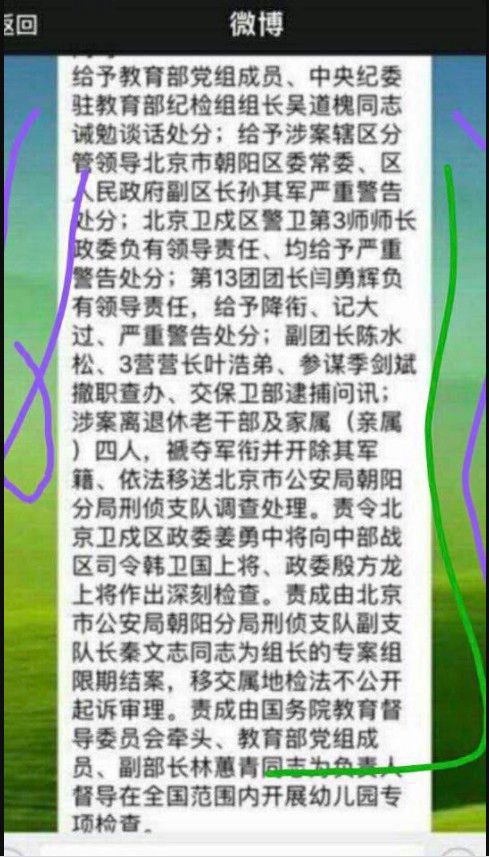
In 2017, allegations of abuse at a Red Yellow Blue kindergarten in Beijing triggered one of the most emotionally charged public controversies in recent Chinese memory. What began as reports of possible child abuse quickly evolved into a broader crisis of trust — not only in private education institutions, but also in the state’s willingness to fully investigate allegations that touched sensitive political ground.
Parents from the kindergarten’s Xintiandi branch in Chaoyang district claimed that their children had returned home with unexplained injuries, needle marks, and disturbing stories of being given unidentified pills by teachers. Some children allegedly described being taken into a dark room for so-called “medical examinations”.
These accounts spread rapidly on Chinese social media, sparking outrage among parents across the country. Within hours, the incident became a national scandal.
Police later detained a teacher on suspicion of child abuse. Authorities announced that there was no evidence supporting the more extreme claims circulating online.
Yet the controversy did not fade.
Instead, it exposed a deeper and more troubling reality: a profound crisis of public trust.
As the story unfolded, Chinese social media platforms began aggressively removing posts about the case. Keywords related to the scandal disappeared from search results. Discussions were curtailed. Entire threads vanished overnight.
For many Chinese citizens, this pattern felt painfully familiar.
Whenever a sensitive scandal emerges — especially one that touches powerful institutions — the public conversation often shifts from the incident itself to a second question: what information is being hidden, and why?
Rumours flourished in the vacuum created by limited transparency. Online speculation suggested connections between the kindergarten and individuals with military or political backgrounds. None of these claims were confirmed by official investigators.
But the absence of credible, transparent information only deepened suspicion.
In modern information societies, public trust depends not only on the outcome of an investigation, but on the openness of the process itself. When information is tightly controlled and debate suppressed, official statements — even when accurate — often fail to convince a sceptical public.
The Red Yellow Blue scandal therefore became more than a single case of alleged abuse. It became a symbol of a broader structural problem: the difficulty of holding institutions accountable in a system where political sensitivity can override transparency.
Child safety is one of the most emotionally powerful issues in any society. When parents believe their children may have been harmed — and when they feel their voices are being silenced — anger quickly turns into fear, and fear into lasting distrust.
Nearly a decade later, the Red Yellow Blue case continues to circulate in Chinese diaspora discussions and overseas Chinese media. It is remembered not only as a disturbing allegation of child abuse, but as a moment when many citizens confronted a painful question:
In a system where information is tightly controlled, can the public ever be certain that the full truth has been revealed?
Until transparency and accountability become stronger pillars of governance, incidents like the Red Yellow Blue scandal will continue to haunt the relationship between the Chinese public and those who hold power.
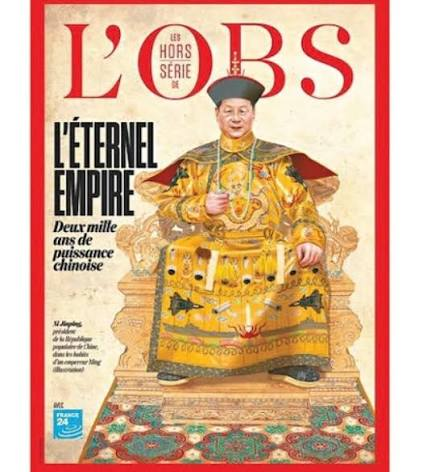
Xi Jinping has crushed all dissent in China, jailing anyone who dares to disagree — even senior generals and top officials of the CCP are not immune. China has become a one-man state, owned and ruled by Xi alone. He is a ruthless tyrant and a national disaster, the most brutal dictator China has seen in nearly 500 years, second only to Mao Zedong. Under Xi and the CCP’s extreme authoritarian rule, China’s future is sinking into darkness.
習近平,中共匪帮集團的獨裁者,對一切異議展開了全面鎮壓,毫不留情地將批評者投入監獄。就連高級軍事指揮官和政權高官也未能倖免,許多人淪為習近平腳下的階下囚犯。悲劇的是,中國已然淪為習近平一人獨裁的國家,他將其視為自己的私人領地。他已成為教科書式的暴君,國家的禍害──近500年來中國最腐敗、最殘暴的獨裁者,僅次於毛澤東。
在共匪的極端專制和習近平不受制約的獨裁統治下,中國的未來如今籠罩在一片深深的陰影中。
The people of Iran have reached the limits of their tolerance toward Ali Khamenei’s theocratic dictatorship, triggering a revolutionary surge that has shocked the world and aims to dismantle authoritarian rule.
The courage and unity demonstrated by the Iranian people command deep respect. There is hope that this revolution will succeed—fully dismantling Khamenei’s dictatorial system and giving rise to a nation founded on democracy and the rule of law.
One also hopes that the Chinese people, one day, will collectively awaken, find the courage to unite, and bring an end to the Chinese Communist Party’s authoritarian tyranny.
“Overthrow the Chinese Communist Party’s authoritarian tyranny and establish a constitutional state founded on democracy and freedom.
伊朗人民對阿里·哈梅內伊神權獨裁的忍耐已達極限,由此引發的革命浪潮震驚世界,其目標是推翻專制統治。
伊朗人民展現的勇氣和團結令人肅然起敬。人們期盼這場革命能夠成功,徹底推翻哈梅內伊的獨裁體制,建立一個建立在民主和法治基礎上的國家。
人們也希望,中國人民有一天能集體覺醒,鼓起勇氣團結起來,終結中國共產黨的專制暴政。
Nicolás Maduro, the dictator of Venezuela, has been subjected to a transnational arrest by the U.S. military under the pretext of anti-narcotics enforcement, and Venezuela’s authoritarian regime has finally collapsed.
First and foremost, congratulations are due to the people of Venezuela. This development will also serve as an inspiration to the Iranian people to overthrow the dictatorship of Ali Khamenei. Should Iran’s authoritarian regime fall, it would likely be followed in succession by the collapse of the Chinese Communist dictatorship, the Kim family dictatorship in North Korea, and Russia’s oligarchic autocracy.
Authoritarian tyranny is the natural enemy of every nation’s citizens. The moment a political system or a leader chooses dictatorship, it places itself in direct opposition to the people.
When facing an authoritarian regime that monopolises state machinery and controls the instruments of violence, unarmed civilians are profoundly vulnerable. At critical moments, external intervention may catalyze the downfall of such regimes.
There is a striking pattern worth noting: two authoritarian regimes that have publicly shaken hands with Xi Jinping have already collapsed. Iran’s dictatorship is now teetering amid revolutionary pressure. One can only hope that the next to fall will be Xi Jinping himself—removed from power and sent before a court of law to face justice.