VariantSync is a research project funded by DFG and an open-source tool. The goal of both is to bridge the gap between clone-and-own and software product lines.
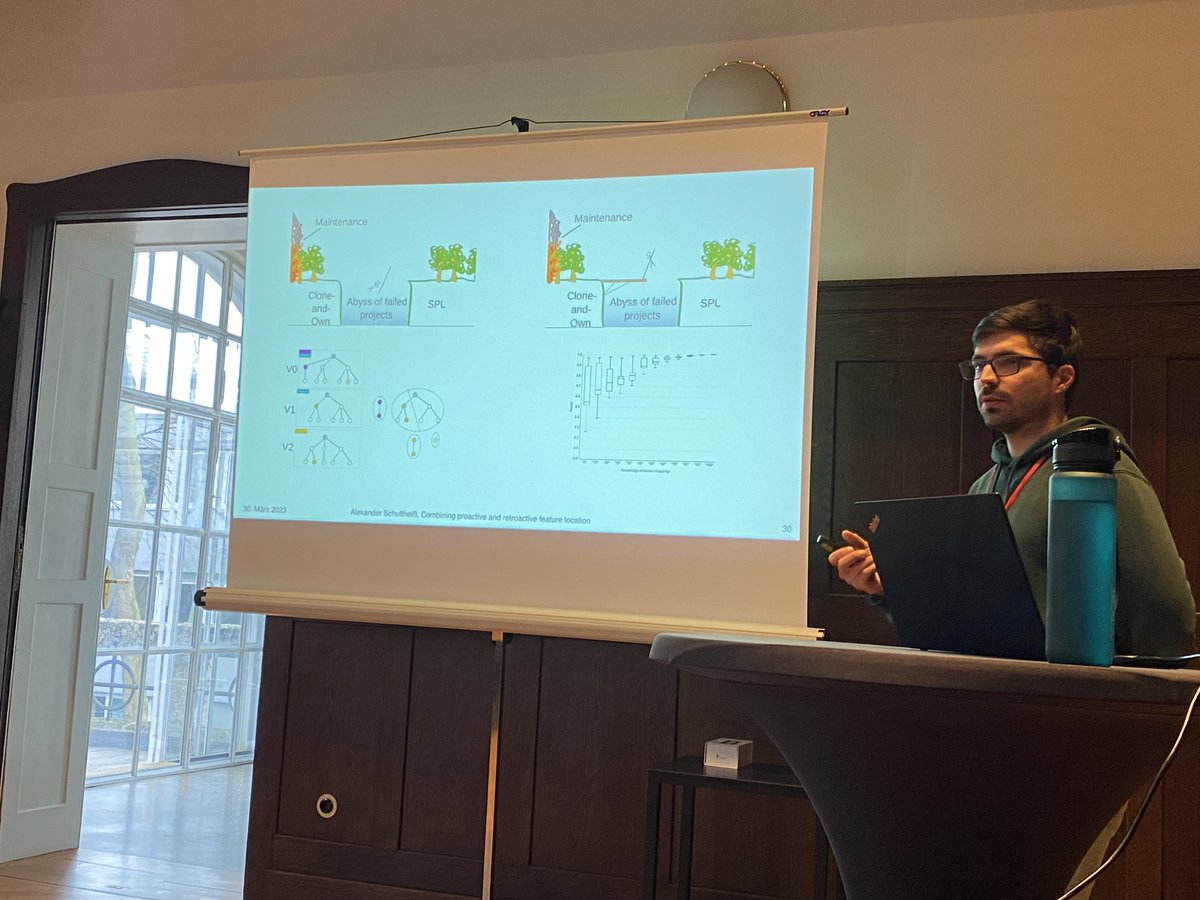
Right now at #splc2023: Sebastian Krieter presenting VariantInc, a tool within the scope of the research project @VariantSync.
Co-Authors: @JacobKrueger_, @tleich, Gunter Saake
Slides: https://t.co/DyzGTZ1oj9
Preprint: https://t.co/qD2DG5AR1o
Paper: https://t.co/8hyuHuAhgC
Recently at #splc2023: Paul helping Alice with doing code reviews for Bob's changes to a product line. Formalization, tooling, and large-scale empirical evaluation of views on edits.
Slides: https://t.co/i9WO1l7YKW
Preprint: https://t.co/yRfPVE9y3R
Paper: https://t.co/ujaMV53Pl5
Want to find out what is meant with clone-and-own and why it is problematic? Curious how it can be supported with version control systems and build systems?
Youtube: https://t.co/FeYBABtvEj
Slides: https://t.co/90QZwg3mAm
Many thanks to Timo Kehrer and Elias Kuiter (@ekuiter)
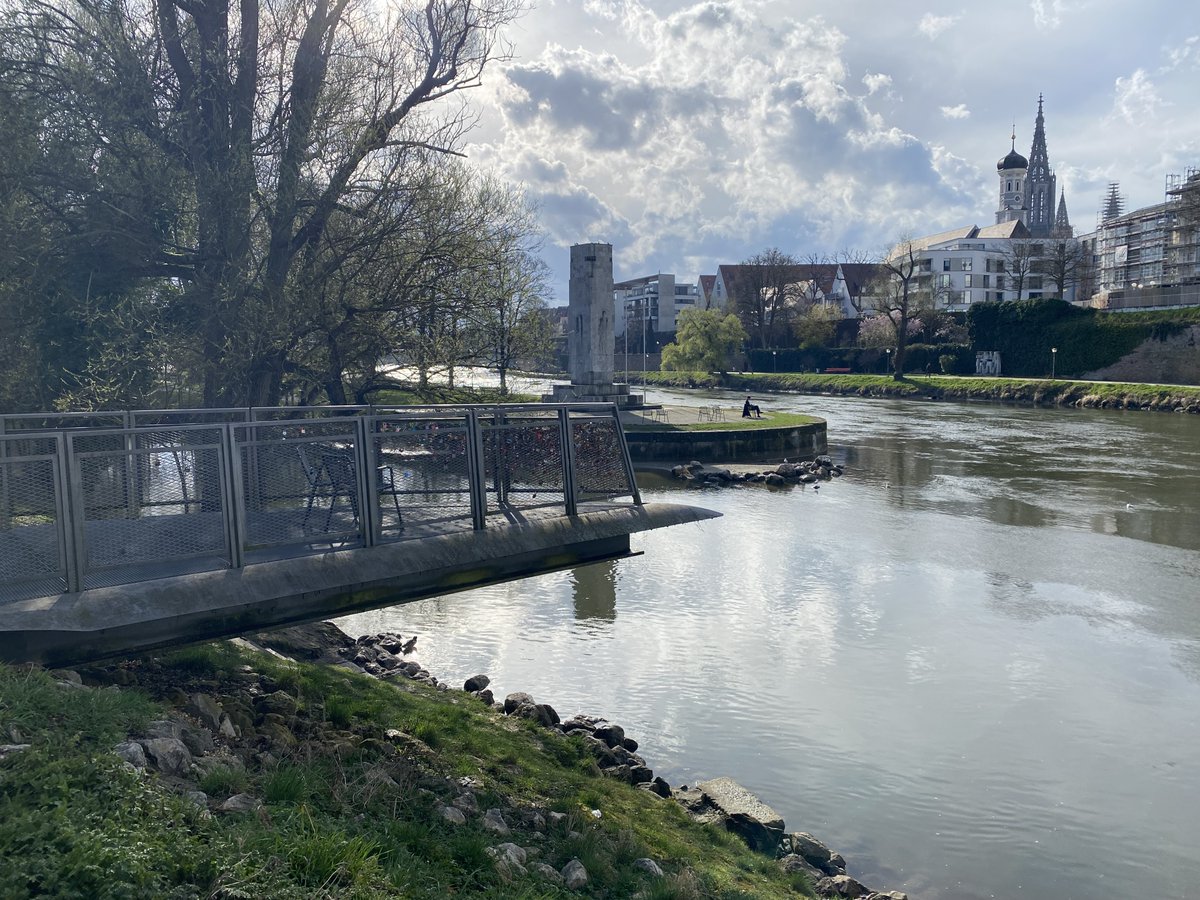
@VariantSync @SchultheissAlex This is not science fiction. The bridge exists in reality.
Clone-and-own is in Bavaria (Neu-Ulm) and product lines are in Baden-Württemberg (Ulm).
Clone-and-own is like a forest fire.
You need to work against the fire (maintenance) or migrate to a product line. Feature traces can help to bridge the gap.
@SchultheissAlex at #FOSD23
#OnlineFirst
RaQuN: a generic and scalable n-way model matching algorithm
Alexander Schultheiß, Paul Maximilian Bittner, Alexander Boll, Lars Grunske, Thomas Thüm & Timo Kehrer
https://t.co/XRaeBZzCFr
Our tooling for our empirical validation across 44 open-source configurable systems, including the linux kernel, was just awared with the available and reusable badges! :) You may check it out here: https://t.co/9qho7g9ZrP 8/8
Our paper "Classifying Edits to Variability in Source Code" got accepted at #esecfse22@FSEconf! Big thanks to my co-authors @SchwinneZ, @SchultheissAlex, Sören Viegener, Timo Kehrer, and @ThomasThuem! We give a short overview below! :)
Preprint: https://t.co/f4UHUymS8G
1/8
We are grateful and very happy to have received the best artifact award at @FSEconf '21. Special thanks to @do_you_gnu for teaching me #Haskell, to @do_you_gnu and @h3ssto for their help with Docker, and to our reviewers.
https://t.co/Uu6E3a2FLE
Feature trace recording is the first step towards our vision for bridging the gap between clone-and-own and software product lines in our project @VariantSync. You may read about it in our #ICSE NIER paper (https://t.co/4RTSNXABWa) or watch it (https://t.co/no7JBlbcof) 😊. 8/8
I am delighted to announce that our paper “Feature Trace Recording” got accepted at #esecfse21@FSEconf! Big thanks to my co-authors @SchultheissAlex, @ThomasThuem, Timo Kehrer, @do_you_gnu, and Lukas Linsbauer!
Preprint: https://t.co/WoRMUUlWyz
Code: https://t.co/3u02E3KWCV
1/8
A preliminary version of our @icseconf presentation on @VariantSync is available online:
Bridging the Gap between Clone-and-Own and Software Product Lines
by Timo Kehrer, @ThomasThuem, @SchultheissAlex, Paul Maximilian Bittner
https://t.co/flVejI6hcc
Alexander Schultheiß just talked at #fosd21 about his ongoing research as part of the @VariantSync project:
Investigating the Potential of Automating Change Propagation in Clone-and-Own Development
Authors: @SchultheissAlex, Paul Maximilian Bittner, Timo Kehrer, @ThomasThuem
Paul Maximilian Bittner just gave his talk at #fosd21 on feature trace recording.
Slides: https://t.co/0S8z9uCy48
Thesis: https://t.co/4O481PNm1n
Project: @VariantSync
In March 2020, Paul Bittner started on a PhD position in the VariantSync project. His master's thesis on the Semi-Automated Inference of Feature Traceability During Software Development is available online: https://t.co/1nSvlLm4FK
Happy to announce that the German Research Foundation @dfg_public accepted the grant proposal by Timo Kehrer and me. With @VariantSync, we aim to automate the synchronization of software variants. The grant incorporates a total of 618,000 € for 2 PhD students over 3 years.