In the 24 months since Labour came to power, we've seen;
• Employer National Insurance increased from 13.8% to 15%.
• The employer NI threshold cut from £9,100 to £5,000.
• Income Tax and National Insurance thresholds frozen until 2031.
• Capital Gains Tax increased from 10% and 20% to 18% and 24%.
• Business Asset Disposal Relief increased from 10% to 14%, then 18%.
• Investors’ Relief increased and its lifetime allowance cut from £10 million to £1 million.
• Carried interest taxation increased and moved towards the Income Tax regime.
• Dividend tax rates increased by two percentage points.
• Savings-income tax rates increased by two percentage points.
• Property-income tax rates increased by two percentage points.
• Most unused pension funds brought into the Inheritance Tax net.
• Agricultural Property Relief restricted.
• Business Property Relief restricted.
• Inheritance Tax thresholds frozen for longer.
• The non-dom regime replaced with a more extensive residence-based system.
• VAT imposed on private school fees.
• Business-rates relief removed from private schools.
• Stamp Duty increased on second homes and buy-to-let properties.
• The Furnished Holiday Lettings tax regime abolished.
• Pension salary-sacrifice benefits capped at £2,000 before National Insurance applies.
• The Cash ISA allowance cut to £12,000 for most under-65s.
• A 22% charge introduced on interest from cash held inside non-cash ISAs.
• Restrictions introduced on transfers and cash-like holdings within ISAs.
• The Energy Profits Levy increased and extended.
• Investment allowances for oil and gas producers reduced.
• A new Vaping Products Duty introduced.
• Tobacco duties increased above inflation.
• Vehicle Excise Duty increased for many new cars.
• Electric vehicles brought into the Vehicle Excise Duty system.
• A new mileage tax announced for electric and plug-in hybrid cars.
• Air Passenger Duty increased.
• Climate Change Levy rates increased.
• Plastic Packaging Tax increased.
• A new Carbon Border Adjustment Mechanism introduced.
• Making Tax Digital extended to more landlords and self-employed people.
Together they represent one of the biggest transfers of wealth from households and businesses to the Treasury in decades - with no noticeable improvement in public services.
Whether you're a business owner employing staff, a parent paying school fees, a farmer planning succession, an entrepreneur building wealth or simply someone trying to save for retirement...
You keep less of what you earn.
You keep less of what you invest.
You leave less to your family.
Death by a thousand cuts is becoming tax policy.
Sozialismus ist das perfekte Geschäftsmodell für Politiker: Er erzeugt Abhängigkeit, und Abhängigkeit erzeugt Wähler. Wer vom Staat lebt – durch Transferleistungen, Subventionen, „soziale“ Absicherung, planwirtschaftliche Privilegien – wählt denjenigen, der die Hähne aufdreht. Der Politiker wird zum Versorger, der Bürger zum Klienten. Je größer die Abhängigkeit, desto größer die Macht. Deshalb lieben sie ihn. Nicht aus Ideologie, sondern aus nacktem Eigeninteresse.
Kapitalismus hingegen ist für die politische Klasse eine existenzielle Bedrohung. Er belohnt Eigenverantwortung, Risiko, Innovation und private Initiative. Er macht Menschen unabhängig vom Staat – und damit unkontrollierbar. Wer seinen Lebensunterhalt selbst verdient, seine Entscheidungen selbst trifft und seinen Wohlstand selbst schafft, braucht keine Gönner in Berlin, Brüssel oder sonstwo.
Jede Regulierung, die „den Markt zähmen“ soll, ist in Wahrheit ein Instrument, um Wettbewerb zu ersticken und etablierte Interessen zu schützen. Der freie Markt braucht keinen Politiker als Mittler. Der Politiker braucht den freien Markt als Feindbild.
Deshalb die ewige Rhetorik: Kapitalismus wird als „gierig“, „ungerecht“, „unsozial“ gebrandmarkt – während der Staat, der mit Gewalt monopolisiert, umverteilt und kontrolliert, als moralische Instanz auftritt. Es ist die älteste Strategie der Macht: die Abhängigkeit als Tugend verkaufen und die Unabhängigkeit als Gefahr.
Der Staat hat kein Interesse an freien Menschen. Er hat Interesse an Untertanen, die ihm dankbar sind. Sozialismus liefert die Untertanen. Kapitalismus liefert die Freien.
#FreiheitstattKnechtschaft #SteuernsindRaub #Eigentum #Freiheit #ParasitenwegmitEuremZwang
@KanekoaTheGreat I can see the flickering in some LED systems. It’s not very nice. I have some in my camper van where I can detect a sort of strobe effect that’s almost invisible but not quite…
@ClarksonsFarm1 True minority groups like farmers, business owners and billionaires are routinely made into boogie men for political capital with the masses.
This well describes my own life. It’s cheaper to work less and do a lot of maintenance myself. Cheaper to buy tools than pay a mechanic. I’ve returned to the old ways of doing everything, but with the emancipation of technology. I still must interface with state failure each time I drive on the UK roads, or require medical help… we can’t do it all but you can become your own off-ramp for a lot of functions, at least while you’re strong and healthy…
The past couple of summers, I’ve been driving a Combine Harvester for work. This year it chewed up one of its many belts. I didn’t know what sort of belt it was so I went into an agricultural engineering depo. The old Chap grabbed a whole range of different belts and just gave them to me and said “try them all out, bring back ones that don’t fit and buy the one that does”. Wouldn’t take money. Complete trust.
Planet Half-Life. Modding scene was on FIRE. I started playing Counter Strike when it was Beta 1.2, Super early build. Had CS_Desert and Mansion… still had CS_Wpndepot… guns would drop in capsule crates so you couldn’t tell what you were getting and they persisted across rounds. Action Half Life and Firearms Mod were good fun as well. Many great mods back then…
Milei choque le monde avec une première mondiale!
Désormais, si l'Etat entre en déficit et que ce déficit n'est pas résolu en quelques semaines, alors ne seront plus payés les salaires:
- du président
- des ministres
- des principaux fonctionnaires du pays
- des députés
- des sénateurs
Et toutes les dépenses non-essentielles de l'Etat seront purement et simplement gelées.
Une mesure forte, brutale mais tellement logique.
Avec ce système, les dirigeants et les bureaucrates n'auront plus le choix que de maintenir un budget à l'équilibre.
Il est temps qu'ils arrêtent de jouer avec notre argent et notre futur en nous endettant sans limites.
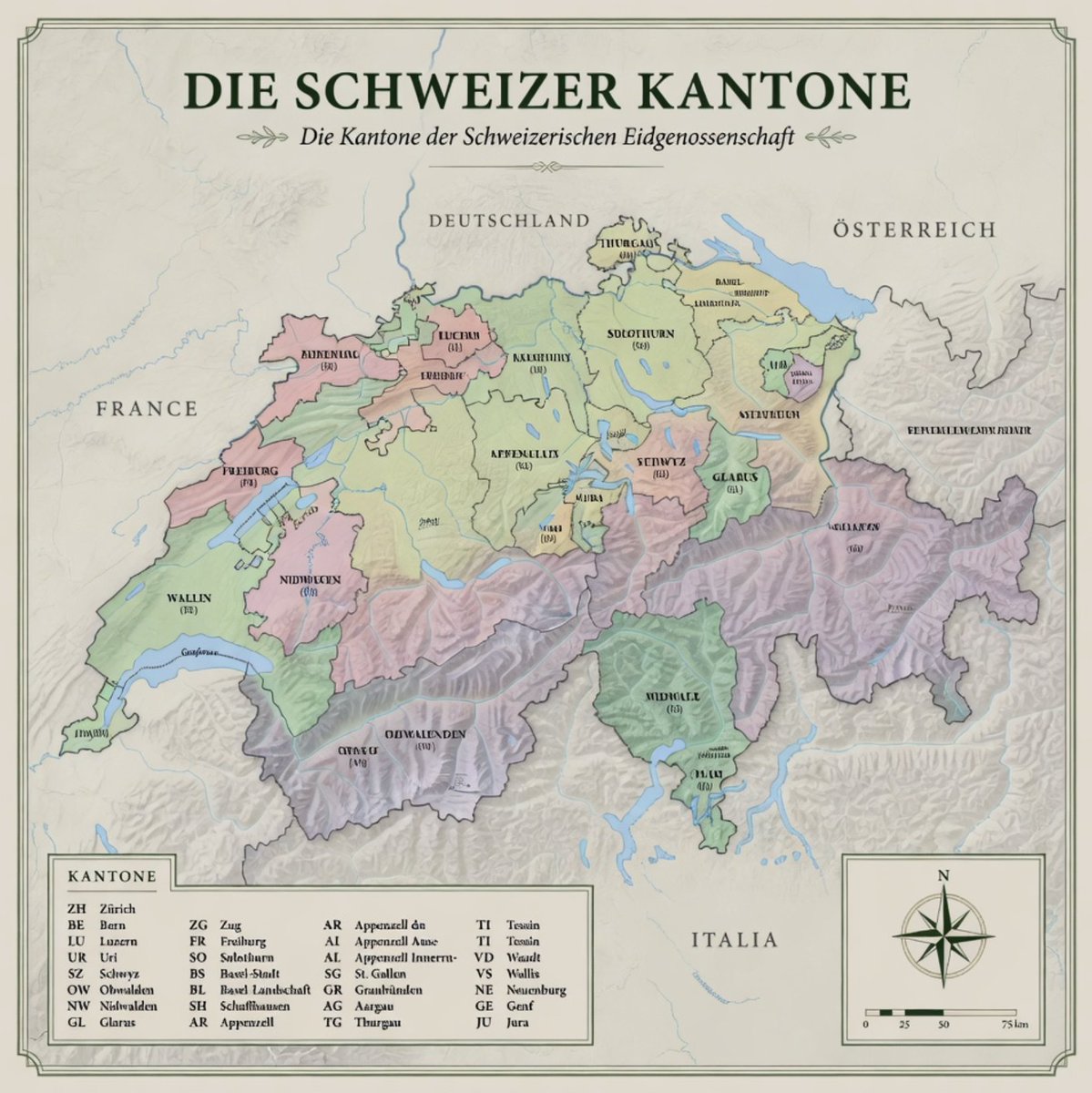
Switzerland has 26 cantons, each with its own constitution, tax rates, and laws, and the result is one of the wealthiest, most stable countries on earth. That is not a coincidence.
You want to understand why Swiss GDP per capita sits around $92,000 while the EU average hovers near $37,000? Start here. Cantons compete for residents and businesses the same way firms compete for customers. Zug kept its corporate tax rate at roughly 11.9%, attracted commodity traders and crypto firms, and watched its population and tax revenues grow. Cantons that taxed aggressively lost mobile capital and productive citizens to neighbors with lighter burdens. This is Tiebout competition working in real life, not a textbook diagram.
The federal government in Bern handles defense, monetary policy, and some foreign affairs. Everything else defaults downward. Cantons set income taxes. Communes set property levies. Citizens in Appenzell Innerrhoden voted on local laws by a show of hands in the Landsgemeinde, an open-air assembly, until 1990 for most matters. The feedback loop between decision-makers and the people paying for those decisions stays tight. That tightness disciplines spending in ways no central auditor ever will.
Free market thinkers have stressed this for generations: political units must be small enough that exit is credible. When the cost of leaving a bad jurisdiction drops, politicians face real consequences for bad policy. Switzerland kept that cost low by design. A business or family in Basel-Stadt dissatisfied with cantonal policy drives forty minutes to Baselland. No visa. No language barrier. No bureaucratic labyrinth. Just a move.
The EU spent decades building the opposite architecture, consolidating regulatory power in Brussels and eliminating the jurisdictional diversity that forces governments to stay honest. Switzerland refused to join. Its per-capita wealth, its low public debt, and its functional civil society arrived because the Swiss preserved the one institutional feature every centralized state destroys first: the credible right to leave.