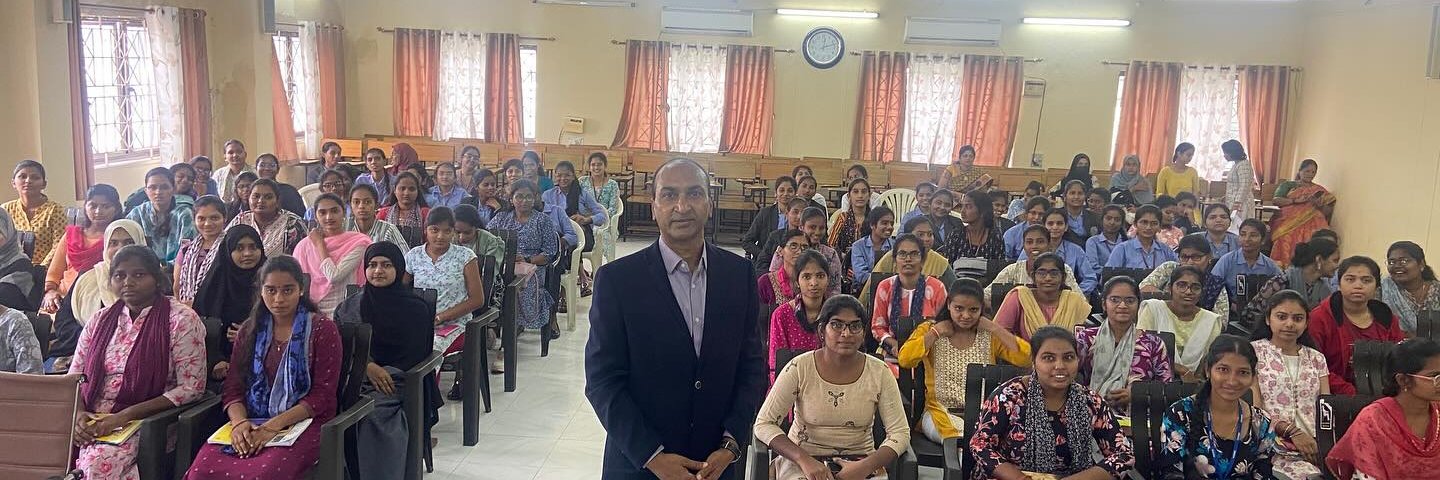
Author of Get Job Ready (Penguin). Researching India’s innovation economy and youth employability. Book in progress: Innovation and the Future of India.
India’s AI Mission has ambition and funding but lacks the institutional architecture to deliver on it. It needs a dedicated body, staffed by technical experts, anchored to the PMO, not another coordination committee.
My latest in The Print: https://t.co/3SMFQoyyEU
@ThePrintIndia
India doesn’t need to produce an NVIDIA to be successful, and NVIDIA itself is not proof that “cheap capital + low rates” is the main driver of innovation. It is an extreme outlier shaped by a very specific ecosystem, not a universal benchmark.
The Korea and Taiwan paths already break the binary in the argument. Firms like Samsung and TSMC scaled through state–market coordination, export pressure, and long-horizon industrial policy—not either free-market capital abundance or authoritarian control.
Cost of capital also doesn’t explain enough on its own. Indian IT firms generated large cash flows but largely optimized for payouts and low-risk expansion, while Amazon and Alibaba reinvested aggressively into platforms and infrastructure. That gap is about reinvestment incentives and institutional structure, not just macro rates.
India already has real strengths—demographics, digital public infrastructure, a growing startup base, and early semiconductor and manufacturing momentum. The constraint isn’t waiting for a perfect macro regime or a domestic NVIDIA, but whether capital consistently gets converted into compounding platforms.
Incentives and institutions explain more of the variance in innovation outcomes than monetary policy ever does on its own.
If anything, India should move away from the obsession with precise rankings and rank-based sorting.
A better approach is what exams like the SAT and ACT do: place students into performance bands and then evaluate them through multiple signals, not a single rank. The goal of assessment should be to identify readiness and potential, not create an illusion of exact merit.
The excessive reliance on a single high-stakes ranking system can create enormous pressure while narrowing how we define talent and success.
The bigger story here is state capacity. As AI lowers the barriers to finding vulnerabilities, governments need far stronger technical expertise inside the system to evaluate vendors, oversee implementation, and manage risk. Policy ambition without technocratic capacity creates blind spots.
Agreed. GDP remains an important measure of economic output, but citizens do not experience GDP directly.
What ultimately matters are lived development outcomes: whether schools teach effectively, hospitals function, jobs are created, public services work, and opportunities expand.
GDP tells us how much value is being created. Lived development outcomes tell us whether that value is translating into real improvements in people’s lives.
@Iamsamirarora IT services companies were never big in product development. Their bread and butter has been ERP-style systems. At this point, I would assume most of the AI revenue is coming from coding and other functional area like marketing and financial analysis.
India could learn from China’s 2013 Civilized Tourism guidelines and 2015 blacklist system, which created visible deterrents for poor public behavior, as well as South Korea’s emphasis on moral education, including daily school cleaning and etiquette from an early age.
But civic sense starts long before adulthood. It is shaped at home, reinforced in schools, and modeled by those in positions of influence.
Rules and penalties can help. Lasting civic culture is built through habits, norms, and examples repeated every day.
That is where I would focus.
A new initiative for Viksit Bharat, connecting global Indian talent with India’s scientific and innovation future.
Ministry of Education is inviting applications for the “Prime Minister Research Chair (PMRC) Scheme”, a premier national initiative bringing talented and accomplished Indian-origin researchers and professionals from across the world to India’s leading Government Higher Education Institutions.
Be a part of Bharat’s next chapter of R&D led growth and innovation. From Bharat’s rich scientific legacy to an innovation-driven future, PMRC aims to bring “Global Indian Talent” closer to nation-building.
Join India’s journey towards an Aatmanirbhar & Viksit Bharat.
📌 Read more: https://t.co/nRs2woYF4z
🕸️ Visit website for more details: https://t.co/YERBem9H6C
#PMRC #ViksitBharat #Innovation #HigherEducation
@narendramodi@PMOIndia@dpradhanbjp@Vineet_K26@PIB_India@airnewsalerts@DDNewslive
Indian IT has generated $100B+ in profits in a decade and largely returned it to shareholders.
Amazon and Alibaba reinvested relentlessly into scale instead of short-term profit.
India doesn’t lack profits or capital. It lacks aggressive reinvestment pathways into globally scalable businesses.
Capital deployment, like modern cricket, has to be year-round—not seasonal.
Respectfully, I think this diagnoses the wrong problem.
India doesn’t suffer from a shortage of political operators. It suffers from a shortage of technocratic capacity.
Politics can set direction. Development depends on execution. Execution depends on expertise, measurement, accountability, and increasingly AI enabled feedback systems.
The missing layer is not more politics. It’s more state capacity.
This is a theme I explored in my recent @ThePrintIndia article:
https://t.co/kl3EF9spDF
Completely agree India needs a National Inference Mission to capture value onshore.
The first foundational step, however, is building a permanent technocrats layer inside the system — people with real domain expertise and decision authority, not just administrators or short-term consultants. Without that, even well-designed missions risk under-delivery.
My piece in ThePrint on exactly this:
https://t.co/kl3EF9spDF
Civic sense starts in elementary school, at home, and with public leaders.
Not by telling people what to do, but by practicing it every day.
When leaders demand special privileges, jump queues, or expect different rules, they teach the opposite lesson.
Children copy adults. Citizens copy leaders.
A culture of civic sense cannot be built on exceptions.
The piece leans heavily on broad claims like “many” without clear evidence or segmentation, which makes tensions look more uniform and structural than they really are. It also underweights the scale of US-India cooperation in defense, tech, and the diaspora which anchors the relationship despite political noise.
US strategic focus is not a clash with India. It is competition with China. India is a partner in that system, even if there are periodic frictions on immigration and trade. The civilizational framing overstates the signal and misses the structure.
Negotiations may pause, but not end, the 47-year U.S.-Iran conflict. A zero-trust, zero-sum confrontation where neither side can afford a deal the other might accept. Trump needs a resolution; Iran is committed to its revolution. My @TheAtlantic essay. https://t.co/sxNxOGCdJU
Mitt Romney to HBS graduates yesterday: "Helping building a nation's economy is public service. But there's more to a country than its economy. ... There is no national success that could compensate for failure to be a good and noble people." https://t.co/WfgkJITPe7
Memorial Day. Today we honor those who gave everything to defend our democracy. Democracy isn't guaranteed; it's a precious inheritance that requires our constant care. 🇺🇸
At the same time, too many people confuse China’s centralized political system with an absence of local governance capacity or local empowerment. In reality, China often combines strong central direction with significant experimentation, execution authority, and competition at provincial and municipal levels.
Both of these misunderstandings lead to analytical blindness.
A good article.
AI is not just another new technology wave. It will increasingly become part of the fabric of society itself…shaping education, governance, healthcare, productivity, research, and how nations develop/compete.
That is why long term strategic thinking matters now, not later. I explored here:
https://t.co/kl3EF9spDF
Re sharing a framework I proposed in October 2025 on next steps for India’s AI mission.
The core issue was never only AI adoption. It was institutional readiness across R&D, higher education, and foundational schooling.
Recommended next steps included:
• A PMO led multi day working session with national technology leaders to develop an R&D and reinvestment course correction plan.
• A focused AI educational liaison office to align regulators, universities, and industry around execution.
• A PMO and Education Ministry coordinated summit of Chief Ministers to develop a framework for transitioning state level K12 systems to a new AI era paradigm.
India’s long term AI position will depend less on announcements and more on whether the country can build durable institutional capacity, research commercialization capability, and globally competitive human capital systems at scale.
https://t.co/QoP0sOVD3k
'Planning in India has failed because political factors dominate economic ones'
Read this 1962 essay by MR Pai
ThePrint #IndianLiberalsMatter
https://t.co/HdJCPOZyEL