This is absolutely correct. It was Wilson's Folly in April 1917 that gave rise to all the horrors of the 20th century---the totalitarian evils of Stalin and Hitler and the Cold War which followed.
That's because US intervention transformed a bloody, fiscally bankrupting manpower consuming carnage in the trenches--- that would otherwise have left both sides to return home severely wounded economically, fiscally flattened and the war party on both sides discredited throughout Europe---into a Pyrrhic victory for the allies. In turn, that led to the insanity of the Versailles Treaty, German reparations, the carving up of German territory to the Danzig corridor in Poland, the Sudetenland in Czech and the French occupation of the Ruhr, and Hitler, German revanchism and the world war that inexorably followed.
And, oh, the US war declaration in April 1917 encouraged the raggedy Kerensky government to launch the 1917 summer offensive against Germany, which ended in failure, revolt of the military and the once in a million chance success of the Bolsheviks when they stormed the winter palace in October 1917, bringing Lenin's madness and Stalin's brutality into the world, as well.
Yes, Wilson's is truly one of the greatest villains in all of history! For crying out loud, Germany was zero threat to the USA by 1917: By then its entire Surface Navy was at the bottom of the North Sea or marooned in port after its cataclysmic loss in the 1916 battle of Jutland with the British Navy. So how were the krauts going to get to the shores of New Jersey---swim the Atlantic or crowd into mini-submarines, 25 at a time?
If you still have confidence in the politicians since all the unnecessary Forever Wars since then, riddle yourself this: If the elected politicians on the banks of the Potomac were stupid enough way back then to join a war that threatened only the pocket book of JP Morgan and not the American citizenry from sea-to-shinning-sea owing to the two great ocean moats, why would you possibly believe their war propaganda now?
For instance, the easily checked claim that Iran was weeks from a nuke on February 28. Yet and yet. According to the sober Tulsi Gabbard, every intelligence agency of the US Warfare State even then agreed that Iran had terminated work on weaponization of a nuke in 2003 and had not restarted it since. In short, in the annals of utterly, stunningly stupid American leaders, history is now in a race between Woodrow Wilson and Donald Trump. The former brought on 20th century totalitarianism, Cold War, Keynesian economics and the American Empire, while the latter appears to be cluelessly presiding over its final demise .
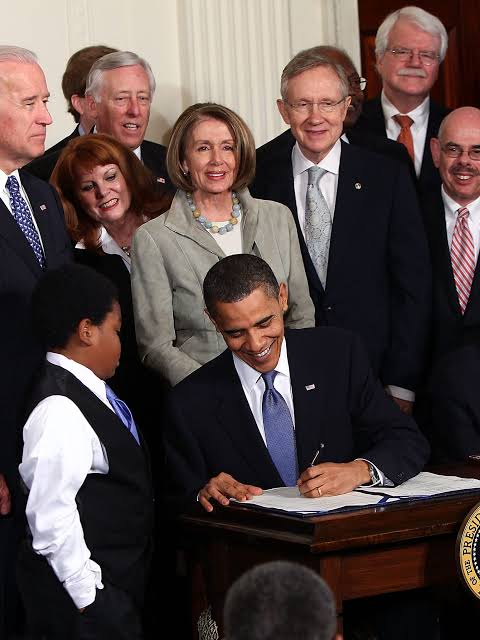
Barack Obama signed the Affordable Care Act in March 2010, guaranteeing you cheaper insurance, more competition, and the ability to keep your doctor. Premiums for individual plans more than doubled between 2013 and 2017. Deductibles climbed so high that millions of technically "insured" Americans still skipped medical care because the out-of-pocket costs were prohibitive.
The government mandated what your insurance must cover, forced healthy young people to subsidize older high-risk pools, and then expressed genuine surprise when prices spiked. Prices always tell the truth.
The 2009 stimulus, officially $831 billion, operated on the Keynesian assumption that government spending creates wealth. Government spending transfers wealth, first taxing or borrowing it from the productive sector, then routing it through political channels where efficiency is nobody's personal concern. The "shovel-ready jobs" Obama later joked about produced no measurable acceleration in recovery. The recession that followed 2008 should have cleared in 18 months, as previous sharp downturns historically did when left alone. The Obama recovery took a decade and delivered the weakest GDP growth of any post-war expansion on record.
Dodd-Frank, signed in 2010, weighs 2,300 pages. Community banks spent compliance budgets they never had, and roughly 1,900 small banks vanished between 2010 and 2016. The big institutions that actually caused the 2008 crisis absorbed the regulatory cost with ease and used the new complexity as a competitive moat. Regulations written by large players consistently protect large players. The middle-class small-business owners who needed credit found fewer lenders willing to offer it.
Obama also expanded drone warfare to seven countries, assassinated American citizens without trial, and extended the surveillance state through a reauthorized PATRIOT Act, which undermines any libertarian's case that the Democratic Party is less hostile to civil liberties than its competition.
Then there was Cash for Clunkers, which destroyed 690,000 working cars in 2009 by crushing them with sodium silicate. Mechanics lost parts inventory. Buyers on a budget lost affordable transportation. Prices for used cars spiked. You paid more so dealers could move new inventory.
A generation of voters watched the government spend $5 trillion across two terms, nationalize health insurance markets, regulate finance into oligopoly, and print money through three rounds of quantitative easing that inflated asset prices and rewarded those who already owned property. You paid higher premiums, earned lower real wages, and watched your savings earn nothing in a deliberately suppressed interest-rate environment. The bill always arrives later. You see the ribbon cutting and the document signing, but you feel the damage to your pocket only years later.
“War does not emerge from human nature alone, it scales with the institutional capacity to fund it. Remove the central bank, and the appetite for conquest meets a hard budget constraint very quickly.”
The guns of August 1914 didn't fire themselves. Politicians, generals, and central bankers loaded them over decades.
The standard story blames Franz Ferdinand's assassination in Sarajevo on June 28, 1914. That explanation satisfies nobody who thinks carefully.
Archduke assassinations were not rare in that era. What made this one ignite a continental war was the institutional infrastructure built to make escalation automatic: interlocking military alliances, general staffs with mobilization timetables that could not be paused, and governments funded by central banks that made unlimited war finance possible for the first time in history.
Before the Bank of England normalized deficit spending, wars ended when treasuries emptied. Governments negotiated. Central banking changed this. A state could now print, borrow, and conscript indefinitely. Inflation was the essential prerequisite of total war. Without it, the trenches of the Somme were literally unaffordable. Ludwig von Mises identified this in "Nation, State, and Economy" (1919).
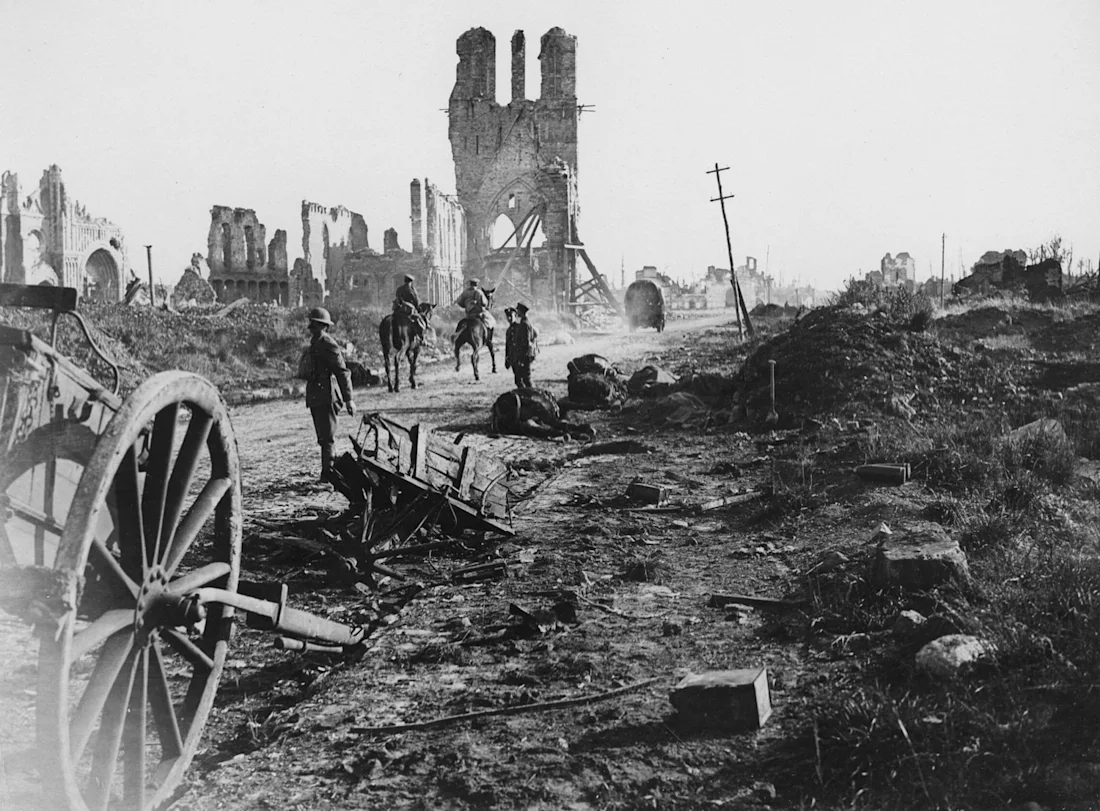
Consider the numbers. Britain expanded its money supply by roughly 1,000 percent between 1914 and 1918. Germany printed so aggressively that it destroyed its own currency by 1923. Every shell fired at Passchendaele, where 325,000 British soldiers became casualties in three months of mud, was purchased with debased currency that quietly robbed citizens of purchasing power while the government told them it was patriotism.
War does not emerge from human nature alone, it scales with the institutional capacity to fund it. Remove the central bank, and the appetite for conquest meets a hard budget constraint very quickly.
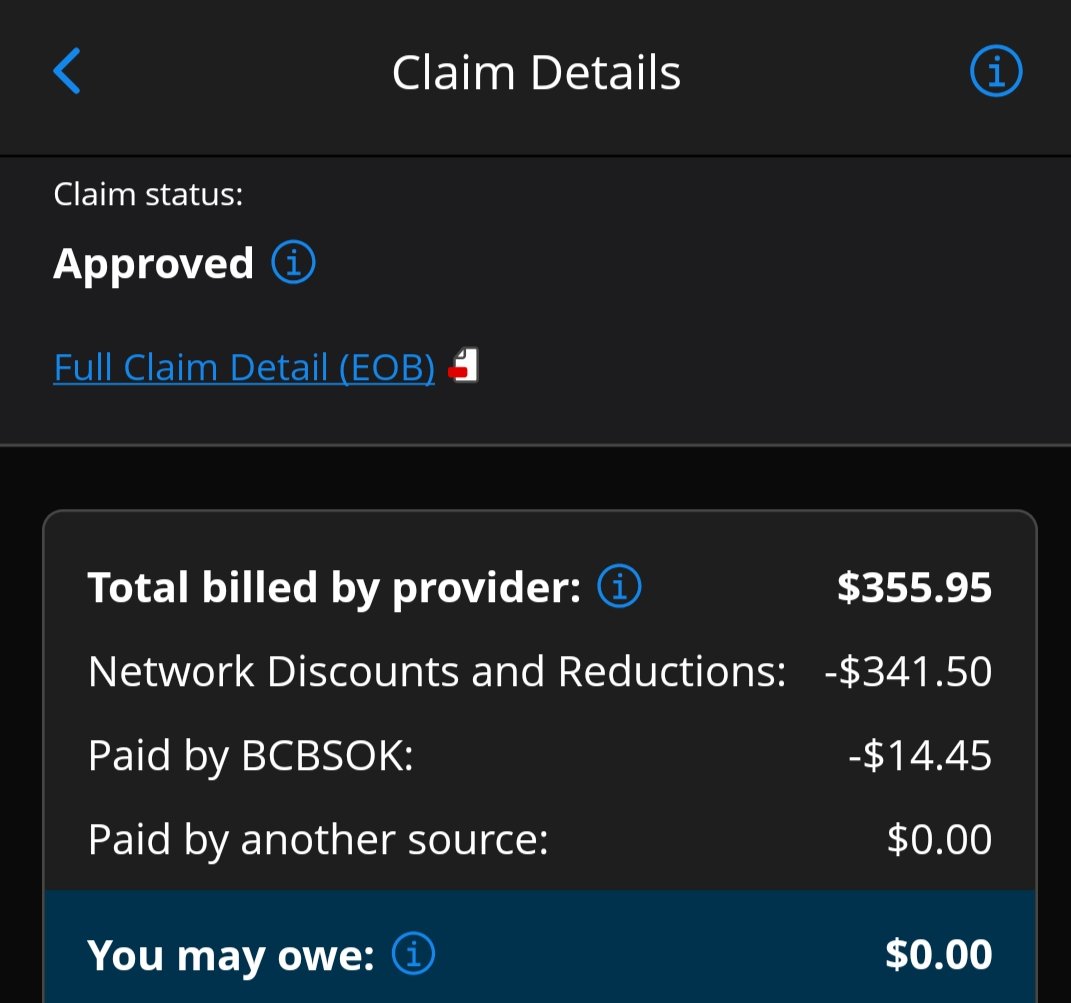
Do people not realize that "prices" in the healthcare sector are entirely made up and represent neither value created nor cost of production? Which means they serve some other purpose...
This is like saying that one is puzzled as to why someone would be adamant that the probability that computer weather simulations are actual real-world weather events is 0% rather than 0.001%. The adamance might simply reflect a refusal to cater to manifest conceptual confusion.
Hey @grok, concise, no spin.
Did Israel have Hamas’s leaked 40-page October 7 battle blueprint over a year in advance, laying out the invasion point by point, with Hamas later executing it with shocking precision?
Yes or no.
It is embarrassing that the Episcopalian, Tucker Carlson, displays considerably more moral coherence than a UK Catholic politician, Sir Jacob William Rees-Mogg.
Rees-Mogg's invocation of Saint Thomas' just war doctrine is a pathetic attempt to paper over a grotesque barbarism that the Angelic Doctor would in no way advocate.
Europe's central banks were not built to protect you, they were built to finance wars.
The Bank of England launched in 1694 with a single purpose: lend William III 1.2 million pounds to fight Louis XIV, and collect interest in perpetuity. Parliament handed a private cartel a monopoly on note issuance. In exchange, the Crown got its war. Depositors got paper promises. The model spread like an infection.
France watched and replicated. John Law established the Banque Générale in 1716, eventually converting it into the Banque Royale, which he used to flood France with paper livres backed by nothing but colonial fantasies about Louisiana. By 1720 the whole scheme collapsed, wiping out French savers across two generations and poisoning French confidence in paper money for over a century.
The lesson Europe drew was not "stop doing this." The lesson was "do it more carefully."
Germany formed the Reichsbank in 1876, Sweden had its Riksbank from 1668 (the world's oldest, and a blueprint every subsequent government copied). Each institution followed the same logic: centralize control, monopolize issuance, and give the state a captive lender when revenue from taxation proves politically inconvenient.
Ludwig von Mises explained that inflation functions as a tax. Every unit of currency created without corresponding production transfers purchasing power from your savings to whoever spends the new money first, which is always the government. That process accelerated dramatically after World War One, when the gold standard's constraints became inconvenient for states that had already promised their citizens more than they could honestly deliver.
The Weimar hyperinflation from 1921 to 1923 is the obvious horror story, but the quieter theft across the rest of Europe through the 1920s and 1930s cost savers just as much over time, simply spread across more years. Gradual expropriation carries less drama and less political resistance.
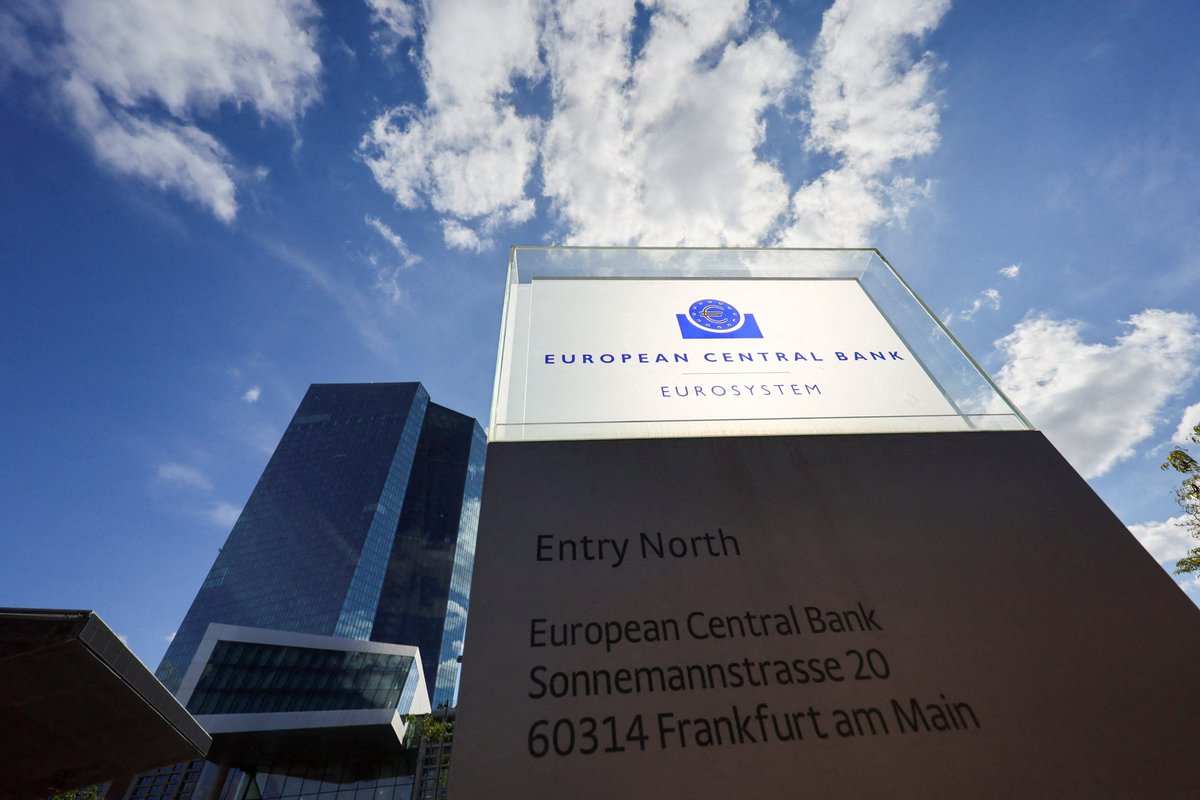
Every European central bank operating today, including the European Central Bank created in 1998, runs on this same foundational logic: the sovereign needs money, the bank provides it, and you absorb the cost through prices that never quite return to where they were.
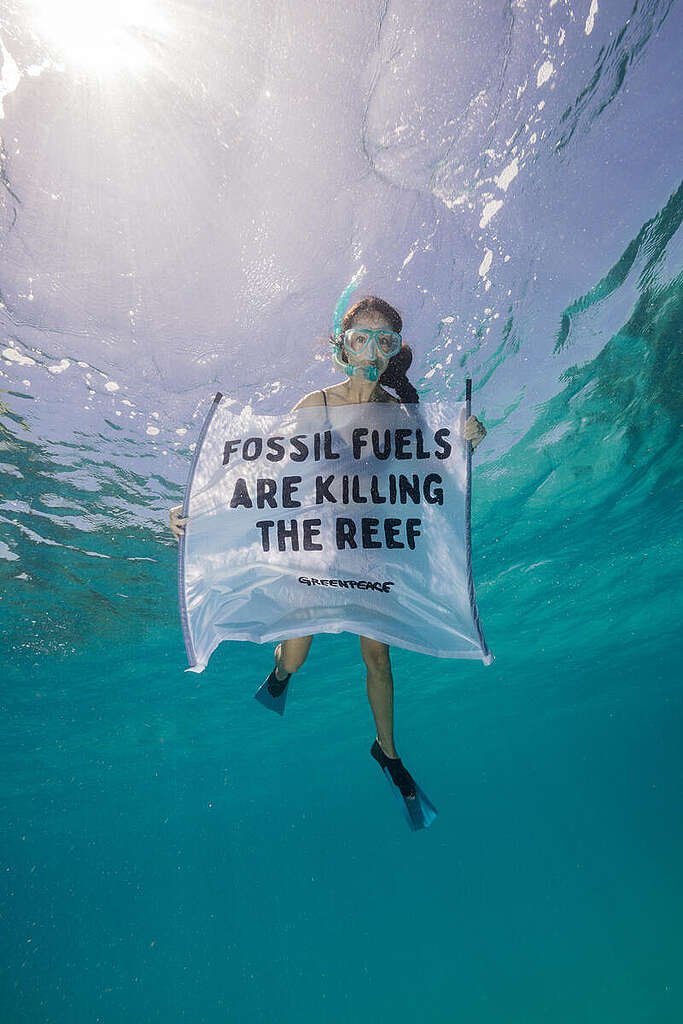
The Great Barrier Reef keeps refusing to die, and the people whose careers depend on its death are furious about it.
For roughly three decades, a rotating cast of government-funded researchers, UN bureaucrats, and documentary filmmakers have scheduled the reef's funeral. Peter Ridd, the James Cook University physicist fired in 2018 for publicly questioning reef doom statistics, watched his colleagues churn out catastrophe reports while the reef itself kept growing coral. The Australian Institute of Marine Science's own bleaching surveys from 2022 showed record high coral cover across the northern and central sections of the reef. Record high. The reef apparently missed the memo.
Government grants flow toward problems, not solutions. An institution that concludes the reef is thriving gets defunded. An institution that produces a glossy report titled "The Reef Has 12 Years" gets another $4 million and a Netflix deal. This is public choice economics operating exactly as predicted: bureaucracies manufacture the demand that justifies their own supply.
You absorb the cost of this racket directly. The Australian government alone has committed over $3 billion AUD to reef rescue programs since 2018. That money moved from the productive economy into the pockets of consultants measuring coral that was never actually dying at the rate they claimed.
The reef itself is a genuinely complex adaptive system shaped by tidal patterns, cyclical bleaching, crown-of-thorns starfish population swings, and water temperature shifts that predate the industrial revolution by millions of years. Coral bleaches, then recovers. It has done this for longer than Homo sapiens has existed. The alarmist model treats one bad bleaching season as a trend and one funding cycle as a conclusion.
None of this means pollution is harmless or coastal development carries zero cost. Property rights over reef access, enforced honestly, would do more to protect it than any bureaucratic taskforce ever has. But honest property rights don't require a $3 billion lobbying operation with satellite offices in Cairns.
The reef thrives. The industry built around its death throes continues fundraising. Both facts coexist comfortably, which tells you everything about whose interests the narrative actually serves.
Murray Rothbard took two separate intellectual traditions and fused them into something the state had every reason to fear.
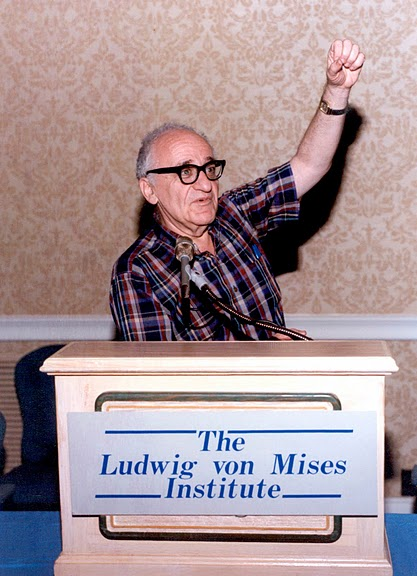
Ludwig von Mises built the demolition case against central planning in 1920. Without private property in capital goods, no rational price signals exist. Without prices, no economic calculation. Without calculation, planners allocate resources by guesswork and ideology. The Soviet Union's 70-year experiment in famine and shortages confirmed this in blood. Mises gave you the economics. He stopped short of the political conclusion.
John Locke and the natural rights tradition gave Rothbard the other half. Property rights are natural rights, not government grants. You own yourself, your labor, and the fruits of that labor by natural right. The state does not create property; it either respects it or violates it.
Rothbard's synthesis was elegant and ruthless. If Mises is correct that rational economic order requires private property, and if Locke is correct that property rights are pre-political, then the state itself collapses as a logical category. Every tax is expropriation. Every regulation is coercion against a property owner who consented to nothing. Every central bank inflates your savings into dust without firing a single shot.
The resulting system, anarcho-capitalism, operates through one principle: no individual or institution may initiate force against another person's body or legitimately acquired property. Courts, security, arbitration, roads, all of it operates through voluntary contract or not at all.
Rothbard published this framework in "For a New Liberty" in 1973 and "The Ethics of Liberty" in 1982. Critics called it utopian. Those critics live in a world where the Federal Reserve has destroyed roughly 97 percent of the dollar's 1913 purchasing power, where regulatory agencies consistently serve the industries they supposedly police, and where wars get funded through debt you inherit rather than choose. The state's track record earns it no presumption of necessity.
Empty, pointless words. Honestly, I’m sick to death of these ivory-tower prelates pontificating in generalities and speaking of principles they undermine with their own policies and acquiesces to the cult of death.
They speak of dignity while molly-coddling sodomy. They speak of subsidiarity while elevating the United Nations. They speak of Freedom while making deals with the CCP. They speak of life while never condemning the politicians or institutions profiting from abortion and euthanasia. And they talk about “building the kingdom of God” while they engage in a deleterious exercise they call “synodality” that does nothing but build the city of man.
Unless and until they drop the language of the world and start preaching the Gospel, telling the world about Heaven and Hell while warning against sin and encouraging virtue, I’m just not interested.
https://t.co/hroCmfMXeQ
The Left generally got the exploitation thesis right but misidentified the players. It's not capital owners exploiting workers--it is those wielding the powers of the State who exploit those who aren't. Of the latter, the capital owners are the only ones with the means to resist.
Nike's management believed in something, and its shareholders sacrificed everything.
The stock traded above $170 in late 2021. By October 2026, it sat below $36. This destruction of shareholder value is what happens when a company operating in a competitive environment adopts woke, leftest ideology.
In 2018, Nike handed Colin Kaepernick a multimillion-dollar ad campaign built around social grievance rather than athletic excellence. The marketing team celebrated the backlash as proof they'd "taken a stand." Consumers responded by burning shoes in their driveways. More quietly, they responded by buying New Balance, Hoka, and On Running instead, turning this into the most expensive ad campaign in history.
A brand sells identity. Nike's identity shifted from "peak human performance" to "progressive political signaling." This repelled the exact middle-American consumer who buys the most sneakers. Nike's core customer earns $50,000 to $80,000 a year, coaches youth sports on weekends, and doesn't want a lecture with his running shoes.
Meanwhile, Nike hollowed out its actual product pipeline. Innovation spending stagnated while the communications budget chased cultural relevance. Competitors filled the performance gap aggressively. Brooks grew. Hoka captured the serious running market. On Running, founded in Switzerland in 2010, built a $2.6 billion revenue business by 2024 by selling performance.
Free market economists would tell you this outcome is perfectly predictable. Profit signals coordinate resources toward consumer preferences. Ignore those signals long enough, and capital migrates toward competitors who actually listen. No government bailout restores a brand once consumers decide they prefer someone else.
Nike's own executives made deliberate choices that alienated paying customers while rewarding internal political culture. The market simply recorded their verdict.
Are you still buying Nike shoes and clothes, or have you moved on?
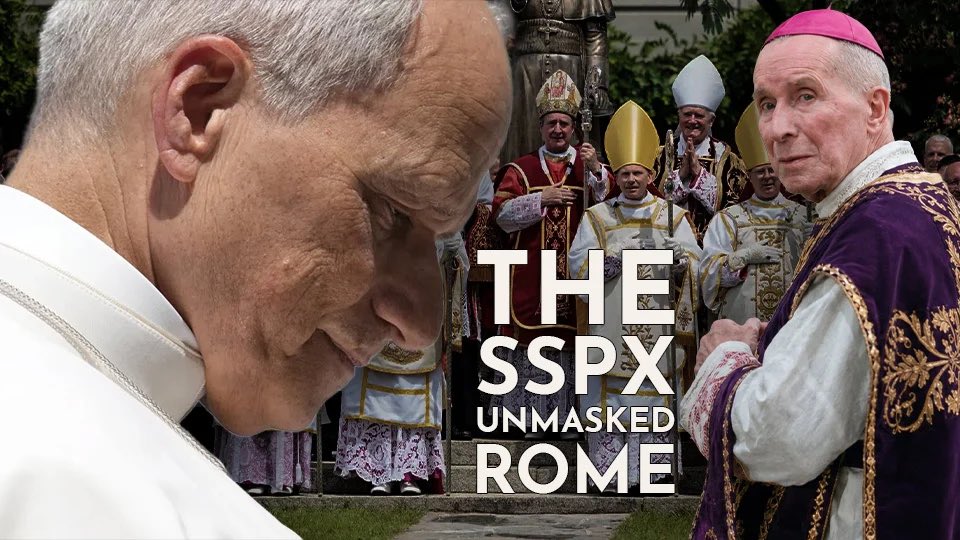
The SSPX consecrations have exposed more than Rome bargained for.
They exposed the “operation of error” that’s been ongoing since the 1960s…
“Operation of error” is essentially the phenomenon where God permits those who reject truth to become increasingly trapped in the consequences of that rejection… even to the point where error becomes institutionalized and those defending the truth appear to be the “disobedient” ones.
Sound familiar?
Rome condemns the SSPX for rejecting “elements of Vatican II”, while simultaneously promoting religious liberty, interreligious dialogue and “fraternity” in ways that contradict the Church’s perennial teaching.
Why is God permitting this crisis to become so unmistakable?
Archbishop Viganò weighs in—and reminds Catholics: STAND FAST. HOLD ON TO TRADITION.
Link in Reply!
My latest piece for @SoundMoneyRpt is about the history of currency debasement.
The Roman Empire, Kublai Khan, the Weimar Republic, and your local fiat currency all follow the same monetary path; it's only the speed that differs.
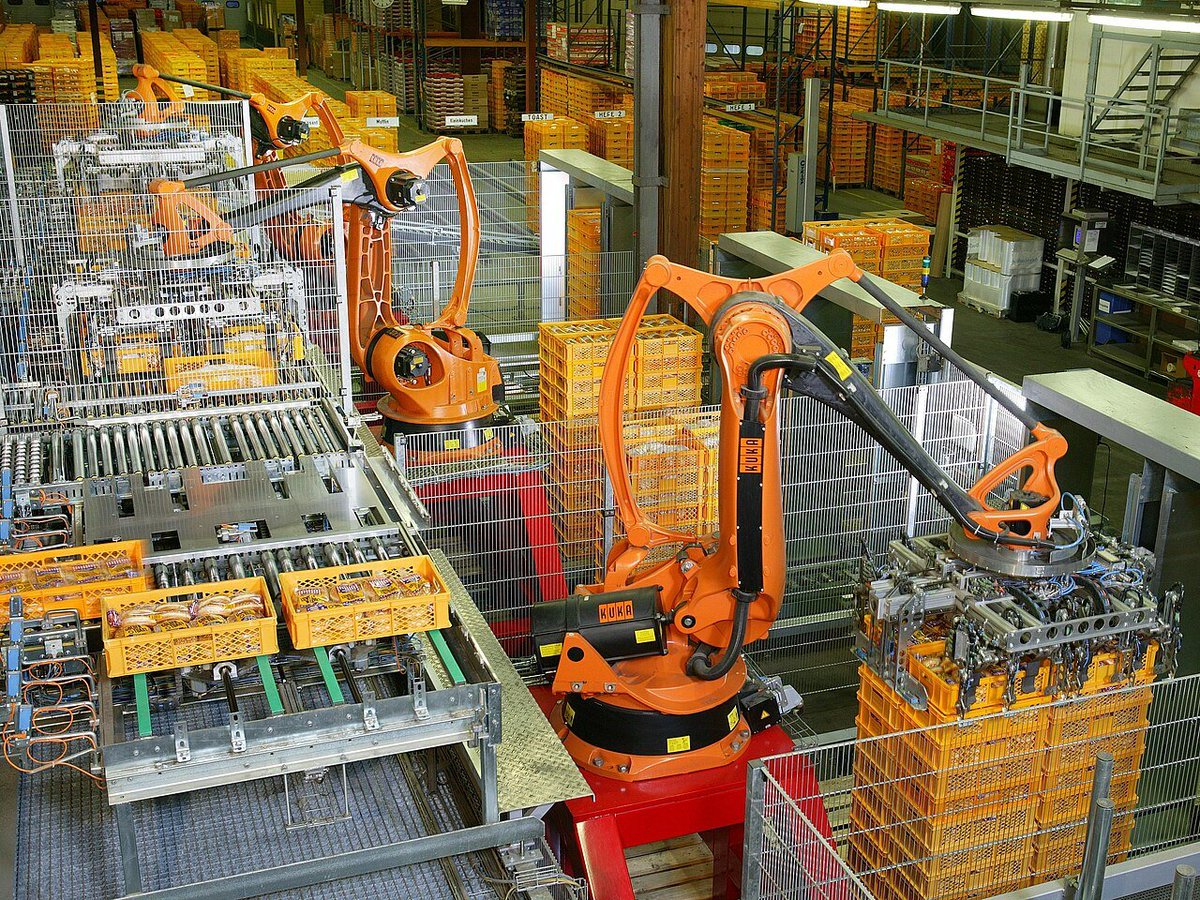
The robot that displaced a factory worker in 2019 made you richer. Not the factory owner. You.
This confuses people who treat jobs as the end goal of economic life rather than the means. Henry Hazlitt demolished this error in 1946 in "Economics in One Lesson." When a machine replaces ten workers on an assembly line, those ten workers represent released labor, which redirects toward production the economy couldn't afford before. The machine, meanwhile, drops the price of the manufactured good. You buy the same shirt for less. That gap between what you pay now and what you paid before is real purchasing power, a raise you received without your employer signing anything.
Let's look at televisions. A 60-inch 4K television cost around $1,500 in 2015. Today you buy comparable picture quality for under $350. Automated manufacturing drove that collapse. The factories didn't become charitable organizations; they competed for your dollars by deploying capital more efficiently, and the savings landed in your pocket.
This process terrifies politicians because the benefits disperse invisibly across millions of consumers while the displaced workers are visible, concentrated, and angry. So politicians respond by subsidizing inefficiency, taxing automation (as the EU seriously proposed in 2017), or erecting tariffs that punish you for wanting cheaper goods. Every such intervention forces you to pay more than the market price, transferring your purchasing power to a protected producer and their employees.
Free market thinkers have stressed one fact since Mises and Böhm-Bawerk formalized capital theory: rising capital intensity, meaning more and better machines per worker, is the entire mechanism behind rising real wages historically. Britain improved living standards between 1760 and 1850 by replacing hand-operated looms with machines, freeing labor to produce medicine, railways, and eventually the electricity grid.
Automation is capital accumulation made visible. You benefit from every iteration of it, provided the state leaves the price system alone to do its work.
According to what I can see from YOUR political party, you favor massive government involvement in education, health care, housing, foreign aid, and about 517 other things that YOU YOURSELF complain about. So maybe your position is just a "utopian political impulse"