Most satellites can't survive at the altitude Vaxon operates at. Atmospheric drag pulls them down fast. We're building Air-Breathing Electric Propulsion to turn that atmosphere into fuel instead. Here's a look at what that makes possible.
@SpaceNews_Inc The US-controlled part is the key detail. Cerberus says it will run the factory as an independent manufacturer and invest in domestic suppliers.
Vaxon Space is proud to announce a collaboration with @RutgersU.
The SPACE Lab in the Department of Mechanical and Aerospace Engineering is carrying out inlet testing, hands-on work that helps move our technology from the drawing board toward flight.
Pic: plasma generation source for inlet testing.
@SpaceNews_Inc Ground telescopes are limited by weather and the atmosphere. Putting the optics in orbit avoids both, which matters more as the number of objects up there keeps growing.
@SpaceNews_Inc A single place for allies to buy commercial space data is a smart move. It gives NATO more eyes on orbit and gives space companies a clear way in.
@BreakingDefense A satellite maker going after its own launch provider is a bold move, and it shows how much Europe wants control of its own access to space.
@planet@stoke_space Getting a launch pad ready this fast matters for anyone flying a constellation. Stoke says it restored SLC-14 in just over a year, and the first Nova orbital launch is planned for early 2027. A diversified path to orbit is the right call as constellations grow.
@jeff_foust At about 275 km this is very low Earth orbit. Atmosphere models put the air there roughly 100 times denser than at 550 km, where many Starlink satellites have flown, so anything left at that altitude comes down far faster.
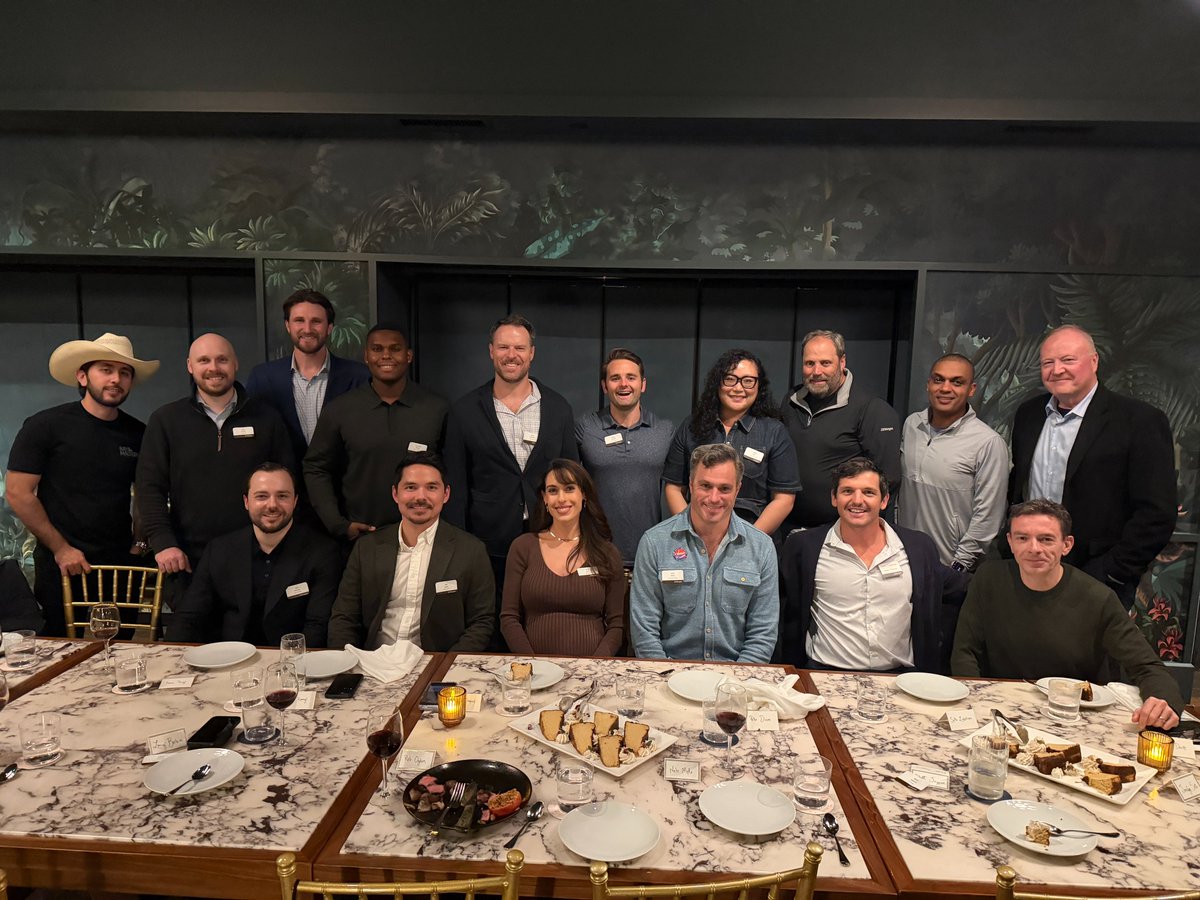
Steve Shepard pitched Vaxon Space live at Context Ventures' Defense Tech Conference in San Francisco and got direct feedback from investors.
The night before, we joined founders and investors at the Vanguard Founders Table dinner with J.P. Morgan.
More to come.
@sorae_jp The tricky part of a power swap like this is that those devices also keep Voyager warm, so the team had to replace them together and balance the heat along with the power.
That is delicate work on a spacecraft nearly a light-day away.
Vaxon Space is moving hardware integration from Boulder, Colorado to Mountain View, California this November.
Hardware integration is where individual components and subsystems are assembled and tested together as one system.
More to come.
@CowboySpaceCorp Turning the upper stage into a data center satellite is a smart design. It's the part even reusable rockets like Falcon 9 still throw away, and here it becomes the product. Good to see launch and compute developed together.
Vaxon Space has won a DARPA contract to advance the technology readiness level (TRL) of our technology as we work toward satellite subsystem testing.
TRL measures how mature a technology is, from early concept to proven in flight.
Thank you @DARPA for the support.
@farzyness Lower orbits also mean more drag on the working satellites. Atmosphere models put the air at 480 km roughly 2.5 to 3.5 times denser than at 550 km.
Starlink's satellites maneuver with electric thrusters, so the cleaner orbit costs propellant.
We completed the System Requirements Review (SRR) for Neuron-1, our first satellite mission.
An SRR confirms the requirements are complete, consistent and achievable before the design is built around them. Everything after depends on it.
Next up: the Preliminary Design Review.
@outerspacetoday This first round of the Space Force's commercial reserve is for tracking objects in orbit, so the companies are tracking specialists, not communications providers. The 2025 pilot was four companies on 90-day contracts worth $1.1M combined. Communications may come next.