Introducing Hindsight Memlake: agent memory on object storage.
100M memories. Recall under 100 ms p99.
Same Hindsight. Up to 47x faster. Up to 26x cheaper.
See the Exact Prompt Before You Spend a Token.
You write a mission for your memory bank. Something like "focus on billing decisions and who approved them." You save it, and the extraction gets better, or it doesn't.
Now: where did that sentence go?
If you guessed the system prompt, you're wrong for two of the three operations that use it.
TL;DR
- A retain or consolidation mission lands in the user message, not the system prompt. Reflect's lands in the system prompt, where it replaces the agent's role line rather than adding to it.
- POST /banks/{id}/prompts/preview returns the exact messages retain, consolidation or reflect would send. No LLM call, no writes.
- Active blocks concatenate byte-for-byte into the real prompt, and there's a test pinning that against the actual builder.
- A setting you switched off comes back as an inactive block, positioned where it would have landed.
- The endpoint refuses to accept your sample text or a candidate mission, on purpose.
- Shipped in v0.10.0 for self-hosted, and coming soon to Hindsight Cloud.
Know more: https://t.co/oxjNGlcYv3
me on the phone looking at shared memories from claude and chatgpt via @Vectorizeio ; spine router is my primary ai skill installed, medical analyzer is an extremely interesting way my chats analyze stuff
@theo Asked Hermes to consult my Hindsight memory first. Its verdict: “You have a technician’s nose for bullshit, an architect’s appetite for interconnected systems, and the browsing restraint of a raccoon with an all-access badge.” Lmao
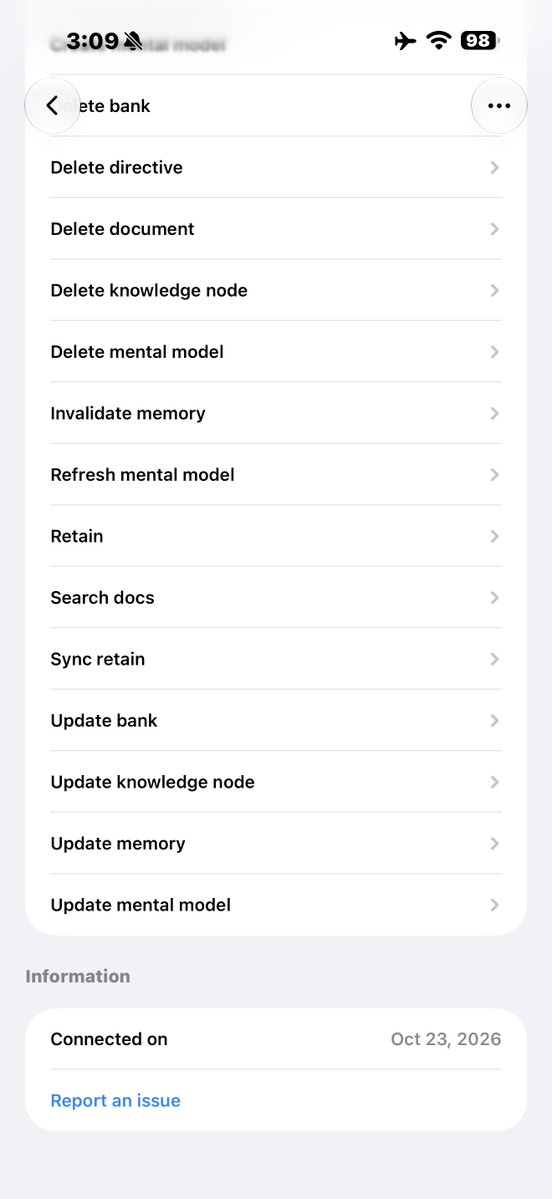
chatGPT work was able to create a custom plug-in for ChatGPT mobile to connect to the hindsight memory system @Vectorizeio as you can see in the screenshots and we have confirmed that it is functional. This was orchestrated by the dot agent running two different chats said it's sol high. It is now assisting Claude in connecting to the shared memory bank while I just talk on my phone, only occasionally clicking a confirmation on the Mac.
8 Agent Memory Use Cases (With Real Examples).
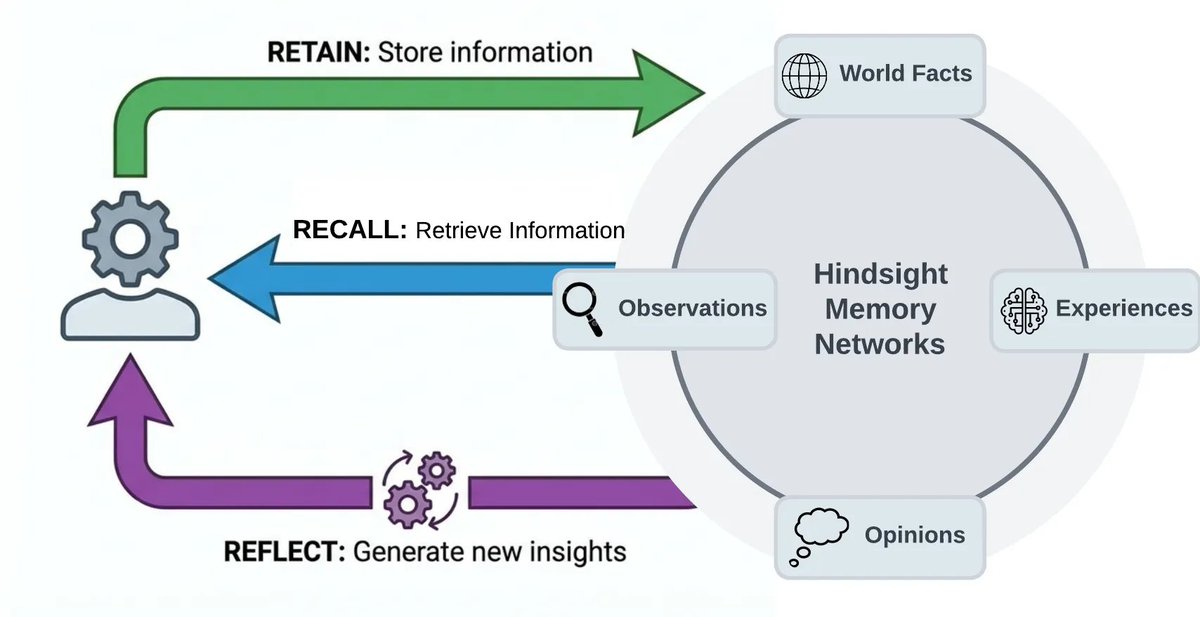
"Agent memory" sounds abstract until you notice it is the same fix applied to a dozen different problems. Any time an agent should remember something past the current session, and today starts from a blank slate, that is a memory-shaped hole. Hindsight fills it with the same three operations everywhere: retain to write, recall to read, reflect to reason. What changes from one use case to the next is not the primitive, it is who the memory belongs to and where it surfaces.
Here are the agent memory use cases people actually build, each with a concrete example: https://t.co/bytfsM5sdB
NVIDIA Nemotron 3.5 Embed came first on all seven retrieval benchmarks we evaluate Hindsight on.
Every recall starts with the embedding model. A better one hands everything downstream a better set of memories.
Try it in Hindsight, open source memory for AI agents.
10 repos de GitHub para agentes IA que más han crecido en Octubre:
1. Hindsight
Memoria para tus agentes que aprende de lo que hacen.
+28.5K estrellas en el último mes.
https://t.co/HgBz9hVVA9
2. Paperclip
Una app para gestionar a todos tus agentes en el trabajo, como si fueran un equipo.
+24.8K, ya pasa de 105.9K.
https://t.co/PcRIhCk5UB
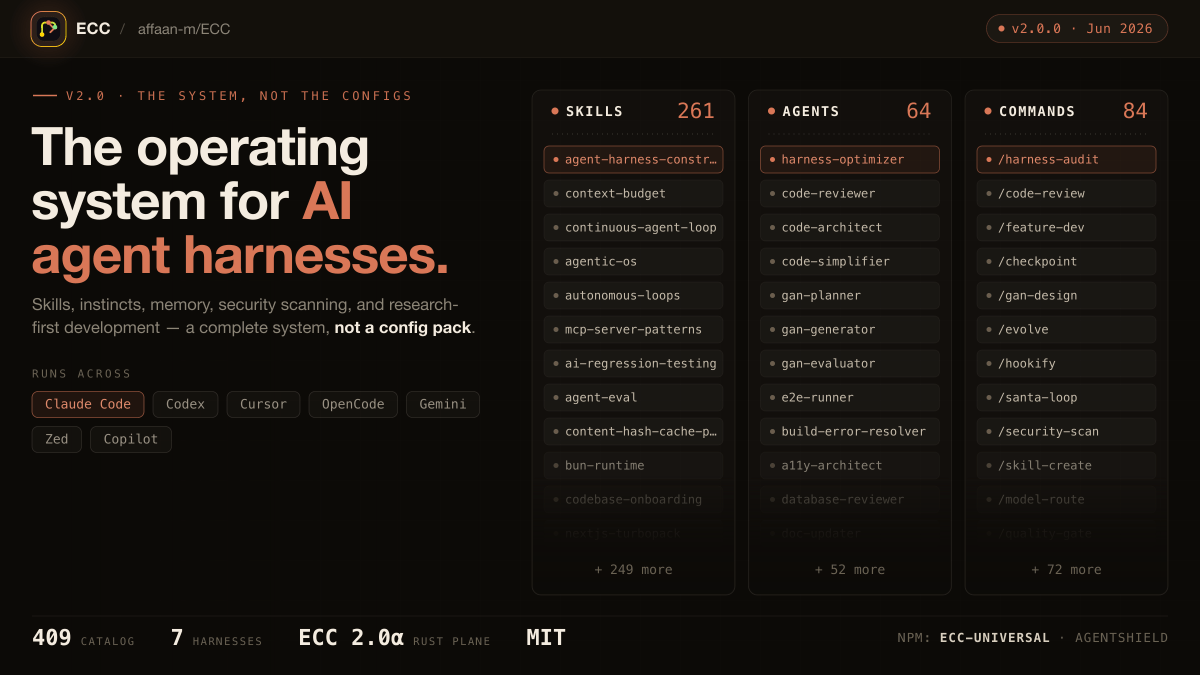
3. ECC
Skills, memoria y seguridad para Claude Code, Codex, OpenCode y Cursor.
+22.5K, va por 286K.
https://t.co/OVOPIXJsK5
4. Impeccable
Un lenguaje de diseño para que lo que diseña tu agente no parezca hecho por una IA.
+15.1K.
https://t.co/8f2yahE4lH
5. FreeLLMAPI
34 proveedores gratis y 635 modelos detrás de un solo endpoint. Si uno cae, salta al siguiente.
+11.2K.
https://t.co/EffguYwVEm
6. OpenShell de NVIDIA
Un entorno seguro y privado donde dejar trabajar a tus agentes.
+8.3K.
https://t.co/pR1Z8EtEIr
7. Plugins oficiales de Claude Code
El directorio de plugins que mantiene la propia Anthropic.
+7.2K.
https://t.co/I7Jk0OZSWV
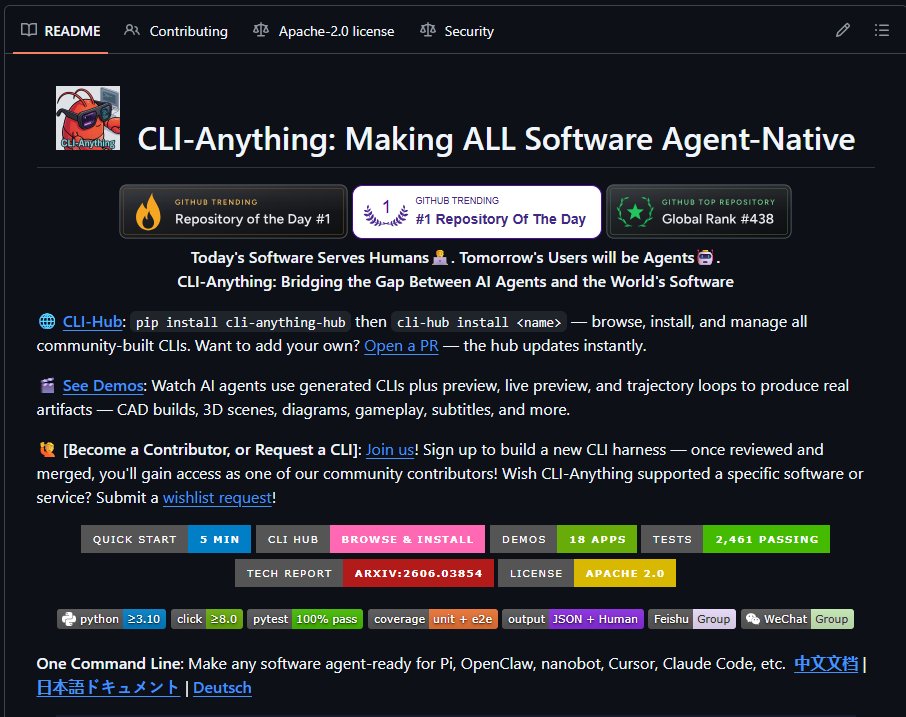
8. CLI-Anything
Convierte cualquier programa en algo que tu agente puede manejar.
+6.4K.
https://t.co/8myOjM7OO6
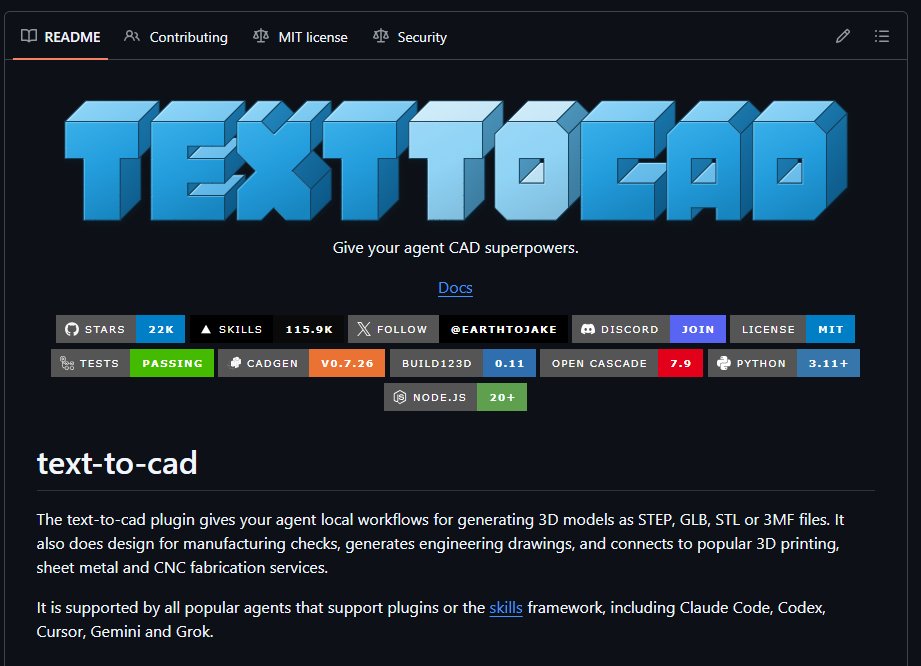
9. text-to-cad
Tu agente diseña piezas en 3D a partir de texto.
+6.1K.
https://t.co/OV5N6YKcUE
10. Knowledge Work Plugins de Anthropic
Plugins para usar Claude en ventas, legal, finanzas y marketing.
+5.8K.
https://t.co/9VQvuzHNRc
Todos open source y gratis.
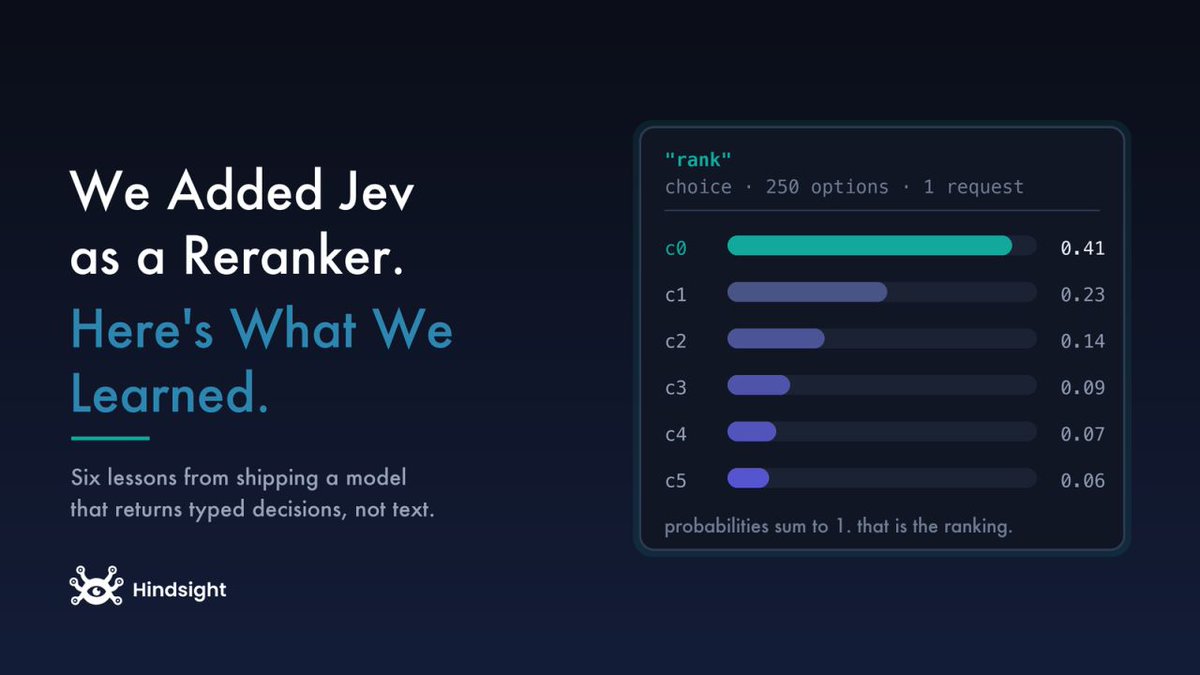
We Added Jev as a Reranker. Here's What We Learned.
Hindsight 0.10.1 adds Jev as a reranker provider. Jev is an unusual model: it produces no text at all. You send it a passage and a typed question, and you get back a typed answer with a calibrated probability. TypeSafe calls this class of thing a System One model, after Kahneman's fast, automatic kind of thinking.
That shape is a good fit for reranking, which is not a writing task. There is a pile of candidate memories and a question about which ones matter, and the only thing you want back is an ordering.
Getting there took longer than we expected, and two of the designs we tried failed outright. Here is what we learned.
Know more: https://t.co/tweMIIko5z
Document search used to match only the document id. It now searches document text and tells you which fields matched, so the search box finds a document by what it actually says.
Knowledge pages and mental models also download as PDF or Markdown.
Most of this release is reliability work:
→ deadlocks between consolidation, retain and delete
→ large graph reads freezing the API
→ retains replayed after an LLM key was rejected
→ a failed chunk replacing a stored document
→ workers exiting cleanly on one SIGTERM
Four new providers:
→ ChatGPT, to run Hindsight on a ChatGPT plan
→ NVIDIA NIM for embeddings and reranking
→ ONNX, any cross-encoder reranker in-process
→ Anthropic Workload Identity Federation, so you can drop the static key
Banks also get default_observation_scopes, used for every retain that sends none.
Set it once and memories about the same subject from different agents consolidate together, with no client change.
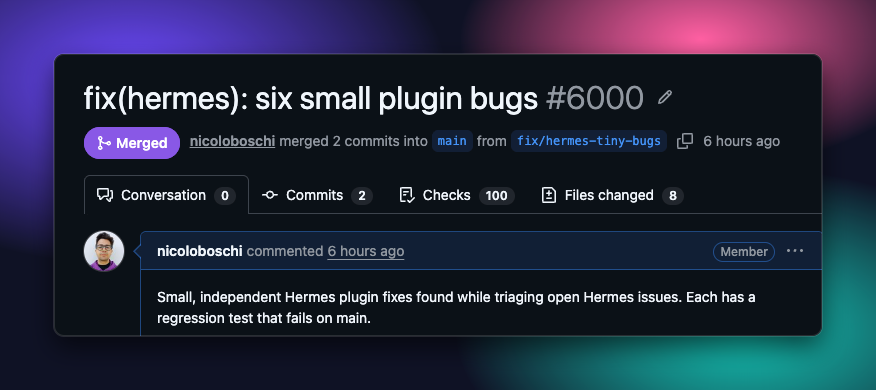
PATCH an existing document and only the memories whose scopes move get rebuilt.