🚨
BIG BREAKING: Surgical Strike by RBI
RBI CANCELS registration of 135 NBFCs (Non-Banking Financial corp) yesterday under Section 45-IA(6)!
Out of them 125 are West Bengal-based companies deregistered for non-compliance, failing registration norms & ceasing NBFC activities.
Affected entities barred from NBFC operations with immediate effect.
I have said it earlier that conditioning is being done to encourage mass migration of Pakis, Kanglus + other subcons to West in coming years
Even the Indians that emigrate tend to be disproportionately minorities
This guy himself is a Muslim convert
Map of the world as known to Indians in 250 BCE. Regions shown in red indicate territories under direct Indian political control. Areas outlined in white represent regions connected to the Indic world through trade, cultural exchange, diplomatic relations, and exploration.
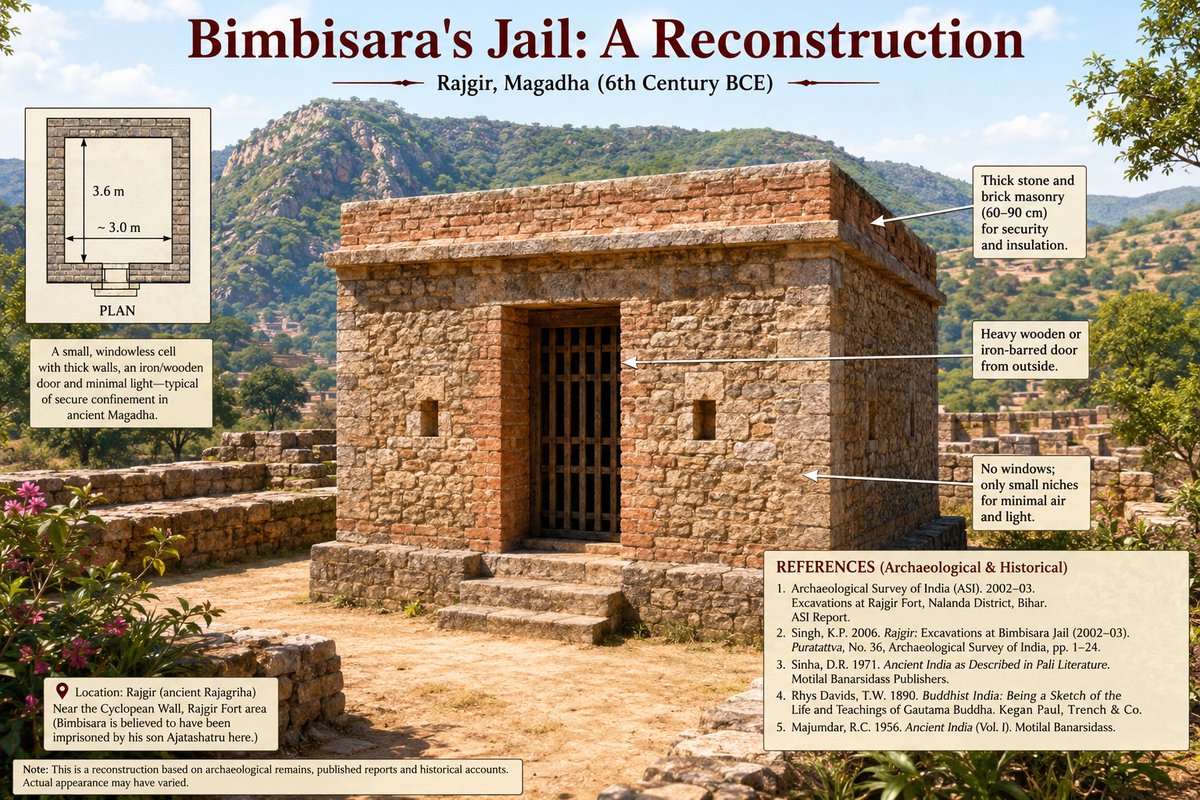
A reconstruction of 'Bimbisara's Jail' based on ASI reports (1st image).
It is here that as per texts, Bimbisar was imprisoned by his son Ajatshatru in c. 491 BCE.
Legends mention a skeleton of a man in fetters, which was found from this location during excavations in late 19th century.
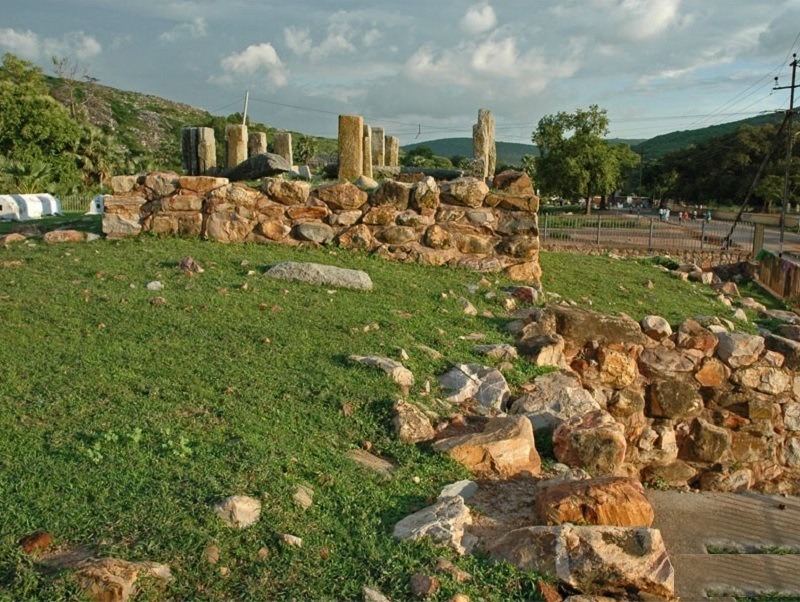
Second image = The spot as visible now.
Reconstruction of 'Ajatshatru's Fort' at Rajgir ( image 1).
This is based on several ASI excavations, which have taken place here since the late 19th century.
Main points about the fort:
1) Made up of stone;
2) Wooden palisades & watch towers stood above the stone foundations;
3) Defensive ditches near the fort;
4) Gateways and bastions
Image 2 = The ruins of the fort as it stands today.
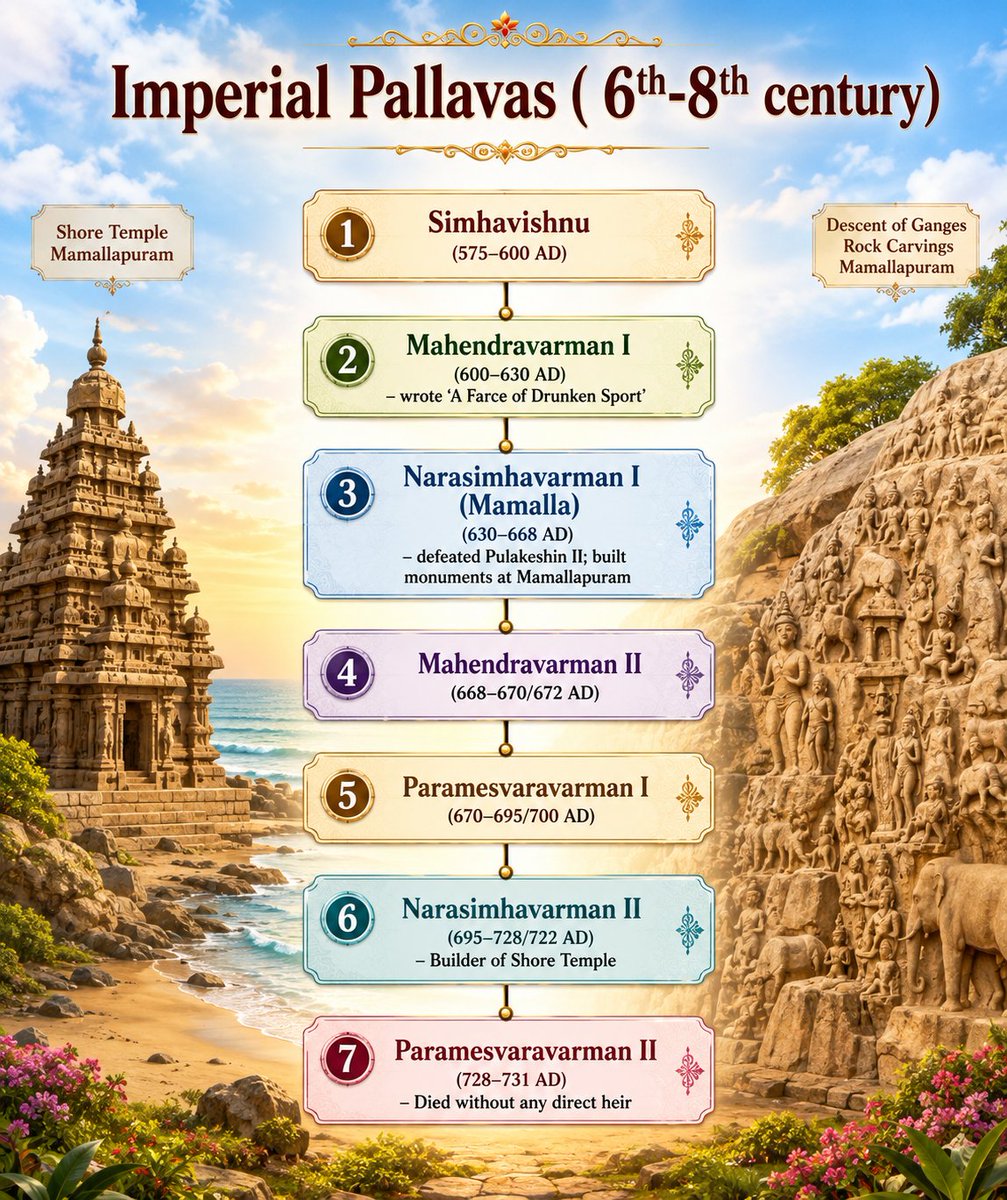
Imperial Pallavas and the Kadava Pallavas, between 6th- 9th century.
The Pallavas were a great power of South, who not only used their military machine, but also constructed various templea, and pieces of architecture which are breathtaking, like the Shore temple at Mahabalipuram.
Their kings were patrons of art, literature and Sanskrit language and had deep diplomatic relations with the Chinese.
The Imperial Pallava line ended in 731 AD, and the Kadava line in 897.
The great kingdom of Pallavas became a part of the emerging Chola empire.
The struggle for Xuanzang in c. 637 AD...!
Participants : The Nālandā university, Bhaskarvarman of Assam and Harsha of Kannauj
Reference: The Tang Records of the Western Regions
Alexander vs Indian Ascetics Part II
Location: On the borders of India, near Sindh;
Date: April 325 BCE
Occasion: Retreat of Alexander from India
Reference: Anabasis by Arrian (Book 7.1.5–7.2)
There is a fallacy on what this gentleman says here.
Verse 3 of the Iron pillar says:
'भूमिपतिना भवेव विष्णो (श्नौ) मतिं प्रांशुर्विष्णुपदे गिरौ भगवतो विष्णुओर्द्धिध्वजः स्थापितः।।
'having in faith fixed his mind upon (the god) Vishnu , this lofty standard of the divine Vishnu l ( Vishnu-dhwaja) was set up on the hill (called) Vishnupada.'
And @SwayamTewari you got no idea where this hill was..
Check Ramayan and MbH for the location!
The Pāla dynasty of Bengal...!
It's founder was Gopala-I who was elected king of Bengal, after a century of anarchy.
In the next centuries, the Pālas fought with Rashtrakutas, Gurjara- Prartiharas for Kannauj.
They also gave donations to many viharas, temples & to Nālandā university.
Their rule ended in the 12th century because of invasions by the Cholas and the rise of the Sena dynasty.
The murder of Satrap Philip - Son of Machatas in 325 BCE.
A singular event which changed the course of Greek Empire in India, after Alexander's retreat.
Philip was appointed by Alexander as a Satrap to govern Gandhara and keep a close eye on the activities of Poros and Aambhi.
Philip was a pillar of Greek imperialism in India, and his death left the Greek soldiers without any substantial leader.
Minor leaders like Eudemus and Peithon soon returned back to participate in the 'Diadochi Wars' and latest by 321 BCE, all the regions captured by Alexander in India, became independent.
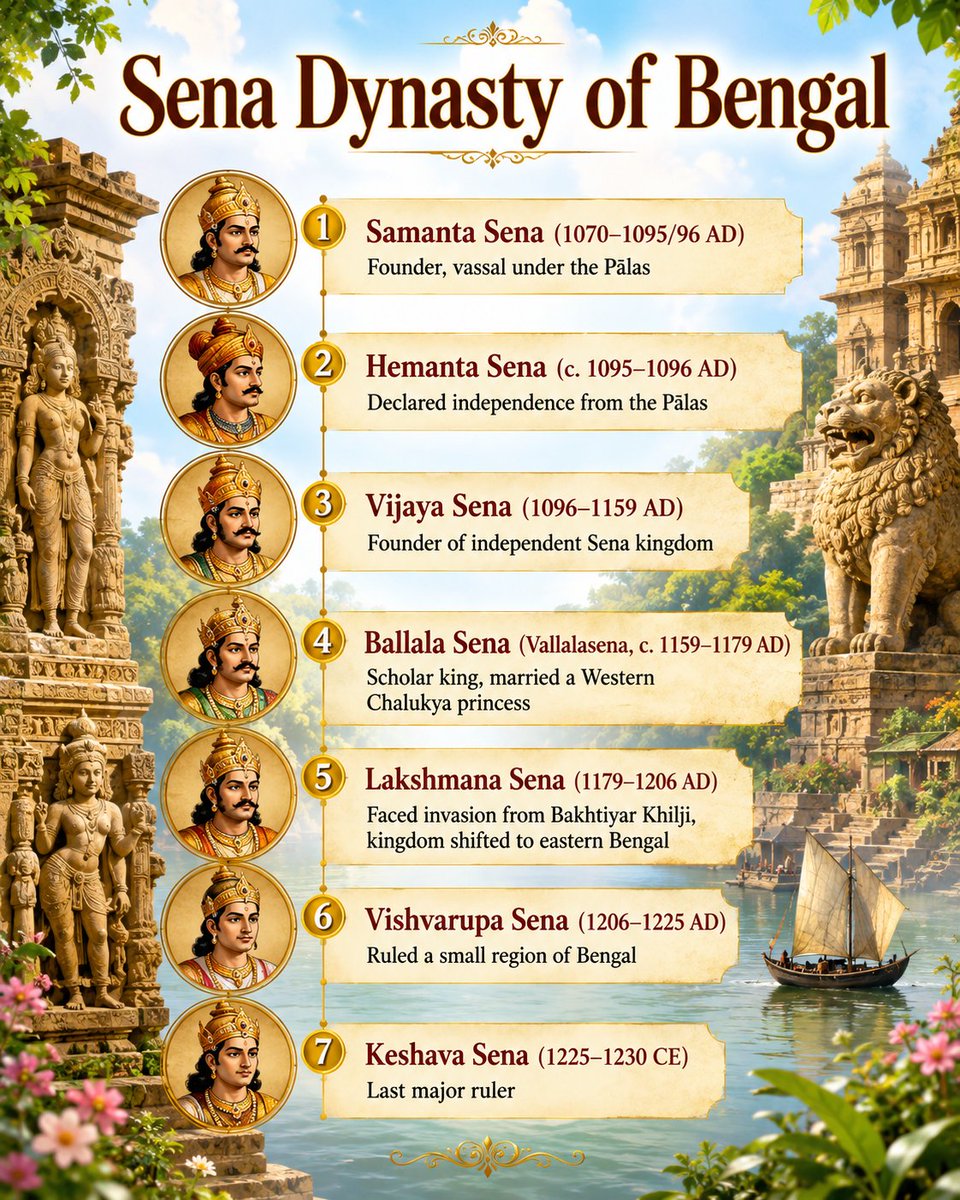
The Sena dynasty of Bengal...!
The founder of the line was Samanta Sena, who was a migrant from Karnataka.
He was a vassal under the Pālas, but his successors declared independence, conquered what ever was left of the Pālas and ruled Bengal, Magadha, parts of Kalinga till about 1206.
They had to face the onslaught of Delhi Sultanate under Bakhtiyar Khilji.
Due to invasions, internal strife, this dynasty was also consigned to the pages of history by 1260 AD.
The Deopara Prashasti is a stone inscription of Sena era in Bengal, composed by Umapati Dhara, who was a minister under King Lakshman Sena ( 1159-1179 AD).
The inscription has few important and unique things :
1) The word ' Karnata' used to denote the state of Karnataka, from where the founder of Sena dynasty, Samanta Sena migrated to Bengal ;
2) The word 'Brahma-Kshatriya' to denote the Sena dynasty.
'Brahma-Kshatriya' is defined as a person or a family having a Brahmin ancestor or parents.
In simple terms, it means a Brahmin father and a Kshatriya mother or vice-versa for the person or a family concerned.
This inter-mixing of caste is not unique.... It was only prohibited during Gupta era, where officials were appointed to 'prevent mixing of varnas' ;
3) The inscription is in Sanskrit language, and it uses distinctive form of Bengali characters, which is considered a precursor to the modern Bengali script.
Sources of Revenue and Taxation under Gupta Empire, as per their inscriptions.
Dasapandha’ ( fines for 10 offences). These are variously listed as :
a) Three offences of the body – theft, murder & adultery,
b) Four offences of speech – hard words, untruthful words, rebellious words & pointless words;
c) Three offences of the mind – Coveting others property, thinking of wrong, and devotion to what is not true.
Reference: 'Gupta Empire' by Dr. R.K. Mookerji
Causes of Defeat of the Indians against Alexander... !
"United we stand, Divided we fall"
Kings like Poros were blinded by their regional aspirations and couldn't think big!
Reference: Chandragupta Maurya and His Times' by Dr. R.K. Mookerji
The Varman dynasty of Assam....!
This dynasty is the first historical dynasty of Assam.
They were subordinates to the Gupta emperors at the start, but as Gupta empire weakend in late 5th century, they declared their independence.
They were a Brahmin dynasty and their most famous king was Bhaskarvarman, who allied himself with Harsha of Kannauj against Shashanka of Gauda (Bengal).
Their capital was Pragjyotishpura ( Guwahati).
The "not Sanskrit/garbled" objection only showcases their own ignorance of Sanskrit. Essentially claiming that ordinary dictionary words are "garbled"?
I bet you can't pick out real inscription words from a list. Because you think your narrow knowledge IS the standard.
Weak.