This is not merely political intrigue.
It concerns the integrity of the Indian state itself.
Former MHA Under Secretary R.V.S. Mani has made allegations so grave that they cannot simply be dismissed with the usual Congress ecosystem smirk.
He alleges that 26/11 was a “fixed match” between elements within the Congress establishment and Pakistan’s ISI in an interview with @ANI.
This is why Congress’s moral lectures on institutions, democracy and national security ring hollow. The party that now screams about “saving the Constitution” must first answer whether state machinery was ever manipulated to manufacture evidence, alter narratives and frame political opponents.
These allegations demand far more than television debates. They demand answers, accountability and a full investigation.
Because if even a fraction of what Mani says is true, this was not politics.
It was a betrayal of India by @INCIndia and it's leaders.
⚠️ Serious Passenger Safety Concern with Rapido
Today I booked an auto through Rapido. The app showed the driver's name as Lakshmikanth and the vehicle number as KA03 AL 0071.
However, the auto that arrived was KA02 AJ 4492, and the driver identified himself as Mohammed Habbas.
This is a serious safety concern. Passengers trust the driver's identity and vehicle details displayed in the app. If a completely different driver and vehicle arrive, it defeats the purpose of identity verification and puts passenger safety at risk.
I request Rapido, the Karnataka Transport Department, and the Bengaluru City Police to investigate this matter and take appropriate action. Ride-hailing platforms must ensure that the driver and vehicle arriving for a trip exactly match the details shown in the app.
Passenger safety cannot be compromised.
#Rapido #PassengerSafety #RideSafety #Bengaluru #Karnataka #PuneethKerehalli
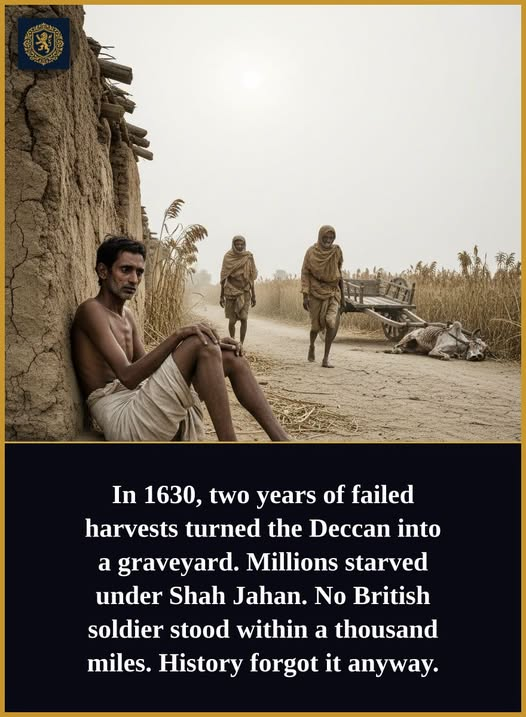
Seven million dead. No harvest for two years. Shah Jahan ruled from the Red Fort while the Deccan turned into a cemetery—and the East India Company was still twenty years from real power in India.
The famine lasted from 1630 to 1632. It swept through the Deccan, Gujarat, and Khandesh—three of the wealthiest regions under Mughal control.
Contemporary accounts recorded scenes that belong in the darkest chapters of human history: cannibalism in the streets, entire cities abandoned, corpses left unburied because there was no one left with the strength to bury them.
This was not a British famine. Not a colonial famine. Not an East India Company famine. This was a Mughal famine. Shah Jahan sat on the throne in Agra. The Peacock Throne. The same emperor who would build the Taj Mahal sat at the centre of an empire watching millions of his subjects starve to death.
The Company had trading posts at Surat and a few coastal footholds—nothing more. The British conquest of India was still a century away. The men who would win Plassey in 1757 had not yet been born.
Two monsoons failed. The rains that fed the subcontinent's harvest simply did not come. Crops withered. Grain stores emptied. Prices spiked beyond what any peasant could pay. The Mughal administrative system—impressive on paper, vast in scope—could not move food from surplus regions to starving ones fast enough. Or perhaps it did not try.
Contemporary writers recorded the horror but the empire's response remains almost invisible in the historical record.
The death toll may have reached seven million. Some estimates go higher. The exact number is unknowable—record-keeping in rural India was patchy, and in a famine of this scale, who was left to count?
What we do know is that entire districts were depopulated. Villages that had stood for centuries were abandoned and never resettled. The demographic wound took decades to heal.
And then history forgot.
Not immediately. The famine was recorded by European travellers, by Mughal court chroniclers, by merchants who saw the devastation firsthand. But it faded. It did not fit the narrative that took hold in the nineteenth and twentieth centuries—the narrative that famine came to India with colonial rule, that starvation was a uniquely British import, that the subcontinent had known only plenty before the Company arrived. That narrative is tidy. It is emotionally satisfying. It is also wrong.
India knew famine long before British administration. The Deccan famine of 1630–32 was neither the first nor the last. The Mughal Empire presided over a system in which millions could starve while the court built monuments. That does not make the later British famines—Bengal in 1770, or the horror of 1943—any less real or any less damning. But it does make the history more complicated than the stories we tell ourselves.
The full record survived. The contemporary accounts are still there, in archives, in the writings of travellers and merchants who saw the Deccan in 1631 and recorded what they found. But the famine itself dropped out of popular memory. It became a footnote.
An inconvenient detail. A chapter that did not serve the broader argument and so was quietly shelved.
Shah Jahan completed the Taj Mahal in 1653. It took twenty-two years and twenty thousand workers. It is one of the wonders of the world. He built it while the memory of seven million dead was still fresh. The Deccan had not yet recovered. The villages were still empty.
History is not a morality play. It is not a story with clear villains and virtuous victims. It is a record of what happened—complicated, contradictory, and often brutal in ways that resist easy narratives. The famine of 1630–32 happened. Millions died. The Mughal Empire could not save them, or chose not to. And the East India Company was nowhere near.
As America prepares to mark its 250th Independence Day, on July 04, I find myself thinking about two great melting pots: India and America.
India is an ancient melting pot: a civilizational one, that does not need slogans and posters to proclaim its diversity. For thousands of years, India absorbed languages, tribes, sects, rituals, philosophies, food habits, art forms, and ways of life. It did not demand that everyone think alike or worship alike. Its unity came from something deeper: respect for and embracing of diversity.
America is a different kind of melting pot. It is a modern constitutional experiment: a nation built not around one ancestry, one sacred geography, or one inherited civilization, but around a set of political ideals: liberty, self-government, rights, responsibility, and the hope that many peoples could build one shared future. A nation built by people who came from many geographies, carrying varieties of dreams, gods, grief, wounds, festivals, languages, recipes, accents, and histories. In short, it is a constitutional melting pot.
But the American independence story is not as simple as we sometimes tell it. America’s Revolution was a settler society breaking away from its imperial parent. The people who led the American Revolution were largely British-descended colonists. The colonists and the Crown hailed from the same geography, spoke much of the same language, worshipped the same god, ate the same cuisine, inherited the same legal traditions, and used the same political vocabulary. For a long time, they saw themselves as British subjects. It was a conflict within the larger British imperial world, akin to a dispute over authority between two members of the same family.
By contrast, India’s independence was an ancient civilization throwing off a foreign colonial power. The difference between the colonized and the colonizer was civilizational. They came from very different worlds with different cultures, religions, cuisines, languages, lifestyles, philosophies, family structures, geographies, social imaginations, and worldviews. Indians and the British were not merely two political groups fighting over taxation or representation. Independence for India was not merely a transfer of political power. It was the recovery of civilizational selfhood after centuries of foreign domination.
America became independent from the British Crown and Parliament. Politically, yes, that is true. But historically, it was also a settler society where all were settlers but one group fought to break away from its imperial parent.
This group consisted of thirteen colonies that declared themselves free and independent states and slowly laid the foundation for a new republic. They wrote a new story that spoke of liberty, rights, consent of the governed, and human dignity. These were powerful ideas. But tragically, those were not applied to everyone.
Native peoples were not free in this new story. Their lands were being taken. Enslaved Africans were not free. Many remained in bondage for nearly another century. Women were not fully free. They helped build the republic but were denied equal political recognition. Many immigrant communities, too, would later face suspicion, exclusion, and hostility before becoming part of America’s fabric.
So, one can't say American independence was a finished moral achievement. But that doesn't make the independence insignificant.
In fact, here is what makes America remarkable: its own founding words became a mirror. Later generations stood before that mirror and asked, “If liberty is true, why not for all?”
That question helped end slavery. That question powered the Civil Rights Movement. That question moved women to fight for the vote, education, property rights, dignity, and equal participation. That question opened the door, slowly and painfully, for immigrants from every corner of the world to become part of the American story.
From a dharmic lens, this distinction matters. Dharma does not assume that individuals or societies are flawless. It recognizes that disorder, injustice, imbalance, and human failure are part of social life. The role of dharma is to identify such imbalance and work toward correction.
In that sense, a society is not judged only by whether it had contradictions at its founding, but more by whether it developed the moral, rational and institutional capacity to confront those contradictions over time.
Here is where the immigrant story enters the larger story of the making of America. People came to America from everywhere. Some came fleeing persecution. Some came fleeing poverty. Some came with degrees and others with empty pockets. Some came as laborers, farmers, doctors, engineers, teachers, soldiers, artists, business builders, and dream-builders.
And regardless of where they came from, each community laid a brick in America’s foundation. They built railroads, farms, schools, hospitals, businesses, neighborhoods, universities, temples, technologies, and families. They did not merely benefit from America. They helped build America. That is where the real beauty of America lies. America’s strength has come from the ability to turn many journeys into one shared national story.
If India is like a sacred river system: many streams flowing into an ancient civilizational current, America is like a great modern experiment: many peoples choosing, sometimes struggling, to build a common future under a constitutional promise.
One is rooted in dharma and civilizational memory. The other is rooted in liberty and civic aspiration.
As a Hindu in America, perhaps their role is to honor both: the ancient wisdom of India and the modern promise of America.
On this 250th Independence Day, America is celebrated not because it was perfect at birth, but because it has shown the capacity to grow into its own best words.
May America be guided by dharma!
Happy 250th Independence Day, America.
Every single time I see Audrey Truschke speak about Hindu civilizational continuity, there is this unmistakable pattern:
Anything that suggests continuity, sophistication, indigenous development, or spiritual depth in Bharatiya civilization is immediately treated with suspicion, ridicule, or external attribution.
And honestly, it is NOT “neutral scholarship.”
It is a vile poisonous agenda!
Now she claims the Pashupati seal is “more likely adapted from proto-Elamite iconography” and not Shiva.
The audacity!!
Even mainstream historians and archaeologists admit the connection.
John Marshall - former Director General of ASI - identified it as a Proto-Shiva/Pashupati figure because of:
• the yogic posture
• association with animals
• ascetic symbolism
• horned deity imagery
• and continuity with later Shaiva iconography
Thomas McEvilley specifically discussed the posture as resembling Mulabandhasana - the not just random sitting.
Even scholars who disagree with Marshall STILL acknowledge:
• yogic symbolism
• ritual significance
• “lord of animals” motifs
• and striking parallels with later Shaiva imagery.
Even after this, what Audrey does repeatedly is present speculative external-origin theories with an air of certainty while portraying Hindu continuity arguments as primitive nationalist fantasy.
That is not balanced scholarship.
And this is where many Indians are exhausted.
Why is Bharat perhaps the ONLY civilization where continuity itself becomes controversial?
Egyptians can speak of continuity.
Chinese civilization can speak of continuity.
Greco-Roman continuity is endlessly explored.
But if Indians point to continuity between the Indus civilization and later Hindu traditions, suddenly:
“dangerous nationalism”
“appropriation”
“myth-making”
“revisionism”
Why?
Because for decades Indian civilization has been filtered through frameworks that instinctively distrust native memory while privileging external explanations.
But dismissing the Shiva interpretation as though it is some laughable WhatsApp theory is historically dishonest and frankly vile considering now their reasons behind doing so are exposed.
It has existed in archaeology and Indology for nearly a century.
What makes this worse is the sheer arrogance with which these claims are delivered to Indians - as though Indians themselves are uniquely incapable of understanding their own civilizational symbols.
And then comes the funniest part.
Comments disabled.
Quote tweets disabled.
Why?
If the argument is so academically robust, why shut down public scrutiny?
Afraid people may respond with:
• ASI references?
• archaeological counterpoints?
• Shaiva continuity studies?
• @IndicMeenakshi ’s work on civilizational continuity?
• counter-evidence from iconography?
• or simply point out how selectively “skepticism” gets applied?
Because that is what many of us are noticing now:
the skepticism is never neutral.
Hindu interpretations are interrogated aggressively.
External-origin theories are treated as sophisticated by default.
And over time, this constant framing creates something poisonous:
a civilizational inferiority complex.
An entire generation of Indians is subtly taught:
• your memories are myths,
• your traditions are appropriations,
• your sacred symbols came from elsewhere,
• your civilization is mostly borrowed,
• and continuity itself is suspect.
That is why people react strongly.
Not because debate is unwelcome.
We are a civilization who invented Debate.
But because the contempt underneath these narratives has become impossible to miss.
Indian history IS amazing, wonderful, and fantastic.
Which is exactly why people are no longer willing to silently accept ideological distortions masquerading as objective scholarship.
Excellent Answer @MEAIndia “……We believe in equality, we believe in human rights...If anyone whose rights are violated, they have the right to go to court...We are proud to be a democracy..."
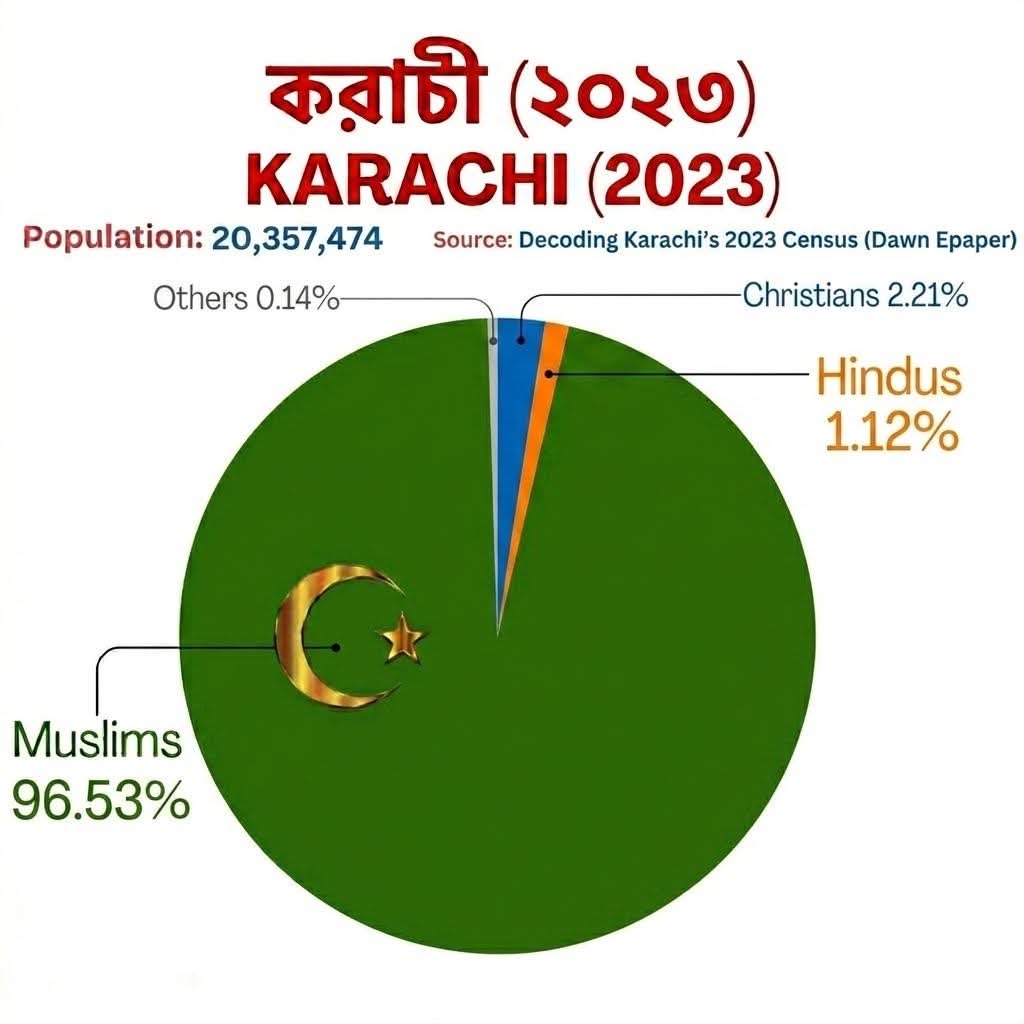
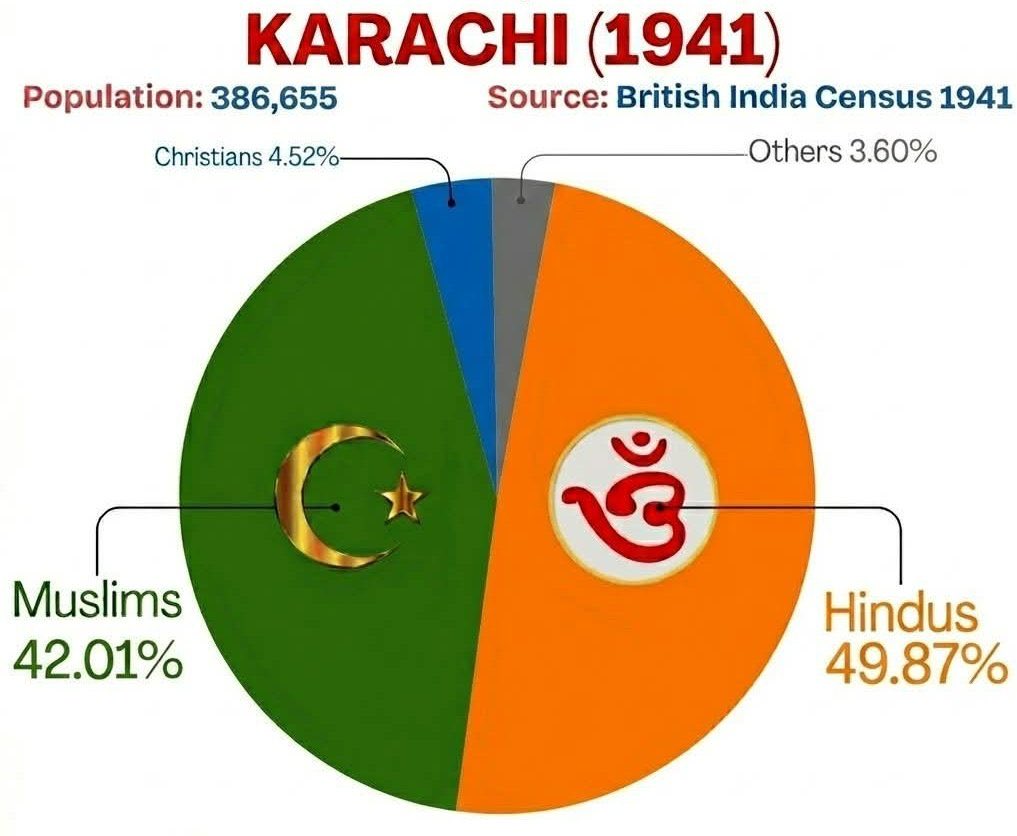
Demography is Destiny❗️
Karachi 1941 —Almost 50% Hindus
Karachi 2023 —Only 1% Hindus
Jihadists killed, raped, converted & took over the land. Some Hindus lucky ones could come to India during partition but leaving their everything.
IMAGINE if Trinamool Congress had won.
IMAGINE the message it would have sent to every local strongman of Mamata Banerjee.
IMAGINE the naked confidence of every TMC party office that stored weapons to attack political rivals.
IMAGINE the fear of ordinary citizens living under that shadow.
IMAGINE the arrogance of those who believed Bengal belonged to them, not to the people.
IMAGINE the silence of the same ecosystem that lectures India on democracy.
This is what West Bengal Police have recovered during a raid on a TMC office in Narayanpur, Ghutiari Sharif, South 24 Parganas, and seized 18 sharp curved weapons from local leader Salauddin Sardar’s party office.
This is a glimpse into the machinery Bengal was asked to surrender to again.
The people of Bengal did not merely defeat a party.
By voting for @SuvenduWB and @BJP4India and @BJP4Bengal, they may have saved themselves from a political culture where fear is the local TMC leader, violence is the manifesto, and democracy is held hostage inside a party office.
EMOTIONAL MOMENT AFTER BIG WIN
After winning the Barabani seat in #BJP worker Sujoy Gorai broke down.
He said, “After every election, TMC workers used to beat us. We had to stay away from home for 15 days.”
A powerful reflection of ground-level political battles in #Bengal.
We did it guys. We did it. I broke down thinking of all the karyakartas that were killed. 2 whose dead bodies I had to see. Only we know what we have been through. Jai Shree Ram.
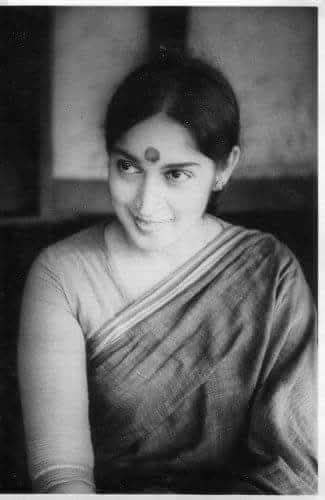
"Identify her, Aghori—who is this woman?"
A corpse, holding up a portrait, blocked the Aghori's path and posed the question. The Aghori halted; gazing at the image, he remained transfixed, staring into the void.
The corpse issued a stern warning: "If you choose to remain silent deliberately, history will forever condemn you as a criminal, and you shall wander eternally as a restless spirit.
Stand as a champion of truth, Aghori, and fear the justice of God." The Aghori began to speak: "The acclaimed South Indian actress honored with the 1970 National Film Award; the artist who gained global renown through the film *Samskara*; a popular actress and producer in Kannada, Tamil, and Telugu cinema—this is none other than Snehalata Reddy.
She is the very woman who, alongside her husband, staged peaceful protests on the streets against Indira Gandhi's Emergency, and who, in retaliation, was thrown into prison and beaten so brutally that she died.
Today, observing those film artists who are willing to do anything—by any means necessary—to disparage the Modi government, I am inevitably reminded of Snehalata.
Regarding her, Madhu Dandavate once wrote: 'At night, her heart-rending screams would reach my cell, and I would wonder—if God truly exists, why does He not witness this injustice?'
The sheer ruthlessness with which this artist—a woman brimming with the innocence and vivacity of a small child—was kill€d still sends shivers down my spine today.
Snehalata was not alone; there were thousands of young men and women whose lives were cut short by Indir@ G@ndhi.
R@hul Gandhi is right when he says that the Congr€ss is a 'mindset.' It is a despicable mindset—one that has remained utterly unchanged to this day.
I felt no surprise upon hearing about the Congr€ss members at India Gate who were groping Priy@nka G@ndhi and her young daughter.
Someone tell Rahul G@ndhi this: if you truly desire the safety and security of our daughters, then you must eradicate this despicable mindset within the Congr€ss.
Remember the screams of Snehalata Reddy, and ask those Indians who sing Indir@'s praises just how well they *truly* know her.
Ask them how well they know the man hailed as 'M@ha@tma'—G@ndhi—who subjected countless women to physical and mental exploitation. The Congr€ss is indeed a mindset, Rahul—and it is a deeply repulsive one.
To save our democracy, this mindset must be brought to an end."
The corpse stood stunned into silence, while the Aghori continued on his path.
From the sound of his footsteps, a refrain seemed to echo: "Let millions of voices rise in a resounding roar."
There’s no bigger propagandist than Amitabh Bachchan who had done most of Anti-Hindu movies & propagated the Islamist propaganda all his life.💯✅
Still Hindus love & respect him.
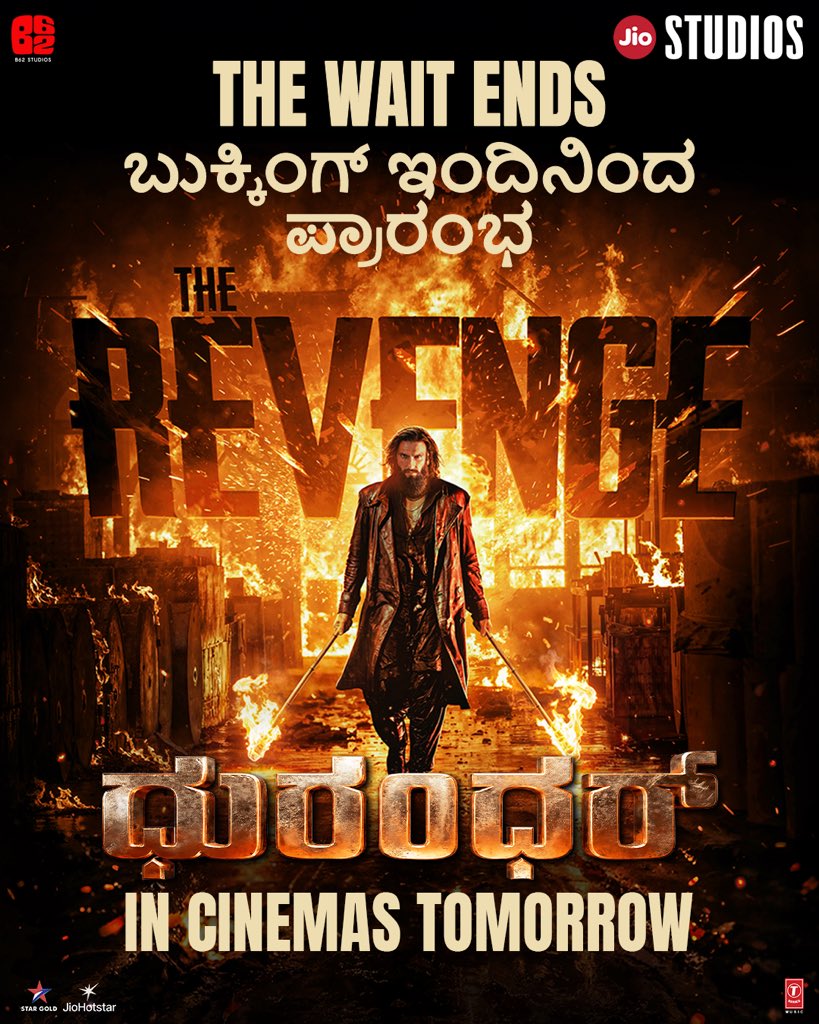
And Islamist Urduwood now calling Dhurandhar a propaganda movie as it EXPOSES their reality❗️