Your path to Silicon Valley doesn’t have to cost a fortune. | University Admissions & Recruiting | Affordable U.S. study & career paths| WhatsApp: +1 4088965215
Thinking about coming to the U.S. but wondering whether you can afford Silicon Valley?
I’m Vena. I live here with my two kids and work in admissions at CSTU. I share what I wish more people knew before coming here: how to compare study options, what to budget for beyond tuition, and what to plan if you’re bringing your family.
If you’re figuring out whether Silicon Valley makes sense for you, follow along. For questions about applying to CSTU, reach me at [email protected] or on WhatsApp at +1 408 896 5215.
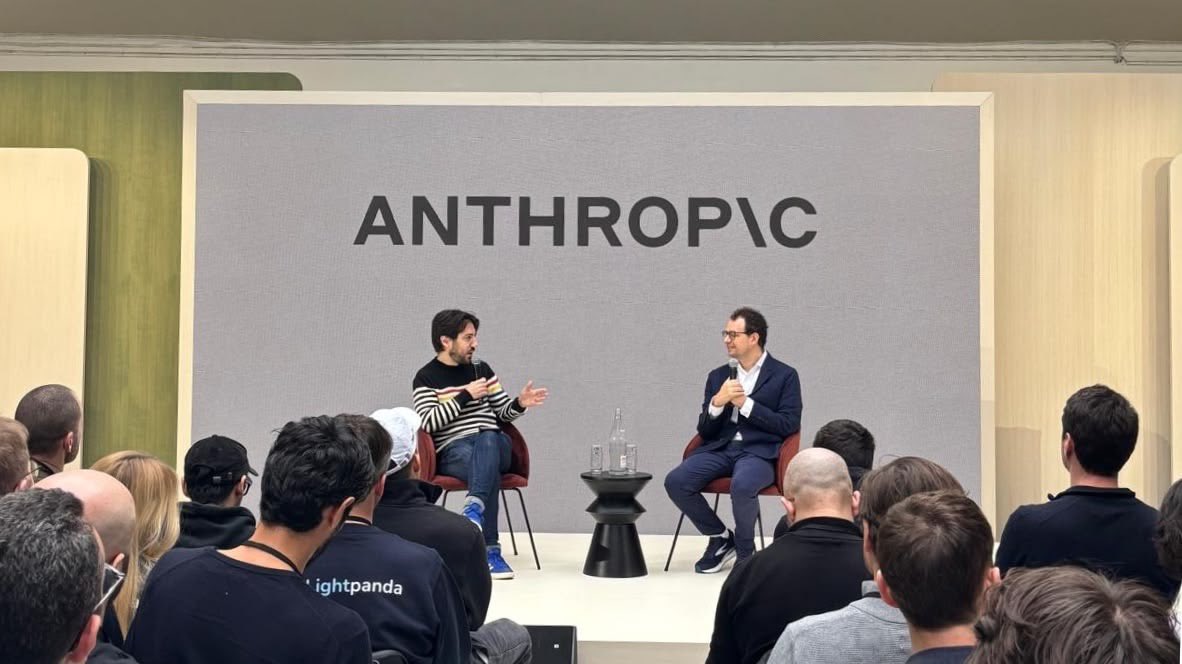
Anthropic is now valued at nearly $1.8 trillion after its IPO.
Meanwhile, Walmart generates over $700 billion in annual revenue, yet its market cap is roughly half of Anthropic’s.
One sells products. The other sells the future of AI.
Welcome to America, where profits set the floor, but imagination sets the ceiling.
Is Anthropic really worth two Walmarts, or are we watching the biggest AI bubble in history? 😂
Yesterday, I shared a story about two Anthropic employees who may now be worth millions.
Some people said, “That’s not a story about ordinary people.”
Fair enough. Here’s a real one.
Last year at CES, I met an international student who chose entrepreneurship over a corporate job.
With just a tiny team, he started selling party supplies online in the US.
This year, his sales have grown 2–3x. He’s even using 3D printers to design and produce his own products. His unfulfilled orders have jumped from a handful to over 100.
Nothing revolutionary. Just a small e-commerce business in a market where he found room to grow.
Sometimes you don’t need to work harder. You just need to find a better market.
Silicon Valley isn’t just about AI billionaires. There are opportunities for ordinary people, too. 🇺🇸
In China, I’ve met so many talented young people working incredibly hard, yet struggling to get ahead.
In Silicon Valley, I’ve seen people achieve more with seemingly half the effort.
Sometimes it’s not about working harder. It’s about being in the right place.
Change your environment, and you might change your life. 🇺🇸
Before moving to Silicon Valley, I imagined skyscrapers and futuristic cities everywhere.
Turns out, it feels more like a giant suburb. Quiet streets, low-rise buildings, and some of the world’s biggest tech companies hidden in plain sight.
Would you enjoy living somewhere like this?
In some places, going back to school at 35 sounds like you’re falling behind.
In Silicon Valley, people switch careers, learn AI, and start over even in their 40s or 50s.
Going back to school after 35: brave move or risky decision?
I used to think staying up late to study meant working hard.
Now I realize a good night’s sleep can make a 2-hour task take just 30 minutes.
Sometimes, sleep is the best productivity hack. 😂
Living in Silicon Valley has made me realize just how many life-changing opportunities America offers!
Two of my professor’s children joined Anthropic after graduation. Following the company’s IPO yesterday, their shares could now be worth over $10 million!
No wonder so many people around the world dream of coming to America. The opportunities here are incredible! 🇺🇸
The hardest part of studying abroad isn’t always the classes. Sometimes it’s having no one to hang out with afterward.
In Silicon Valley, there are tech meetups, startup events, and networking opportunities everywhere.
Is making friends in America more about where you live or how much effort you make?
Anthropic briefly crossed a $2 trillion valuation on its IPO debut.
But OpenAI has ChatGPT. Google has Gemini. Then there’s Grok, DeepSeek, and a growing list of competitors.
As AI models get cheaper and competition intensifies, what justifies a $2 trillion valuation?
Are we witnessing the next tech revolution, or the next massive AI bubble?
Steve Jobs once said in his Stanford commencement speech, “If you haven’t found it yet, keep looking. Don’t settle.”
But what if you’re a fresh graduate who’s been unemployed for six months?
Can you really afford not to settle?
For your first job, would you choose money or passion?
Most international students focus on university rankings when choosing where to study.
But if your goal is to build a career in the U.S., location might matter just as much.
Would you choose an average university in a major tech hub or a prestigious one in a small town?
Who still takes the time to sit down and read a physical book?
In a world where AI summarizes everything for us, when was the last time you actually finished one? 📚
Someone asked how international students survive the long, cold winters in America, especially when living alone.
Honestly, living in Silicon Valley feels like a cheat code. No shoveling snow, and we can still enjoy sunshine in winter. 😂
Does the city you live in matter more than the school you attend?
If your grad school essay says you want to “use AI to solve real-world problems,” name one problem you’ve actually dealt with. A spreadsheet your team updates by hand every Friday tells me more than another paragraph about innovation.
Same storm, same experience in a Silicon Valley parking garage today. 😂
We’re building the future of AI, but apparently we still haven’t figured out how to keep the rain outside.
Only in Silicon Valley. 🌧️
Anthropic: $1.5 trillion valuation.
ASML: ~$530 billion market cap.
One builds AI models. The other builds the machines that make advanced AI chips possible.
Yet Wall Street values the AI company at nearly 3x.
Is this the future of technology being priced in, or the next AI bubble?
If you studied in Silicon Valley for two years, what would you want to bring home besides a degree?
Maybe a better way to run your family’s business. Maybe a network of people in a new field. Maybe the confidence to test an idea you’ve had for years.
There’s no single right answer. But having your own answer can help you choose where to spend your time.
A university brochure can make every program sound exciting.
Before you apply, open the course list and circle the classes you’d genuinely like to take. Then check when they’re offered and whether you meet the prerequisites.
If you can’t find enough courses you’d be excited to spend your evenings on, it’s worth looking again before paying an application fee.
A stable job can pay your bills. But it rarely changes your life overnight.
That’s why I think everyone should try building something of their own at least once.
It doesn’t have to be a big startup. A small business, a side project, or even a one-person company is a good start.
You might fail. You might make less than your salary. But you might also discover that your income doesn’t have to be limited by what an employer is willing to pay you.
Living in Silicon Valley has changed how I see this.
The biggest difference between people isn’t always talent. Sometimes it’s simply the willingness to take a chance.
And with AI today, starting something on your own has never been more accessible.
Keep your job if you need it. Just don’t let it be your only option.
Jensen Huang built NVIDIA into an AI powerhouse. Now he wants a second chance.
But should a founder’s extraordinary achievements outweigh personal misconduct?
That’s a question for NVIDIA’s board — and a defining test of corporate governance.
Would you bring him back?
Over the past week, I’ve been overwhelmed by the love and support of friends, industry colleagues, and people I've never met. Thank you to everyone who has shown kindness to my family and me. It means the world to me.
I came to the United States 53 years ago, and becoming an American citizen is one of the greatest gifts and proudest moments of my life. NVIDIA has been my life’s work. Building it into the company it is today alongside my colleagues has been a privilege and an honor. Nowhere but in America could a company like NVIDIA be possible. I love our country, and I love NVIDIA.
I did not live up to the standards expected of everyone at NVIDIA, and I have made serious mistakes in my personal life. I created problems for the Board that I deeply regret. I own my mistakes completely, and I am committed to cooperating with the Board’s independent investigation.
Since my departure, I’ve seen an outpouring of calls from NVIDIA’s employees, investors, business partners, and customers for me to return as CEO. Many continue to reach out to me directly as the company navigates complex technology, market, competitive, and geopolitical dynamics. NVIDIA is a once-in-a-generation company. If the Board of Directors decides that my return is in the best interest of our shareholders, our employees, the company, and America, I would be honored to answer these calls and return as CEO.
Thank you again to everyone who has shared their good wishes. I am profoundly humbled by your support. To my family: I love you, and I will spend the rest of my life being worthy of yours.
Jensen