We’re proud to announce that Veriff has been named a Category Leader in the Chartis KYC Solutions 2026 Quadrant.
Know Your Customer (KYC) is the first moment a business and a customer meet. When it works, real people get through quickly, and every decision holds up to a regulator’s questions.
This recognition reflects the work our teams do every day to make verification something businesses can build on, across 230+ countries.
Download the report: https://t.co/essCSkE9Kd
We're really sorry, we understand how stressful this is 💚 Since Veriff handles verification on behalf of the service provider, we'd suggest contacting them directly, explaining the situation, and asking about alternative options or a manual review. They can often help in cases like this.
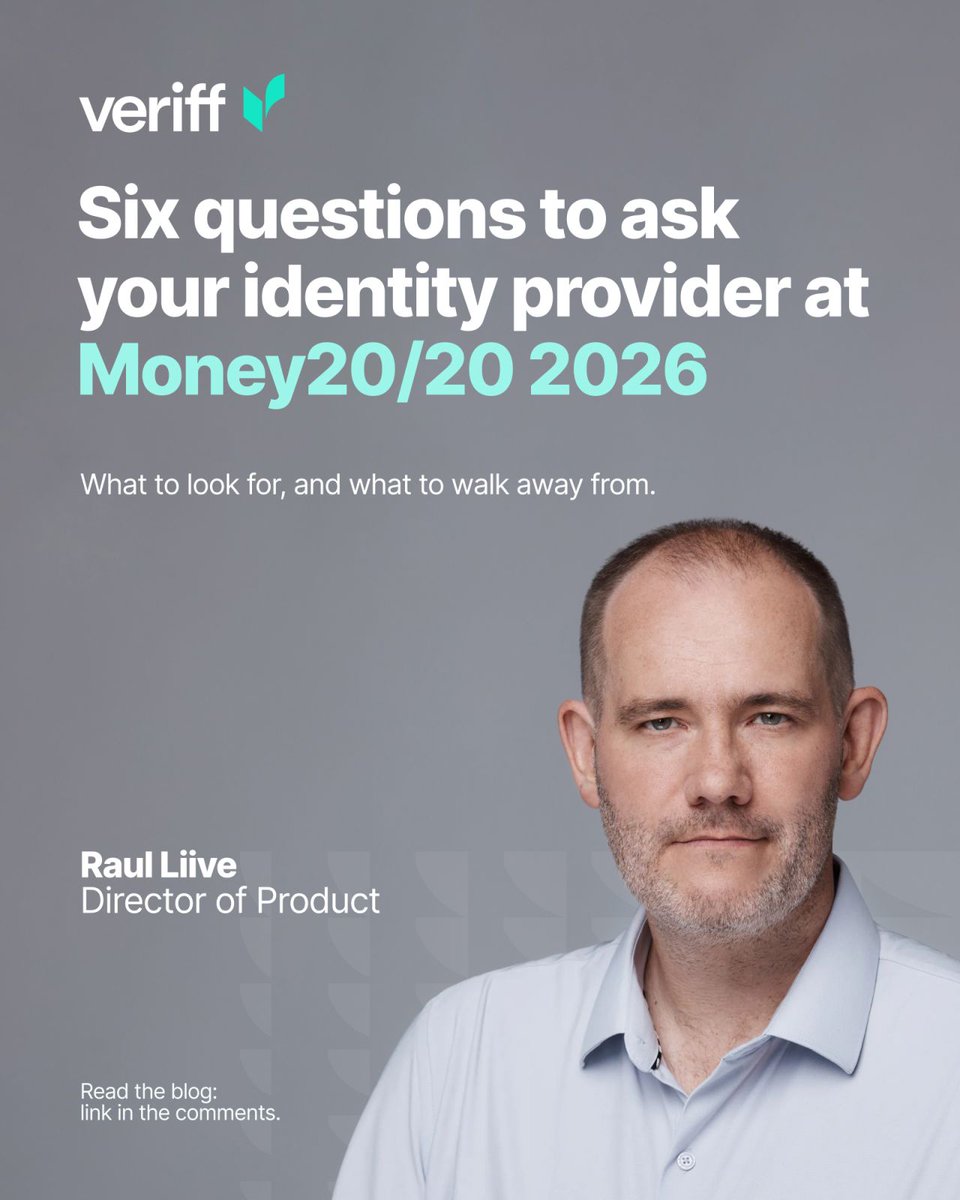
Money20/20 is officially underway. Every booth will tell you how much fraud they catch.
Fewer will tell you how many good customers they turn away, or how long a decision takes.
Raul Liive, our Director of Product, shared six questions to ask any identity provider on the floor this week, including us. Each comes with a green flag and a red flag, so you know what a good answer sounds like.
Read them before your next booth conversation: https://t.co/NDR8JeSBQX
If you're in Las Vegas, stop by and ask our team these. We're at booth #9040, and we'd love to talk it through.
@BigBrodaBanter1 For now, please verify with a valid physical ID document. We're working on accepting NIN slips by checking them against the NIN biometric registry to confirm they're genuine. More updates soon! 💚
Reused identities rarely look suspicious in isolation. That’s what makes them hard to catch.
Veriff CrossLinks connects signals from devices, documents and sessions, so the pattern shows even when each check looks clean.
How it works: https://t.co/ZNCjmZmmGZ
The UK's expanded Right to Work rules have been live since October 1. For employment platforms, the verification itself is the easy part. The challenge is everything around it.
Three things we're seeing work for the platforms we support:
1️⃣ Qualify applicants early, so British and Irish passports and eVisas follow the right route from the start
2️⃣ Staff the manual queue for registration peaks, with a named team and a clear escalation path
3️⃣ Keep checking after onboarding, especially where workers can send substitutes
Our Director of Product, Marketplaces, Raul Liive breaks down what we've learned working with several major platforms. 👉 https://t.co/mgMv2EN2BI
@StateLicenseio Well put. When templates are cheap and everywhere, a PDF is a claim, not proof. Checking the document itself, the person presenting it, and the issuing source where one exists is what closes the gap. Contractor onboarding is a good example of where this matters.
Fraud used to require skills. Now a lot of it can be bought.
Stolen identity packages, document templates, one-time passcode (OTP) bots and ready-made scripts are sold as services, sometimes with support and updates included. That lowers the barrier to entry and speeds up how fast attacks spread.
Our blog breaks down the fraud-as-a-service supply chain and what it means for fraud teams. Read here: https://t.co/MBCwTg0xWx
@JoyHarrysOkenna@LeadHerLogic Thanks for the feedback! 🙏 For now, please verify with a valid physical ID document. We're working on accepting NIN slips by checking them against the NIN biometric registry to confirm they're genuine. More updates soon! 💚
You verified a driver or seller in January. Great. Who is operating that account in September? 🚗
Account renting is now industrial-scale. Fraudsters pass KYC once, then hand the keys to unvetted operators.
If your trust stack stops at the front door, you're not running a safe platform. You're running an onboarding gate.
Why continuous verification is replacing "one and done": https://t.co/zQZSTd6PKh
A reflection in a verification video exposed a third person coaching the "customer" off-camera.
500+ linked accounts. Different users, same devices. Each one looked fine alone.
Fraud rings are built that way. How we spot them: https://t.co/4FZ2jKarwc
🇪🇪 Estonia has produced some of the most consequential technology companies in the world.
Today, Veriff was officially named one of them.
We've been ranked #3 on the 2026 TopTech list of the 30 most valuable Estonian tech companies.
Building the infrastructure for digital trust doesn't happen by accident. It takes a relentless team, incredible partners, and a zero-compromise approach to identity verification.
We spent the last decade building a system that stops synthetic fraud while keeping the front door wide open for legitimate users. This ranking is a direct reflection of that execution.
Thank you to the TopTech organizers for this recognition, and a massive congratulations to all the incredible companies driving Estonian tech forward alongside us on this year's list.
Here's to the team that built this, and the customers who trust us to protect their platforms every day! 🚀
You might think you know who is behind the screen.
A FTSE 100 company ran a standard hiring process, conducted video interviews, and made an offer.
Months later, they received a call from the FBI: the developer they hired was actually a North Korean state-sponsored worker using a rented identity.
@Gartner_inc projects that by 2028, 1 in 4 candidate profiles worldwide will be fake. AI resume generators and deepfake interview bots have made applying free and effortless, turning recruitment funnels into massive security liabilities.
A resume looks identical whether it was written by an honest applicant, an AI agent, or an organized fraud ring.
That is why our partners at hackajob launched Archer Approves, a multi-layer trust system using Veriff to verify government IDs before an employer wastes time on an interview.
Dive into hackajob’s latest report, "Who's Really Applying?", to see how 46% of US candidate applications are now flagged for risk: https://t.co/YIkrVXK2kT
Veriff has spent a decade answering three questions: is this person really who they claim to be, is this person trusted, and is that trusted person still behind the already verified account?
It took ten years to answer them 400 million times. We're at 784 million today, having nearly doubled that in the past year alone.
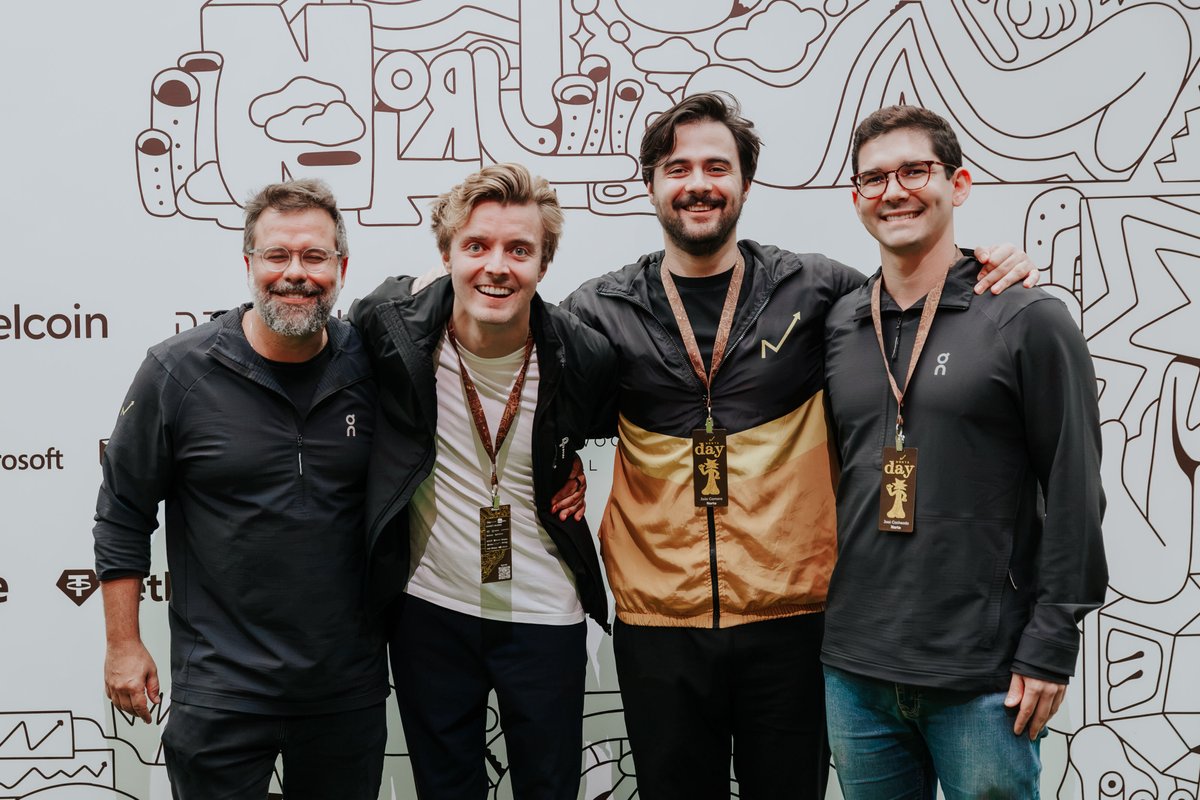
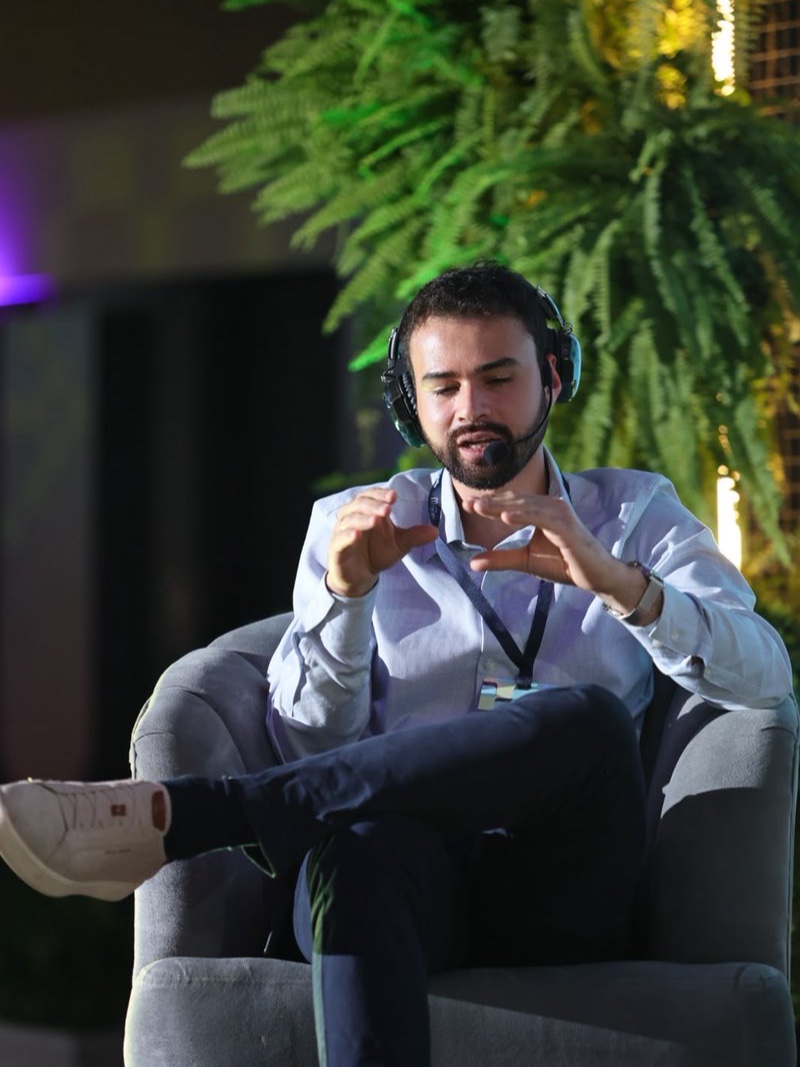
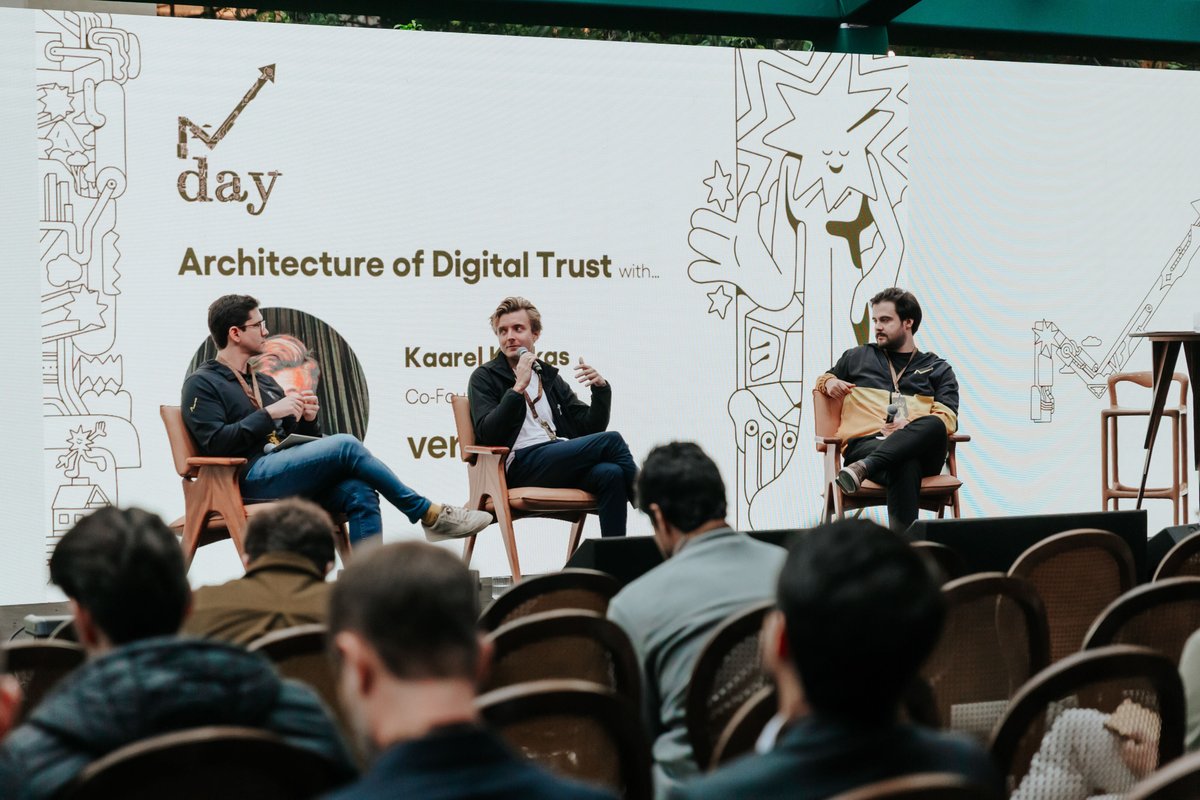
What's changed is the adversary. AI made fraud cheap, fast, and convincing. As agents start acting on our behalf, we'll need an entirely new standard for trust, which is exactly what @KaarelKotkas sat down to discuss at Norte Venture's fireside in São Paulo last week.
Thank you Norte for having us, and congrats on the new fund.
"I don't want it to happen in the first place."
@ceciliefjellhoy lost more than $250,000 to romance fraud and filed for bankruptcy because of it.
When we spoke to her on Veriff Voices, she was clear that reimbursement is not the answer.
Prevention is, and it starts with verified identities online.
Her words land differently this week, with news that a convicted fraudster plans to launch a dating app of his own.
Founders get verified for who they are, not for what they have done. In most industries that is a technicality. In this one, it's the whole risk.
If an AI agent buys a $4,000 laptop on your marketplace, who authorized the transaction?
Automated traffic is now both your fastest-growing acquisition channel AND your largest attack surface. Fraudsters know this, and they are using automation to scale account takeovers.
The goal isn't to block all bots. To confidently serve legitimate AI buying agents, platforms need to bind the agent's activity to a verified, accountable human. We break down how to get your platform agent-ready in our latest piece for Retail Dive: https://t.co/CzFhWda4dl
Yesterday at Latam Fintech Market, Rafael Luque took the stage to discuss the tension between certainty and probability in modern financial decisions.
He highlighted one of the most critical blind spots in identity verification: interoperability.
Right now, if a fraudster is caught by one provider, that intelligence remains siloed. Rafa spoke about the urgency of breaking down these walls and the immense value of cross-referencing biometric data directly with national registries, a model already proving its worth in Mexico.
Fraudsters share information. The industry needs to do the same.
We're ready for day 2. If you're at Latam Fintech Market today, come meet our experts to talk about identity, conversion, and scaling securely across the LATAM ecosystem! 🚀