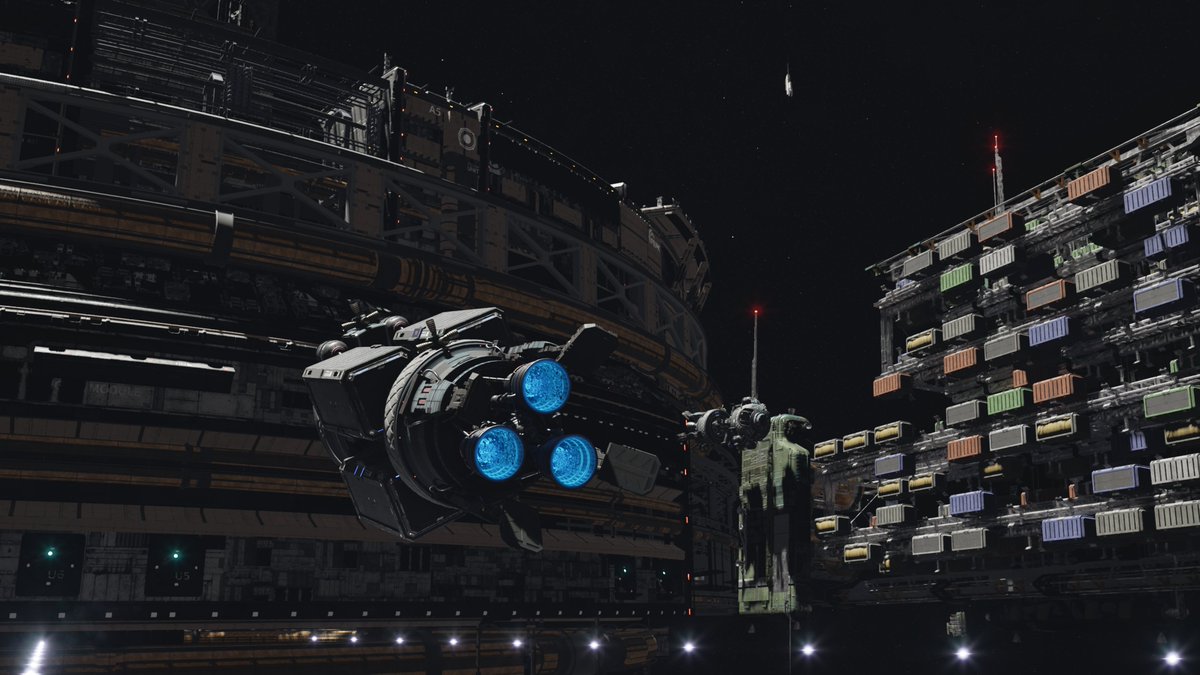
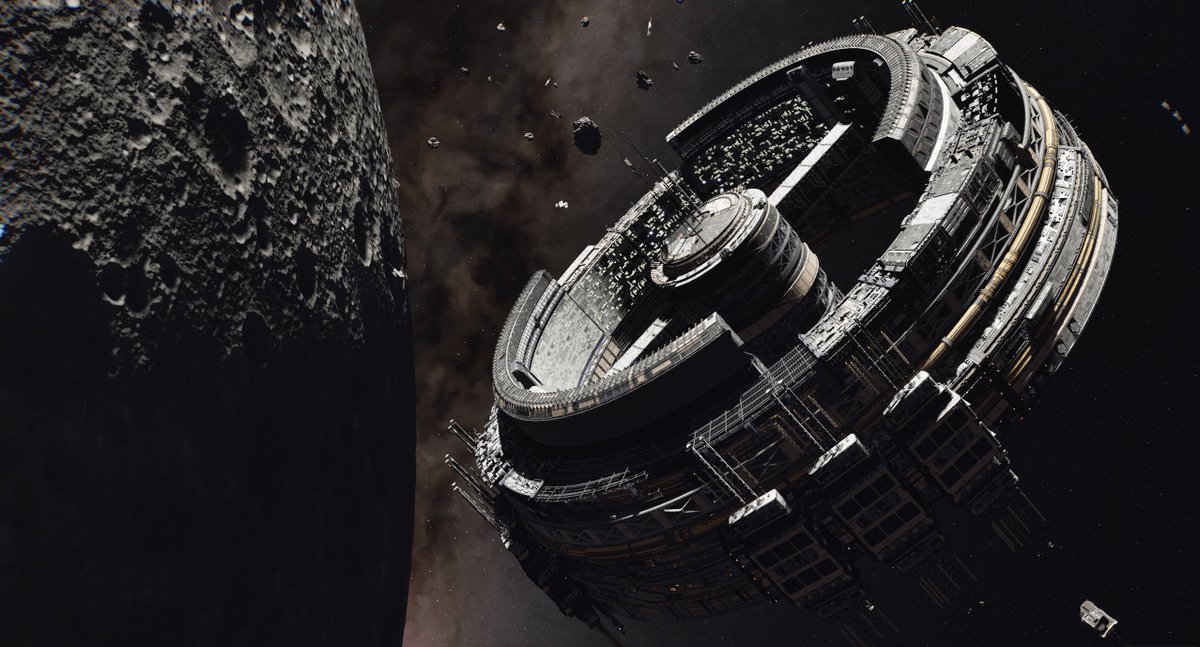
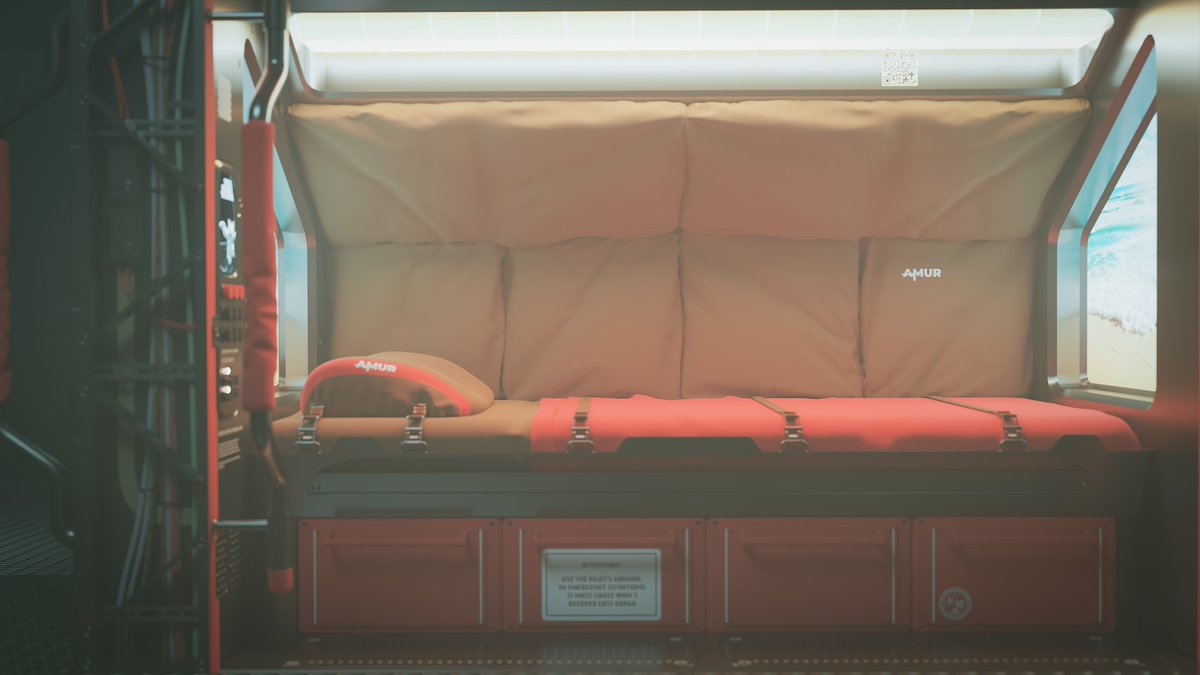
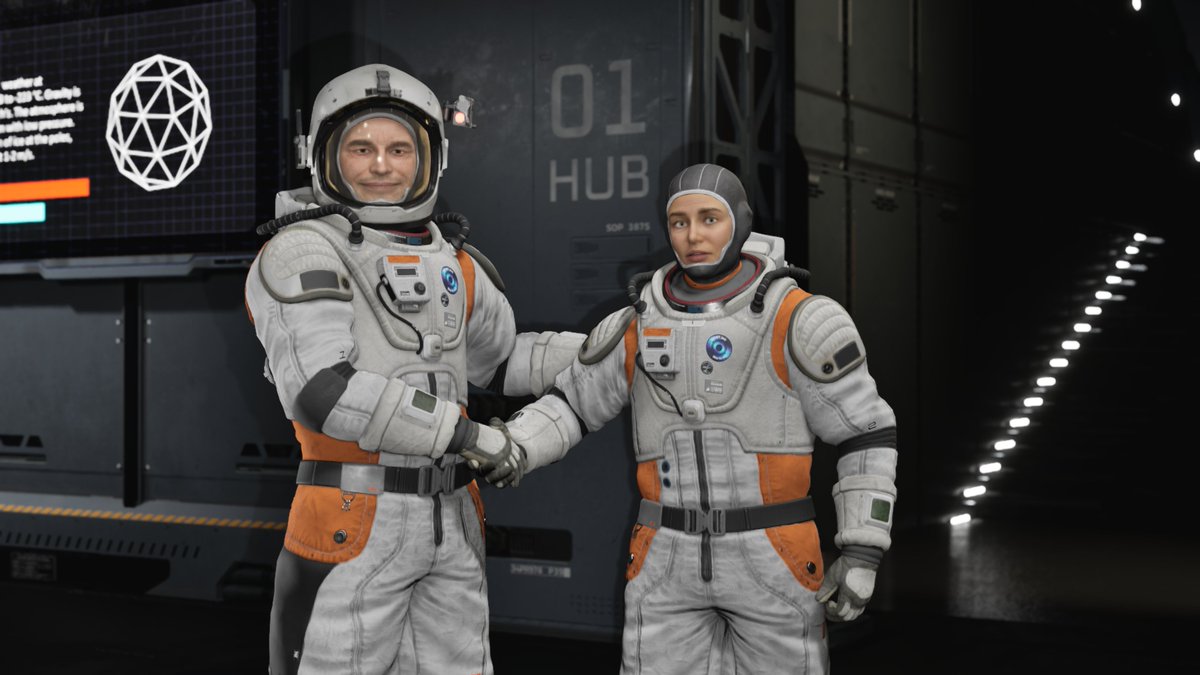
Unreal can't do multi-axis gravity. Can't generate planets at real scale. Can't handle double-precision math properly.
So we built all three from scratch.
#VerseProject#SpaceSim#HardSciFi#Gamedev
In #VerseProject, market demands aren't driven by RNG loops they reflect the real logistical limits of Earth-Moon colonization. Lunar outposts trade based on actual physics and orbital chemistry, not artificial game balance.
Here’s a WIP look at our trade terminal UI. Thoughts on the layout?
#SpaceSim #HardSciFi #Gamedev #IndieDev
A lot of you ask if Verse Project requires a dedicated crew to play.
Short answer: No.
Solo players and co-op crews are both getting a massive, deep experience here. You can totally fly solo. Run trade routes, salvage Kessler syndrome debris, or map out sectors - you can build a massive career and never depend on another human being. It’s got the depth of a full single-player game.
But if you want to team up, the mechanics are there. You can crew a single ship and split the stress (someone flies, someone manages the reactor). You can build a shared outpost. You can even just contribute to massive global goals asynchronously, without ever syncing your play sessions. And yes, piracy and bounty hunting exist for those who want friction.
What about PvP? We know a lot of solo players hate forced combat. We’re building this co-op first. You won't be forced into the meatgrinder if you just want to haul cargo in peace. If you’ve been burned by bad PvP in other space games, let us know what happened.
One last thing: we are hard sci-fi. Real physics, no magic shields. But "hard sci-fi" doesn’t mean "requires an engineering degree". We want you to learn as you play.
To our hardcore space engineering nerds: keep roasting our physics and thruster placements. We need your feedback to keep the game honest.
Solo players - what’s your biggest fear about multiplayer in games like this? Tell us below.
#VerseProject #SpaceSim #HardSciFi #Gamedev #IndieGame
Today we wanted to share a speech we overheard at Host Station between an old man and his little grandson. He was being a bit overdramatic for our taste. But still, he held pretty close to the facts.
"Back then this station was just a fuel depot, youngster. A cluster of tanks and docking rings between Earth and the Moon. Almost nobody lived here.
Then the sky closed.
A satellite collision caused another one, and that started a cascade nobody could stop. Over months, Earth wrapped itself in a shell of shrapnel. A tiny scrap would go through a pressure hull like paper. And there were billions of them. Billions.
People named it after the man who had predicted it decades earlier: the Kessler Belt. Old fella's warning had been ignored, because cleaning up costs money. And every nation and company wanted someone else to pay first. They squabbled until it was too late.
Every attempt to clear it made things worse. You cannot punch a hole through orbital debris without creating more orbital debris. And above seven hundred kilometres, nothing comes down on its own. Not for centuries. That damned Belt will outlive me, you, and probably your grandchildren too.
So, just like that, the Moon was alone.
Oh, we still talked to Earth. Radio went through the Belt fine enough. We saw the news, called our families, watched the funerals we couldn't attend. What we couldn't do was get there. No resupply. No machine parts, medicine, soil. No replacement crew.
Shackleton-3 was a mining outpost built to send helium-3 up the line. Feeding itself wasn't in the design. But for eleven years, everything Shackleton-3 needed had to come from Shackleton-3.
We rationed water by the gram. We turned half the habitation modules into greenhouses. Soy. Potatoes. Algae. Three things on a plate, then the same three things tomorrow, then the same three things... for a decade. We cannibalised broken landers for parts we couldn't manufacture, and when the parts ran out, we manufactured the manufacturing.
Truth is, half the time we had no idea what we were doing. So we improvised. Hoped for the best. Yet, people died who didn't have to. A lot of people. Your Great-grandmother Graça.
But we were still there when the first unmanned ships began threading the Belt. At first, most shipments couldn't make it. Still, some did.
I was fourteen when the first cargo run made it through. They gave me an apple. I cried. Sweetest thing I'd ever had.
On the way up and on the way down, every ship passed the same old place: the fuel depot at Lagrange 1. It was waiting, sitting there, tanks locked.
And when we finally felt mad enough to expand again, Host slowly started turning into what you see now."
#VerseProject #SpaceSim #Worldbuilding #IndieGame #Gamedev
Huge thanks for all the feedback on our previous UI posts. We honestly wouldn’t be progressing this fast without your input, so please keep it coming!
Here is the newest iteration of the module inspection screen for Verse Project. It’s still a Work in Progress (the stat icons are just placeholders, and we have plenty of other tweaks to make), but we wanted to share the update. Does the layout feel cleaner to you?
#VerseProject #SpaceSim #UI #IndieGame #Gamedev
WIP concept art for the Leviathan station. The visual design might change, but one thing is certain: it won't build itself. Players will have to make it happen.
#VerseProject#SpaceSim#ConceptArt#IndieGame
When we started Verse Project, we wanted to build something different from the usual space sim. No magical hyperdrives, no distant fantasy galaxies. Just our Solar System in the 22nd century, and the brutal reality of expanding into it.
We aim for hard sci-fi. While we obviously have to make a few game design compromises, we base our tech and mechanics on real-world physics. There are no energy shields here. Earth is blocked off by a massive Kessler syndrome debris field. Space stations are built around actual Lagrange points - the unstable ones require constant fuel to maintain orbit, while the stable ones naturally gather debris for scavenging.
The real challenge in the game isn't just combat. It's logistics, managing energy deficits, and weighing cargo mass against safety. You can’t build interplanetary infrastructure alone, which is why the game heavily rewards cooperation. Surviving space is a massive collective effort, and that's the exact feeling we want to capture.
#SpaceSim #IndieGames #SpaceEngineers #SpaceGame #VerseProject #RealisticSciFi
Our character system is evolving!
We’re moving to a new universal framework that will power both player characters and NPCs. This gives us much more flexibility for different body types, outfits, and future character customization.
This system will become the base for more detailed customization later on - including faces, body shapes, and more.
We’ve also significantly upgraded our spacesuits compared to the older versions, and this is only the beginning.
#gamedev #indiedev #spacesim #indiegame #scifi
We know you take a lot of cool screenshots during your flights, so it's time to show them off. We want to see how you explore the Verse Project, the locations you discover, and what milestones you've hit. Drop your best shots and achievements right here in the replies. We'll be keeping an eye out and picking the most atmospheric ones to feature in our future posts. Show us your Verse!
#VerseProject #SpaceSim #IndieGame #ScreenshotSaturday
Greetings, pilots! Development of Verse Project is in full swing!
While the team is busy working on the current build, take a look at some atmospheric screenshots straight from the game ✨
Very soon we'll start sharing detailed patch notes and hosting community interactives.
#SpaceSim #IndieGame #SciFi #IndieDev
@fakevampi Sim, não é fácil, porque tentamos fazer da forma mais realista possível. Você pode assistir a vídeos no YouTube para aprender como fazer isso com sucesso. Obrigado.