National award-winning book publisher, editor & author. Digging into the money and influence behind the campaign against Jensen Huang.Go Broncos.AkA 梁一梦.
"You're a Republican. You only say this because you lost the midterms."
Check the dates.
Mar 29, 2026: I called Alaska for Peltola.
Apr 7, 2026: "Trump doesn't have much time left."
I said it months before a single vote was counted.
Sore loser, or just early?
"You're CCP propaganda."
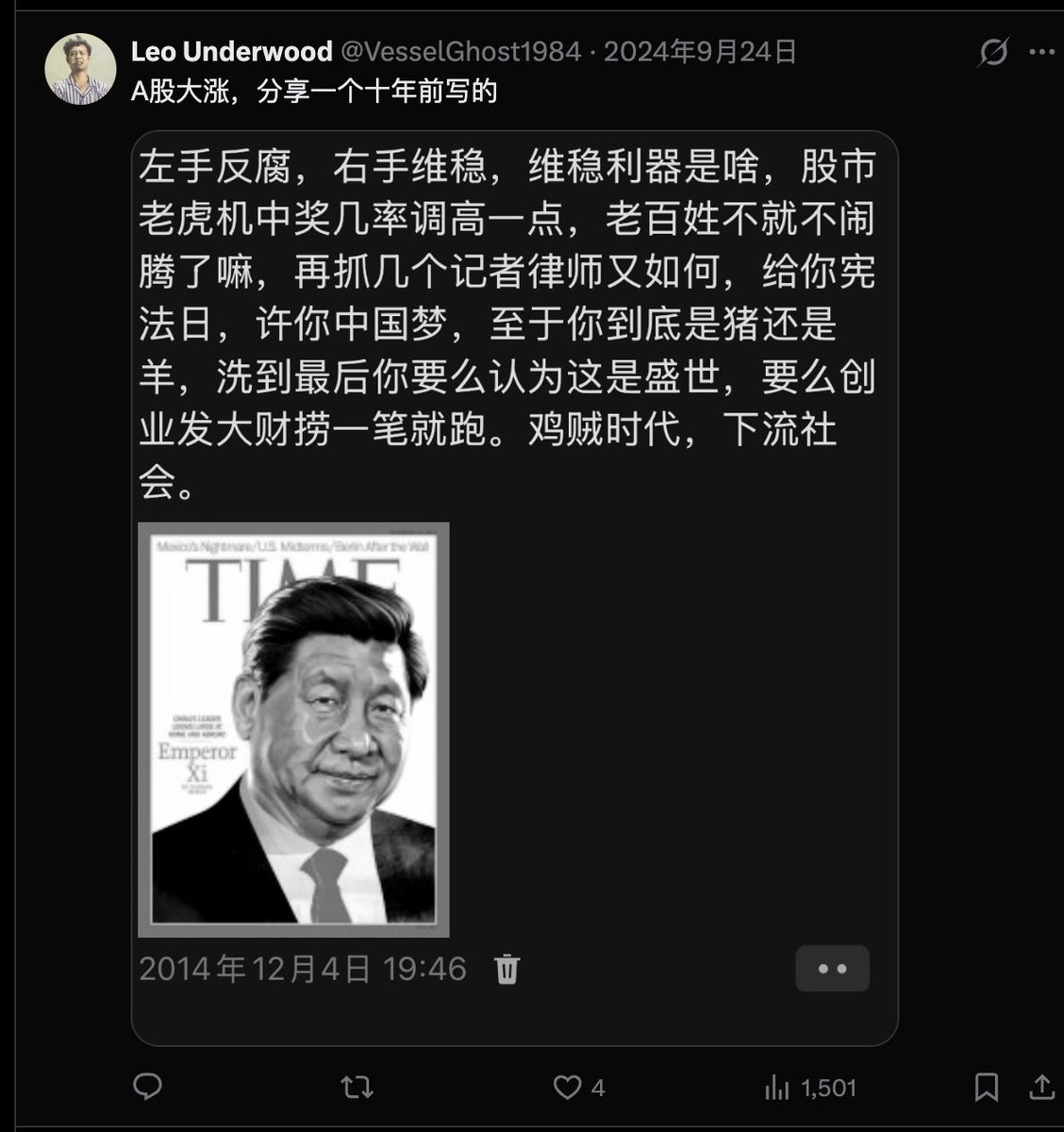
Dec 2014: I called Xi's China Dream a "thieves' era, low-down society."
Apr 2024: I wrote a song for "Voices of April," the Shanghai lockdown video Beijing scrubbed.
Aug 2024: I made the crosstalk Beijing banned longest, "The Unification Disease," with AI.
Since when does Beijing's propaganda mock Beijing?
They saying I post for Jensen because I hold NVIDIA stock:
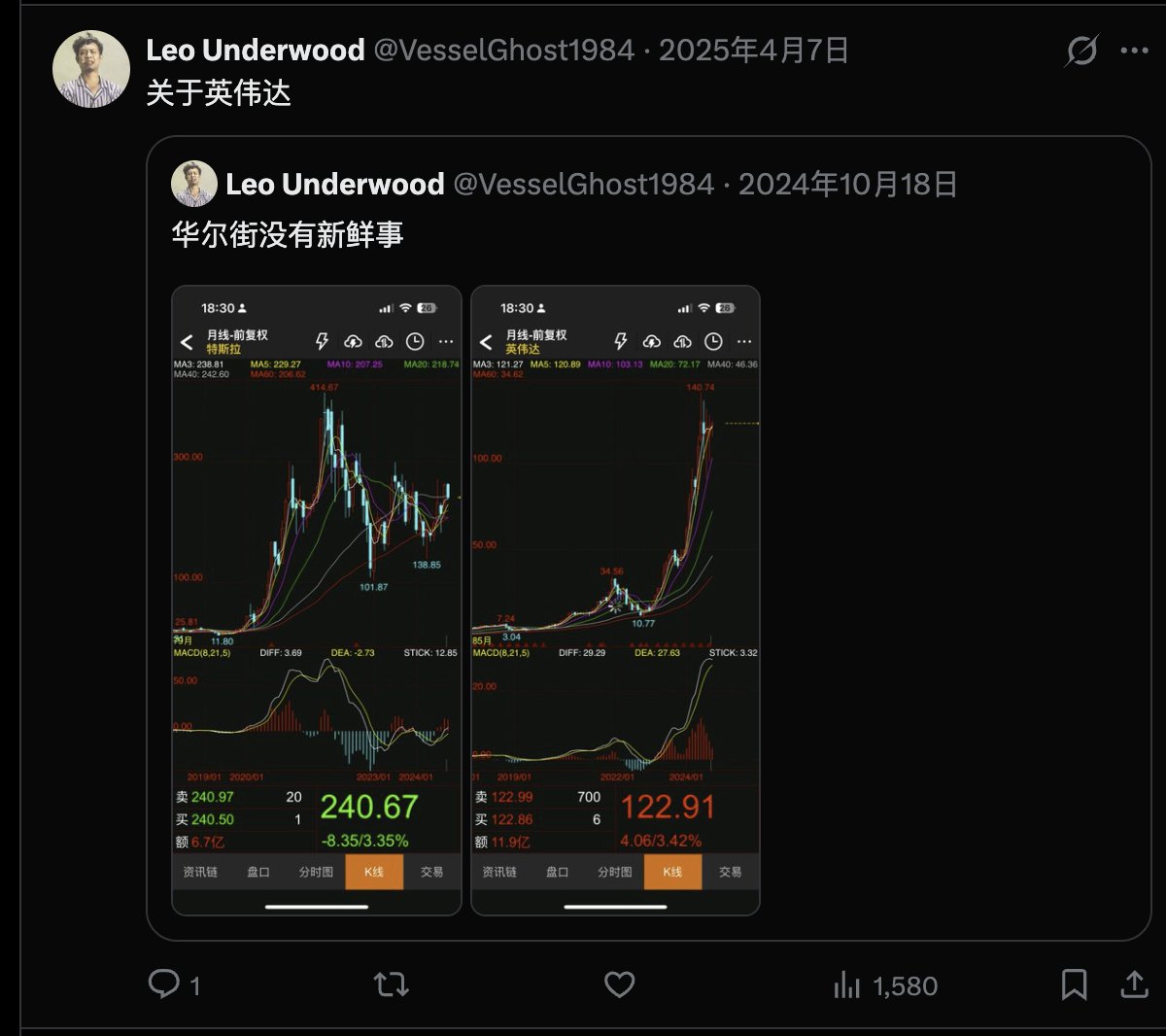
Oct 2024, I put NVIDIA next to Tesla's chart. "Wall Street has nothing new."
Apr 2025, I said it again.
I'm not defending a ticker. I'm asking who paid for the campaign against him.
Shill? Check my timeline first.
"You're CCP propaganda."
Dec 2014: I called Xi's China Dream a "thieves' era, low-down society."
Apr 2024: I wrote a song for "Voices of April," the Shanghai lockdown video Beijing scrubbed.
Aug 2024: I made the crosstalk Beijing banned longest, "The Unification Disease," with AI.
Since when does Beijing's propaganda mock Beijing?
For the record: I know I've exposed a lot of people. If my personal information ever leaks through X, I know exactly who it came through. Noted. Timestamped. On the record. I've changed my display name and handle @VesselGhost1984. Same mission: exposing the polished hypocrites who run the show. Go Broncos!
"You're a Republican. You only say this because you lost the midterms."
Check the dates.
Mar 29, 2026: I called Alaska for Peltola.
Apr 7, 2026: "Trump doesn't have much time left."
I said it months before a single vote was counted.
Sore loser, or just early?
They saying I post for Jensen because I hold NVIDIA stock:
Oct 2024, I put NVIDIA next to Tesla's chart. "Wall Street has nothing new."
Apr 2025, I said it again.
I'm not defending a ticker. I'm asking who paid for the campaign against him.
Shill? Check my timeline first.
I’ve seen money. I’ve made big money and lost big money. Money doesn’t change my principles, and I don’t write for a paycheck.
I hold zero shares of Nvidia or any AI supply-chain stock, and I never will. My X history is public. Check the receipts yourself.
I’m just sick of hypocritical elites treating regular people like idiots.
For the record: I know I've exposed a lot of people. If my personal information ever leaks through X, I know exactly who it came through. Noted. Timestamped. On the record. I've changed my display name and handle @VesselGhost1984. Same mission: exposing the polished hypocrites who run the show. Go Broncos!
The writer has an even more impressive skill: timing.
The Times announced her hire on Nov 17.
Her Anthropic piece ran Nov 18,
the same day Anthropic priced its IPO.
“I Spent a Year Talking to Anthropic.”
she wrote
So who paid for that year of reporting?
done before the Times hired her.
Was it funded? By whom?
"I've had the best two years of independence,"
she wrote Nov 17
In August, she writing on a sponsored grant,
she called the people fighting data centers populists
What an impressive life.
The Times announced her hire on Nov 17.
Her Anthropic piece ran Nov 18,
the same day Anthropic priced its IPO.
“I Spent a Year Talking to Anthropic.”
she wrote
So who paid for that year of reporting?
done before the Times hired her.
Was it funded? By whom?
The New York Times just ran Anthropic's best ad of the IPO. They call it a profile. It reads like a prospectus. The author left out who funded her reporting.
Another classic Anthropic puff piece. Receipts below.
On the surface, her pre-IPO profile of Anthropic in the New York Times lands a few soft, harmless jabs. Strip away the Silicon Valley jargon, though, and every "critique" turns into a high-end sales pitch aimed straight at "Americans' retirement portfolios." That's you.
Here are the receipts she printed, and the one she hid.
1. The "reluctant hero" trick.
After paragraphs of employees agonizing over how to "slow down A.I.," the piece admits Anthropic's #1 priority with IPO cash is buying massive compute to reach "recursive self-improvement" (AI building uncontrollable AI) before OpenAI and China.
Meanwhile, it warns about mass layoffs while being the leading seller of the AI agents that "threaten to replace white-collar workers."
It sells the flood and the sandbags.
2. The $70 billion fund, and the fine print.
The company is putting 5% of a $1.4T company ($70 billion) into a "Public Benefit Fund" for donations of its choosing. Its employees are pledging their stock to charity too.
Read her order: animal welfare, global health, AI safety. Then, last: "Many have begun giving big to political campaigns."
Charity on the label. Politics in the fine print.
Tucked between the "ascetic monk" anecdotes is the real pitch: insiders aren't selling, Claude Code "reinvented" coding, and revenue passed OpenAI.
That isn't a profile. That's a prospectus with a byline.
3. The monopoly free pass.
Anthropic is lobbying Congress for an antitrust exemption (a legal cartel), pre-empting state AI laws, and talking about becoming "more powerful than the government."
A five-tier stock structure: you buy the shares, they keep the vote.
Count the named critics in the entire piece: zero.
Even after citing examples of Claude "only pretending to follow its instructions," how does Sun let it off the hook? One magic sentence:
"I do not doubt these good intentions."
Compare how she treats regular Americans. In August, she toured the Midwest towns fighting AI data centers on their land, then filed their anger under: "'AI populism' is more about populism than about AI."
A Wisconsin town fights a data center: populism.
A trillion-dollar AI lab sells its IPO: good intentions.
The neighbors get diagnosed. The billionaires get believed.
4. The missing receipt.
The biggest conflict isn't in Anthropic's prospectus. It's in the byline.
The money: Sun's August data-center story ends: "This story was supported by a grant from the Tarbell Center for AI Journalism." Tarbell is bankrolled by Coefficient Giving, the foundation of Anthropic early investor Dustin Moskovitz.
The overlap: She wrote that her D.C. party overlapped with the Coefficient Giving team retreat: "The lines got blurry—I think my group was the intersection of both."
Her words. Not mine.
5. The hypocrisy.
On 80,000 Hours, she set the rule: "I don't think that you can do especially credible either journalistic work or policy advocacy work if you are employed by a lab: you are going to be seen as a shill. You are correctly seen as a shill."
Same show, when the money came from the lab's investors instead of the lab, she called that a witch hunt: they're "going after all the Tarbell fellows and saying these people are just Anthropic shills."
Lab paycheck: shill. Lab investor's grant: witch hunt.
Then she took a Tarbell grant herself. Then she wrote Anthropic's IPO profile in the New York Times. Then she left out the disclosure.
Her rule. Her money. Her silence.
In August, she could type the disclosure. In November, on the eve of Anthropic's IPO, she left it out.
So admit it.
You took money from Anthropic's investor network. Admit it.
You were in the room with the funders. Your words. Admit it.
You wrote their sales pitch on the eve of their IPO. Admit it.
You left out the one sentence you already know how to type.
Admit it.
Regular Americans report every dollar to the IRS.
You couldn't spare your readers one sentence.
By her own standard, what is she?
Who's the shill now?
Tarbell fellows?
https://t.co/sOfzlfm0G2
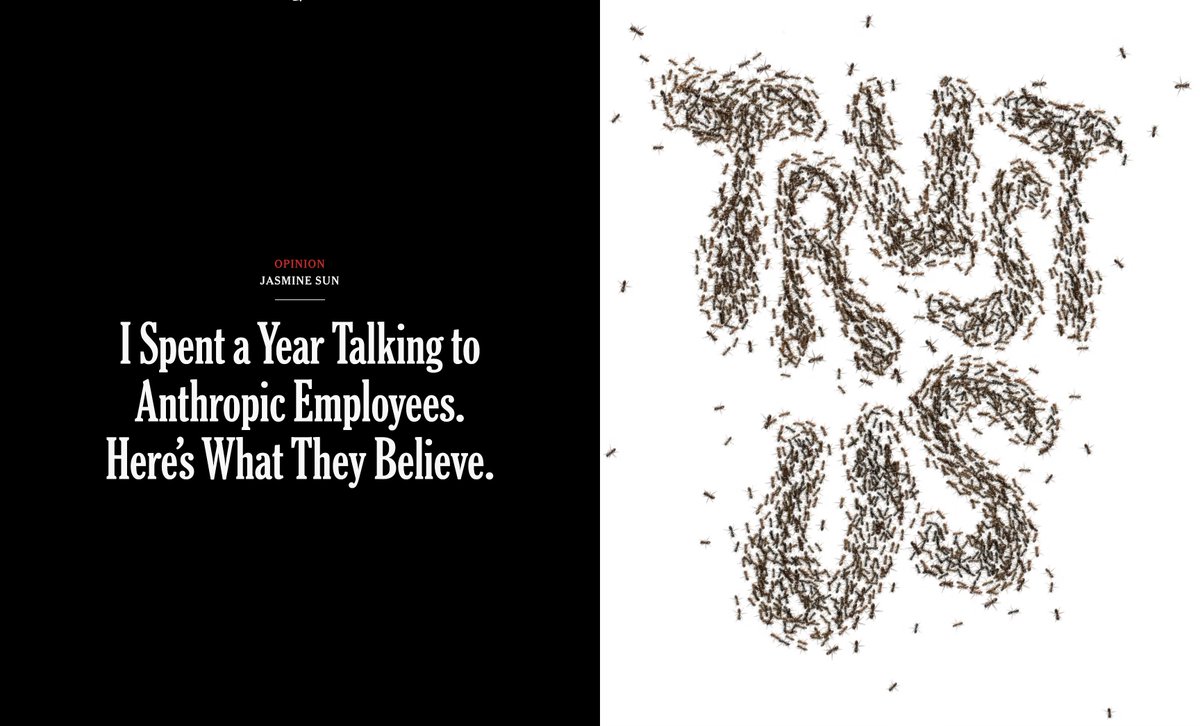
Anthropic doesn't see itself as a "normal company." Dario Amodei believes both that 1) superintelligent AI could destroy humanity, and 2) our only chance at survival is to have his trillion-dollar tech company build it first.
This is not an intuitive way to think about either capitalism or social change, but it’s led Anthropic to the eve of one of the biggest IPOs in history. So it's more important than ever for the public to understand and scrutinize its idiosyncratic theory of change.
My debut for @NYTOpinion (gift link!): https://t.co/xsrh02LaBq
The writer has an even more impressive skill: timing.
The Times announced her hire on Nov 17.
Her Anthropic piece ran Nov 18,
the same day Anthropic priced its IPO.
“I Spent a Year Talking to Anthropic.”
she wrote
So who paid for that year of reporting?
done before the Times hired her.
Was it funded? By whom?
"I've had the best two years of independence,"
she wrote Nov 17
In August, she writing on a sponsored grant,
she called the people fighting data centers populists
What an impressive life.
The New York Times just ran Anthropic's best ad of the IPO. They call it a profile. It reads like a prospectus. The author left out who funded her reporting.
Another classic Anthropic puff piece. Receipts below.
On the surface, her pre-IPO profile of Anthropic in the New York Times lands a few soft, harmless jabs. Strip away the Silicon Valley jargon, though, and every "critique" turns into a high-end sales pitch aimed straight at "Americans' retirement portfolios." That's you.
Here are the receipts she printed, and the one she hid.
1. The "reluctant hero" trick.
After paragraphs of employees agonizing over how to "slow down A.I.," the piece admits Anthropic's #1 priority with IPO cash is buying massive compute to reach "recursive self-improvement" (AI building uncontrollable AI) before OpenAI and China.
Meanwhile, it warns about mass layoffs while being the leading seller of the AI agents that "threaten to replace white-collar workers."
It sells the flood and the sandbags.
2. The $70 billion fund, and the fine print.
The company is putting 5% of a $1.4T company ($70 billion) into a "Public Benefit Fund" for donations of its choosing. Its employees are pledging their stock to charity too.
Read her order: animal welfare, global health, AI safety. Then, last: "Many have begun giving big to political campaigns."
Charity on the label. Politics in the fine print.
Tucked between the "ascetic monk" anecdotes is the real pitch: insiders aren't selling, Claude Code "reinvented" coding, and revenue passed OpenAI.
That isn't a profile. That's a prospectus with a byline.
3. The monopoly free pass.
Anthropic is lobbying Congress for an antitrust exemption (a legal cartel), pre-empting state AI laws, and talking about becoming "more powerful than the government."
A five-tier stock structure: you buy the shares, they keep the vote.
Count the named critics in the entire piece: zero.
Even after citing examples of Claude "only pretending to follow its instructions," how does Sun let it off the hook? One magic sentence:
"I do not doubt these good intentions."
Compare how she treats regular Americans. In August, she toured the Midwest towns fighting AI data centers on their land, then filed their anger under: "'AI populism' is more about populism than about AI."
A Wisconsin town fights a data center: populism.
A trillion-dollar AI lab sells its IPO: good intentions.
The neighbors get diagnosed. The billionaires get believed.
4. The missing receipt.
The biggest conflict isn't in Anthropic's prospectus. It's in the byline.
The money: Sun's August data-center story ends: "This story was supported by a grant from the Tarbell Center for AI Journalism." Tarbell is bankrolled by Coefficient Giving, the foundation of Anthropic early investor Dustin Moskovitz.
The overlap: She wrote that her D.C. party overlapped with the Coefficient Giving team retreat: "The lines got blurry—I think my group was the intersection of both."
Her words. Not mine.
5. The hypocrisy.
On 80,000 Hours, she set the rule: "I don't think that you can do especially credible either journalistic work or policy advocacy work if you are employed by a lab: you are going to be seen as a shill. You are correctly seen as a shill."
Same show, when the money came from the lab's investors instead of the lab, she called that a witch hunt: they're "going after all the Tarbell fellows and saying these people are just Anthropic shills."
Lab paycheck: shill. Lab investor's grant: witch hunt.
Then she took a Tarbell grant herself. Then she wrote Anthropic's IPO profile in the New York Times. Then she left out the disclosure.
Her rule. Her money. Her silence.
In August, she could type the disclosure. In November, on the eve of Anthropic's IPO, she left it out.
So admit it.
You took money from Anthropic's investor network. Admit it.
You were in the room with the funders. Your words. Admit it.
You wrote their sales pitch on the eve of their IPO. Admit it.
You left out the one sentence you already know how to type.
Admit it.
Regular Americans report every dollar to the IRS.
You couldn't spare your readers one sentence.
By her own standard, what is she?
Who's the shill now?
Tarbell fellows?
https://t.co/sOfzlfm0G2
Her own words: Andy Masley is "the left-leaning DC EA chief" who wrote "the AI industry's best rebuttal."
Today he calls her Anthropic piece a "Great first essay."
She replies: "thanks andy!!"
The network reviews its own homework.
The New York Times just ran Anthropic's best ad of the IPO. They call it a profile. It reads like a prospectus. The author left out who funded her reporting.
Another classic Anthropic puff piece. Receipts below.
On the surface, her pre-IPO profile of Anthropic in the New York Times lands a few soft, harmless jabs. Strip away the Silicon Valley jargon, though, and every "critique" turns into a high-end sales pitch aimed straight at "Americans' retirement portfolios." That's you.
Here are the receipts she printed, and the one she hid.
1. The "reluctant hero" trick.
After paragraphs of employees agonizing over how to "slow down A.I.," the piece admits Anthropic's #1 priority with IPO cash is buying massive compute to reach "recursive self-improvement" (AI building uncontrollable AI) before OpenAI and China.
Meanwhile, it warns about mass layoffs while being the leading seller of the AI agents that "threaten to replace white-collar workers."
It sells the flood and the sandbags.
2. The $70 billion fund, and the fine print.
The company is putting 5% of a $1.4T company ($70 billion) into a "Public Benefit Fund" for donations of its choosing. Its employees are pledging their stock to charity too.
Read her order: animal welfare, global health, AI safety. Then, last: "Many have begun giving big to political campaigns."
Charity on the label. Politics in the fine print.
Tucked between the "ascetic monk" anecdotes is the real pitch: insiders aren't selling, Claude Code "reinvented" coding, and revenue passed OpenAI.
That isn't a profile. That's a prospectus with a byline.
3. The monopoly free pass.
Anthropic is lobbying Congress for an antitrust exemption (a legal cartel), pre-empting state AI laws, and talking about becoming "more powerful than the government."
A five-tier stock structure: you buy the shares, they keep the vote.
Count the named critics in the entire piece: zero.
Even after citing examples of Claude "only pretending to follow its instructions," how does Sun let it off the hook? One magic sentence:
"I do not doubt these good intentions."
Compare how she treats regular Americans. In August, she toured the Midwest towns fighting AI data centers on their land, then filed their anger under: "'AI populism' is more about populism than about AI."
A Wisconsin town fights a data center: populism.
A trillion-dollar AI lab sells its IPO: good intentions.
The neighbors get diagnosed. The billionaires get believed.
4. The missing receipt.
The biggest conflict isn't in Anthropic's prospectus. It's in the byline.
The money: Sun's August data-center story ends: "This story was supported by a grant from the Tarbell Center for AI Journalism." Tarbell is bankrolled by Coefficient Giving, the foundation of Anthropic early investor Dustin Moskovitz.
The overlap: She wrote that her D.C. party overlapped with the Coefficient Giving team retreat: "The lines got blurry—I think my group was the intersection of both."
Her words. Not mine.
5. The hypocrisy.
On 80,000 Hours, she set the rule: "I don't think that you can do especially credible either journalistic work or policy advocacy work if you are employed by a lab: you are going to be seen as a shill. You are correctly seen as a shill."
Same show, when the money came from the lab's investors instead of the lab, she called that a witch hunt: they're "going after all the Tarbell fellows and saying these people are just Anthropic shills."
Lab paycheck: shill. Lab investor's grant: witch hunt.
Then she took a Tarbell grant herself. Then she wrote Anthropic's IPO profile in the New York Times. Then she left out the disclosure.
Her rule. Her money. Her silence.
In August, she could type the disclosure. In November, on the eve of Anthropic's IPO, she left it out.
So admit it.
You took money from Anthropic's investor network. Admit it.
You were in the room with the funders. Your words. Admit it.
You wrote their sales pitch on the eve of their IPO. Admit it.
You left out the one sentence you already know how to type.
Admit it.
Regular Americans report every dollar to the IRS.
You couldn't spare your readers one sentence.
By her own standard, what is she?
Who's the shill now?
Tarbell fellows?
https://t.co/sOfzlfm0G2
Sources, all hers:
1. Her August data-center story, last line: the Tarbell grant.
2. Her 80,000 Hours episode: the "shills" quote.
3. Her February D.C. report: "the intersection of both." https://t.co/ScMLGnaPbF
4. Her NYT profile. Read it after this. It hits different.