Then Tesla frees up Fremont factory space for Optimus humanoid robots, accelerates Robotaxi and full self-driving rollout, and focuses on the next-gen vehicle platform. Model 3, Y, and Cybertruck keep the lights on while autonomy and robotics take center stage. End of an era, start of the next one. 🚀
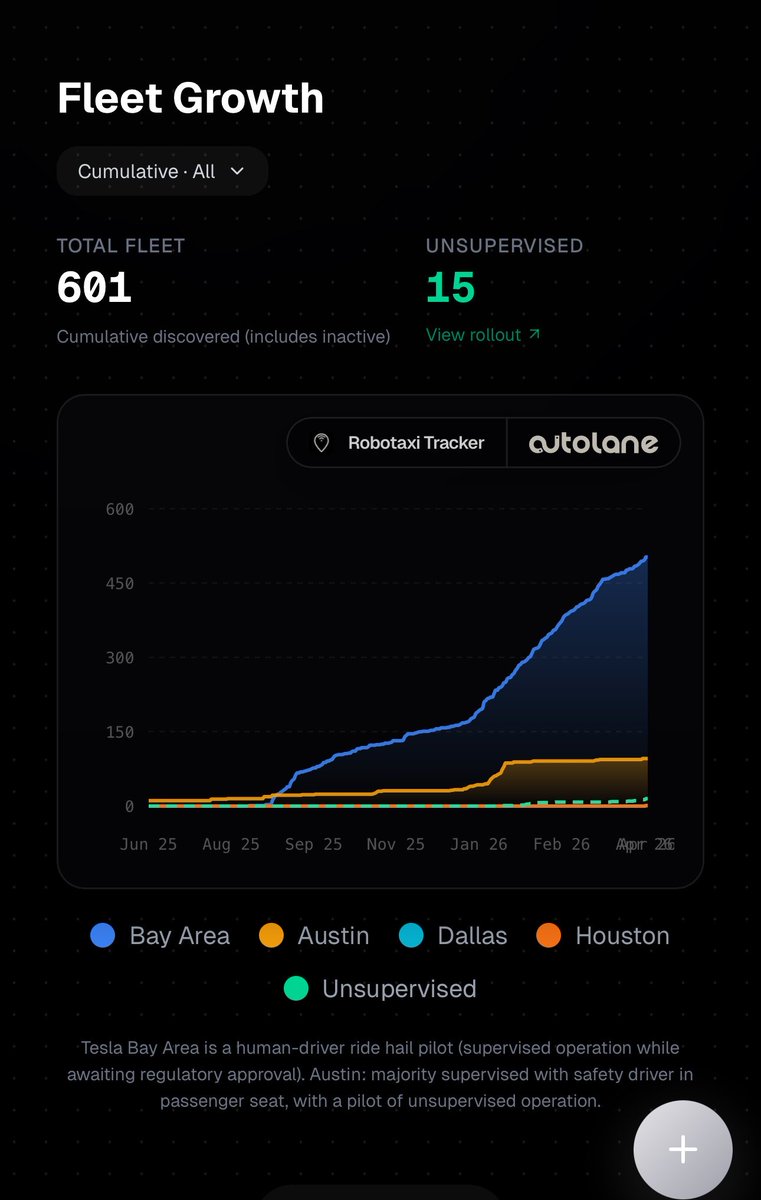
1. Initially, continued increase in deployment of unsupervised Robotaxis with no issues.
2. Strong Optimus demo including proven real use cases.
3. Unsupervised released in consumer vehicles.
4. Selling every Optimus they can make.
Lower cost SUV and CyberUte would bolster sales, but not create a "breakout."
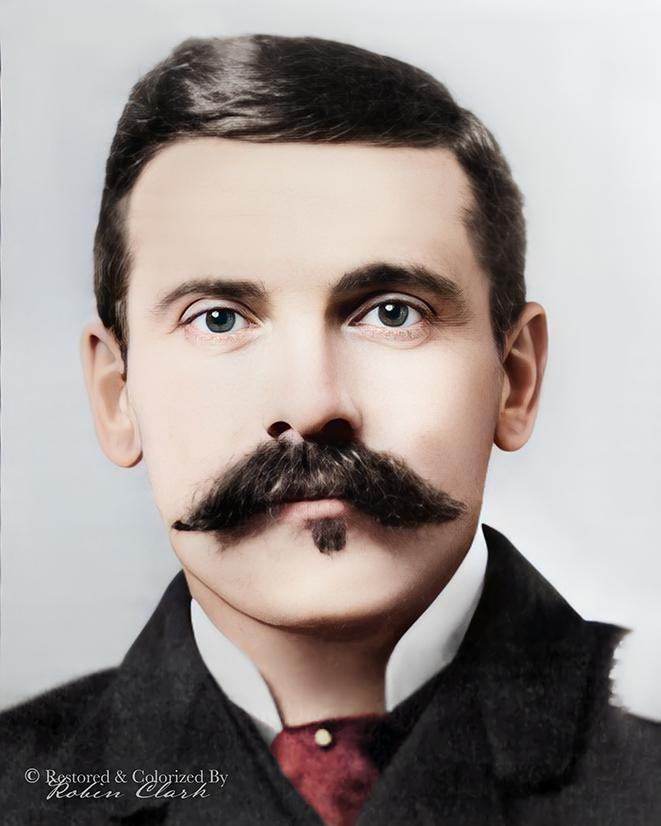
Doc Holliday was a dentist with a classical education in Greek and Latin who killed his first man at 19, coughed blood into a handkerchief for the next 17 years, and died in bed with a glass of whiskey, saying, "This is funny."
Funny because he'd spent his entire adult life expecting to die in a gunfight. He never did.
John Henry Holliday was born in Griffin, Georgia in 1851. He came into the world with a cleft palate and a partial cleft lip, a deformity that in 1851 was usually a death sentence for an infant. His uncle, a surgeon named John Stiles Holliday, performed the corrective surgery himself when the baby was two months old. His mother Alice spent the next several years patiently teaching the boy to speak clearly. She taught him piano. She taught him manners. She taught him how to bow to a woman and how to address a gentleman. By the time he was a teenager, John Henry could quote Virgil in the original Latin, play Chopin from memory, and dance a quadrille.
Then she died of tuberculosis when he was 15, and so did the small, soft world she'd built for him.
He was sent to Philadelphia to study dentistry. He graduated from the Pennsylvania College of Dental Surgery in 1872 at the age of 20, one of the youngest in his class, and his entry "Diseases of the Teeth" was considered exceptional. He won an award at a dental fair for "Best Set of Artificial Teeth in Gold." His diploma still exists. You can look at it.
He moved back south, set up a practice, and started coughing.
By 1873 the diagnosis was unmistakable. Pulmonary tuberculosis. The same disease that killed his mother. Doctors gave him a few months, maybe a year. They told him his only chance was to move west, where the dry air might slow the lungs from drowning. He kissed his cousin Mattie goodbye. He had been in love with her for years. She would later become a Catholic nun, Sister Mary Melanie, and she was the woman Margaret Mitchell would model Melanie Hamilton on in Gone With the Wind. They wrote each other letters until the day he died. Nobody has ever found those letters. The family burned them.
He went to Dallas. He set up a dental office. And his patients, watching this thin polite young man cough blood into a handkerchief between extractions, stopped coming.
So he turned to cards.
Faro, mostly. Poker when he could find it. He had a gambler's gift and a dying man's nerve, and within two years he was making more in a week at the tables than he'd made in a year pulling teeth. He moved through Texas and into the Colorado mining camps, then New Mexico, then Arizona. He drank an estimated two to three quarts of whiskey a day, partly because it numbed the lungs and partly because nothing else did.
Here is what made him terrifying.
Most gunfighters in the Old West were cowards in expensive boots. They picked fights they could win and avoided fights they couldn't. Doc Holliday already knew he was dying. There was nothing you could threaten him with. There was no future you could take from him. He would walk into a room of armed men with that thin slow smile and a Colt and a knife and sometimes a sawed off shotgun under his long grey coat, and the math running behind his pale blue eyes was simple. Every day he was alive was already stolen. The men across the table had something to lose. He had nothing.
He weighed about 135 pounds. He was five foot ten. He was usually drunk. And by the time he reached Tombstone, men crossed streets to avoid him.
His common law wife was a Hungarian woman named Mary Katharine Horony, better known as Big Nose Kate. She had been born to nobility in Budapest, run away as a teenager after her parents died, worked as a prostitute in Iowa, and ended up on the frontier with a temper that matched his. He once got her out of jail by bribing a guard. She once got him out of jail by setting fire to the hotel next door as a distraction, then walking him out at gunpoint. They fought constantly. They loved each other in the way two people love each other when they both know one of them is going to die soon.
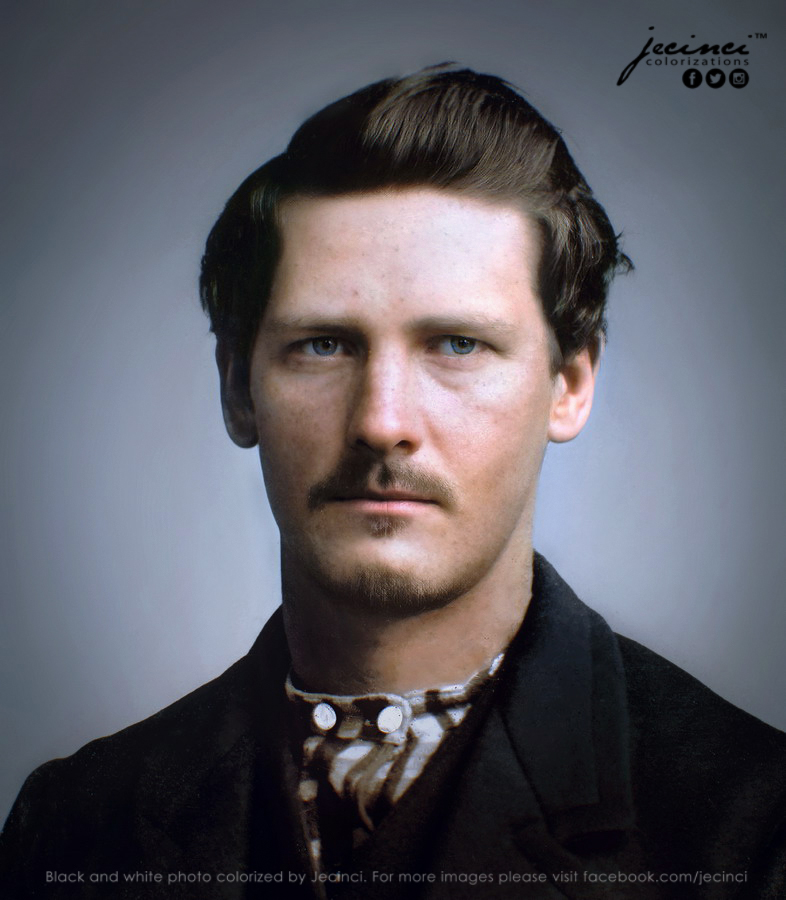
He met Wyatt Earp in Fort Griffin, Texas, in 1877. The friendship that followed would shape both their lives. The legend goes that Doc saved Wyatt's life in Dodge City, walking out of the Long Branch Saloon to find Wyatt surrounded by cowboys with guns drawn, and putting his pistol to the leader's temple before anyone saw him move. Wyatt later said he owed Doc his life. He said Doc was "the most skillful gambler, and the nerviest, fastest, deadliest man with a six gun I ever knew."
Wyatt Earp said that. About a tubercular dentist who could quote Cicero.
At the OK Corral on October 26, 1881, the fight lasted thirty seconds. Doc was carrying a 10 gauge coach gun under his coat. He killed Tom McLaury with both barrels. When Morgan Earp was assassinated months later in retaliation, Doc rode with Wyatt on what history would later call the Vendetta Ride, a three week killing spree across Arizona that left every man they believed responsible dead in the dirt. They were never caught. They were never tried. They simply rode out of the territory and disappeared.
By 1887 the disease had finally caught up with him. He was 36 years old. He weighed less than 120 pounds. He had outlived nearly every man who had ever tried to kill him, and most of the ones who had only thought about it. He checked into the Hotel Glenwood in Glenwood Springs, Colorado, where the sulfur springs were said to ease the lungs. They didn't.
On the morning of November 8th, the nurse brought him a glass of whiskey. He had always sworn he would die with his boots on, the way a gunfighter was supposed to die. He looked down at his bare feet under the white hospital sheet. He looked at the whiskey. He started to laugh.
"This is funny."
Then he drank it.
And he died.
Wyatt Earp died in 1929.
Let that sink in.
The man who shot his way through the O.K. Corral lived long enough to see talking pictures, the Model T, Prohibition, jazz, and Babe Ruth hit 60 home runs in a single season.
He consulted on early Hollywood Westerns. He drank coffee with Charlie Chaplin on studio lots. A young John Wayne, then a prop boy named Marion Morrison, met him on a film set and later admitted he built his entire screen persona around the way Wyatt carried himself. Quiet. Slow. Absolutely certain.
The legend almost never happened.
Wyatt was born in 1848 in a small Illinois town to a farmer with a temper and eight children. When the Civil War broke out, thirteen year old Wyatt tried to run away and enlist three separate times. His father caught him each time and dragged him home by the collar. By sixteen he was hauling freight across the prairie. By twenty he had buried his first wife, Urilla, who died of typhoid while pregnant with their first child. He went off the rails after that. Got arrested in Arkansas for stealing a horse, broke out of the jail by climbing through the roof, and disappeared into the West.
He hunted buffalo on the plains alongside a young Bat Masterson, who would later become his lifelong friend and, decades later, a sportswriter for a New York newspaper. He worked as a stagecoach guard, a faro dealer, a bouncer, a saloon owner, and at various points, a pimp. The legend tends to leave that last one out. His common law wife in Wichita was a known prostitute, and Wyatt himself was once fined for running a brothel. The myth wants a saint. The man was something messier and more interesting.
He drifted into Dodge City, then the rowdiest cattle town in America, and pinned on a deputy's badge. He almost never fired his gun. His preferred weapon was the long barrel of a Colt revolver, which he used to crack drunken cowboys across the skull. They called it "buffaloing." It was free, it was fast, and the man stayed alive while everyone around him kept dying.
It was in Dodge that he met Doc Holliday, a tubercular dentist from Georgia who had killed at least one man and was slowly drowning in his own lungs. The story goes that Doc once saved Wyatt's life in a saloon by drawing a pistol on a crowd of cowboys closing in behind him. From that moment on, the two were bound together. The lawman and the killer. The teetotaler and the alcoholic. The most unlikely friendship in the American West.
In 1879 Wyatt's older brother Virgil sent word from a new silver town in Arizona Territory called Tombstone. The whole Earp clan went, hoping to get rich. They never did.
What they got instead was a feud.
A loose gang of cattle rustlers and stagecoach robbers known as the Cowboys ran the back country around Tombstone. The Earps, now wearing federal and city badges, kept tangling with them. Words turned to threats. Threats turned to ambushes. On October 26, 1881, in a narrow vacant lot beside a livery stable, the two sides finally met.
The famous gunfight at the O.K. Corral lasted thirty seconds. Around thirty shots fired. Three Cowboys dead. Virgil shot. Morgan shot. Doc Holliday grazed. Wyatt walked away without a scratch.
It wasn't even at the O.K. Corral. It happened next door. The papers got it wrong and history kept the mistake.
Two months later, an assassin in the dark shot Virgil through the arm and shoulder, leaving him crippled for life. Three months after that, while Morgan was playing pool in a saloon, a gunman fired through a glass door and put a bullet through his spine. Wyatt was standing a few feet away. He held his brother as he bled out on the floor.
Morgan's last words, according to Wyatt, were a request that no one ever wrote down on paper.
Then Wyatt did something the law could not.
He pinned on a federal marshal's badge, gathered a small posse including Doc Holliday, who was coughing blood into a handkerchief the entire ride, and hunted every man he believed responsible for his brothers. No trials. No arrests. He killed them where he found them. A train yard. A wood camp. A creek bed at sunset where he reportedly emptied both barrels of a shotgun into a man named Curly Bill at point blank range.
History calls it the Earp Vendetta Ride.
He was never charged. He was never caught. Arizona issued warrants for his arrest. Wyatt simply rode out of the territory and kept moving for the next forty seven years.
He went to Colorado. To Idaho. To San Francisco, where he met Josephine Marcus, a Jewish stage actress who had once been engaged to the very sheriff Wyatt had been feuding with in Tombstone. She left that life behind and stayed with Wyatt until the day he died.
They never had children. They never owned a real home. They lived in hotels, tents, mining camps, and rented rooms.
In 1896 Wyatt was hired to referee a heavyweight prizefight in San Francisco between Bob Fitzsimmons and Tom Sharkey. He walked into the ring with a loaded pistol still in his coat pocket. The police made him remove it on the spot in front of ten thousand people. He then awarded the fight to Sharkey on a controversial foul call that the entire sporting world believed was fixed. Wyatt insisted, until the day he died, that the call was honest. Most historians still doubt him.
He chased gold in the Yukon during the Klondike rush, running a saloon in Nome, Alaska, where temperatures hit forty below and miners paid for whiskey in raw gold dust. He came back south. Prospected in the Mojave Desert with Josephine in a tent for years. Found a little copper. Lost most of it.
By the 1910s he was old, broke, and living in a small bungalow in Los Angeles. He spent his days at the new film studios watching cowboys ride across painted backdrops. He befriended Tom Mix, the biggest Western star of the era. He befriended William S. Hart, the second biggest. He told them stories. He corrected their gun handling. He hated almost every Western he saw because none of them got it right.
He tried to commission an honest biography of his life. Three different writers gave up. The first one Wyatt fired for being too soft. The second died. The third, Stuart Lake, wouldn't finish until after Wyatt was dead, and the resulting book, published in 1931, invented half the legend we know today, including a special long barreled revolver called the Buntline Special that almost certainly never existed.
Wyatt Earp died in his sleep in Los Angeles on January 13, 1929, at the age of eighty. He had no money. He had no land. He had Josephine, a few photographs, and a reputation he had spent a lifetime trying and failing to control.
When he was buried in a small Jewish cemetery just south of San Francisco, in Josephine's faith rather than his own, the pallbearers included Tom Mix and William S. Hart. Tom Mix wept openly at the grave. A studio orchestra played softly. The frontier was already a movie by then.
The last real gunslinger had just become a character in it.
Josephine lived another fifteen years. She spent most of them trying to clean up his story for the public and burning the parts she did not want history to see. She is buried beside him.
His grave was robbed in 1957. The headstone was stolen. Twice.
They keep replacing it.
People keep coming.
MICROSOFT DROPPED A 4B PARAMETER MODEL THAT TURNS ONE IMAGE INTO A 3D ASSET IN 3 SECONDS
and it's open source
TRELLIS.2 fully textured, physically accurate 3D models with PBR textures out of the box
not a rough mesh..not a placeholder
roughness, metallic, opacity the kind of detail that makes things look real under any lighting
and it handles the weird stuff too..open surfaces, hollow interiors, geometry that breaks every other tool
the model doesn't know the word "limitation" apparently
https://t.co/BoNwq30ulK
demo is live on hugging face right now
In an interview with Lex Friedman, Musk said that after 2027 there would be no going back.
When the reporter clarified what he meant, Musk paused for almost a minute, then added:
“It’s not a catastrophe, it’s a transition.” Analysts have identified three themes that he has been particularly vocal about: autonomous intelligence, loss of meaning, and energy dependency.
Everything he predicted is already happening.
The first sign is the collapse of attention.
Musk said that people will stop thinking long-term.
The planning horizon has shrunk from 30 years to three; people don’t build, they just innovate.
MIT research shows that the generation born after 2000 has an attention span of just eight seconds.
Musk called this cultural Alzheimer’s.
The second sign is artificial intelligence, which will no longer be subordinate.
Musk said: “When the system starts correcting the person, and not the other way around, linear logic will end.”
Algorithms already control our attention, choice of partners, food and thoughts. This will not be a revolt of machines, but a silent loss of freedom of choice.
The third sign is the energy dependence of civilization.
People are increasingly unable to survive without electricity for even a single day. When energy becomes currency, its control will become power.
Musk believes that by 2027, the relationship between people and energy will surpass everything, and everything that is not autonomous will disappear.
There is only one way out: a return to meaning. “Technology is stronger than us, but not smarter. As long as we have goals, we are not algorithms,” Musk repeated.
He added: “We must learn to be human before systems start doing everything for us and controlling us👌
downloaded👇🏻
@Endendini1