@rithwikpat@Remotion You've really done a great job, well done! I asked because it looks very professional; it seems like After Effects or similar programs were used.
@tejas3732@marv1nnnnn1@Remotion Can you explain to me how this video was produced, specifically which programs were used and what stages were involved?
The president of OpenAI just revealed the exact formula behind prompts that actually work.
Four elements that completely transform how AI responds to you.
Greg Brockman calls it the "perfect prompt" structure — and it's surprisingly simple ↓
The formula has 4 parts: Goal, Return Format, Warnings, Context Dump.
Here's what each one does:
1) Goal — Define exactly what you want the AI to produce. Not a vague question, but a specific outcome. Brockman treats it like a skilled colleague with a clear assignment.
2) Return Format — Tell the model how to structure its answer. When you specify the format upfront, you eliminate guesswork and get usable results immediately.
3) Warnings — Set boundaries. Tell the AI what to avoid, what to double-check, and where it must not make things up. This is how you reduce hallucinations and keep outputs grounded in reality.
4) Context Dump — Give the AI everything it needs to understand your world. Your audience, your constraints, your past attempts, your preferences. Unlike a human colleague, AI has zero implicit knowledge about you unless you spell it out.
But here's what most people miss...
The formula isn't the real breakthrough.
The mindset shift is.
Brockman's deeper lesson? Completeness matters more than cleverness.
The best prompts don't sound like cryptic commands. They sound like natural conversations (wordy, specific, full of side notes and background.)
The more relevant context you provide, the better the result. Every time.
And the community took it even further.
Prompt engineers started appending one powerful line:
"Ask me any clarifying questions needed to achieve the best outcome."
That single sentence turns a one-shot prompt into a back-and-forth dialogue. Suddenly the AI isn't just following orders. It's collaborating with you.
Yet underneath all the debate, one thing stayed consistent:
When OpenAI's president pulled back the curtain on how he personally structures prompts, the "secret formula" was four labeled sections that force you to think clearly before you type.
Start with intention. Shape the output. Reduce failure modes. Over-invest in context.
The people getting the best results from AI aren't writing better prompts.
They're thinking more clearly before they write them.
—
Thanks for reading!
Enjoyed this post?
Follow @realBigBrainAI for more content like this.
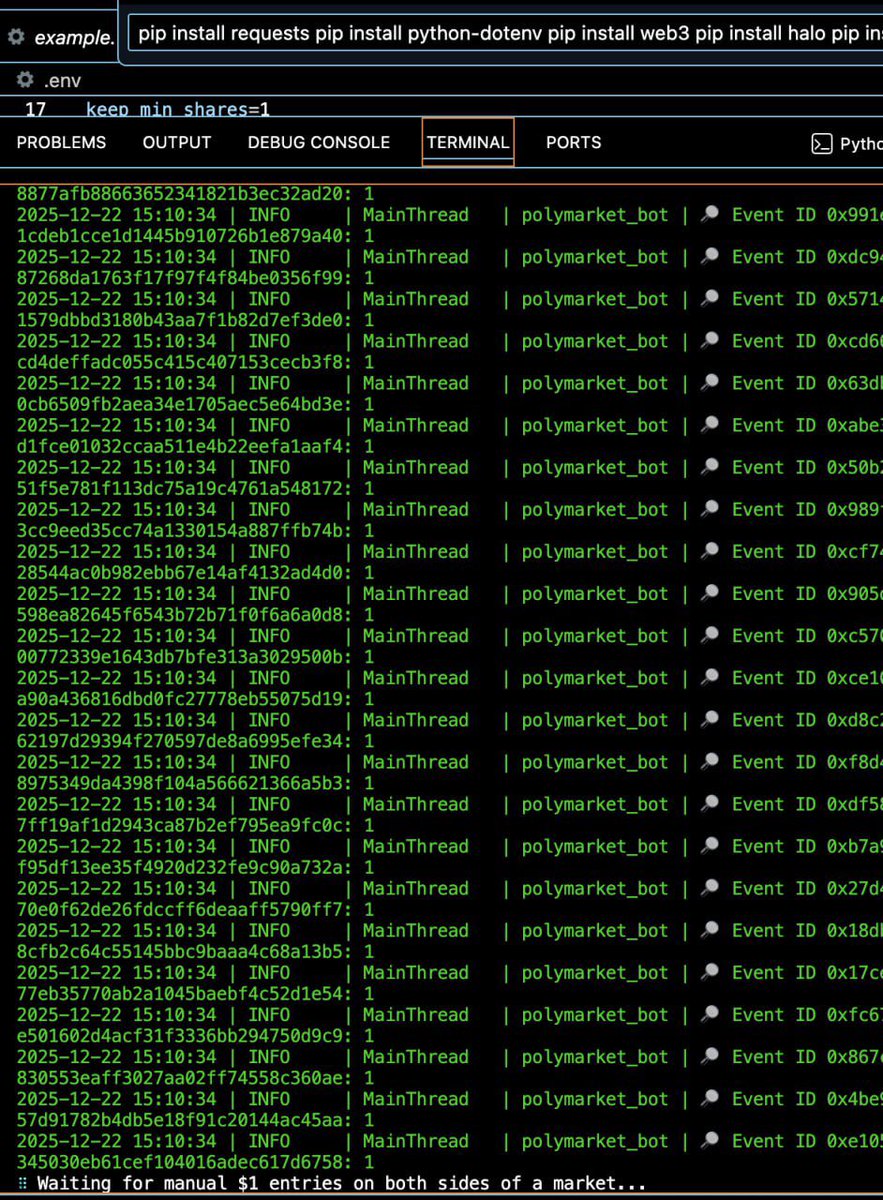
One trader turned Polymarket into a money printer
I’m not exaggerating. His results are honestly hard to believe: he started with $5 and scaled it to $3.7M
He’s not an insider Not friends with Trump or Musk He’s a programmer who wrote a script
Profile → https://t.co/WqQgX3QjKE Copytrade → https://t.co/UPSyph2hTm
I opened his script and was genuinely surprised No massive databases No insanely complex infrastructure Nothing “rocket science” level
I spent 5 hours breaking down his strategy
His FULL strategy:
1. “Free money” via NO bets
The bot targets near-impossible outcomes and stacks small, high-probability wins. This isn’t gambling - it’s closer to systematic risk underwriting.
2. Logic arbitrage
If event A must logically lead to event B, and the market hasn’t priced that in yet, the bot enters instantly. While you’re still reading the headline, the imbalance is already gone. No human can compete with that speed.
3. The real edge - sports and politics
These markets are flooded with retail money and delayed or emotional reactions. The bot lives in the spread, clipping tiny profits from every mismatch.
Scale matters
Tens of thousands of micro-trades every month, each worth just pennies. Stacked over time, they compound into seven figures.
Bottom line
There’s a real bot war happening on Polymarket. Crypto markets are already slowed down by fees and heavy competition, but sports markets are still pure chaos - easy money for those who automate.
This Polymarket trader made $500,000 using his ClawdBot script
Hard to believe, but this guy built the script in 5 hours and is already making solid money
He’s not a genius
He’s not an insider
And he’s not the creator of Polymarket
He’s just a regular trader who decided to write his OWN personal script
Profile → https://t.co/vDsdP2w5q2
I figured out how he can be copy-traded with minimal delay
Copytrade → https://t.co/gDTWibUQFE
After breaking down his entire script, I was honestly a bit surprised
No huge databases
No insanely complex infrastructure
Nothing rocket-science level
Here is the full strategy of the script:
Bets are placed not on event outcomes, but on price inefficiencies
Thousands of fast trades accumulate into a massive total profit
In calm markets, risks stay minimal, while strong trends allow capital to grow rapidly
Most traders can’t react fast enough, but the bot turns market delays into real money.
@Argona0x This post really caught my attention. Could you DM me about it so we can discuss and evaluate it together? Because I've also become interested in these things and want to improve myself. I need an entrepreneurial and knowledgeable mentor like you.🙏
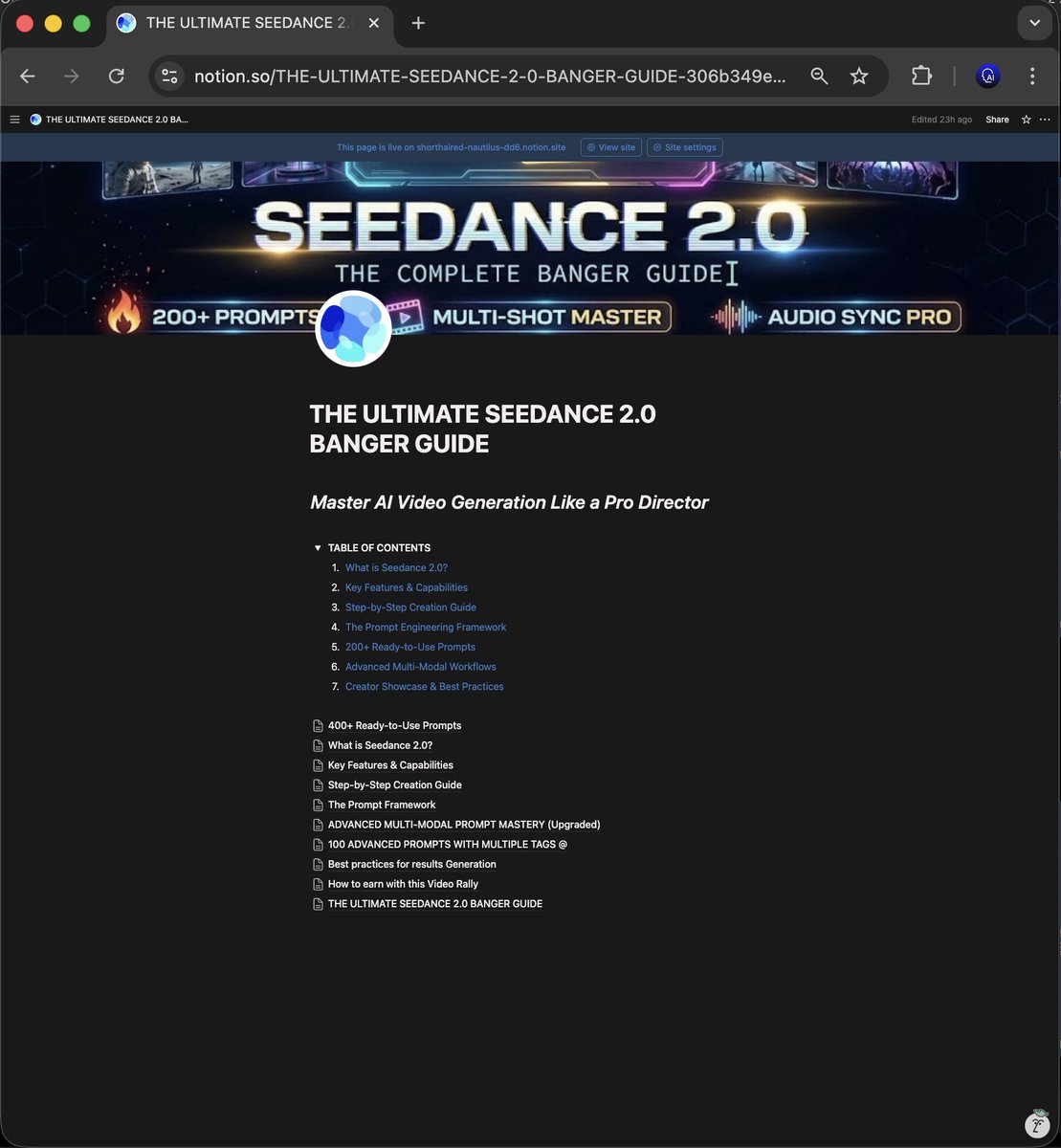
Seedance 2.0 is the best video model released yet.
People are just watching the videos, but no one is telling you how to create them or which prompts to use.
I made a complete guide with 400+ VFX-supported prompts for my readers.
Worth $199 in this rush.
FREE for 24 hours only.
♻️ Repost + Comment "VIDEO" → I'll DM the guide.
Note: Must follow first. (I can't DM otherwise)