End-of-Monday question for HR:
Has anyone at your company seen the plan's written comparative analysis for mental health and substance use disorder benefits?
1. Yes, we have a copy
2. We know who has it
3. First time hearing of it
Reply with a number.
Who answers for a mental health parity analysis depends on how the plan is funded.
Self-funded or level-funded: the employer, as plan sponsor, even if a TPA prepares it.
Fully insured: much of the load sits with the carrier, and states are its primary enforcers.
Which are you?
The Department of Labor says mental health parity audits start in three places (FAB 2026-03):
1. Mental health-only treatment exclusions
2. Prior authorization, concurrent and retrospective review
3. Network admission and provider pay
Which would be hardest to document?
Renewal signed? A to-do list from our team:
1. Within 30 days: request your claims report in writing (Texas insured plans)
2. Within 60 days: confirm rate-guarantee, termination, and run-out terms
3. Before a mid-year change: check plan documents, set the 60-day SBC notice date
HR and finance: what's the one renewal question you wish you'd asked before signing?
Three our team asks every time:
1. What's driving the increase?
2. What went to market, and what came back?
3. What does each option do to employee cost at the family tier?
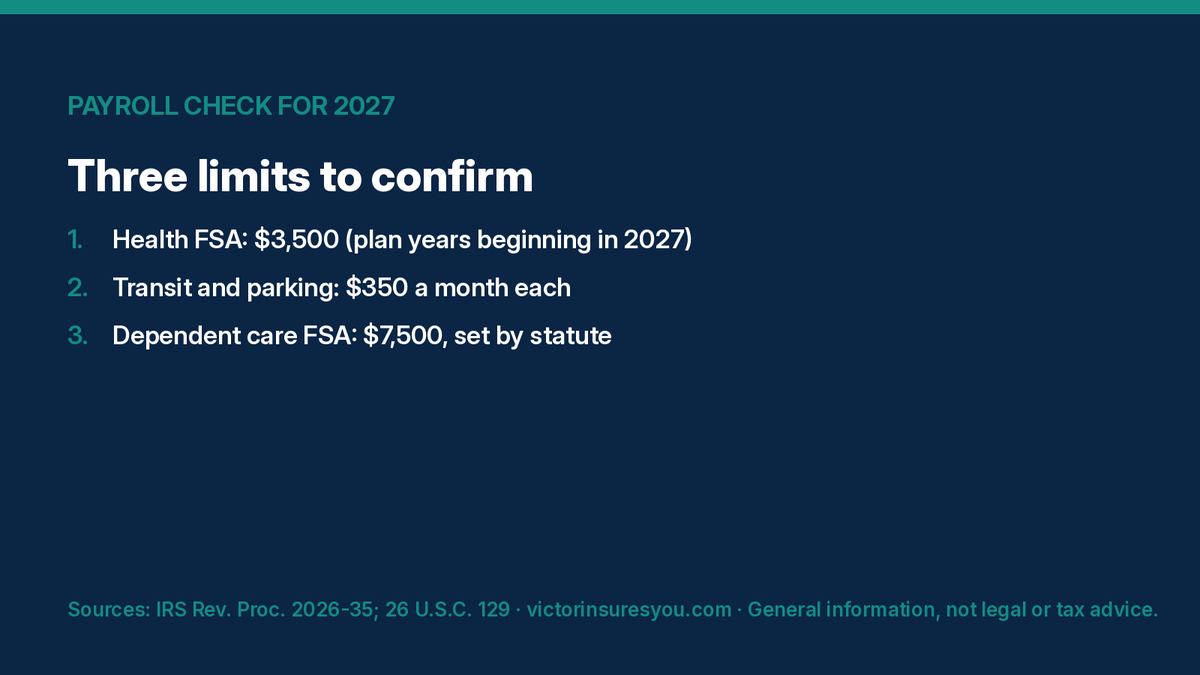
Payroll check before the first 2027 paycheck:
1. Health FSA cap: $3,500 (plan years beginning in 2027)
2. Transit and parking: $350 a month each
3. Dependent care FSA: $7,500, set by statute
Sources: IRS Rev. Proc. 2026-35; 26 U.S.C. 129
Which one is still on your list?
January 1, 2028 renewal? Count back 150 days and you land on Aug 4, 2027.
That's when our team starts: a fresh claims report, a read of contract terms, and time to model options. It's our planning rule, not a legal deadline.
When does your team usually start?
The Department of Labor (DOL) pharmacy benefit manager (PBM) fee disclosure rule applies to self-funded and level-funded plans of employers averaging 100 or more employees, for plan years beginning on or after July 1, 2027.
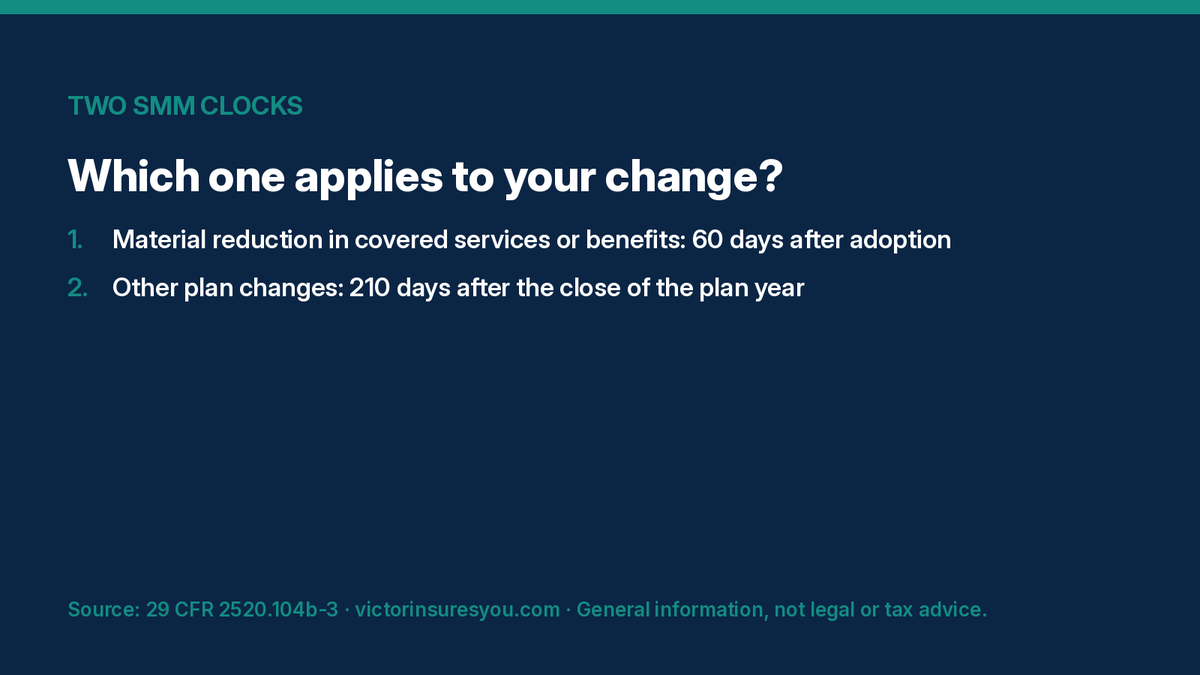
Two SMM clocks HR teams mix up (29 CFR 2520.104b-3):
1. Material reduction in covered services or benefits: 60 days after adoption (90-day communication alternative)
2. Other plan changes: 210 days after the close of the plan year of adoption
Which one trips your team up?
Planning a mid-year plan change?
If it's a material change that affects the Summary of Benefits and Coverage, enrollees get notice at least 60 days before it takes effect (45 CFR 147.200(b)). This covers changes outside a renewal.
Is the 60-day date on your calendar yet?