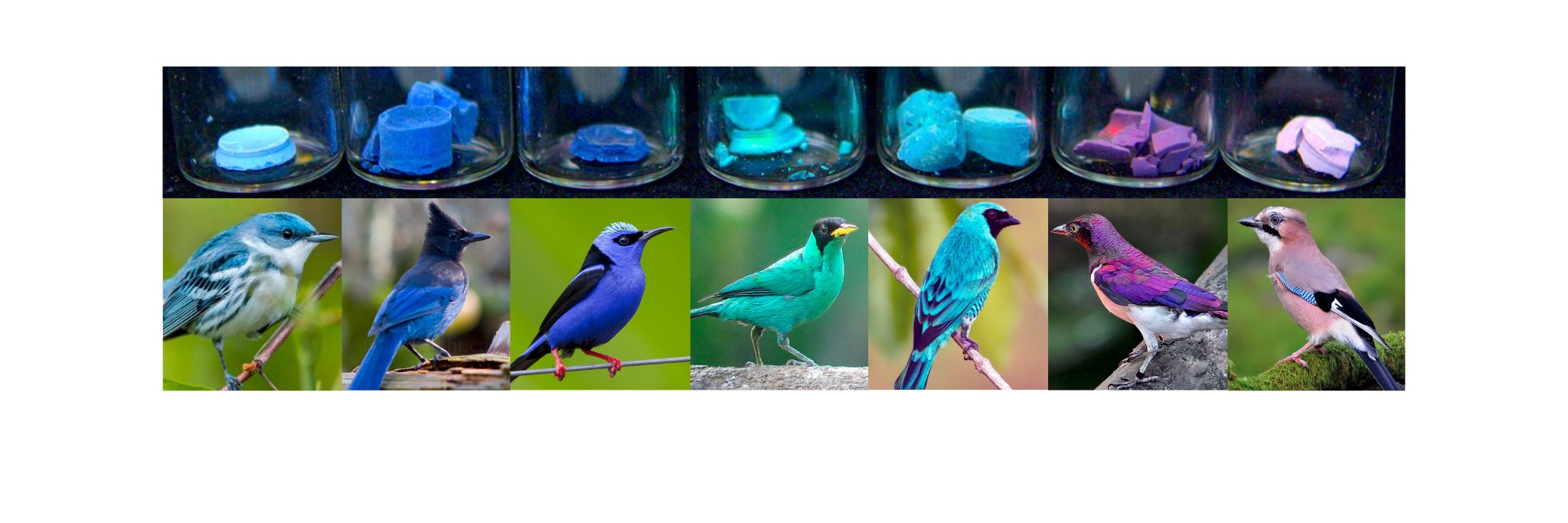
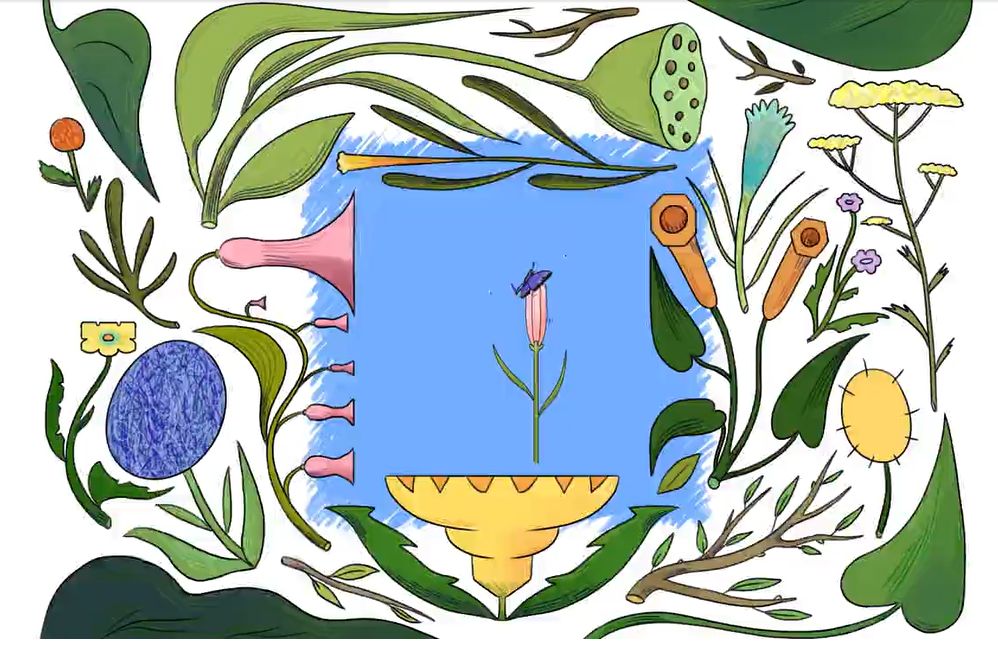
Can you guess what is the rarest color in nature (and why it’s rare)? Find out in my TED-Ed video! Thank you to the amazing @TED_ED team for a great collaboration and @artrake_studio for the beautiful and colorful animations! #rarestcolor#structuralcolor#pigment
.@VictoriaHwang explica que hay dos factores que determinan los colores que pueden observarse en la naturaleza: la física y la evolución. Y responde a la siguiente pregunta: ¿Qué colores son menos probables de ver en el mundo natural?
https://t.co/eLvgaQEIu3
.@VictoriaHwang: Si alguna vez te tropiezas con las alas violetas iridiscentes de una mariposa emperador púrpura, tómate un segundo para apreciar uno de los espectáculos más raros de la naturaleza.
https://t.co/eLvgaQEIu3
Our work on a new voltage-tunable color-changing system is online now! By integrating photonic glasses to dielectric elastomer actuators, we can use shape instabilities to cause homogenous color changes. https://t.co/CaPLyTZysN
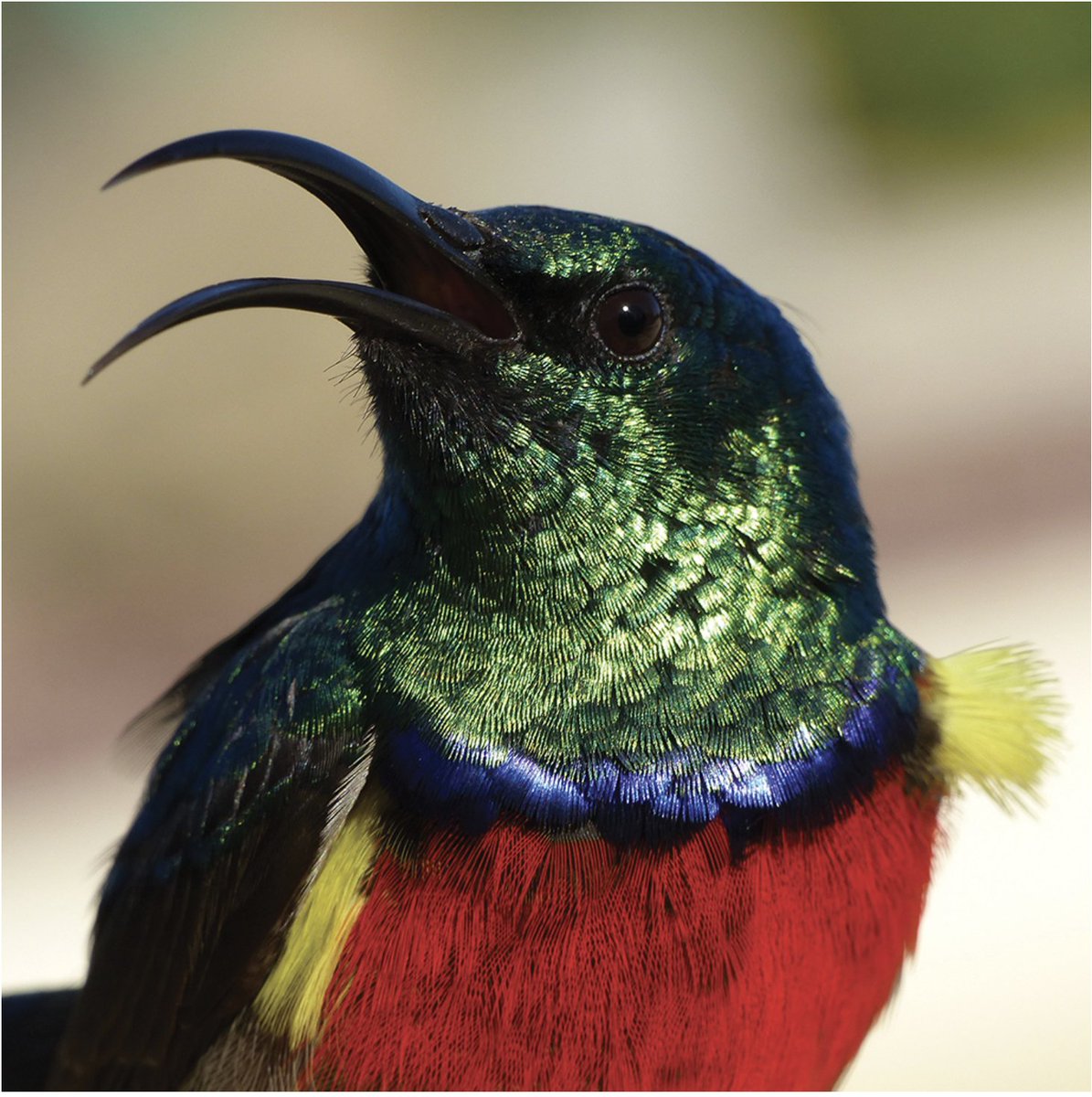
We all know that black materials become hotter in the sun than white, but what about other colors? In our new (cover article) paper, led by Svana Rogalla, we show that shiny iridescent feathers absorb more light & heat more than any other feather color! https://t.co/9anyEzguJc
Our paper is finally online: we use simulations demonstrate the trade-off between color saturation and angle-independent and offer a way to break the trade off. Thanks to Vinny, Annie, @VictoriaHwang and collaborators from UK #OSA_OpEx https://t.co/j2Ted59Ic8
Researchers go beyond biomimicry and recreate the sky-blue color of the mountain bluebird using a simple microstructure: https://t.co/OYhnBtnxJi @BASFCorporation@VictoriaHwang@PNASNews
Imagine paint that never fades or a full-color e-reader that is easier to read in the sunlight. Researchers have developed an easier way to design structural color for human applications: https://t.co/OYhnBtnxJi @PNASNews@BASFCorporation@VictoriaHwang
Imagine paint that never fades or a full-color e-reader that is easier to read in the sunlight. Researchers have developed an easier way to design structural color for human applications: https://t.co/OYhnBtnxJi @PNASNews@BASFCorporation@VictoriaHwang
While I may be the first woman in this office, I will not be the last—because every little girl watching tonight sees that this is a country of possibilities.