This painting seeks to portray the Passion, the Agony, and the enduring Spirit of Christ—capturing not only His physical suffering but the immeasurable love, sacrifice, and strength that defined His journey to the cross.
Titled: The passion
Size: 3ft x 4ft
Medium: Oil on Canvas
Available for Purchase @ $80,000
This painting seeks to portray the Passion, the Agony, and the enduring Spirit of Christ—capturing not only His physical suffering but the immeasurable love, sacrifice, and strength that defined His journey to the cross.
Titled: The passion
Size: 3ft x 4ft
Medium: Oil on Canvas
Available for Purchase @ $80,000
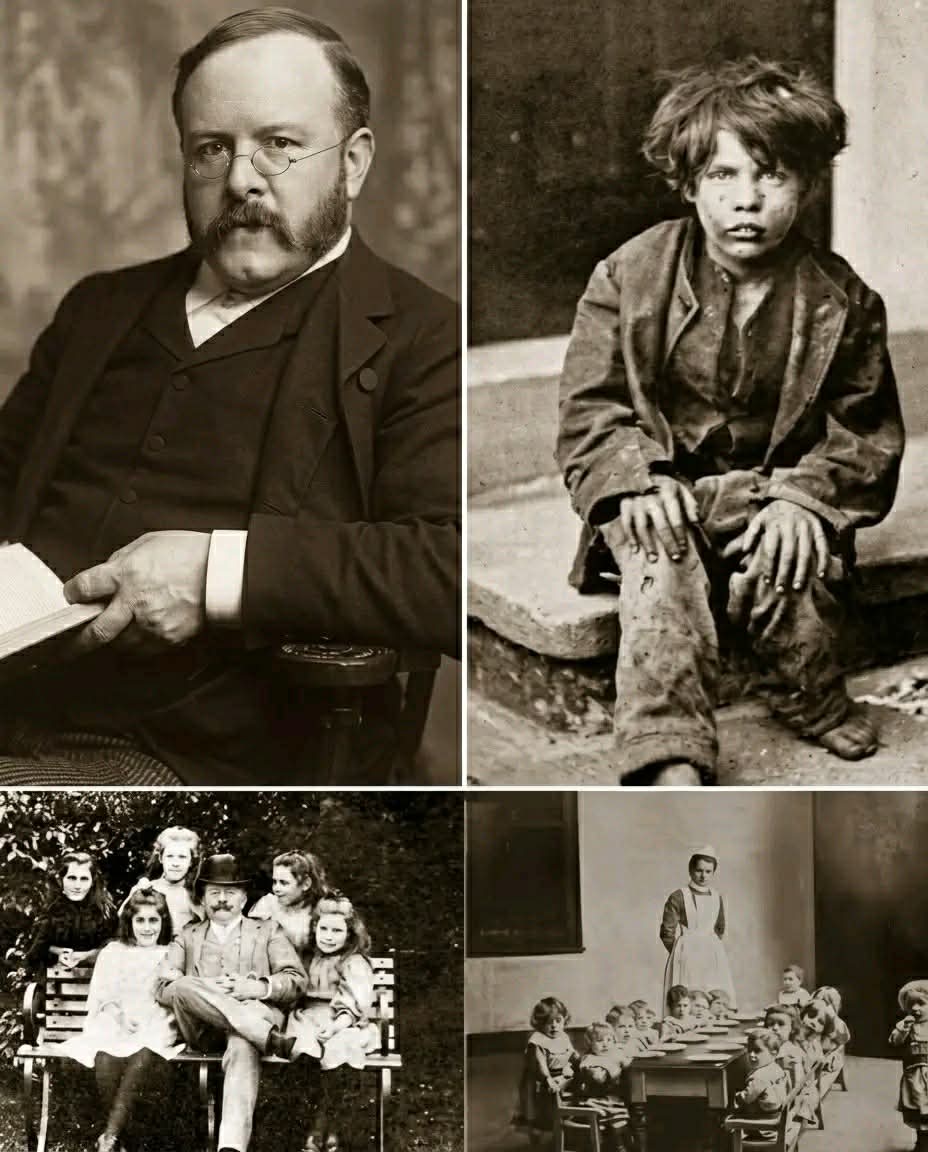
A 7-year-old boy slept under a bridge in London. No shoes. No food. No one who knew his name. A young stranger stopped and asked him a simple question — and what the child said next changed history forever.
His name was Jim. The year was 1866. London was choking under black factory smoke, and the East End was a maze of sewers, starvation, and invisible children. Jim was one of them — filthy clothes, matted hair, eyes that held pain no child should ever know.
Thomas Barnardo was just a 21-year-old medical student, quietly preparing to travel to China as a missionary. Then he met Jim crouched in a doorway, shivering.
"Are there more like you?" Thomas asked.
"Heaps of 'em, sir," Jim whispered. "More than I can count. We sleep where the dogs won't go."
A few days later, Jim was dead. He died alone in the cold, another child the city had simply forgotten to notice.
Thomas Barnardo never boarded that ship to China.
Instead, in 1870, he opened a small home for abandoned boys in East London. Above the door, he hung a sign that read:
"No destitute child will ever be refused admission."
One night, the home was full and he turned a boy away. Two days later, that same child was found dead from hunger and cold. Thomas wept. He made a vow he never broke: the door would always open.
When critics told him he was crazy and would run out of money, he kept building. More homes. Foster families. Vocational training. He gave street children — children people called "rats" — a trade, a name, and a future.
He didn't ask for papers. He didn't ask for backgrounds. He simply opened the door.
By the time Thomas Barnardo died in 1905, he had rescued more than 60,000 children from the streets of Britain.
Today, Barnardo's is still one of the UK's largest children's charities — still keeping a dead boy's whispered words alive, 160 years later.
Everything began with one man who stopped walking, looked down, and truly saw a child that the rest of the world had decided wasn't worth seeing.
Tag someone who still believes one person can change everything. 💙
@MissUniverse@VictoriaKjaerTh It looks like one strong contender to be the next #BondGirl comes from Denmark🇩🇰 people at @007‼Victoria was spotted in Bali, ID using a moto-taxi to come back to her hotel after a dinner out w/friends. @MissUniverse 2024 is still stealing hearts when she's not winning crowns❣
A powerful scene in the Odyssey happens when Odysseus finally returns to Ithaca after twenty years of war and wandering.
You would expect the story to end with celebration, with the hero coming home, the family reunited, and order restored.
Homer does something far stranger.
Odysseus arrives disguised as a beggar, because Athena warns him that the palace has been taken over by more than a hundred suitors who have been living there for years, eating his food, drinking his wine, and pressuring his wife Penelope to marry one of them.
They believe Odysseus is dead and in their minds the kingdom is already theirs.
So the king of Ithaca walks through his own halls dressed in rags while the men stealing his house sit comfortably at his tables. They mock him, throw scraps at him, and one of them even strikes him, and Odysseus takes it. That is the remarkable part, because the same man who blinded the Cyclops and survived twenty years of disasters now stands quietly while strangers insult him in his own home. Homer tells us his heart burns inside his chest and that he wants to attack them immediately, yet he restrains himself and waits.
Instead of striking, Odysseus studies the room carefully. He counts the men, watches their habits, and quietly observes which servants remain loyal and which have betrayed him. The hero of the Odyssey does something most people cannot do, which is delay revenge until the moment is right.
Eventually Penelope announces a contest and brings out Odysseus’ great bow, declaring that she will marry the man who can string it and shoot an arrow through twelve axe heads lined up in a row. One by one the suitors try and fail, because none of them can even bend the bow. Then the beggar asks for a turn. The suitors laugh at first, but the bow is eventually handed to him.
Odysseus takes it in his hands and strings it effortlessly. Homer says the sound of the bowstring tightening rings through the hall like the note of a swallow. Then he places an arrow on the string and sends it cleanly through all twelve axe heads.
In that moment the beggar disappears. Odysseus turns the bow toward the suitors and reveals who he is.
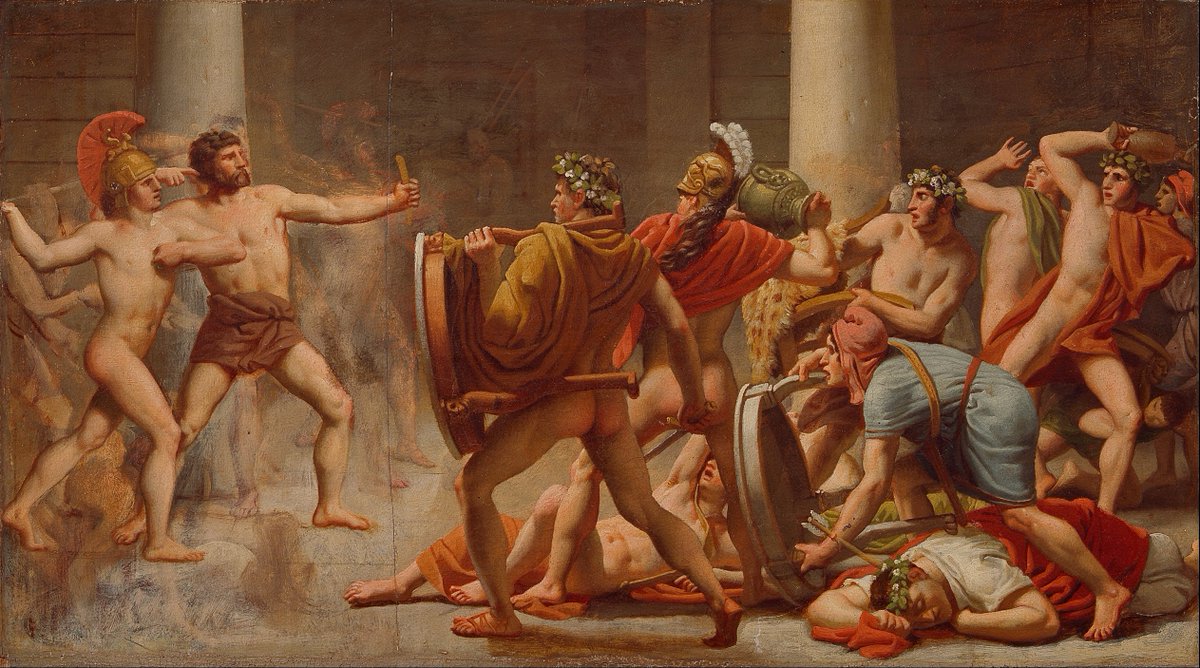
What follows is one of the most brutal scenes in Greek literature. The doors are sealed and the suitors realize too late that they are trapped inside the hall. Odysseus, his son Telemachus, and two loyal servants begin killing them one by one. There is no escape, no mercy, and no negotiation. The men who spent years consuming another man’s house die inside it.
It is a violent ending, but Homer wants you to understand something important. The real danger to Odysseus was never just the monsters and storms on the long journey home. It was the possibility that someone else might take his place while he was gone. When Odysseus finally returns, he reminds everyone in Ithaca of a simple truth: a man’s home is not truly his unless he is willing to fight for it.