The Causes and Consequences of Electoral Violence project examines the short, medium, and long-term triggers of electoral violence between the 1832 First Reform Act and outbreak of the Great War in 1914, as well as its immediate and long-term consequences: https://t.co/38cKWnaIMM
Today marks the 185 anniversary of the Newport uprising (see https://t.co/N3sWLPBHRA). To explore that violence in the Newport election before the 1839 uprising and thereafter, especially after the Second Reform Act, visit our interactive map at https://t.co/2t4Zb4fWpI
A wonderful write-up of @philipjcowley of our recently published @PastPresentSoc article on the causes and consequences of 19th Century Election Violence in England and Wales.
Read about the patterns of election violence in 19C England and Wales and the role of the previously ignored actors, commonly referred to as roughs, heavies, or lambs...
...when and where it was most useful to candidates and parties, and often involved the previously overlooked figure of the ‘hired rough’: men employed to disrupt elections by force. We thus advance a political, rather than cultural, explanation for electoral violence.
3⃣ Despite the recent historiographical emphasis on explaining electoral violence as a ritual expression of discontent, much violence resulted from elites strategizing to win elections. Electoral violence occurred disproportionately...
A 19thC tactic was the 'cooping' or 'bottling' of voters before polling day at pubs, where they would be plied with drink. Opposition voters would be detained until the polls had closed; party supporters would be kept safe from the opposition and then brought to the poll to vote.
With 4 days until polling day, we are sharing another Victorian election history fact. 4. Elections could be unruly and violent events, as this guest blog from the Victorian Election Violence Project @VictorianEV_UK explains: https://t.co/K5KOPnbU0k
Happy to share that we have been featured on @TheRestHistory's "Mad Elections (Part 1)", starting from around 40:00min at https://t.co/52Bg9vuxsZ
To explore more 19thC election violence stories, check-out our website (https://t.co/zpVHCkqF97) with an interactive map and blog!
🚨🎟️💥MAD ELECTIONS💥🎟️🚨
🗳️ With general elections underway in the UK, what is their riotous deep history?
🧨 The colourful kaleidoscope of British elections from 1265 to their early 20th century incarnation, has seen some of the most critical, shocking, and downright farcical moments of western democracy.
🍺 None more so than during the 17th, 18th and 19th centuries, when, following the dawn of party politics in the 1690’s, violence and “treating” - a means of enticing voters with raucous, drunken street parties - as tools of political persuasion, rose to the fore.
🏇 Few episodes encapsulate this more admirably than the election of 1698, which saw Whig candidates driving down their Tory opponents with hordes of hired horsemen, cudgelling them as they went.
🔫 So too that of 1865, when a good humoured ruckus between a cheerful liberal and a keen conservative resulted in a fatal shot to the mouth. The murderer was partially pardoned on the basis of having been from suffering from “election fever”…
💣 Today, Dominic and Tom discuss in titillating detail the highlights of history’s greatest, bawdiest and most bombastic pre-20th century elections.
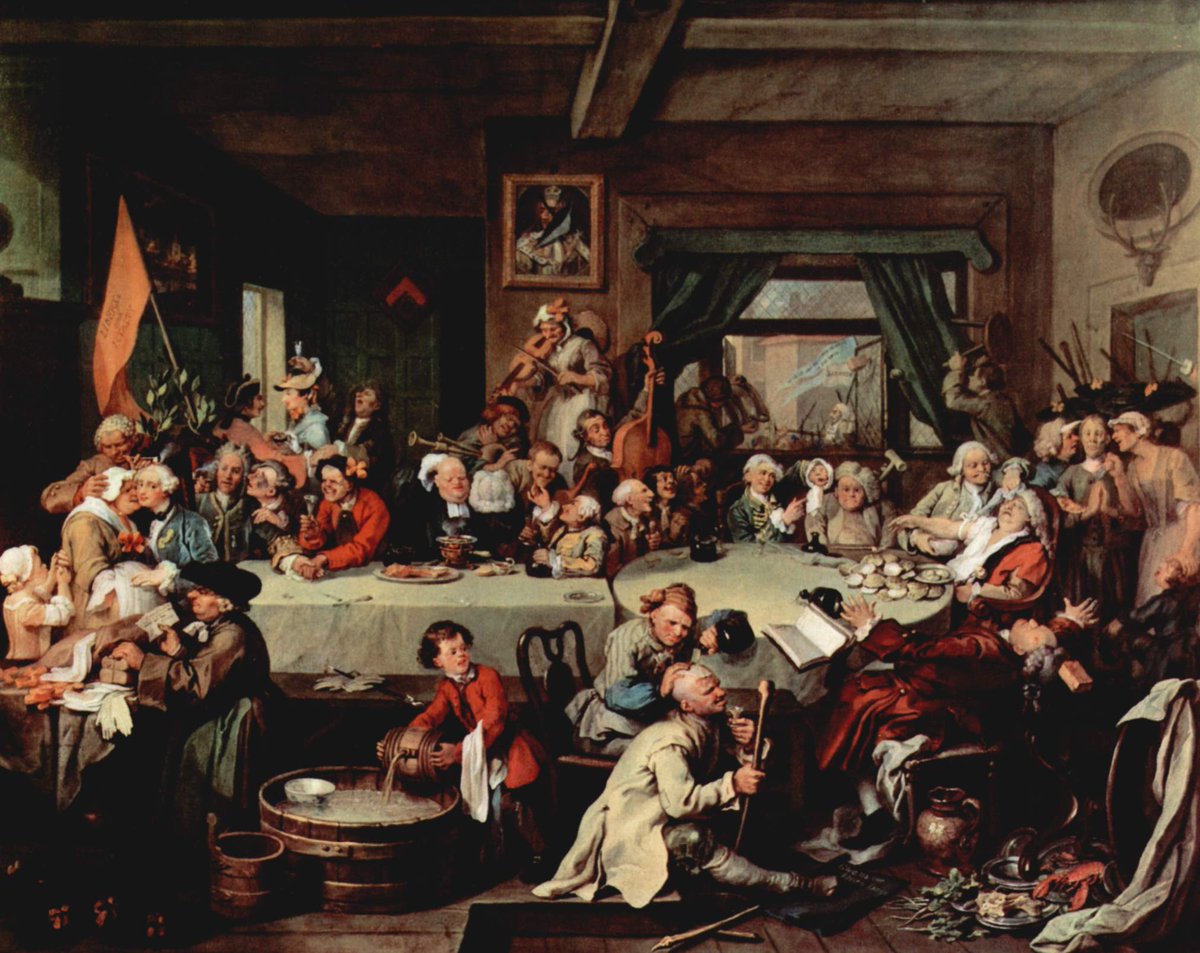
🍷 From murder, duelling MPs, hooliganism, and Hogarthian street carnivals, to cat throwing, pub invasions, mass kidnappings and charging grenadiers. Are there echoes of these absurd episodes in the election antics of today..?
Happy to share that we have been featured on @TheRestHistory's "Mad Elections (Part 1)", starting from around 40:00min at https://t.co/52Bg9vuxsZ
To explore more 19thC election violence stories, check-out our website (https://t.co/zpVHCkqF97) with an interactive map and blog!
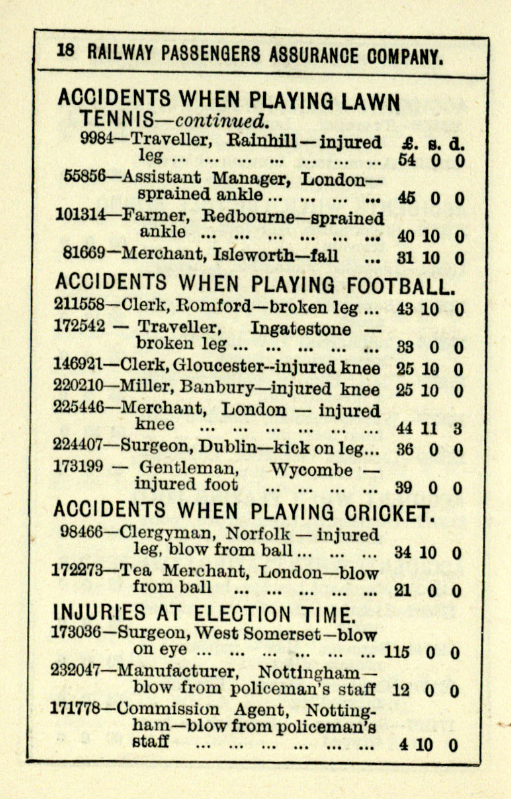
Who paid for the injuries to persons and properties during 19th-century elections? At least in one case (Nottingham 1885) the Railway Passengers Insurance Company seems to have paid for injuries to persons. 👇
Read more on the 1885 Nottingham riots at https://t.co/jk5q8foNTK
Dr Martin Spychal, drawing on his paper from last month's @UEA_History/#HistParl conference, discusses the impact of the 1832 Reform Act on England's constituency map and electoral politics 👇 @TheVictCommons https://t.co/8b9Yc0jdRm
Interested in how nascent forms of party development in 19th-Century England and Wales affected the use of violence during election campaigns? Check out the video from an engaging and diverse panel 👇 (19thC Election Violence presentation starts at 45:50min)
The panel on electoral manipulation, from earlier today at #iEIP2023
It was a bumper panel! Thanks to @rebewagner for chairing and @M_higashijima for discussant comments!
https://t.co/nQnY4CrpKc