Seeing how fragile my mom has become worries me. I never want to lose her, man.
And before “Twitter for Baba ni Jigi” ask if I’m not afraid to lose my dad. He passed away when I was three.
So, as you were.
Suddenly everybody on Twitter loves people with Down Syndrome so much and that couple who aborted their DS baby are devils.
All of you condemning them:
How many DS children have you raised?
How many DS adults are you friends with / hang out with?
How many DS people do you date?
We all know the answer to these questions.
99% of the people sitting on their moral high horse neither care for people with Down Syndrome nor do they include them in their lives in any way.
They have never gone to any orphanage to consider adopting a child with DS.
They would never consider seriously being friends with or spending time with a person with DS.
Some of them are even repulsed by people with DS but want to pretend they are saints when it’s time to condemn that couple.
Why would any loving mother choose that fate for her child?
Do you think mothers of children with DS are happy seeing their children being excluded and rejected, and never being able to live a full independent life?
Let alone the fact that whenever a family with a disabled child breaks up, 9 times out of 10 the father abandons the mother with the disabled child and the woman becomes a lifelong hostage unable to live life because she has been enslaved to the endless care of her disabled child.
On top of that she spends her entire life worrying who will care for her child after she dies and because of this worry some old women have even killed their disabled child and killed tnemselves out of despair and worry of what will happen to their child.
So what was the point?
After listening to wicked people at the time of pregnancy and not aborting, spending a lifetime caring for the child without respite, only to end up still killing the child because SURPRISE SURPRISE, none of those people who shamed you to not abort were willing to volunteer to help care for your disabled child to give you a break while you were young, or now that you’re too old and frail to continue.
These people just want to see women as slaves in every unpleasant situation in the world, and as a woman you are the only say and the FINAL say on whether you give birth to a child or not, because when the suffering begins NONE OF THESE PEOPLE WILL EVER SUFFER WITH YOU.
@justinskycak It's tough. I remember a graph in atomic habits that shows how we usually expect our habits to yield results and compound linearly in an ascending order. Whereas it grows from linear to a curve upward, an exponential rise.
It was quite interesting to see this play out in reality
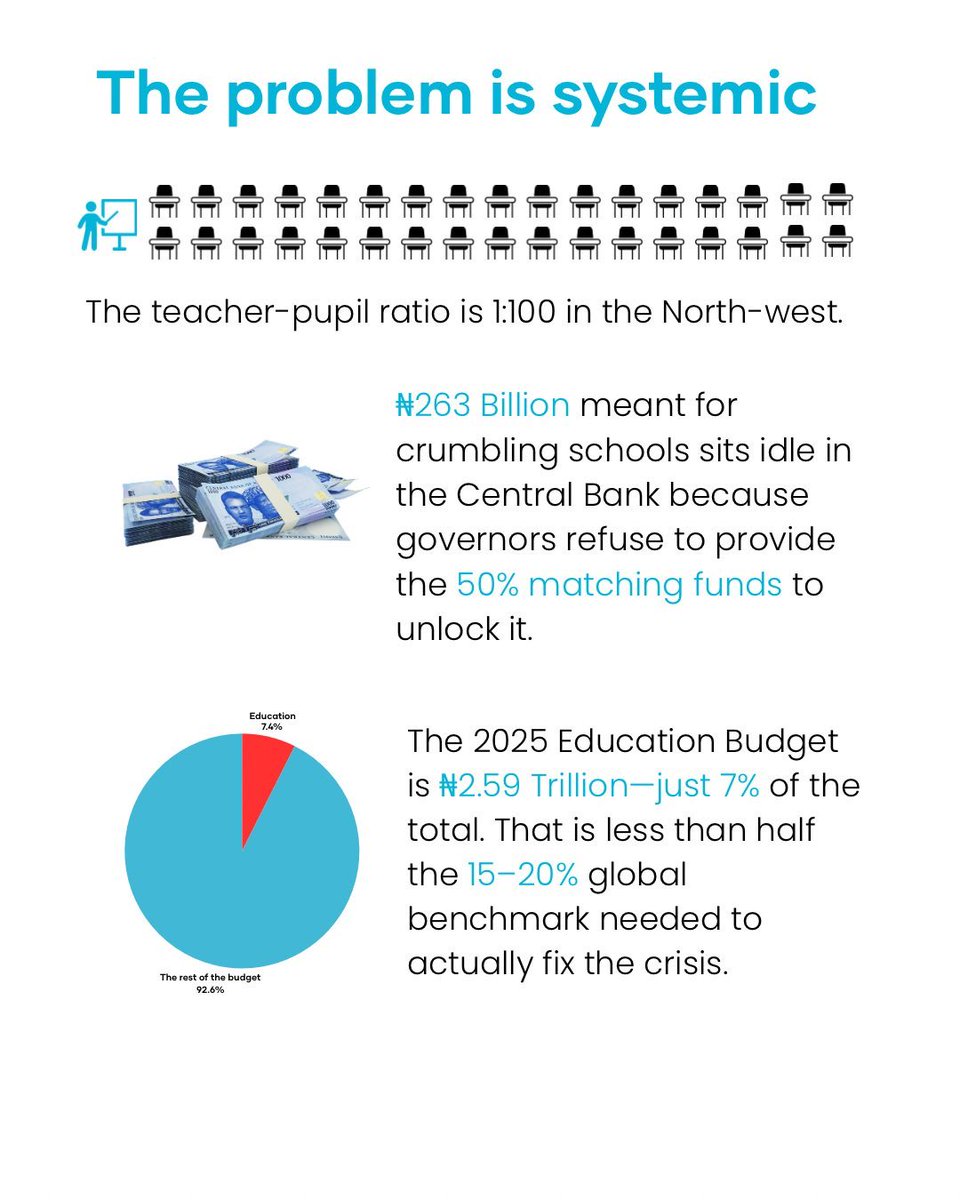
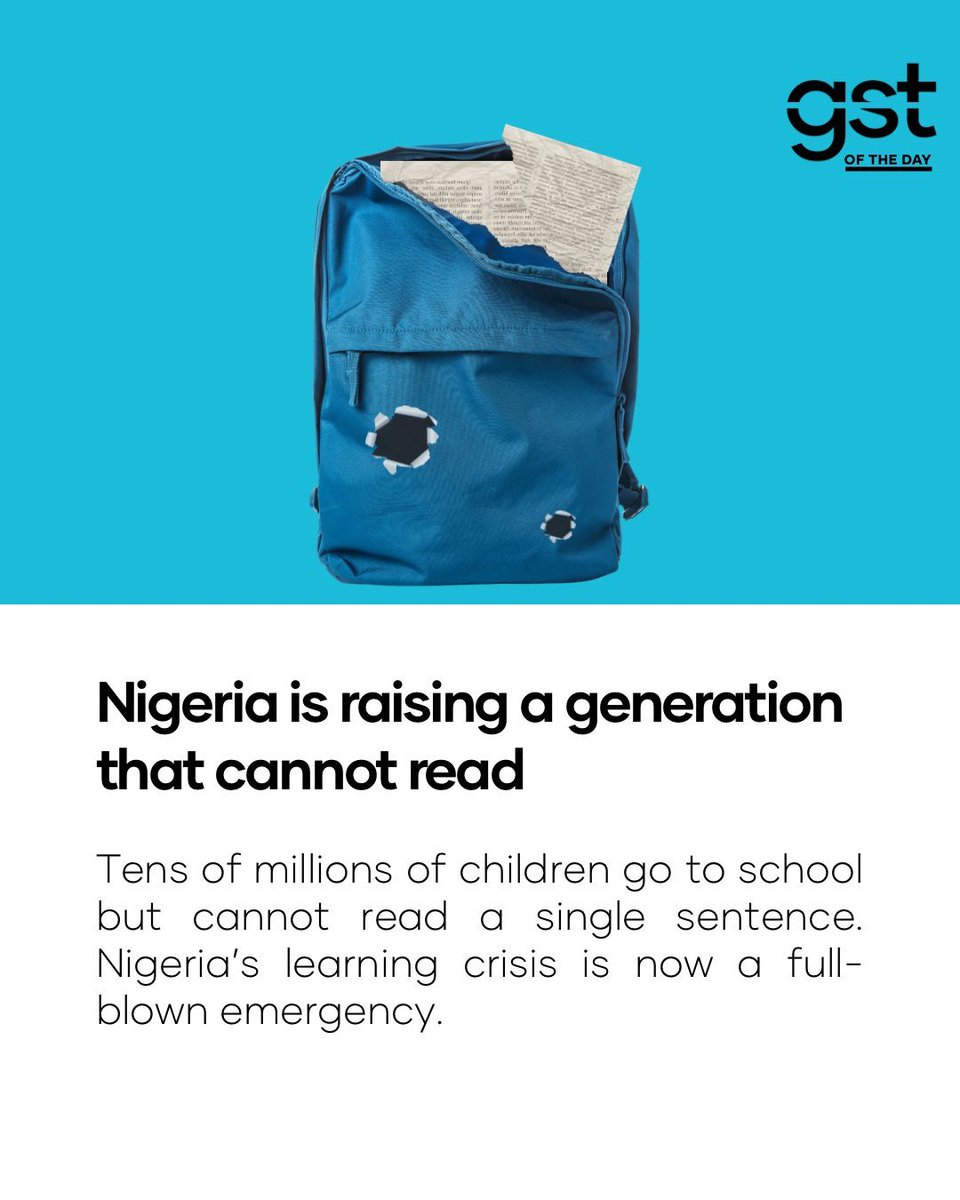
- 7 in 10 Nigerian children can’t read properly or solve basic maths.
- 9 in 10 children aged 7–14 cannot read at all.
- Only 6.3% of Nigerian children have basic maths proficiency.
Nigeria is now facing a generational early childhood development crisis. And it is political.
Children of Holocaust survivors who were never in a camp still carry their parents' trauma in their DNA. A team at Mount Sinai found it on a single gene, the one that controls how the body handles stress and fear. In the survivors, the gene was 10% more marked than in regular families. In the children, it was 7.7% less marked, with the same gene shifted in opposite directions just by being passed down.
When the gene gets thrown off, the body stays on alert for danger that isn't there, long after the threat is gone. Holocaust survivors' children live with this overactive stress system. Their stress hormones run lower at rest, then swing much more sharply than other people's after something stressful. They have higher rates of anxiety, depression, and PTSD than people from similar backgrounds. When some of these children grew up and fought in the 1973 Yom Kippur war, they were much more likely to come home with combat PTSD than other soldiers.
Twenty-five years after Rwanda's 1994 genocide, researchers tested 432 mothers and 432 of their teenage children. 16.5% of the kids met the criteria for PTSD, despite being born after the killing ended and having no memory of it. The trauma reached them anyway. During pregnancy, the mother's body passes stress hormones to the developing fetus. After birth, parents with PTSD raise their children differently, and the household lives with the weight of what happened.
In Cambodia, the 1970s Khmer Rouge dictatorship killed about a quarter of the country. Decades later, the children of survivors show high rates of depression and anxiety, transmitted mostly through parenting: the child becomes the emotional caretaker of a parent who never finished grieving. In a US study of Cambodian American kids whose parents survived the killings, 26.5% had full clinical PTSD.
From the late 1800s into the 1960s, the US government took Native children from their families and placed them in boarding schools designed to erase their cultures. Their descendants show the same pattern. On the Pine Ridge reservation in South Dakota, men live to an average of 63 and women to 71, against US averages of 77 and 82. In 2023, more than a quarter of Native American high school students made a serious suicide plan in the past year, against 16% of all American high schoolers.
In the body, "touched by genocide" is a stress system kept on alert for threats it never faced. The evidence runs across three generations of descendants who were never there.