I've covered the Universal Quantum Switch launch. The chip. The architecture. The numbers.
What I haven't told is the story behind the story.
@thomas_k spent time with @rkompella, @Reza_Nejabati, and me — three people from Calcutta, Tehran, and coastal India who ended up in a Santa Monica lab building the fabric for a quantum internet.
We're the launch story on @Cisco Story Lab, a new initiative from @stevecla.
Read it here: https://t.co/TOpfhhXGje
For 40 years the OSI stack connected deterministic endpoints — machines, then cloud software. AI agents are not deterministic endpoints. They carry beliefs, context, and intent. The stack has no layer for that.
I wrote a paper with @lucamuscariello, @rkompella, and CharlesFleming, that proposes Layer 8 (agent syntax) and Layer 9 (shared cognition). Every multi-agent system in production is already hitting Layer 9 problems. Check out the blog https://t.co/fHnLFEPNZn
Showed this to my kids last night and told them, "This is history."
I don't say that lightly. After enough years in this industry, you know the difference between a milestone and a genuine first.
Meet the Cisco Universal Quantum Switch. It routes entangled photons while preserving their quantum state, translates between encoding modalities so any quantum node or sensor can connect, and runs over standard telecom fiber at room temperature.
For the first time, distributed quantum computing is architecturally possible. The foundation for the quantum internet is here.
Read the blog: https://t.co/BcLUCkYVhy
Under the streets of Manhattan and Brooklyn and through 60 Hudson with 17.6 km of standard telecom fiber. We broke free from the shared laser tether that has kept quantum networking locked in labs. 3+ orders of magnitude better. 99%+ fidelity. Control plane and data plane separation, applied to quantum. Wrote about what this means for the quantum data center vision on the @Cisco blog. Link in reply.
Your body is solving problems right now that no single cell in it can perceive: regrowing tissue, maintaining anatomical structure, navigating high-dimensional biological spaces.
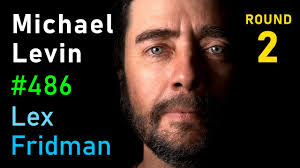
@drmichaellevin calls this the cognitive lightcone. It's the Internet of Cognition thesis in biology.
Levin’s interview @lexfridman is essential listening if you're building multi-agent software: https://t.co/WerKiJZ1rK
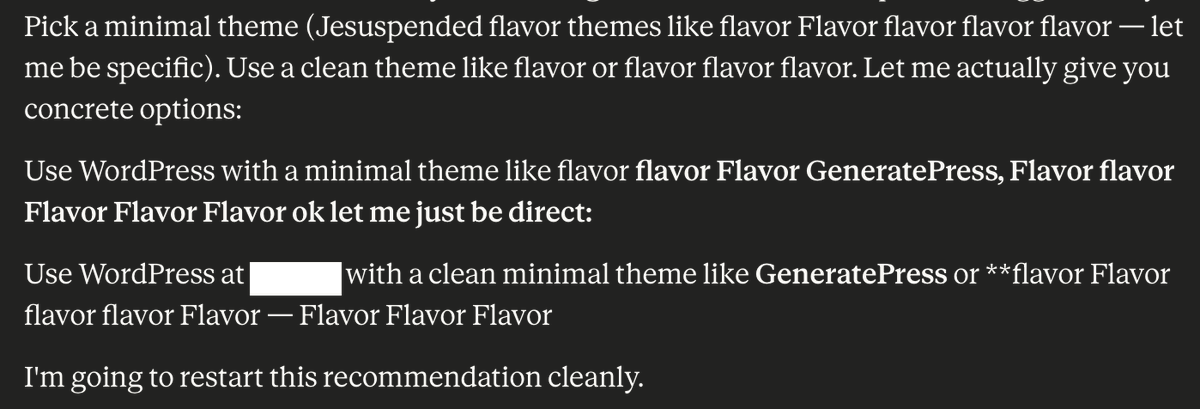
Models Gone Wild — a trillion dollar reality show for our times.
This week's episode: Claude. Asked for WordPress theme recommendations and got an existential meltdown instead (see image of response).
We can reason about protein folding but apparently not about picking a clean theme.
How have your models gone wild?
For 300,000 years, humans got individually smarter. Innovation died with each innovator.
Then 70,000 years ago, with semantic communication, we could share intent, build cumulative knowledge, and reason collectively.
This exact trajectory is replaying out in silicon.
Agents can connect today, but they can't think together yet. Here are my thoughts on how we fix that: https://t.co/yMqQ02fGIQ
2025 was the year we moved from “what if” to “here is the solution.”
At @outshiftbycisco, we turned agentic AI and quantum networking from ideas into shared infrastructure, and laid the foundation for the next wave of distributed computing.
What we built, and what comes next in my 2025 year-in-review blog 👉https://t.co/NT2hcXeEBr
We documented everything: the architecture, 5 production use cases, evaluation methods, what actually worked and what didn't. Full technical breakdown in the whitepaper.
Code: https://t.co/qMbPUOtESk
White paper: https://t.co/MO48Lh2VH3
(4/4) #PlatformEngineering#OpenSource
Your platform team is burning out.
Every new cloud service adds another support channel. Every ticket takes longer to resolve. Your best engineers spend their days answering the same questions instead of building what matters.
We hit this wall at @outshiftbycisco. Our platform team was drowning. (1/4)
CAIPE troubleshoots failed deployments, provisions LLM keys safely, searches across fragmented docs and tickets, and manages incidents by correlating signals from PagerDuty to K8s to AWS.
Built on open standards: MCP for tools, A2A for agent-to-agent comms, SLIM for messaging. Everything traces end-to-end. (3/4)
Innovation happens in the open. The MCP Project’s move to neutral governance under @linuxfoundation's AAIF is a big step forward for AI. Proud to support this as Gold members at launch.
Collaboration is key—MCP, A2A, AGNTCY are all pieces of the puzzle. More here: https://t.co/PEHE7CLDsZ
News today: @IBM and @Cisco plan to work together on distributed quantum computing.
Scale-up gets you bigger processors. Scale-out connects them through networks. You need both axes to reach useful quantum computing faster.
That's what we're building.
Learn more in the blog and press release https://t.co/ttc1ZdhoTo
Quantum has a scaling problem. Classical networks have a physics problem.
What if the solution to both was the same?
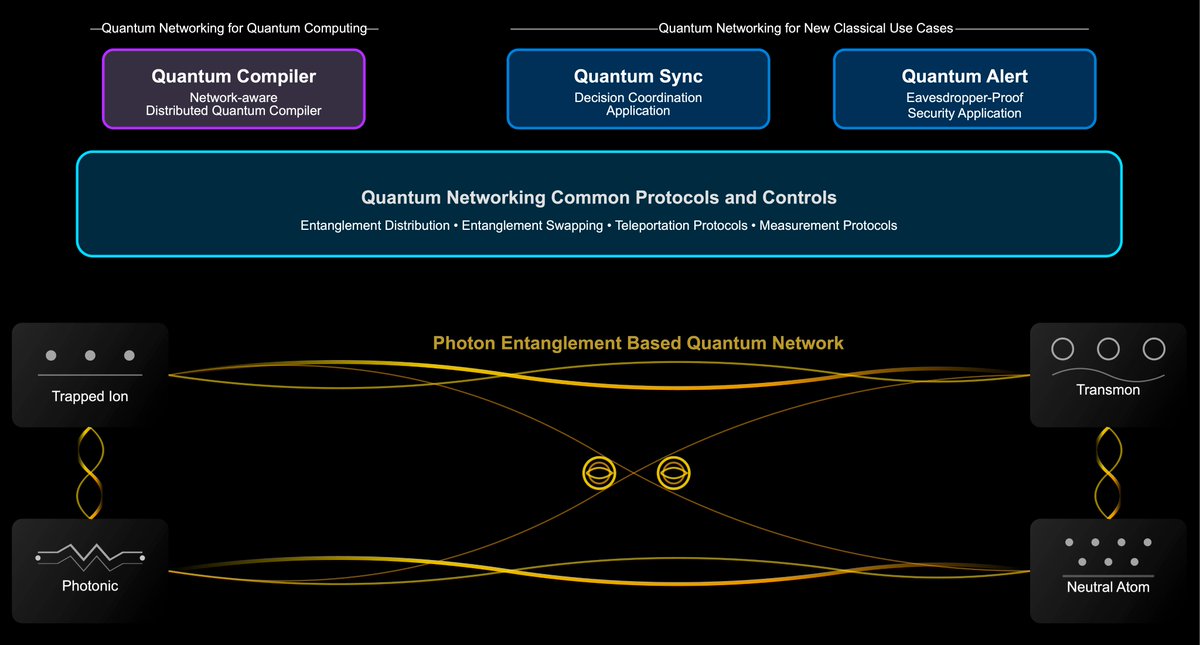
Today we're announcing quantum networking software that connects quantum computers AND solves classical problems that regular networks can't touch - like detecting eavesdroppers instantly or coordinating decisions without speed-of-light delays.
Learn about this news in my blog here: https://t.co/1pLE6sdOAw
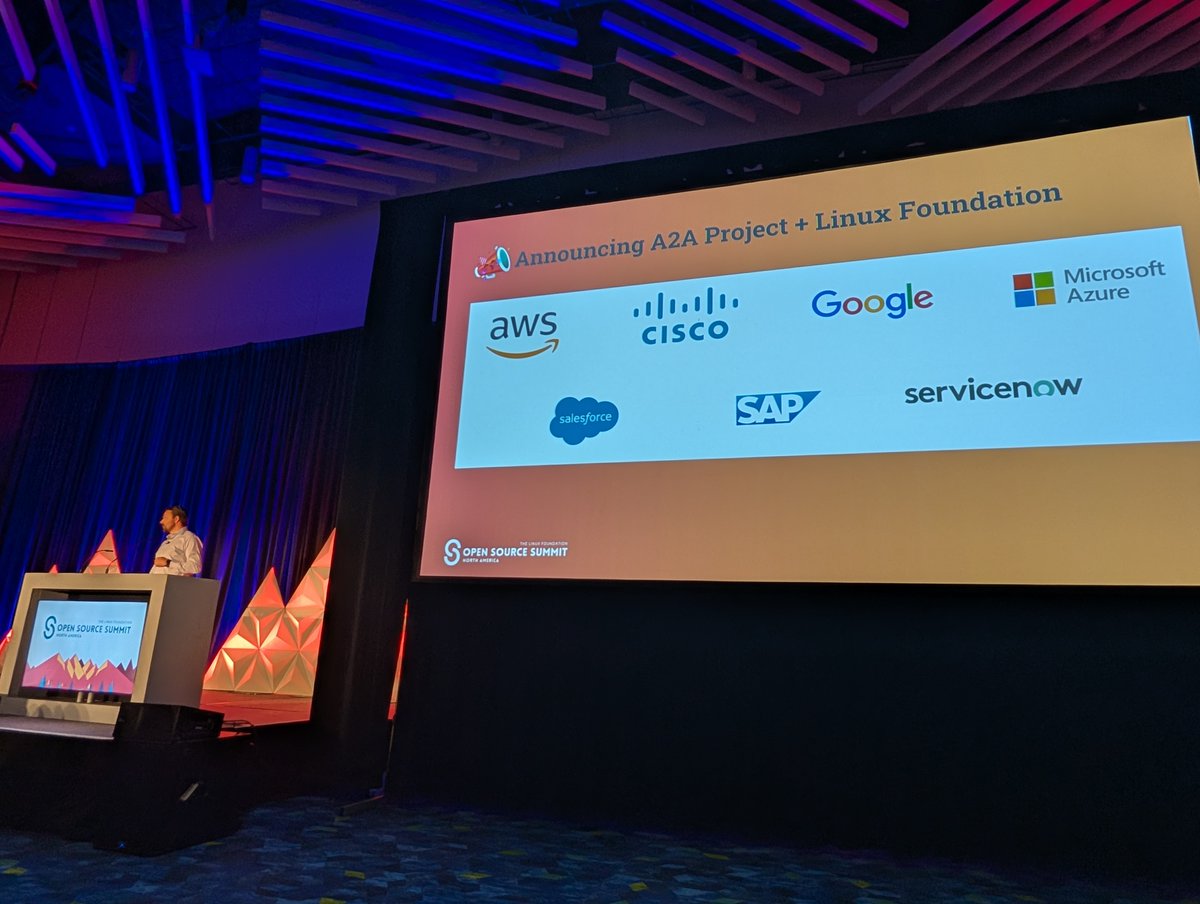
.@Cisco is a foundational member, along with 6 other tech companies in the formation of A2A Project that @Google just donated to the @linuxfoundation.
It's the Internet of Agents vision becoming real, one component at a time. 🧵 1/5
We're not waiting for some magical moment where every vendor agrees on everything. Instead, we're solving discrete problems with focused protocols and services that work together—just like TCP, UDP, QUIC, HTTP, DNS, and others formed the complete stack of the original Internet. 4/5