VIKING WISDOM
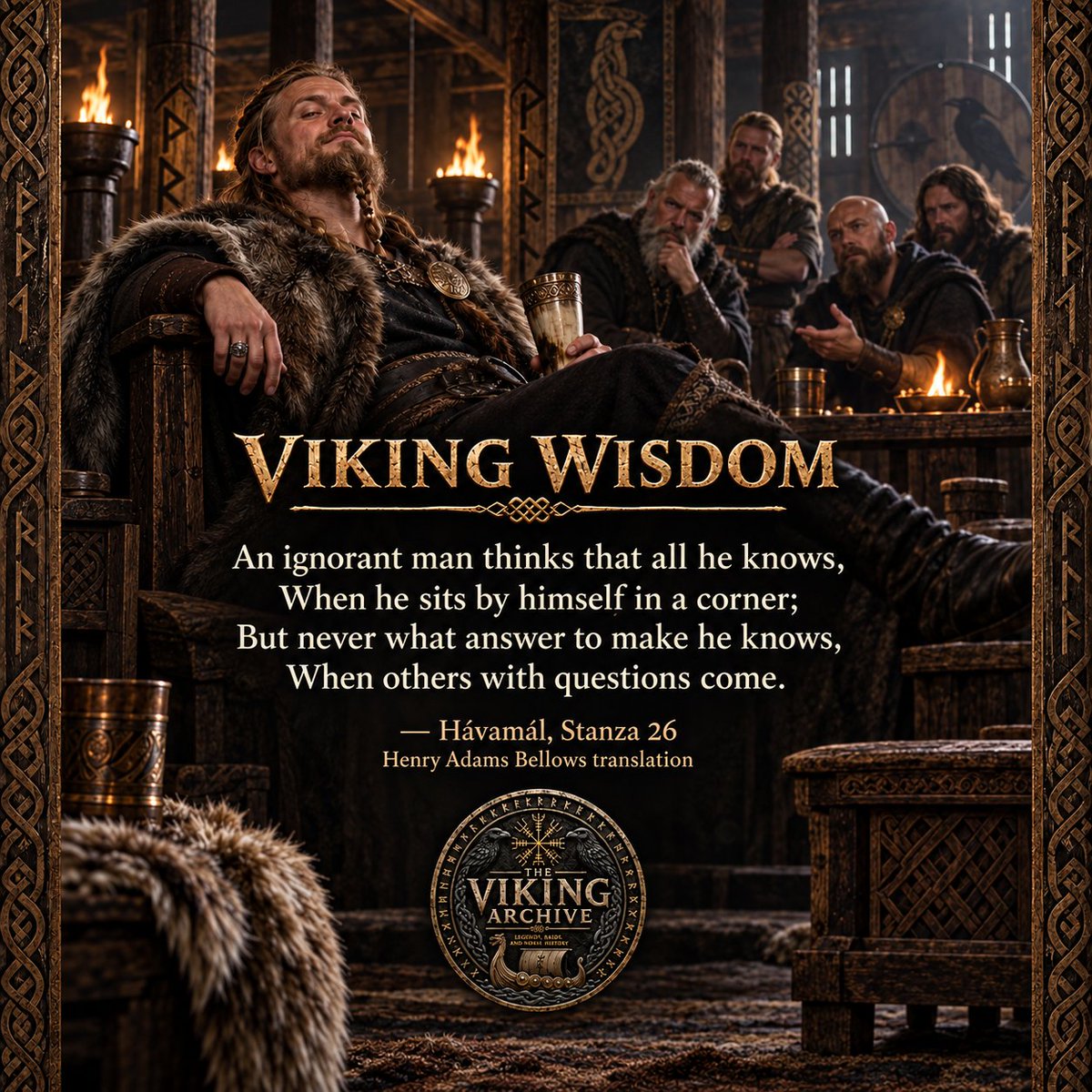
“An ignorant man thinks that all he knows,
When he sits by himself in a corner;
But never what answer to make he knows,
When others with questions come.”
— Hávamál, Stanza 26
Henry Adams Bellows translation
The Hávamál warns us about the false confidence that can grow when our knowledge is never questioned.
When a person remains alone with his own opinions, it is easy for him to believe that he understands everything. Without anyone challenging his ideas, limited knowledge may begin to feel like complete wisdom.
But knowledge is truly tested when we must explain what we believe, respond to difficult questions, and listen to people whose understanding may be greater than our own. It is often during such moments that the limits of our knowledge become clear.
True wisdom is not having an answer for everything. It is having the humility to admit when we do not know, the patience to listen, and the willingness to continue learning.
The foolish person protects his pride by pretending to know everything. The wise person recognizes that there will always be more to understand.
When someone questions what you believe, do you listen with an open mind—or immediately defend what you think you know?
Every voice has a place at The Thing.
There are no wrong opinions here—only different perspectives. Whether you agree, disagree or see the question in an entirely new way, you are free to speak your mind without fear of judgment.
Bring your reasoning, respect the assembly and let your voice be heard. The Thing belongs to all of us.
SOMETHING NEW IS COMING TO THE VIKING ARCHIVE
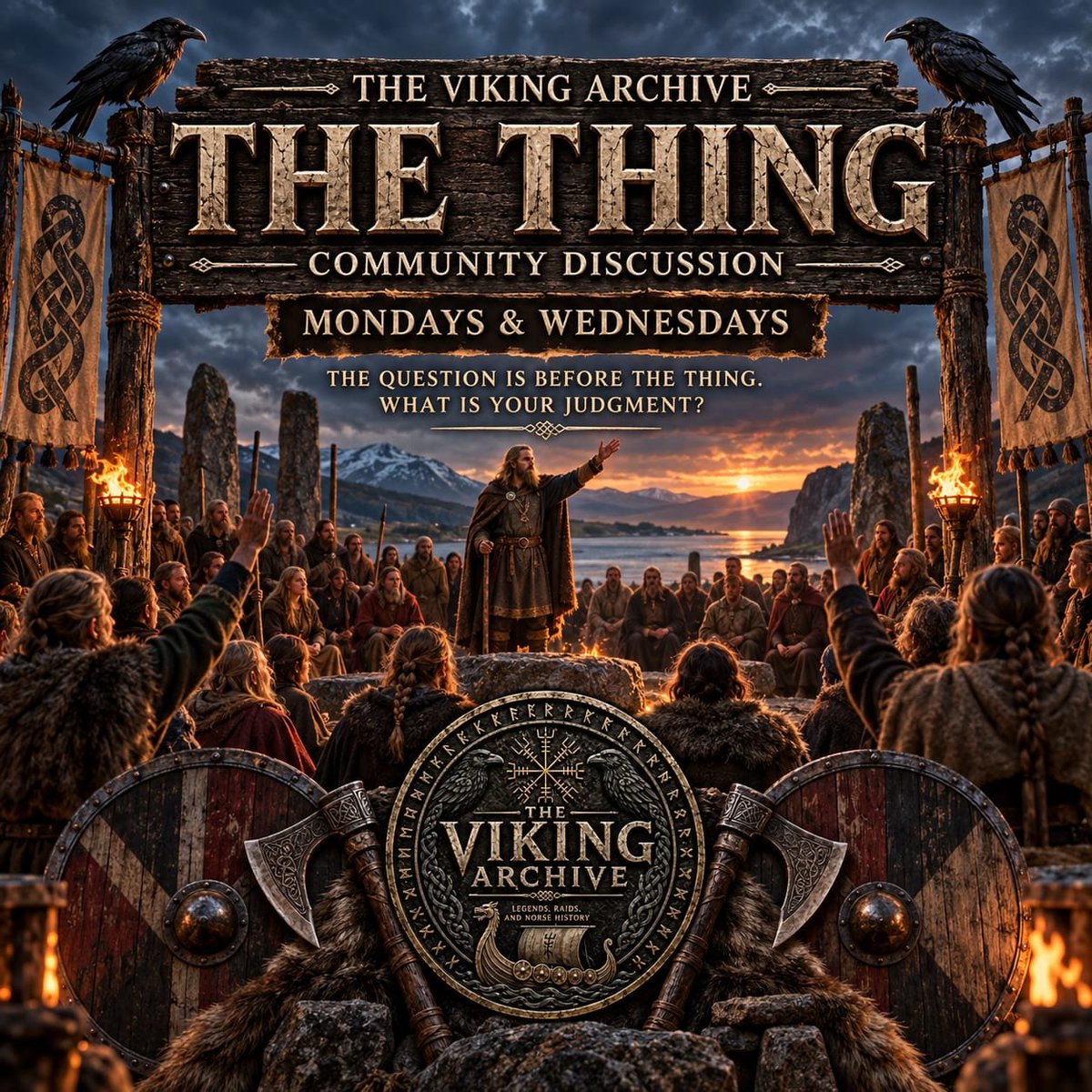
Next Monday, The Viking Archive will open a new community discussion segment:
THE THING
In the Viking Age, The Thing was an assembly where people gathered to address laws, disputes and matters affecting their communities.
Now, we are borrowing that ancient idea for something new.
Every Monday and Wednesday, we will bring one question before The Thing.
Some will come from Norse mythology.
Some from Viking history.
Others will confront the difficult questions hidden inside the sagas, religion, warfare, exploration, law, honor, leadership and everyday life.
Was Odin a wise ruler—or a dangerous manipulator?
Could Ragnarök have been prevented?
Was Viking revenge justice—or a cycle that destroyed families?
Were the Vikings really more violent than the people they fought?
We will provide the historical or mythological background.
You provide the judgment.
There will not always be one simple answer—and that is exactly the point.
Whether you agree, disagree or see something everyone else has missed, bring your argument to the assembly.
Respect the history.
Respect different beliefs and interpretations.
And respect the people debating beside you.
The Thing will run across our Facebook page, Instagram page, TikTok, YouTube Community and X. Choose whichever platform suits you best, join the discussion and enjoy The Thing with the wider Viking Archive community.
Next Monday, The Thing is called into session.
Mondays & Wednesdays
The evidence will be presented.
The question will be asked.
The judgment belongs to you.
Welcome to The Thing.
#TheThing #VikingHistory #NorseMythology #NorseHistory #TheVikingArchive
Historical Context: Abbasid geographer Ibn Khordadbeh described Rus merchants carrying northern goods through the Caspian trade network toward Baghdad. In AD 922, Ahmad ibn Fadlan encountered another group of Rus traders along the Volga River and recorded their appearance, customs and ship-funeral ceremony. The thousands of Arabic dirhams discovered in Scandinavia reveal the extraordinary scale of commerce connecting the Viking and Islamic worlds.
Vikings are usually remembered for sailing west toward England and France—but many also travelled east.
Swedish Vikings and other Norse traders followed vast river systems through present-day Russia and Ukraine, transporting furs, amber, honey and enslaved people toward the markets of the Islamic world. Medieval writer Ibn Khordadbeh even described Rus merchants travelling as far as Baghdad.
Their connection with the Abbasid world is reflected in the enormous numbers of Arabic silver dirhams discovered across Scandinavia. Ahmad ibn Fadlan also recorded a remarkable encounter with Rus traders along the Volga, describing their appearance, customs and a dramatic ship-funeral ceremony.
The Vikings were more than raiders. They were merchants and explorers whose journeys connected Scandinavia with some of the wealthiest civilizations on Earth.
Would you ever have imagined Viking traders reaching the world of Baghdad?
WE HAVE HIT 1,000 FOLLOWERS ON FACEBOOK!
The longship has reached another important shore.
What began as a vision—to explore the history, legends, discoveries and wisdom of the Viking world—has now grown into a community of 1,000 followers on Facebook.
Every view, reaction, comment, share and follow has helped carry The Viking Archive forward. Whether you joined us for the warriors and voyages, the gods and sagas, the archaeological discoveries or our daily Viking Wisdom, you have become part of this journey.
This milestone belongs to all of us.
But our voyage is only beginning. There are still countless stories waiting to be uncovered, forgotten voices waiting to be heard and powerful lessons from the Norse world waiting to be shared.
To every member of our growing community: thank you for believing in The Viking Archive and helping us reach 1,000 followers.
Now we raise the sails again—and journey toward the next milestone together.
Skål to the first 1,000!
#TheVikingArchive #VikingHistory #NorseHistory #VikingWisdom #1000Followers
A smile may create the appearance of friendship, but loyalty is revealed when there is nothing to gain. The Hávamál reminds us to value those whose actions remain sincere—even when we are not present.
VIKING WISDOM
“The foolish man for friends all those
Who laugh at him will hold;
When among the wise he marks it not
Though hatred of him they speak.”
— Hávamál, Stanza 24
Henry Adams Bellows translation
The Hávamál warns us not to mistake friendly appearances for genuine friendship.
A person may laugh with us, praise us, and enjoy our company while secretly holding little respect or goodwill toward us. Pleasant words are easy to offer, but they do not always reveal what someone truly thinks.
Real friendship is shown through loyalty, honesty, and support—especially when we are absent or facing difficulty. A true friend does not merely smile in our presence; they defend our name when we are not there and speak honestly when we need guidance.
This wisdom does not tell us to distrust everyone. Instead, it encourages discernment. We should judge friendship by consistent actions rather than laughter, flattery, or temporary warmth.
Some people enjoy what we provide without genuinely caring about us. Wisdom lies in recognizing the difference before false friendship causes harm.
Do the people you call friends remain loyal when you are no longer in the room?
When people imagine Vikings, they often picture fierce warriors with wild hair and unkempt beards—but archaeology reveals a very different story.
Thousands of carefully crafted combs made from antler and bone have been discovered across Viking-Age settlements. These everyday objects show that grooming, cleanliness and personal appearance were important parts of Viking life.
Some medieval writers even complained that the Vikings’ regular bathing, neat clothing and well-groomed appearance made them attractive to local women.
Sometimes, history is not rewritten by a sword or an axe—but by an ordinary comb that survived for a thousand years.
Follow The Viking Archive for more surprising true stories from the Viking Age.
VIKING WISDOM
“The witless man is awake all night,
Thinking of many things;
Care-worn he is when the morning comes,
And his woe is just as it was.”
— Hávamál, Stanza 23
Henry Adams Bellows translation
The Hávamál warns against allowing worry to consume the night without producing a solution.
Some problems require careful thought, but repeatedly turning the same fears over in our minds is not the same as solving them. By morning, the problem may remain unchanged while we are left exhausted and less prepared to face it.
This wisdom does not tell us to ignore our difficulties. It reminds us to recognize when reflection has stopped being useful and has become a cycle of anxiety.
There is a time to think, a time to act, and a time to rest. Sometimes the wisest choice is to set the burden down for the night and meet it again with a clearer mind.
What worry could you set aside tonight so that you can face it with greater strength tomorrow?
Historical Context: Combs were among the most common personal objects found in Viking-Age settlements. Many were expertly assembled from several pieces of antler, showing the skill of specialist craftspeople. A medieval English chronicle also preserved the claim that Danes combed their hair regularly, bathed weekly and changed their clothing—further evidence that personal appearance mattered in the Viking world.
Recognizing another person’s faults can guide us, but mocking them teaches us nothing about ourselves. Hávamál Stanza 22 reminds us that wisdom requires the courage to examine our own character with the same honesty we apply to others.
VIKING WISDOM
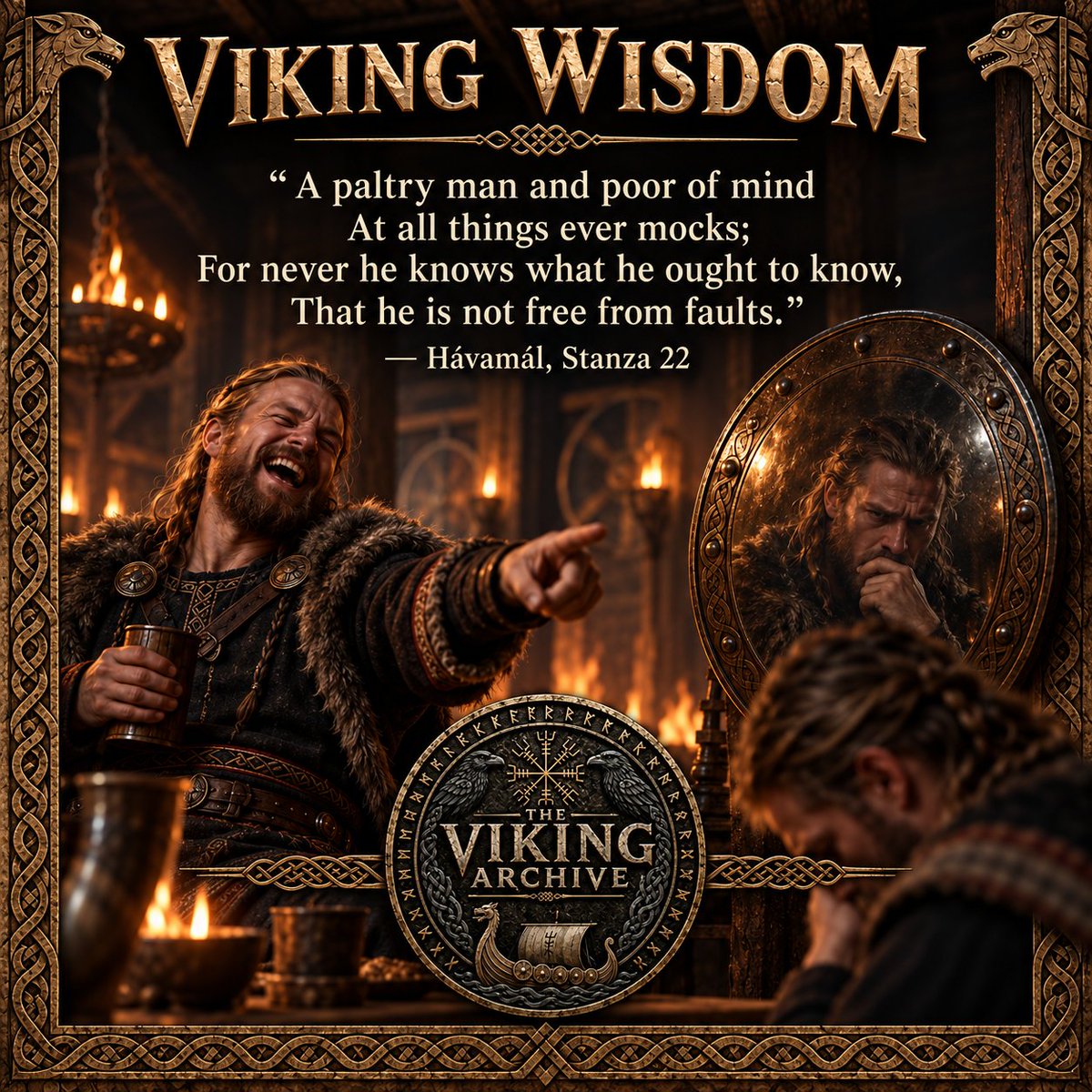
“A paltry man and poor of mind
At all things ever mocks;
For never he knows what he ought to know,
That he is not free from faults.”
— Hávamál, Stanza 22
Henry Adams Bellows translation
The Hávamál warns against constantly ridiculing other people while remaining blind to our own weaknesses.
We naturally notice the mistakes, habits and imperfections of those around us. Recognizing these faults can sometimes help us make better judgments or avoid repeating the same mistakes.
The problem begins when understanding turns into mockery.
A person who laughs at everyone else may feel superior, but their ridicule can conceal an unwillingness to examine their own character. By concentrating entirely on the shortcomings of others, they avoid confronting the weaknesses within themselves.
The stanza does not ask us to ignore bad behavior or pretend that every action is acceptable. Instead, it reminds us to apply the same honesty to ourselves that we apply to other people.
Wisdom is not blindness to another person’s faults. It is recognizing them without forgetting that we also have faults of our own.
When you notice someone else’s weakness, can you examine it without losing sight of your own?
True strength is not found in excess, but in knowing when enough is enough. The Hávamál reminds us that self-control protects both our health and our dignity.
VIKING WISDOM
“The greedy man, if his mind be vague,
Will eat till sick he is;
The vulgar man, when among the wise,
To scorn by his belly is brought.”
— Hávamál, Stanza 20
Henry Adams Bellows translation
The Hávamál warns that appetite without self-control can lead a person beyond satisfaction and into harm.
This stanza speaks directly about overeating, but its lesson reaches further. Greed can appear wherever we continue taking long after we have enough—whether we are pursuing food, money, attention, possessions or power.
Having access to something does not mean we must consume all of it. A person who cannot recognize when enough is enough may turn abundance into discomfort and opportunity into embarrassment.
Self-control is not the rejection of pleasure. It is the wisdom to enjoy something without allowing desire to control our decisions.
Moderation protects both our well-being and our dignity. Sometimes the ability to stop is a greater sign of strength than the ability to acquire more.
Where in your life would recognizing “enough” bring you greater peace?
Every time you connect your phone to wireless headphones, you are using the name of a Viking king.
Harald “Bluetooth” ruled Denmark more than 1,000 years ago and became remembered for uniting his kingdom. Centuries later, engineers named Bluetooth technology after him because it was designed to unite different devices.
Even the familiar Bluetooth symbol combines the runic initials for Harald Bluetooth.
Follow The Viking Archive for more incredible true stories from the Viking Age.