My new study reveals that artificial water level stability is a chronic stressor for reeds. While high, managed water levels suppress photosynthetic capacity, natural fluctuations can increase reed biomass by up to 31%. https://t.co/WNcRd82BVy
Making a splash again!
We are excited to share some news straight from the world of limnology and algal biomass monitoring. Here is an article on Lake Balaton and an open-source online tool: https://t.co/3mFURYGBg4
https://t.co/w8Hi4GBcIM
My latest research paper looked into the relationship between a pondweed with its epiphytic algae. These epiphytes hog the light that the pondweed needs for photosynthesis and mess with the way the pondweeds use the light.
https://t.co/OnND8sgziR
We took a deep dive into the bustling microbial metropolis of #LakeBalaton and used some fin-tastic technology to uncover its hidden secrets. Turns out, this lake is teeming with many tiny inhabitants!
You can find more details in the paper: https://t.co/VoeTKLdoR3
The results suggest that environmental degradation tends to decrease the average values of the traits studied, but definitely increases the plasticity of these traits. A similar pattern was observed for plant senescence.
What do you think?
These findings may not rock your boat, but ... hey ... it could improve lake management if you think beyond catchments in a form of clustered management for neighbouring lakes.
In my latest article I sum up investigation on the biological synchrony of neighbouring lakes in western Hungary using some satellite-derived chlorophyll data https://t.co/mTQVvpMzri...
#Lakes#Limnology
Proximity matters: the closer the lakes, the more similar their biological processes, suggesting that regional factors (such as geology, geomorphology and mesoclimate) sometimes play a greater role than hydrological connectivity.
Here are some old trivia that everyone knows, but I manage to quantify:
- Hydrologically connected lakes show synchrony (yeah ... who knew?), although hydrologically disconnected lakes show higher synchrony of phytoplankton phenological events.
Hey everyone ... this piece of science is here to help you ... use it to do whatever you need to do! #Botany#Genetics#Phylogeography
A Pleistocene legacy of gene pools, ecodemes and admixtures of Stucken... https://t.co/VYqcD2MAkY
New research uncovers the global distribution of Telonemia, an ancient predatory flagellates in freshwater ecosystems! 🌍 An important player in the freshwater food web! #FreshwaterEcology#Protists#MicrobialEcology https://t.co/HGNYqO7INN
150-year daily data (1870–2021) in lakes and rivers reveals intensifyi... https://t.co/DEb0ThZr5Z We investigated the long-term changes in surface water temperatures of lakes and rivers in the Pannonian ecoregion, focusing on the trends observed over the last 150 years.
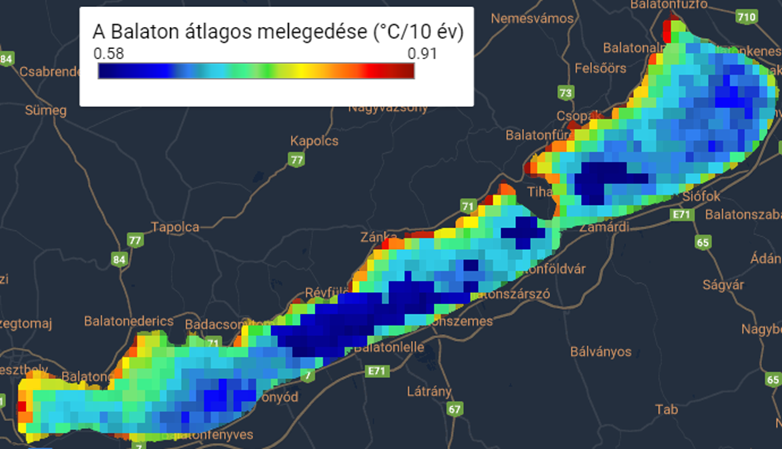
We looked at how the water temperature in Lake Balaton has changed over the last 20 years. Using satellite data we found that the temperature of the lake has risen by 0.7°C per decade, i.e. it has already risen by 1.4°C since the beginning of the millennium.