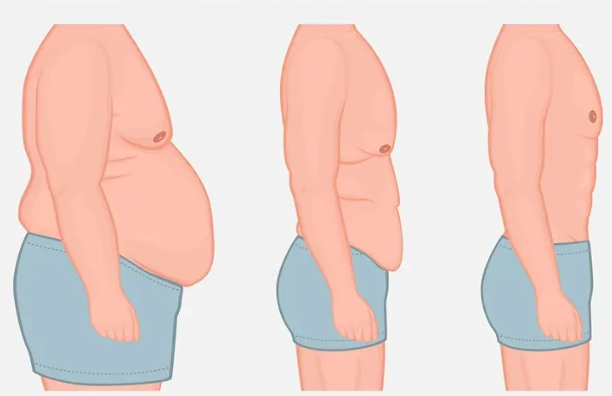
If I had 14 kilos of extra weight, a big belly, and my goal was to become unrecognizable by the summer of 2026, this is everything I would do:
Tip 1 - Last meal 2 hours before bed
@Nigel__DSouza Gold, silver and equities would have already reacted to this news if there was even an iota of possibility of it.
The fact that none of the asset classes have shown any erratic movements in the last 24 hours says a lot about this news.
5 years old - Mom, I love you.
12 years old - Mom, I can't stand you.
16 years old - My mother is very annoying.
18 years old - I'm leaving this house.
25 years old - Mom, you were right.
30 years old - I want to go to my mom's house.
50 years old - I don't want to lose my mother.
70 years old - I would give up everything to have my mom here with me.
You only have one mom. Take care of her while she's still alive.
What the salad tried to do to us.
The first ambition of any plant is to make itself uneatable. Long before anything clever walked on earth, plants settled on poisoning anything with a mouth. If you can’t run, you better taste terrible. The only way to stay alive was to face your predator (dinosaur, beetle, goat, man) with chemistry. Plants got clever in the only way available to them. They made toxins, astringents, enzymes, fibrous defences. Which made them and their parts bitter. Also indigestible, and outright poisonous.
In evolutionary terms, it was a cunning move. Not that the plant knows anything about cunning. But the natural consequence was deterrence. You bite, you suffer. You learn. You stop biting.
Humans responded in the human way. By using fire and other things. We boiled, we burned, we soaked, we crushed, we fermented. We pickled. We found ways to take the bitter poisonous offerings of plants to our hungers. We hacked our own biochem, made over 50 types of CYP450 enzymes. They’re fascinating. A plant toxin molecule (alkaloid, glucosinolate, cyanogenic glycoside, saponin etc) is like a greasy stain. CYP450s act like detergent: They grab it, break it apart, make it dissolve in water, and wash it away. Cats don’t have a lot of this stuff. The thiosulfates in a couple of cloves of garlic can trigger a dangerous oxidative crisis in cat blood. About four cloves (of garlic) can be a potentially lethal dose. A tiny amount of solanine from a raw potato can sicken and kill a rabbit. Without a particular kind of P450, a potato would be your last meal.
We figured out how to eat the enemy. And then we got kinky about it. Our tongues learned to relish the sting. And the rot. We started liking the burn and the bitterness. We started having poison for the plot. Hot sauce. Tannins. Coffee so strong it peels paint. Flavour is a toxin we’ve come to applaud.
Plants spent a hundred million years trying to kill us. We’ve spent a hundred million years learning to savour their attempts. That’s the story, give or take a few famines and a few million deaths.
Retail doesn’t seem to have capitulated yet.
Here is a few signs:
- When serious deleveraging occurs and margin calls hit, literally any asset gets sold to raise cash and meet these margin calls. Gold is a very institutionalized asset class and on Friday it showed some signs of weakness. Bitcoin is a retail-heavy asset class and it isn’t budging yet.
- Several banks reported that on Thursday retail added a large amount of equities via ETF flows. That’s not what you do when you are deleveraging.
- To my knowledge, massive contra indicators like CNBC going live with a special “Markets in Turmoil” episode or Brent Donnelly’s proven front-page contrarian covers haven’t happened yet
More importantly, the buy-the-dip mentality will need a few more hits before cracking.
Even after this drawdown the S&P 500 is still up 119% over the last 7 years, which is a massive compounded yearly rate well in excess of the standard 7-8% investors are used to in normal times. Recent surveys show investors growing accustomed with the fairytale assumption of a 10% yearly SPX return.
If the drawdown extends to levels challenging these assumptions and threatening the excess wealth accumulation of 2019-2024, I expect retail to start deleveraging.
Funnily enough, that might happen at the worst possible time and compound economic weakness through reduced consumer spending.
Retail capitulation hasn’t happened yet, and that’s not a good thing.
FPIs sold USD 9bn in January alone
Source: DAM Capital 👇
Overall outflow over 4 months (Oct-24 to Jan-25) has totalled ~USD 21 bn 🙁
1⃣ FPI past outflows
a. 2008 Global Financial Crisis: 👉 ~USD 11 bn over ten months
b. March 2020 COVID-19 shock 👉 ~USD 8 billion
c. Global inflation surge, interest rate hike & Russian-Ukraine during Oct-21 to Jun-22 👉USD 33bn
2⃣ Despite heavy FPI selling over the past 4 months, 4 sectors saw overall net inflows
💻 IT Services USD 624mn
🏡 Realty USD 525mn
👖🥻 Textiles USD 219mn
🧪 Chemicals USD 183mn
3⃣ Sectors than saw over a billion-dollar selling over last 4 months
⛽️ Oil USD 5.6bn
🏦 Financials USD 5.3bn
🚘 Auto USD 3.3bn
🧴 FMCG USD 2.5bn
Consumer Durables 1.7bn
🏗️ Construction Materials USD 1bn
@CNBCTV18News@CNBCTV18News
American scientist Adelbert Ames Jr. created the mind boggling ‘Ames Window’ optical illusion in 1947.
Here’s a demonstration of how it works. It’s so effective that even when you know how it works, your mind can’t break the illusion.
Since 1990 Nifty has seen multiple drawdown instances of more than -5%, let's analyse the historical data to see what happens the following week/month once we cross more than -5% drawdown. This analysis would help all the short term traders who are worried about the downtrend.🧵