🚨 I just learned about a concept, I can't stop thinking about.
The Four Burner Theory.
It destroyed Elon Musk's first marriage.
It explains why Bezos is jacked but divorced.
And why Zuckerberg has no real friends.
Once you understand it, your life will never be same:🧵
BREAKING: US new home construction declined 5.5% year-over-year to an annual rate of 1.28 million units, the lowest level since June 2020
Building permits also dropped 3.8% to 1.39 million, the weakest level in 4 years.
Furthermore, single-family home permits have plummeted for 4 consecutive months, to their lowest level in 12 months.
Elevated interest rates have been the primary driver of this recent trend.
In the Midwest alone, home construction has decreased by 19% year-over-year.
Is the housing market is beginning to stall?
Australia may have a reputation as a warm and sunny nation, but one feature makes our winters feel colder than countries known for their snow. https://t.co/Zov4Eplduo
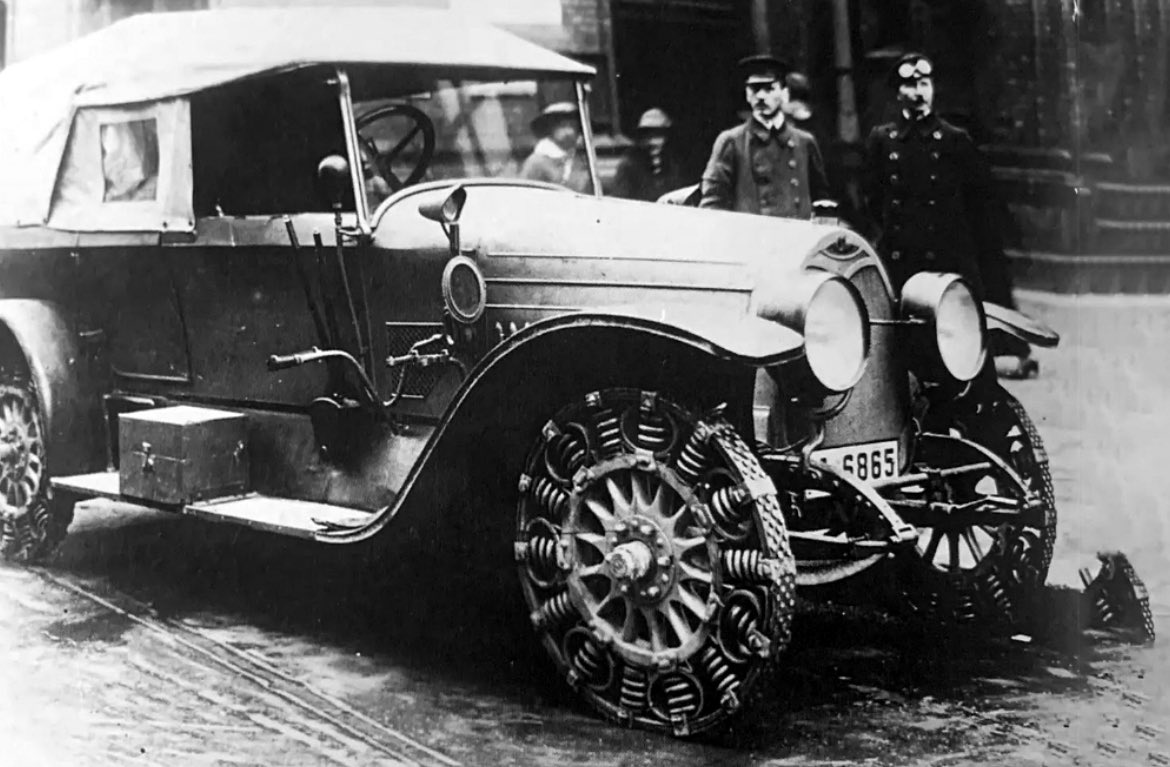
In the early 1900s, the shortage of rubber and the challenges associated with filling tires with air during the First World War led to a significant need for alternative solutions. In response to this problem, German engineers devised a groundbreaking invention in 1916—a steel spring tire.
The tire was specifically designed by the Germans to address the scarcity of rubber and the unreliable nature of traditional rubber tires. Their goal was to create a tire that not only offered a viable alternative to rubber but also provided enhanced reliability, particularly for military vehicles that required robust and durable tire solutions.
The innovative steel spring tire was first implemented on a Protos vehicle, showcasing its potential for military applications. The tire design incorporated a series of steel springs arranged in a circular pattern, which replaced the conventional rubber construction. These springs were strategically placed to provide both support and flexibility, allowing the tire to withstand the rigorous demands of military operations while offering improved traction on various terrains.
One of the key advantages of the steel spring tire was its resistance to punctures and damage, which significantly reduced the need for constant maintenance and tire replacements. This attribute made it particularly attractive for military vehicles operating in challenging environments, such as battlefields or rough terrain.
Furthermore, the German engineers believed that the steel spring tire's performance would not be affected by adverse weather conditions, a common issue with traditional rubber tires. The tire's unique design was expected to maintain its reliability and functionality even in extreme temperatures, making it well-suited for military campaigns in diverse climates.
While the steel spring tire initially gained attention due to its potential military applications, there was also significant interest in its civilian use. The tire's durability and puncture resistance made it an attractive option for commercial vehicles, especially those that frequently traveled on rough roads or encountered sharp debris.
Although the steel spring tire demonstrated promise, the end of the First World War and subsequent developments in rubber technology led to a shift back towards traditional rubber tires. Rubber became more accessible again, and advancements in tire manufacturing techniques and materials improved the reliability and performance of rubber tires. As a result, the steel spring tire gradually faded from use, becoming a fascinating but short-lived chapter in the evolution of tire technology.
Nonetheless, the German engineers' ingenuity in developing the steel spring tire during a time of resource scarcity and technological challenges remains a testament to human innovation and adaptability in the face of adversity.