'La Tendresse', a famous French chanson in both Mandarin and French. The seamless transition between the two languages is incredible. I don't think you can do something like this except in those two languages. It works because French and Chinese songs share similar melodies and the phonetic range is almost exactly the same.
⁉️« La question n’est pas de savoir si nous faisons du mal aux gens, si les enfants meurent : nous savons qu’ils meurent. La question est de savoir combien et combien nous en acceptons. Est-il acceptable que le gouvernement tue des enfants innocents ? »
💥« Nous devons donc envisager cela différemment et nous demander : est-il acceptable, même si c’est pour le bien commun, de tuer, de mutiler et de détruire un enfant ? C’est ainsi que, selon moi, la politique devrait aborder cette question. Et c’est pourquoi nous disons : là où il y a un risque, il doit y avoir un choix. »
Réécouter l’émission 🔗 https://t.co/fcwCjqwnL3
🗣️Pour @delbigtree, producteur de télévision et de cinéma américain et PDG du groupe antivaccin Informed Consent Action Network, les vaccins ne devraient pas être imposés à la population par les gouvernements ; le choix devrait être laissé aux parents, parce que, selon lui, les vaccins ne sont pas sans risque.
Robert Kennedy Jr. has done more as HHS Secretary than any HHS Secretary in my lifetime. He is cleaning up the food supply. He is removing chemical dyes from children's food, pulling heavy metals out of baby food, investigating microplastics and forever chemicals. And he is working to bring the childhood vaccine schedule down from 54 vaccines to 26.
That isn't a small thing.
@RobertKennedyJr
Qui protège Gérard Miller ?
7 plaintes déposées
3 par des filles mineures
90 signalements
Viols sous hypnose
Aujourd’hui sous contrôle judiciaire
Affaire au point mort
A obtenu une autorisation pour un week-end romantique à Venise 😳😳
Patrick Bruel :
Mis en examen en moins de 15 jours
Attention : je ne dis pas que l’affaire de Patrick Bruel est moins grave, je dis qu’elle est infiniment plus rapide !
⚠️📰 𝗗𝗢𝗨𝗕𝗟𝗘 𝗜𝗡𝗙𝗢𝗫 𝗗𝗘 𝗟'𝗔𝗥𝗗𝗘𝗡𝗡𝗔𝗜𝗦
𝗦𝗨𝗥 𝗠𝗔 𝗖𝗢𝗡𝗙𝗘́𝗥𝗘𝗡𝗖𝗘 𝗗𝗘𝗩𝗔𝗡𝗧 𝗟𝗘𝗦 𝗝𝗘𝗨𝗡𝗘𝗦 𝗔𝗚𝗥𝗜𝗖𝗨𝗟𝗧𝗘𝗨𝗥𝗦 𝗗𝗘𝗦 𝗔𝗥𝗗𝗘𝗡𝗡𝗘𝗦
L'interdiction de ma conférence au Lycée agricole de Rethel hier 11 juin a fait suffisamment de bruit localement pour que le journal L'ARDENNAIS lui consacre un article rétrospectif en pleine page ce 12 juin 2026.
Cependant, on y trouve 2 infox visant à truquer la réalité pour me nuire.
---
1️⃣ le journal affirme que, contrairement à ce que j'ai déclaré, l'interdiction ne serait pas venue du ministère mais seulement du lycée agricole.
Il est aisé de montrer que cette pseudo "correction" - qui vise à dédouaner le ministère- est doublement mensongère :
▪️d'une part, cela faisait au moins une dizaine de jours que les JA08 avaient réservé l'Amphithéâtre du Lycée Agricole de Rethel. L'administration du lycée était donc dûment avertie et avait donné son accord.
Il est bien évident que c'est sur une pression extérieure, imprévue et puissante, qu'elle a brusquement retiré son accord la veille, en se déjugeant vis-à-vis des Jeunes Agriculteurs.
▪️d'autre part, ce sont les Jeunes Agriculteurs eux-mêmes qui ont publié un Communiqué officiel pour protester contre cette soudaine décision, en l'expliquant ainsi :
«SUITE À DES PRESSIONS DIRECTES DU MINISTÈRE, l'accès à l'amphithéâtre du lycée agricole de Rethel nous a été brutalement retiré à la veille de l'événement»
[J'ai déjà cité ce Communiqué dans un tweet précédent et j'en republie le passage concerné ci-après].
---
2️⃣ le journal publie une photo en illustration de son article, qui donne à penser au lecteur que ma réunion n'aurait attiré qu'une maigre dizaine de personnes.
Cette photo est un mensonge pur et simple : elle a été prise à une date inconnue, avec un intervenant et un public clairsemé très différent, et dans une salle sans aucun rapport avec la salle communale de Doux où je me suis exprimé hier soir.
Je publie ci-après une comparaison de la vraie photo de l'événement et de la fausse photo publiée par L'ARDENNAIS.
---------------
CONCLUSION
---------------
L'article de compte-rendu du quotidien local L'ARDENNAIS sur ma réunion publique du 11 juin (à laquelle aucun journaliste n'a d'ailleurs daigné assister) est révélatrice du niveau effarant de propagande dans lequel est tombé la presse française.
C'est une honte, et c'est une insulte à la Charte de Munich de 1971 fixant la déontologie de la profession de journaliste.
-----
Le fait qu’il me bloque pendant l’arnaque Covid (à laquelle il a largement collaboré) prouvait déjà pour moi qu’il était un usurpateur. Je ne m’étais pas trompé 😁
This is why I'm here. This is why I'm traveling the world. If we all start speaking our truth, we have all the power we need to change every government in the world. We must recognize our only decision now is to stand up and make a change, or we will never be happy with the world we leave to our children.
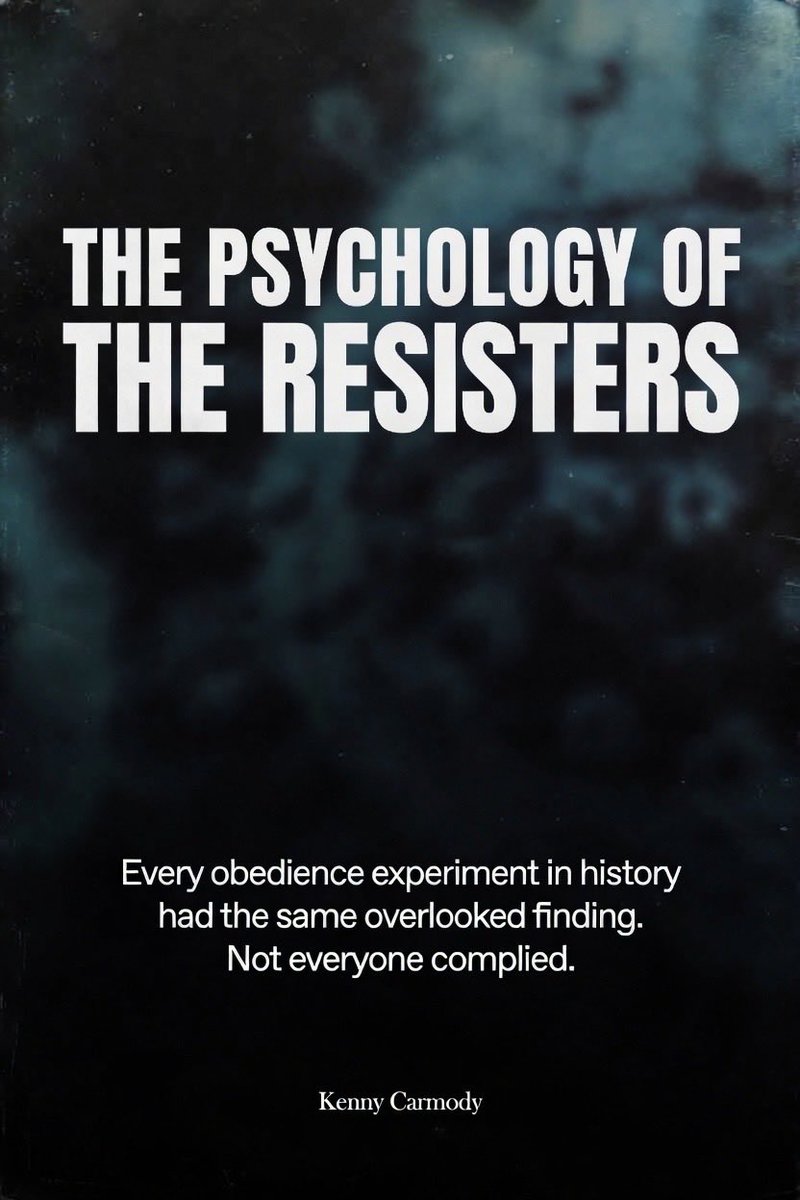
Every obedience experiment in history had the same overlooked finding.
Not everyone complied.
In Milgram’s lab, 35% refused to deliver the final shock. In Asch’s line experiments, 25% never conformed, not once, across any trial. In Zimbardo’s prison, at least one guard refused to dehumanize. One prisoner demanded a lawyer instead of a doctor and broke the psychological frame entirely.
We spent decades studying the ones who obeyed.
We barely asked what made the others different.
That question matters more now than it ever has.
The resisters in the COVID era were not difficult to find. Physicians who filed exemptions and lost their licenses. Nurses who walked away from careers rather than mandate patients into decisions they hadn’t genuinely chosen. Scientists who published contrary data knowing what it would cost them. Parents who stood alone at school board meetings. Ordinary people who simply said, quietly, without drama , no.
What made them different?
Research consistently identifies a cluster of factors. Not personality traits you either have or don’t. Situational and cognitive patterns that can be cultivated.
First: prior reflection on authority. The resisters had usually thought, before the crisis, about the limits of institutional trust. They weren’t cynics. They were people who had already asked the question “under what conditions would I refuse?” before anyone was asking them to comply.
Second: a concrete reference point outside the consensus. A value, a principle, an oath, a relationship that existed independently of the institutional structure demanding compliance. Something the system couldn’t reach.
Third: at least one other person. Milgram found that a single dissenting confederate reduced compliance dramatically. The resisters rarely stood entirely alone. They found each other. Sustained each other. Gave each other permission.
Fourth: the willingness to tolerate social pain. Not immunity to it. Tolerance of it. They felt the pressure. They felt the exclusion. They chose the discomfort of integrity over the comfort of belonging.
None of this is innate. All of it is learnable.
The most important thing Milgram, Asch, and Zimbardo taught us is not how fragile conscience is.
It’s that conscience can hold, if you’ve trained it, named its limits, and found even one other person willing to hold theirs beside you.
Build that now. Because the experiment is always running.
Until then stay humble.
“I never thought I’d live to see the day when the right wing would become the cool ones giving the middle finger to the establishment, and the left wing becoming the snivelling self-righteous twats, going around shaming everyone.”
- John Lydon, The Sex Pistols
Cette revelation est énorme. Le journaliste américain @Delbigtree
a obtenu l'aveu des autorités sanitaires qu'elles n'ont jamais réalisé pour les vaccins d'essais en double aveugle avec un groupe placebo.
C'est pourtant la base de toute réflexion scientifique pour évaluer un produit.
En toute logique, il faudrait retirer tous les vaccins du marché en attendant de réaliser de tels essais.
Qui sont les obscurantistes anti-science ?
🙅🏻« Actuellement, ce que nous constatons, c'est qu'il n'y a pas de discussion. Il n'y a qu'un seul mot venant d'en haut et il faut obéir. C'est exactement comme disait Del Bigtree : on est réduit à un simple animal d'élevage et les victimes sont traitées comme de simples chiffres. C'est une façon de penser utilitariste. »
👨🔬« La vaccination est pratiquement un dogme pour la plupart des médecins. »
Réécouter l’émission 🔗 https://t.co/fcwCjqwnL3
🗣️@louisfouch3, médecin intensiviste-réanimateur et anesthésiste, cofondateur de la branche française du mouvement Make Europe Healthy Again, estime qu'il faut autoriser le débat sur le sujet de la vaccination. Il dénonce un « dogme » des médecins sur ce sujet.
5⃣ans après
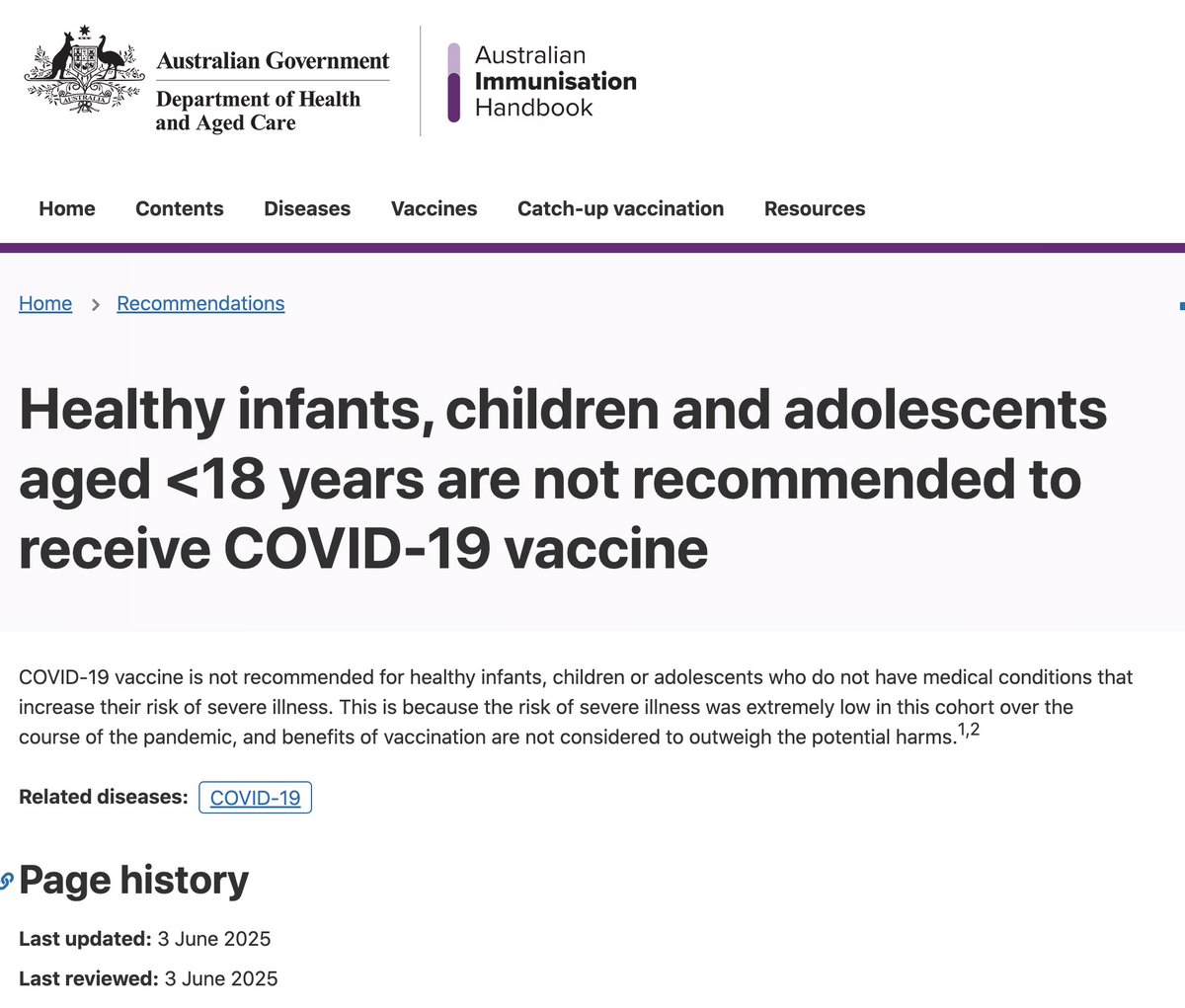
Non sans une vive douleur, je vous annonce ce que les autorités Australiennes ont enfin publié:
IL NE FALLAIT PAS INJECTER: VOS ENFANTS, VOS ADOLESCENTS, VOS BÉBÉS...
Vous dire que je vous avais prévenu n'atténuera jamais mon vertige
Source:https://t.co/EE4Fq45rcu







![f_asselineau's tweet photo. ⚠️📰 𝗗𝗢𝗨𝗕𝗟𝗘 𝗜𝗡𝗙𝗢𝗫 𝗗𝗘 𝗟'𝗔𝗥𝗗𝗘𝗡𝗡𝗔𝗜𝗦
𝗦𝗨𝗥 𝗠𝗔 𝗖𝗢𝗡𝗙𝗘́𝗥𝗘𝗡𝗖𝗘 𝗗𝗘𝗩𝗔𝗡𝗧 𝗟𝗘𝗦 𝗝𝗘𝗨𝗡𝗘𝗦 𝗔𝗚𝗥𝗜𝗖𝗨𝗟𝗧𝗘𝗨𝗥𝗦 𝗗𝗘𝗦 𝗔𝗥𝗗𝗘𝗡𝗡𝗘𝗦
L'interdiction de ma conférence au Lycée agricole de Rethel hier 11 juin a fait suffisamment de bruit localement pour que le journal L'ARDENNAIS lui consacre un article rétrospectif en pleine page ce 12 juin 2026.
Cependant, on y trouve 2 infox visant à truquer la réalité pour me nuire.
---
1️⃣ le journal affirme que, contrairement à ce que j'ai déclaré, l'interdiction ne serait pas venue du ministère mais seulement du lycée agricole.
Il est aisé de montrer que cette pseudo "correction" - qui vise à dédouaner le ministère- est doublement mensongère :
▪️d'une part, cela faisait au moins une dizaine de jours que les JA08 avaient réservé l'Amphithéâtre du Lycée Agricole de Rethel. L'administration du lycée était donc dûment avertie et avait donné son accord.
Il est bien évident que c'est sur une pression extérieure, imprévue et puissante, qu'elle a brusquement retiré son accord la veille, en se déjugeant vis-à-vis des Jeunes Agriculteurs.
▪️d'autre part, ce sont les Jeunes Agriculteurs eux-mêmes qui ont publié un Communiqué officiel pour protester contre cette soudaine décision, en l'expliquant ainsi :
«SUITE À DES PRESSIONS DIRECTES DU MINISTÈRE, l'accès à l'amphithéâtre du lycée agricole de Rethel nous a été brutalement retiré à la veille de l'événement»
[J'ai déjà cité ce Communiqué dans un tweet précédent et j'en republie le passage concerné ci-après].
---
2️⃣ le journal publie une photo en illustration de son article, qui donne à penser au lecteur que ma réunion n'aurait attiré qu'une maigre dizaine de personnes.
Cette photo est un mensonge pur et simple : elle a été prise à une date inconnue, avec un intervenant et un public clairsemé très différent, et dans une salle sans aucun rapport avec la salle communale de Doux où je me suis exprimé hier soir.
Je publie ci-après une comparaison de la vraie photo de l'événement et de la fausse photo publiée par L'ARDENNAIS.
---------------
CONCLUSION
---------------
L'article de compte-rendu du quotidien local L'ARDENNAIS sur ma réunion publique du 11 juin (à laquelle aucun journaliste n'a d'ailleurs daigné assister) est révélatrice du niveau effarant de propagande dans lequel est tombé la presse française.
C'est une honte, et c'est une insulte à la Charte de Munich de 1971 fixant la déontologie de la profession de journaliste.
-----](https://pbs.twimg.com/media/HKod1mUXIAAGBHJ.jpg)