I've been a backend Engineer for 12+ years. Today, I'm a Principal Engineer at Atlassian.
I've designed systems that handle millions of requests. Sat on both sides of system design interviews.
Reviewed more architecture docs than I can count.
Starting today, I'm breaking down the fundamentals of scaling for the next 25 days.
If you're learning system design bookmark this thread, you're going to get a lot of learning from this.
🚨 AI JUST DESIGNED A MATERIAL STRONGER THAN STEEL, LIGHTER THAN FOAM AND UP TO 5× STRONGER THAN TITANIUM.
Researchers used machine learning to discover entirely new microscopic lattice structures that were then 3D-printed into carbon nanolattices.
The result is a mechanical metamaterial that combines properties previously thought to be impossible together: extreme strength with ultra-low weight.
Why this matters:
• Aerospace and automotive industries could build dramatically lighter vehicles and aircraft without sacrificing strength
• Construction and infrastructure could use stronger, lighter components
• Medical implants and protective gear could become both tougher and more comfortable
• It proves AI can now design physical matter at the structural level exploring geometries no human engineer would have thought of
The deeper implication is huge:
We are moving from discovering materials that already exist in nature… to inventing entirely new classes of matter with properties we specify.
AI isn’t just writing code or generating images anymore. It’s helping us build the physical world from the inside out.
What industry do you think will be transformed first by these AI-designed super-materials?
Follow for more frontier science and future technology.
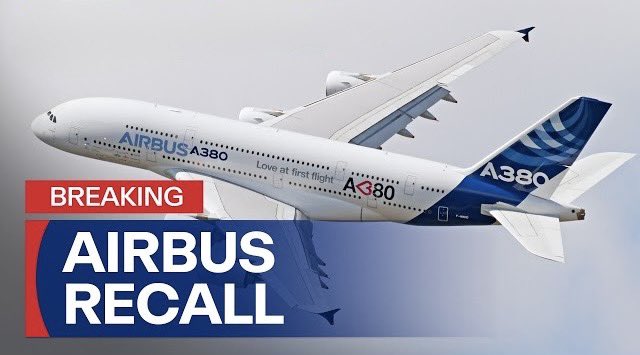
JUST IN: THE SUN JUST GROUNDED HALF THE WORLD’S MOST POPULAR AIRCRAFT
6,500 Airbus A320s. Grounded. Effective immediately.
Not terrorism. Not mechanical failure. Not human error.
Solar radiation.
The same star that sustains all life on Earth just exposed a fatal flaw in the computer that controls whether your plane pitches up or down.
October 30: JetBlue Flight 1230 drops 100 feet in 7 seconds over Florida. 15 passengers hospitalized. Investigators trace it to the Elevator Aileron Computer. The sun corrupted its data mid-flight.
November 28: Airbus issues the largest recall in its 55-year history. EASA Emergency Directive demands fixes before next flight.
The cascade:
American Airlines: 340 aircraft grounded
ANA Japan: 65 flights canceled, 9,400 stranded
Air France: 35 flights scrapped
India: 250 aircraft affected
Avianca: Ticket sales halted for 10 days
This is 60% of the global A320 fleet. The aircraft that just overtook Boeing’s 737 as humanity’s most-delivered jet. Over 11,000 in service. 8 million seats departing daily. 2,000 takeoffs every hour.
The brutal truth: 2025 is peak solar cycle. NOAA confirmed it. And we just learned our fly-by-wire civilization has a single point of failure nobody stress-tested against space weather.
Most aircraft need a 2-4 hour software rollback. But 1,000 older jets require hardware replacement. They stay grounded for weeks.
The fix exists. The question that should terrify every systems thinker: What else haven’t we tested against the sun?
We built global aviation on the assumption that our star would behave. It didn’t ask permission.
Check your flight status. Now.
A Windows 11 bug is duplicating Task Manager process when you use the 'X' close button to exit it.
This means Task Manager won’t quit on Windows 11, sending each instance to background.
It appears that the October 2025 optional update (Build 26200.7019/26100.7019, which released with new Start menu, accidentially broke Task Manager close button for some users (not everyone will run into this issue).
If you're affected, don't use close button to close Task Manager, as it'll create ghost entries, which use your RAM and CPU.
To exit Task Manager, use “End task” instead.
I never run out of content to post anymore.
Built an automation that monitors 50+ news sources, scores articles for relevance, and writes social posts automatically.
It finds trending topics in my niche before they explode everywhere else.
Saves me 15-20 hours monthly and keeps me ahead of every trend.
Comment "NEWS" and I'll DM it to you (must be following)
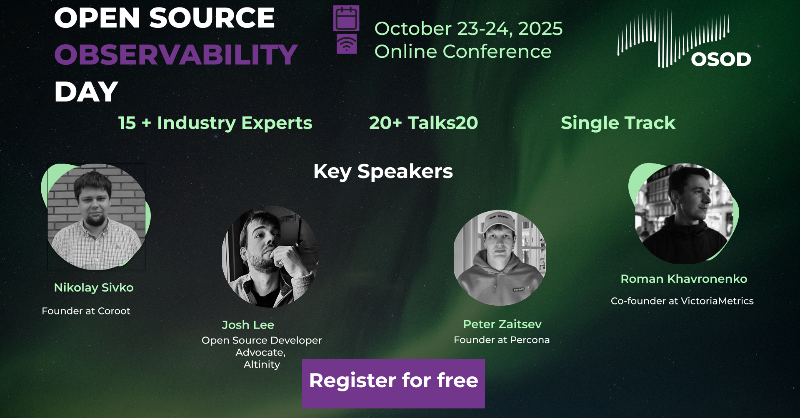
🎙️ Open Source Observability Day | Oct 23-24
Join 600+ attendees and 15+ experts for 20+ talks on the latest in open-source observability.
- Tracing, Logs, Metrics
- Cloud-Native, eBPF
- Kubernetes, OpenTelemetry, Prometheus, Clickhouse
Register for free
Shell scripting is the one skill that separates DevOps engineers who panic during incidents from those who fix them in minutes.
I spent 8 years in Linux before I got into DevOps.
I wrote a minimalistic ebook on Linux shell scripting that will give you enough knowledge to start writing any shell scripts
I'm giving it away for free.
Follow me + retweet + comment "Living devops" and I'll send you the ebook in DM.
An over-the-counter allergy spray just made COVID infections three times less likely.
A new study published in JAMA Internal Medicine tested azelastine, an antihistamine spray sold under names like Astelin and Astepro. Used for decades to ease symptoms of hay fever and dust allergies, it’s now being investigated for its potential to prevent viral infections.
In this double-blind study, 450 healthy adults – almost all already vaccinated – were split into two groups. One group sprayed azelastine into their nostrils three times daily for eight weeks, while the other used a placebo. Participants were tested twice a week.
By the end, only 2.2% of the azelastine group had tested positive for COVID-19, compared with 6.7% in the placebo group. Not only were infections less common, they also cleared faster: just over three days versus more than five.
On top of this, fewer participants on azelastine caught other respiratory illnesses like influenza and rhinovirus, and when they did, their symptoms resolved more quickly.
["Azelastine Nasal Spray for Prevention of SARS-CoV-2 Infections: A Phase 2 Randomized Clinical Trial." 2025]






![Rainmaker1973's tweet photo. An over-the-counter allergy spray just made COVID infections three times less likely.
A new study published in JAMA Internal Medicine tested azelastine, an antihistamine spray sold under names like Astelin and Astepro. Used for decades to ease symptoms of hay fever and dust allergies, it’s now being investigated for its potential to prevent viral infections.
In this double-blind study, 450 healthy adults – almost all already vaccinated – were split into two groups. One group sprayed azelastine into their nostrils three times daily for eight weeks, while the other used a placebo. Participants were tested twice a week.
By the end, only 2.2% of the azelastine group had tested positive for COVID-19, compared with 6.7% in the placebo group. Not only were infections less common, they also cleared faster: just over three days versus more than five.
On top of this, fewer participants on azelastine caught other respiratory illnesses like influenza and rhinovirus, and when they did, their symptoms resolved more quickly.
["Azelastine Nasal Spray for Prevention of SARS-CoV-2 Infections: A Phase 2 Randomized Clinical Trial." 2025]](https://pbs.twimg.com/media/G0vTaCxWYAAQ6E5.png)





