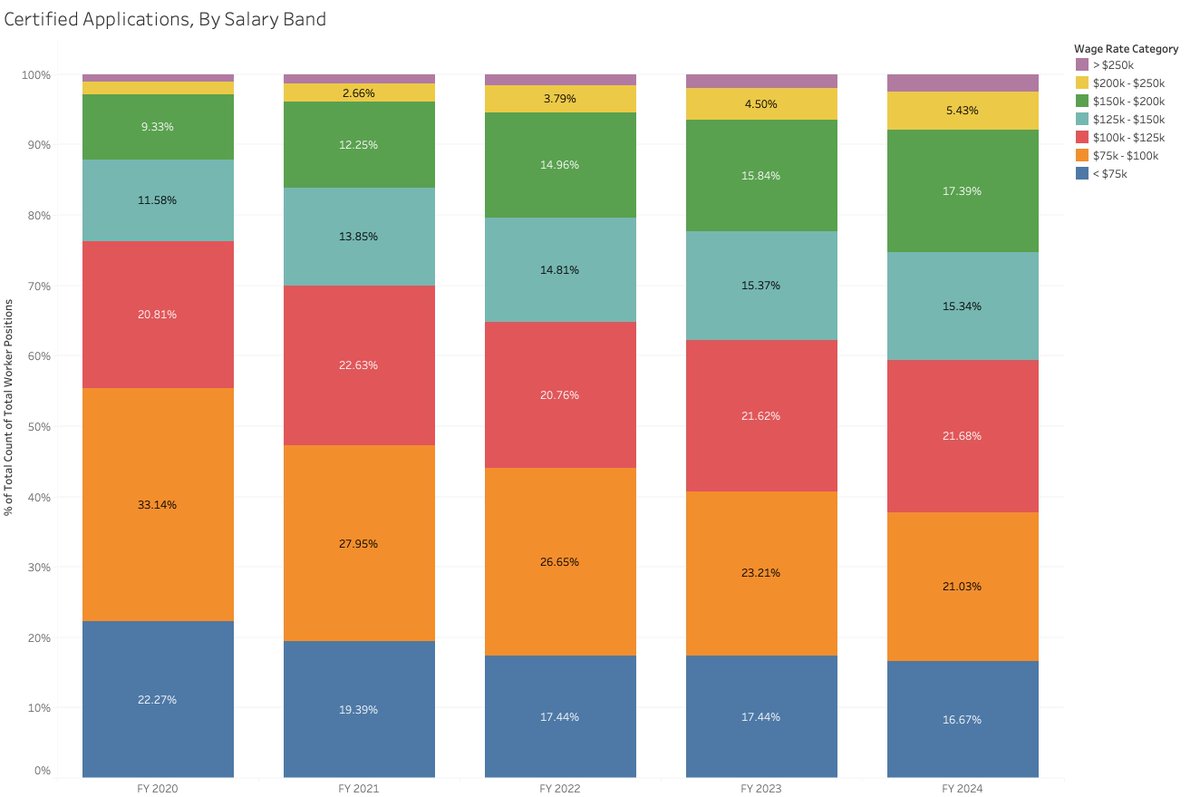
H-1B DATA MEGA-THREAD 🧵
I downloaded five years of H-1B data from the US DOL website (4M+ records) and spent the day crunching data.
I went into this with an open mind, but, to be honest, I'm now *extremely* skeptical of how this program works.
Here's what I found 👇
Recently witnessed an incident where employees excelling in multiple roles (with top-notch performance on their designed one) were called out for failing to meet KPIs. Do people improve business by having a "founder's mentality" in IT, or stick to narrowly defined assignments?
One of the best skill youngsters can learn along with finance planning is to read mind psychologically; can help to avoid red flags before making mistakes.
Is it normal in today's situation that your client will give you timelines for the work you've to do without expecting a confirmation on those timelines?
The brain can tolerate an incredible degree of needless complexity, which comes in handy when you're learning a new language. Right now, I’m learning French, and John McWhorter helped me get unconfused about its complicated sophistication: https://t.co/7uRzHpermj
CEOs / Executives:
When you freak out about a team missing their launch date by a week or a few weeks, you should know that freaking out (or punishing this team) will not actually achieve the outcome you want.
This also applies if you appreciate a team very publicly mainly for hitting their committed date.
I know you want a culture of speed, sense of urgency, execution discipline, set an example, etc. etc. but in practice you will almost certainly get the opposite of that if you do these things.
Why?
Unintended consequences.
From now on, every team — wanting to avoid punishment & seeking your appreciation — will start padding their schedules and creating a perception of greater complexity to justify the schedules.
This in turn will slow things down a lot more, company-wide.
Plus, despite heavily padding the schedule, it’s not like these teams are going sometimes launch a project early. Because of Parkinson’s Law (“work expands to fill the time allotted for its completion”), these teams will still struggle to barely hit the padded date they committed to.
This is not intuitive to some executives. They have forgotten how first-level & mid-level managers will respond to incentives and disincentives set by the execs and the CEO.
What to do?
You must learn to see the odd missed date as an acceptable cost of setting ambitious goals and aggressive deadlines. If you want teams to move as fast as they can, you must be tolerant of the occasional missed date.
(it is a different matter if there is an external customer / partner / regulator / analyst / Wall Street commitment for a given launch date — in most companies, for most launches, this is not the case)
One of the interesting read from recently published article #99Effect
The wondering part is that this strategy was introduced in year 1896 by a department store in Philadelphia and it's still effective even after changes in the generations.
https://t.co/VowNXUf5vn