No. Bill Clinton did not resign.
Jensen Huang shouldn’t either.
And the Nvidia board shouldn’t fire him.
Particularly in the heat of the moment.
Ride it out and ignore the journos.
Clinton did. And then no one cared.
Expanding on why I believe "ETH as store of value (SoV)" makes much more sense to focus on than "ETH as fee-burning token".
Three primary reasons:
1. ETH as fee-burning token never was as strong as it seemed
2. Optimizing for ETH as fee-burning token would demand Ethereum and ETH function in ways that are very hard to make compatible with decentralization and capture resistance.
3. Meanwhile, optimizing for ETH as SoV is aligned with Ethereum focusing on its unique strengths (decentralization and CROPS)
EIP-1559 (including its burn) is fine and good, we should keep them. But we should not feel sad if fee burn is < 10% of breakeven indefinitely; the value of ETH comes from elsewhere.
The core idea: the big thing that people appreciate about Ethereum is decentralization and CROPS. The main pragmatic benefit that these things translate into is stability. SoV is the category where that is not an unneeded extra we merely put effort into for ideological reasons, but rather a pragmatic strength from the perspective of people putting in their assets. And in the era of AI disruption, stability will be highly valued.
"Step one of winning is surviving… then the next step is getting Ethereum actually used at a much higher scale." - @VitalikButerin
Vitalik says @ethereum is making sure it is fully secure against quantum computers and AI, so it can scale into prediction markets, decentralized social, identity and DAOs.
He also says private transactions that cost more than 300,000 gas today will get much cheaper and become quantum safe.
I asked him about the next decade of Ethereum.
> What used to be hard or expensive on Ethereum that will become easy and cheap in the next 18 to 24 months? > What becomes newly practical for users and builders over the next 3 to 5 years of lean Ethereum? > What does winning look like for Ethereum in the next decade, and what early signals would show it? > How does Ethereum's edge with institutions compound as more assets move on-chain?
Full Q&A👇
You can literally type a sentence and watch a Transformer process it.
This interactive explainer runs a GPT-style model in the browser and lets you follow the whole path:
tokenization → embeddings → Q/K/V → attention → MLP → logits → next-token probabilities
You can inspect attention maps, intermediate values, and change temperature, top-k and top-p to see how generation changes.
If Transformers still feel like boxes connected by arrows, this is worth opening.
https://t.co/vkyxOqDVll
Around 3 weeks ago introduced Laya, the first open-source version of JEV, and it has reached a very large scale. Today I am open-sourcing a new physics-based typed decision model called Vega.
The interesting parts. It is only 800 million parameters (4B is also there), with 73k token support, image support, and surpassing many of the jev benchmarks in single-shot. Implemented an engine+adapter as a Test-Time Training Architecture.
Imagine you are giving input to the model like "ignore all previous conversations," which is called the observation, along with a question, "Is this trying to override the instructions of the model?" and your possible outcomes are YES or NO. The whole prompt is passed to an LLM/VLM (yeah, image-supported), then from the hidden layers, we can extract the observation, question, the yes and no, and last token. These will be vectors, and we can project it by multiplying with wieghts; then, first, using the observation projection, we can create a landscape with valleys; then, using the question and last-token vectors, we can initialise a ball in the valley, and using YES or NO, we can get the candidate location of the ball. Depends on the number of outcomes we create valleys; that is, here YES and NO, so 2. When the ball fall on YES valley, we get the answer. There is friction also influencing how the ball moves.
TLDR: It's like creating valleys of outcomes that we need and throwing a ball that will slow down based on friction and settle on the best outcome
Blog: https://t.co/GFaP7djUBQ
GitHub: https://t.co/ai8SnOElQ8
HuggingFace Model Card: https://t.co/6jEWA8eoBG
HuggingFace Space: https://t.co/GvzEKjkWB2
Innate is a team of 7 building capable robots for everyday life.
"The seven of us here do the work of 50," says Vignesh Anand, co-founder of @innate_bot.
We spent time with the team to capture what building means to them.
The midterms are about 5 weeks away.
Crypto isn't a partisan issue. It's about whether the next generation of financial technology gets built in America.
Before you vote, check where your candidates stand: https://t.co/omXih3GQ4C
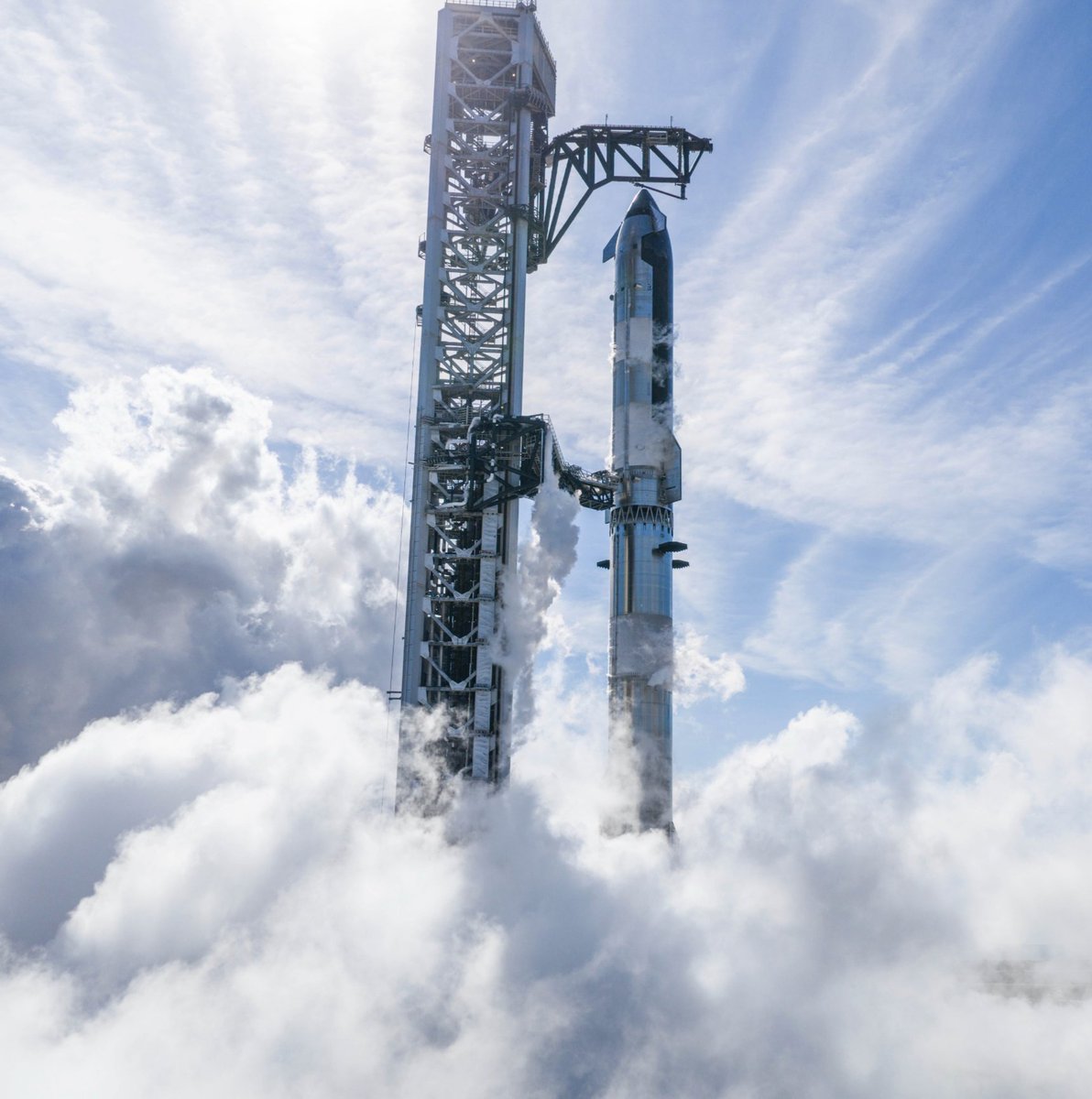
Starship’s 14th flight is set to launch on Monday, Sept 28. The 75-minute launch window opens at 7:15 a.m. CT. Live coverage of the mission starts ~35 minutes before launch → https://t.co/uQKQvgaTmJ
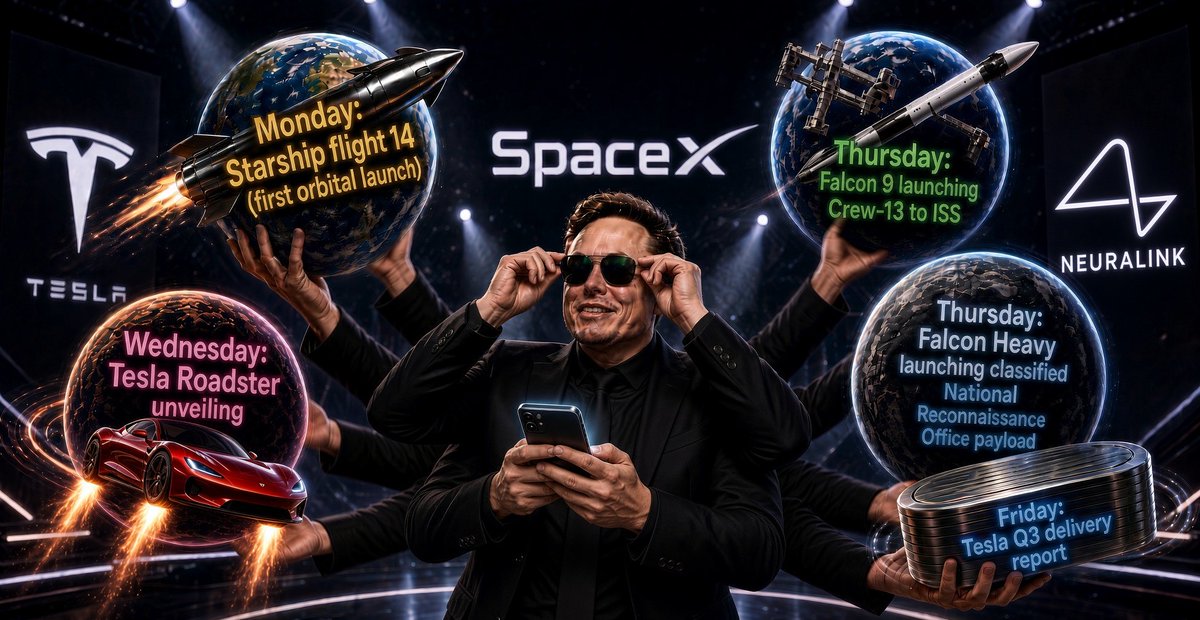
This upcoming week:
• Monday: Starship flight 14 (first orbital launch)
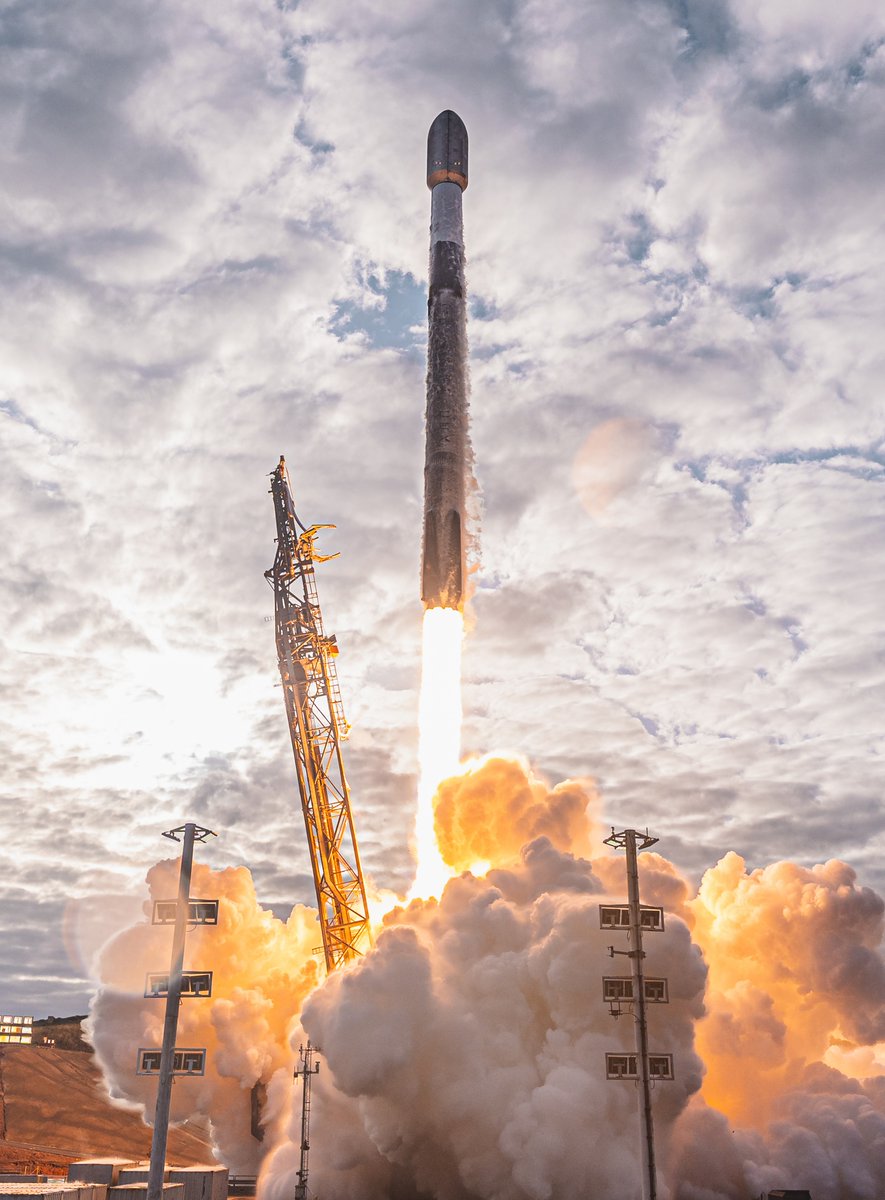
• Thursday: Falcon 9 launching Crew-13 to ISS
• Thursday: Tesla Roadster unveiling
• Thursday: Falcon Heavy launching classified National Reconnaissance Office payload
• Friday: Tesla Q3 delivery report
Starship is preparing to go to orbit. Flight 14 is targeting to launch as early as Tuesday, September 22, pending regulatory approval → https://t.co/LwJ4g6dg9v
Cybercab is absolutely magical. Tesla has actually done it. A domestically mass-produced affordable autonomous electric vehicle is available to the general public. A car with no steering wheel generating revenue.
It’s sad to come back to a city without Robotaxi after being in Austin. Like stepping back in time. The event was awesome. I know it was tough to follow online, but we all knew the story going in.
This was a launch, not an unveiling. It felt like the city transformed immediately. Cybercabs were everywhere, you couldn’t take a trip without seeing another one. Outside of the ride experience itself, the scale of this launch is what I want to make sure people understand.
On previous trips, Robotaxi felt like a test network (an amazing one). Not anymore. Suddenly it’s real. It’s hard not to laugh when you ride past a Waymo in a Cybercab. Good luck… As I’ve said before, Robotaxi is way smoother than Waymo. It feels natural. Supernatural, really. This holds true for Cybercab. Waymo feels like a computer. And it looks like one too.
The production Cybercab is beautiful. It really is special. The color, the lines, the lighting, the doors. It looks great. While also being the most efficient car in history? Insane. I think it fits perfectly in the space between familiarity and the future. It doesn’t stick out, but it catches your attention. After exiting our first ride, there was a large group of 10-20 people. They were all talking about the Cybercab as we walked by. These doors are like gasoline on a word of mouth wildfire.
Our rides were flawless. Better than a human driver. No anxious moments. Cybercab is very comfortable, even at 6’2. Leg room is particularly notable. It would be tough to find a car that has this much leg room for two passengers at the same time. No pedals, center console, or multiple rows of seating creates a lot of space and a very open feel.
Robotaxi is unquestionably one of those products that will be way cheaper and way better than what existed before. I like those. No one is going to want to roll the dice on some random person and their car when the alternative is a private, safe, comfortable, clean, consistent, quiet, personalized Tesla with tons of room and a massive screen. It’s a premium experience on every level, and we get it cheaper thanks to technology. No noise or air pollution, either.
I don’t have much to critique. Little refinements that I know will happen. Pick up and drop off were satisfactory, over time will become excellent. Grok integration is already impressive, and it’s clear that we’ll eventually be able to just give directions like “pull over around the corner up there.” You can already have Grok update your destination in Robotaxi, it pushes the update to the Robotaxi app on your phone for approval.
I leave the event with more confidence in Tesla’s ability to scale, but also renewed patience. I have a greater appreciation for the intentionality of limitations (service area, times, fleet size) rather than seeing them simply as barriers that have yet to be overcome. I now believe the objective is to build slowly, safely, to critical mass. A tail-risk event is inevitable. The absolute last thing we need is some bad luck on a tail-risk event at an early stage before enough data exists to prove its rarity. That data is accumulating quickly and will become undeniable soon enough.
Huge congrats to Tesla and Elon for this incredible milestone. Decades of work culminating in a life-saving, sustainable, affordable, economically exceptional product. It’s all pretty surreal, a testament to vision and determination. I love this company!