🚨BREAKING NEWS from #ESCCongress: The first 1️⃣ ESC Guidelines for the Management of Cardiovascular Disease and Chronic Kidney Disease are here!🫀🫘
The new approach: STAMP on CKD
📍 S-Screen: All patients with CVD should be screened for CKD using both eGFR and spot urine ACR; not creatinine alone
📍 T-Triage & stage: CKD is diagnosed when eGFR <60 mL/min/1.73 m² and/or uACR ≥3 mg/mmol persists for ≥3 months
📍 A-Address risk: Smoking cessation, weight control, physical activity and an SBP target of 120-129 mmHg, when tolerated
📍ACEi/ARB, statin-based therapy and SGLT2 inhibitors are recommended in the majority of patients with CKD, according to the individual indication & kidney function
📍Diabetic CKD with albuminuria, add GLP-1 RA & non-steroidal MRA when appropriate
📍 M-Modify CVD management: CKD changes drug pharmacokinetics and increases the risks of hyperkalaemia, bleeding and AKI; but necessary cardiovascular treatment should not be unnecessarily delayed
📍In HF with CKD, SGLT2 inhibitors & loop diuretics for congestion are recommended irrespective of LVEF, with additional therapy guided by EF and eGFR; overall there is limited evidence when eGFR <30 mL/min/1.73 m²
📍 P-Plan services: identify high-risk patients, minimize CKD-related treatment delays & strengthen multidisciplinary care
Read more📚: https://t.co/RUsCVUAyCu
@escardio #ESCGuidelines
#CKD #CVprev #Prevention #CVD
@kevin_damman@jozinetm
How to remember the descending tracts of the CNS?
There is 1 pyramidal and 5 parapyramidal descending tracts - reticulospinal, vestibulospinal, tectospinal, olivospinal and rubrospinal tracts.
Tracts of motor control -
1. The RETICULOSPINAL TRACT is the most primitive tract. It is found even in the most ancient vertebrates with only torsos and no limbs. It helps in maintenance of AXIAL POSTURE and MOTION.
2. The RUBROSPINAL TRACT evolved for control of fins and other primitive appendanges. In primates, it controls the upper limbs and helps in gross motor control like reaching and grasping.
3. The CORTICOSPINAL TRACT is the most advanced tract. It is extensively integrated with the 1° and 2° sensory cortex and provides the finest and most precise motor control of the hands in primates --> like my fingers as I type this post.
Tracts of balance -
1. The VESTIBULOSPINAL tract connects the vestibular nuclei with the spinal cord and helps in maintenance of balance via the inner ear. It might also perform some functions of the reticulospinal tract.
2. The TECTOSPINAL tract connects the tectum of midbrain --> specifically the superior and inferior colliculli and helps in maintenance of balance via visual (SC) and auditory (IC) cues.
Tract of little consequence -
1. The existence of the OLIVOSPINAL TRACT itself has been questioned.
This is a heavily simplified view of this complex topic in neuroscience.
It is meant to be used as nothing more than an aide memoire for students.
#MedTwitter
#NeuroTwitter
#Neuroscience
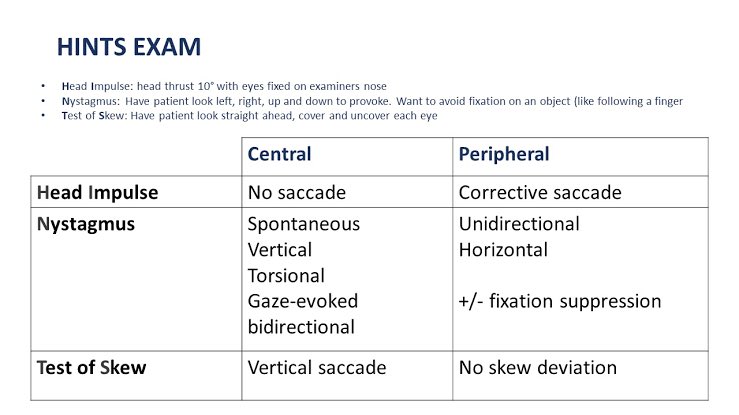
“ HINTS+” - A bedside tool to d/f central vs peripheral vertigo in acute vestibular syndrome.
Steps:
1️⃣ Head Impulse Test (vestibular function).
2️⃣ Nystagmus (pattern matters!).
3️⃣ Test of Skew (vertical misalignment).
➕Acute hearing loss = central cause.
#MedTwitter
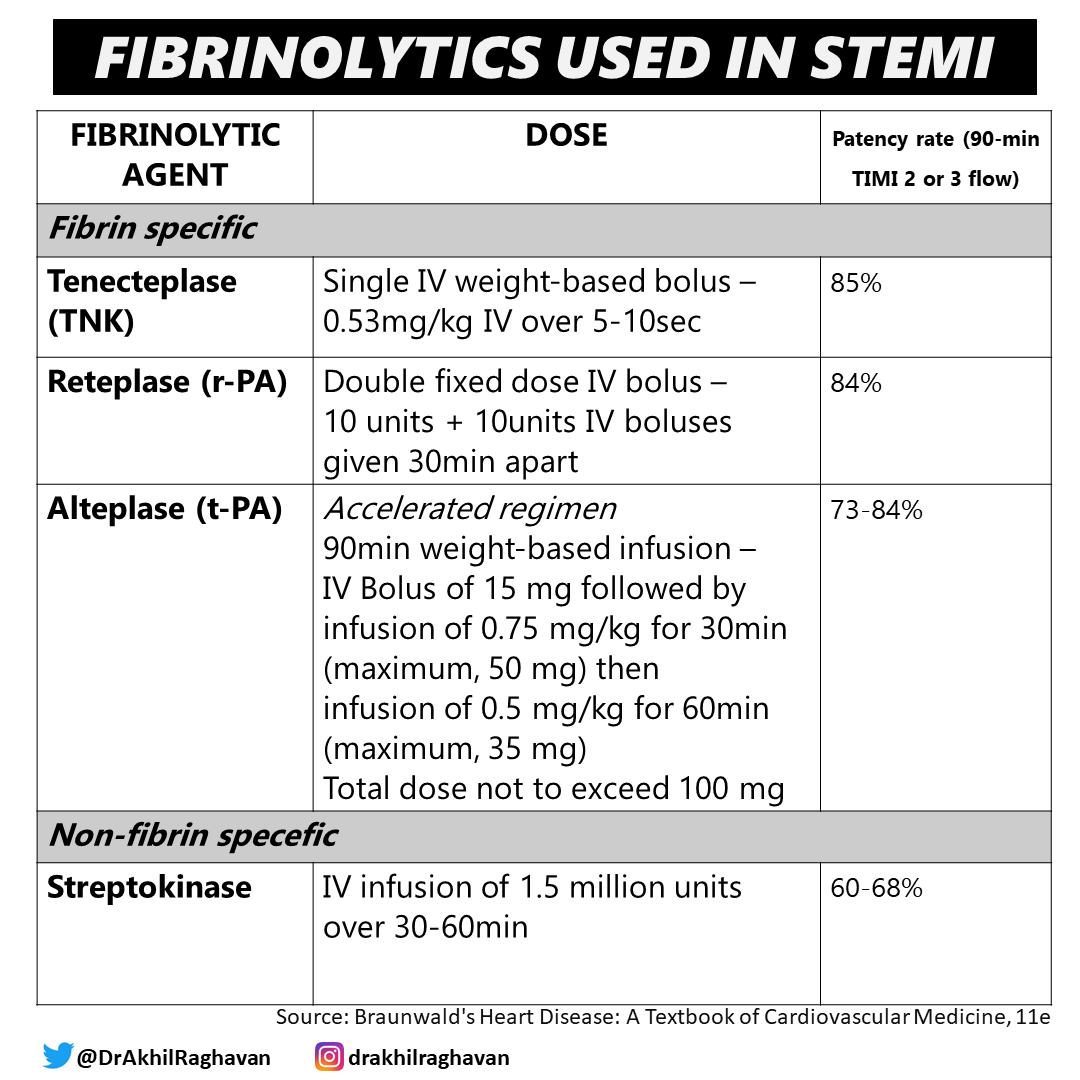
🌟 FIBRINOLYTICS APPROVED FOR THROMBOLYSIS IN STEMI-ACS
Indicators of successful reperfusion post fibrinolysis
🔸️Chest pain releived
🔸️≥50% ST-segment resolution
🔸️Haemodynamic stability
🔸️Typical reperfusion arrhythmia( AIVR)
ESC 2023 guidelines recommend shifting of all ACS patients to PCI capable centre as soon as possible post thrombolysis.
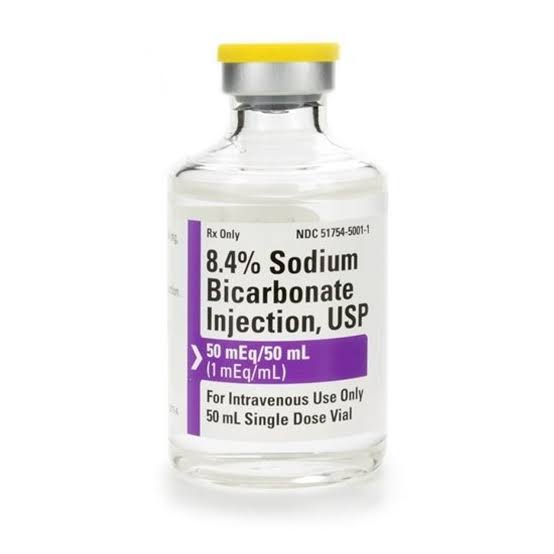
A patient of diabetic ketoacidosis presented in a stupourous state with hypotension. ABG ➡️ pH -7, HCO3 - 9 mEq/L, K-5mmol/L. Along with other measures a decision was made for alkali therapy with IV sodium bicarbonate for severe acidosis. How should the Rx be given?
#MedTwitter
For medical students, SRs, fellows. See apex beat. Hyperdynamic impulse, indicating volume overloaded left ventricle. Indicate that either MR or AR is severe. If eccentric jets lead to confusion for echocardiographer leading to erroneous assessment, for a clinician this is enough
📄 20 studies that Internal Medicine Residents should read in the first year 👇
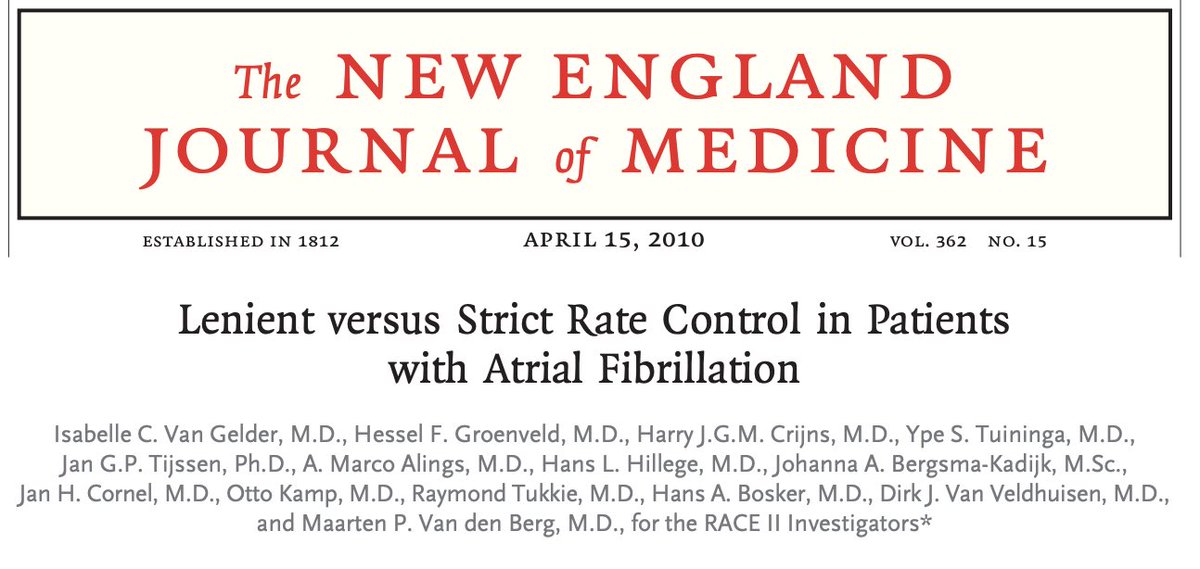
1/ 🏃♀️ RACE II trial: Lenient resting HR < 110 was non-inferior to a strict HR < 80 in patients with atrial fibrillation.
🧵
When I started med school, I subscribed to the New England Journal of Medicine. Apart from published trials, case records are the world's treasure for education & help navigate clinical courses & differentials better than any class.
A visual 🧵of selected cases #MedTwitter#MedX