#EVAS Emergency Vision Assurance System Cockpit Smoke Protection, pilots can see instruments, through windscreen & land in blinding smoke, fire, fumes emergency
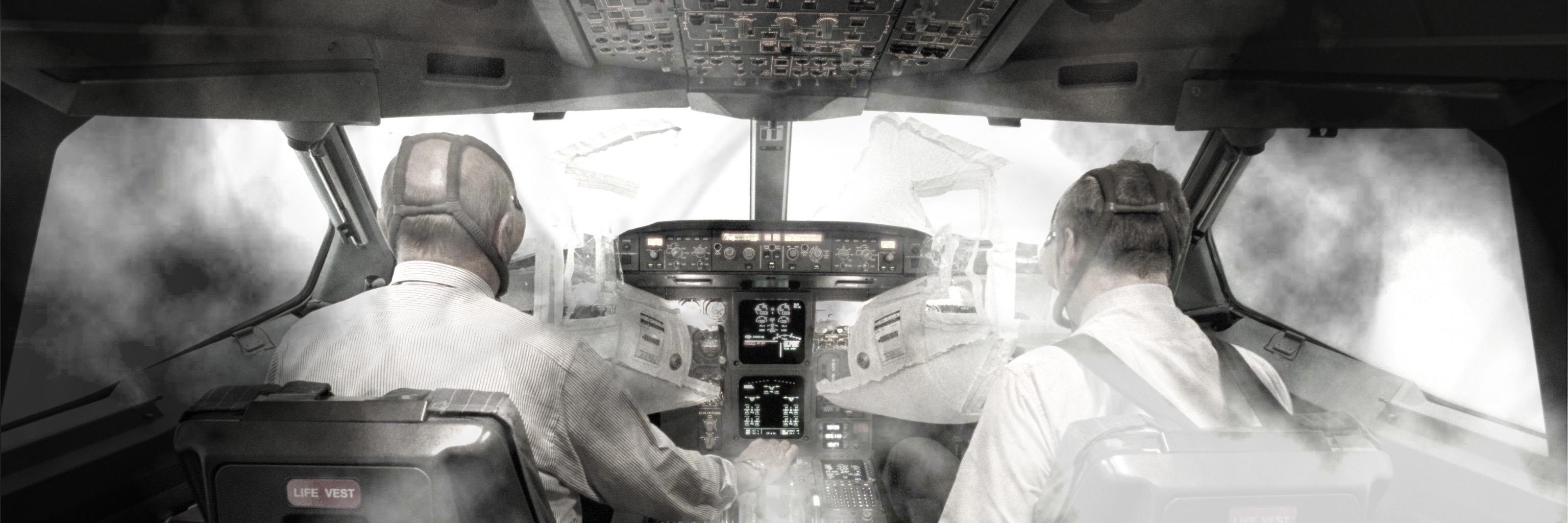
Commercial airline pilot nearly avoids catastrophe, yet 90% of commercial airliners are flying unprotected.
While Emergency Vision Assurance Systems are near-universal in cargo aircraft and commonplace in business jets, they remain far less common in commercial airliners, with many Airlines flying with no protection against blinding smoke.
The disparity in cockpit smoke protection is alarming. Cargo and business jets prioritize enhanced measures, yet commercial airliners lag behind—despite having a higher risk of smoke incidents. This safety concern needs urgent attention!
Share this story to raise awareness about this unaddressed threat to commercial airliners.
#Aviation #PilotSafety #CockpitSafety #AviationSafety #CommercialAviation #EVAS #VisionSafe #A320 #737MAX #737
Most cockpit risks aren’t underestimated because they’re unknown. They’re underestimated because they’re rare.
Operators plan for reliability, efficiency, and consistency. But cockpit smoke doesn’t behave like normal operations.
🧠 Workload increases instantly ⏱ Time compresses 👀 Visibility can degrade rapidly
What looks manageable on paper can escalate quickly in reality.
That’s why preparedness matters so much in aviation, especially in low-frequency, high-consequence events where maintaining visibility becomes critical.
Solutions like EVAS exist for those moments when conditions change faster than crews expect.
https://t.co/W6akNgxnyt
#AviationSafety #PilotSafety #VisionSafe #EVAS
Training prepares you for scenarios.
Real emergencies test how well that training holds up.
In training, situations are structured.
Clear start point.
Defined steps.
Expected outcomes.
But real-world emergencies are different.
They don’t arrive cleanly.
They don’t unfold predictably.
And they rarely give you time to think in sequence.
🧠 Multiple inputs hit at once
⏱ Time compresses
🎯 Priorities shift in real time
What was practiced in isolation becomes complex in combination.
That’s the gap.
Not a limitation of training, but a reminder that realistic training matters.
Because the closer training reflects real conditions,
the better prepared crews are when it counts.
That’s why immersive, scenario-based experiences like those delivered through VisionSafe demonstrations focus on recreating the conditions, not just the procedure.
And when visibility is affected, that realism becomes critical.
Because in the end, performance isn’t just built in training…
it’s proven in real conditions.
https://t.co/W6akNgxnyt
#AviationSafety #PilotSafety #VisionSafe #EVAS #EmergencyPreparedness #AircraftTechnology #FlightSafety #AviationInnovation #SafetySolutions #SmokeProtection
Training is most effective when it reflects real conditions.
Airventure Academy in Vienna is bringing EVAS®️ familiarization to pilots in the region with a dedicated simulator designed specifically for EVAS training.
This investment reflects AirVenture’s strong commitment to aviation safety, giving crews the opportunity to:
✈️ Understand EVAS
🛠 Practice deployment
🎯 Experience it in a realistic simulator environment
Great to see the AirVenture team supporting pilots and operators across Europe with innovative, safety-focused training.
#EVAS #VisionSafe #Airventure #CockpitSafety #PilotTraining #AviationSafety
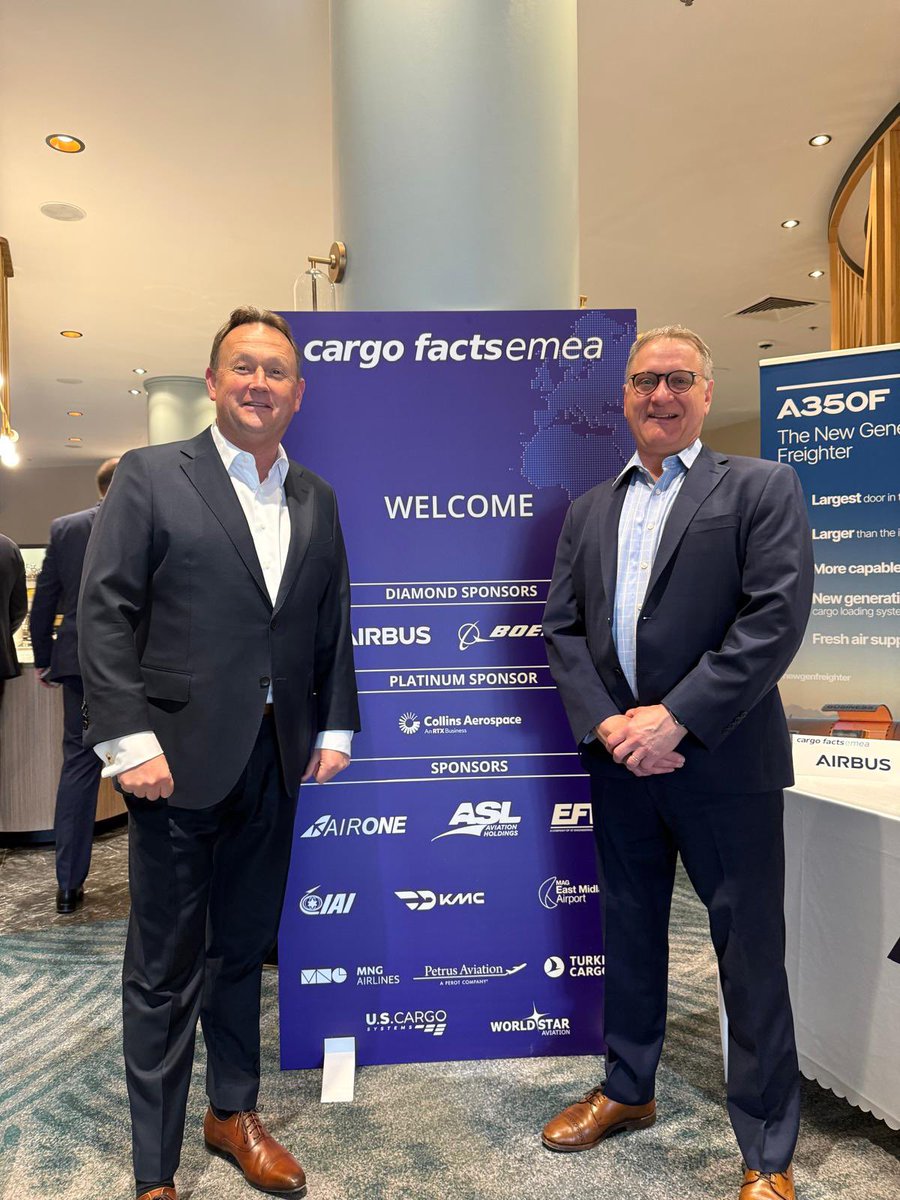
James Zanino & Patrick Schutterop are at Cargo Facts EMEA this week.
A great opportunity to connect with others across the air cargo industry and discuss aviation safety.
If you’re here, come say hi. We’d love to connect.
#AirCargo#Aviation#CargoFactsEMEA
After thousands of demonstrations, one thing becomes clear:
Smoke changes everything.
Not gradually.
Not predictably.
But instantly.
In controlled environments, crews often start confident.
Procedures are familiar.
Responses are structured.
But once visibility is reduced, the shift is immediate.
🧠 Workload increases
🎯 Focus narrows
👀 Visual references disappear
What seemed manageable seconds earlier becomes significantly more complex.
And the takeaway isn’t about knowledge.
It’s about conditions.
Because in aviation, even the most experienced crews rely on one constant:
The ability to see.
That’s what thousands of real-world demonstrations continue to reinforce not theory, but how quickly environments can change when visibility is lost.
https://t.co/W6akNgxnyt
#AviationSafety #PilotSafety #VisionSafe #EVAS #EmergencyPreparedness #AircraftTechnology #FlightSafety #AviationInnovation #SafetySolutions #SmokeProtection
In aviation, trust isn’t assumed.
It’s validated.
Every safety system introduced into the cockpit must meet rigorous standards, not just in one country, but across multiple regulatory environments.
Because safety in aviation is global.
🌍 Aircraft cross borders daily
🛫 Crews operate under international standards
🛡 Systems must perform consistently, everywhere
That’s why global approvals matter.
They’re not just certifications, they represent alignment between regulators, operators, and safety expectations worldwide.
When a system is trusted across different authorities, different fleets, and different operating conditions, it signals something important:
Consistency.
Reliability.
Confidence under pressure.
Solutions like EVAS are shaped by this global perspective, designed not just for one scenario, but for real-world operations across the industry.
Because in aviation, safety isn’t local.
It’s shared.
https://t.co/W6akNgxnyt
#AviationSafety #PilotSafety #VisionSafe #EVAS #EmergencyPreparedness #AircraftTechnology #FlightSafety #AviationInnovation #SafetySolutions #SmokeProtection
Rare events don’t mean impossible events.
And in aviation, that distinction matters.
Smoke in the cockpit isn’t something crews experience every day.
But when it does happen, the consequences escalate quickly.
That’s why aviation safety has always been built on a simple principle:
prepare for the event you hope never happens.
✈️ Engine failures are rare, yet every aircraft is designed to handle them.
🔥 Cabin fires are uncommon, yet fire suppression systems are standard.
Because in aviation, low probability doesn’t mean low risk.
The same thinking applies to cockpit smoke.
Solutions like EVAS exist for those rare moments when visibility disappears and crews need to keep flying the aircraft safely.
Preparedness isn’t about frequency.
It’s about being ready when it matters most.
https://t.co/W6akNgxnyt
#AviationSafety #PilotSafety #VisionSafe #EVAS #EmergencyPreparedness #AircraftTechnology #FlightSafety #AviationInnovation #SafetySolutions #SmokeProtection
Over 74% of domestic cargo aircraft are equipped with EVAS.
That's not a regulation. That's a choice the best operators made.
Here's why the number keeps growing:
✅ Certified on 122+ aircraft types
🌍 Approved in 48+ countries
⚡ Operates independently — no aircraft power required
⏱ Deploys in seconds
🔋 Runs on alkaline batteries, not lithium
Aviation has always been an industry that sets the standard for safety. EVAS is part of that standard.
💭 Do you think visibility should be treated as a critical system — the same way avionics and engines are?
https://t.co/W6akNgxnyt
#AviationSafety #PilotSafety #VisionSafe #EVAS #EmergencyPreparedness #AircraftTechnology #FlightSafety #AviationInnovation #SafetySolutions #SmokeProtection
Aviation training is incredibly advanced.
But some things are still hard to simulate.
Simulators can recreate failures, procedures, and system alerts with remarkable accuracy.
Pilots can practice responses again and again.
But certain elements of an emergency are harder to reproduce:
🧠 the sudden spike in workload
⏱ the pressure of rapidly changing conditions
🌫 the disorientation when visibility disappears
These are the moments where training meets reality.
That’s why preparing for smoke events isn’t just about knowing the procedure, it’s about ensuring crews can maintain clarity and situational awareness when conditions degrade.
💭 What aspect of real-world emergencies do you think is hardest to simulate in training?
https://t.co/W6akNgxnyt
#AviationSafety #PilotSafety #VisionSafe #EVAS #EmergencyPreparedness #AircraftTechnology #FlightSafety #AviationInnovation #SafetySolutions #SmokeProtection
Most safety systems are tested for failure.
Not for chaos.
In aviation, we train for defined events:
Engine failure.
Hydraulic failure.
Electrical failure.
Clear problem.
Clear checklist.
Clear sequence.
But smoke isn’t always structured.
It doesn’t announce the root cause.
It doesn’t isolate itself to one system.
It spreads, reduces visibility, and increases workload all at once.
That’s the difference between a controlled failure and an unstructured emergency.
Structured failures follow logic.
Chaos tests clarity.
That’s why visibility matters, because when the scenario becomes unstructured, pilots still need one constant: the ability to see and make decisions under pressure.
💭 Do you think modern safety philosophy focuses more on component failure… or operational chaos?
https://t.co/W6akNgxnyt
#AviationSafety #PilotSafety #VisionSafe #EVAS #EmergencyPreparedness #AircraftTechnology #FlightSafety #AviationInnovation #SafetySolutions #SmokeProtection
Great week at NBAA Miami! ✈️
We loved connecting with so many operators and industry partners and showcasing the EVAS Simulator. Thank you to everyone who stopped by — we appreciate the conversations and the continued commitment to aviation safety.
https://t.co/W6akNgxnyt
#AviationSafety #PilotSafety #VisionSafe #EVAS #EmergencyPreparedness #AircraftTechnology #FlightSafety #AviationInnovation #SafetySolutions #SmokeProtection
Modern aircraft are smarter than ever.
But they're also more electrically complex.
Today's cockpits rely on layers of avionics, displays, sensors, and connected systems working constantly behind the panels.
More capability.
More automation.
More electronics.
With that evolution comes a new reality:
⚡ higher system density
🔌 increased electrical load
📡 more equipment operating at once
The more connected everything becomes, the more each system relies on the one next to it.
That's why the best safety solutions don't add to that dependency, they operate independently of it.
EVAS requires no aircraft power to function. When visibility in the cockpit is compromised, it works precisely because it stands apart from the systems around it.
In an era where everything is connected, there's real value in a system that isn’t.
https://t.co/W6akNgxnyt
#AviationSafety #PilotSafety #VisionSafe #EVAS #EmergencyPreparedness #AircraftTechnology #FlightSafety #AviationInnovation #SafetySolutions #SmokeProtection
The most dangerous moment in a smoke event isn’t the start.
It’s what happens next.
At first, crews often still have control.
Procedures begin.
But smoke doesn’t stay static.
It thickens, spreads, and compresses time.
What felt manageable can escalate quickly as visibility drops and workload rises.
This is where pressure peaks, when crews must keep flying while conditions worsen.
That’s why maintaining visibility matters.
EVAS helps crews retain the clarity they need as situations evolve.
💭 When does a smoke event become most challenging - at onset, or as it evolves?
https://t.co/W6akNgxnyt
#AviationSafety #PilotSafety #VisionSafe #EVAS #EmergencyPreparedness #AircraftTechnology #FlightSafety #AviationInnovation #SafetySolutions #SmokeProtection
An aircraft can be controllable and still unsafe.
If the pilot can’t see.
In many smoke events, the aircraft is still flyable.
Engines respond.
Flight controls work.
Systems remain online.
But control alone isn’t enough.
Because flying an aircraft also requires:
seeing instruments clearly
confirming configuration
maintaining situational awareness
When visibility is compromised, control becomes fragile.
Decisions slow.
Workload increases.
Risk grows even if the aircraft itself hasn’t failed.
That’s the difference between controlling the aircraft
and truly being able to fly it.
💭 Do you think visibility is treated as a system… or as a given?
https://t.co/W6akNgxnyt
#AviationSafety #PilotSafety #VisionSafe #EVAS #EmergencyPreparedness #AircraftTechnology #FlightSafety #AviationInnovation #SafetySolutions #SmokeProtection
Smoke doesn’t just fill the cockpit.
It fills the pilot’s brain.
Even experienced crews can get overloaded fast because smoke triggers a human-factors storm:
🧠 Workload spikes
🎯 Tunnel vision kicks in
⏱ Time compresses
👀 Visibility drops
And when pilots can’t see clearly, decision-making becomes harder by the second.
💭 What impacts crews most in smoke events - workload, time pressure, or visibility loss?
https://t.co/W6akNgxnyt
#AviationSafety #PilotSafety #VisionSafe #EVAS #EmergencyPreparedness #AircraftTechnology #FlightSafety #AviationInnovation #SafetySolutions #SmokeProtection
In a smoke emergency, pilots don’t investigate first.
They fly first.
✈️ Aviate. Navigate. Communicate. Land.
Smoke compresses time and often destroys visibility fast.
And when pilots can’t see, decision-making degrades immediately.
Preparedness protects the first decision.
https://t.co/W6akNgxnyt
#AviationSafety #PilotSafety #VisionSafe #EVAS #EmergencyPreparedness #AircraftTechnology #FlightSafety #AviationInnovation #SafetySolutions #SmokeProtection
⚡ The #1 cause of cockpit smoke isn’t fire.
It’s electrical and avionics failures.
🔌 Wiring faults.
🧠 Overheated avionics.
⚠️ Systems working nonstop behind the panels.
Electrical and avionics issues are the leading cause of cockpit smoke events and they often develop without warning. No flames. No noise. Just smoke.
👀 When it happens, the challenge isn’t diagnosing the problem.
It’s maintaining visibility long enough to keep control of the aircraft.
🛠 That’s where EVAS (Emergency Vision Assurance System) matters, restoring a pilot’s ability to see instruments and outside references when smoke compromises the cockpit.
Because the most common cockpit smoke emergency isn’t dramatic.
It’s silent.
And it demands immediate visibility.
💭 Do you think electrical smoke risks are still underestimated in modern aircraft?
https://t.co/W6akNgxnyt
#AviationSafety #PilotSafety #VisionSafe #EVAS #EmergencyPreparedness #AircraftTechnology #FlightSafety #AviationInnovation #SafetySolutions #SmokeProtection
🔥 Rechargeable batteries can be more dangerous than most people think.
If you saw the recent NBC News segment on the risks of rechargeable batteries on planes you’re not alone. Everyday devices like power banks, phones, laptops, and tablets all contain lithium-ion batteries that can overheat, emit smoke, or even ignite during flight.
In a confined aircraft environment, a single overheating battery can quickly lead to smoke that jeopardizes cockpit visibility and forces crew action. That smoke is often a critical threat.
A few key realities about lithium batteries onboard aircraft:
• They can enter thermal runaway (a rapid, uncontrolled heating event that releases intense smoke and heat).
• Fires from these cells are difficult to extinguish and can spread quickly.
• Global regulators and airlines are tightening rules, including where these devices can be carried and used.
It’s a real-world reminder of why understanding smoke dynamics and cockpit visibility is essential and why solutions like EVAS exist to help crews maintain sight when every second matters.
🔗 https://t.co/Wssq6zeaaP
#AviationSafety #PilotSafety #VisionSafe #EVAS #EmergencyPreparedness #AircraftTechnology #FlightSafety #AviationInnovation #SafetySolutions #SmokeProtection
✨ 2025: A Year in Review ✨
As the year comes to a close, we’re taking a moment to reflect on what made 2025 meaningful for VisionSafe.
This year was defined by progress, from expanding EVAS certifications and approvals, to connecting with operators, pilots, and partners across the globe. Through demonstrations, events, and continued collaboration with the aviation community, one thing remained constant: a shared commitment to safety.
We’re grateful for the trust placed in us by operators, manufacturers, regulators, and flight crews who prioritize preparedness when it matters most.
Thank you to our team, partners, and the broader aviation community for an impactful year. We’re looking ahead to 2026 with focus, momentum, and continued dedication to protecting visibility in the cockpit.
✈️ Here’s to another year of advancing aviation safety together.
🔗https://t.co/iHbg9JgXiS
#AviationSafety #PilotSafety #VisionSafe #EVAS #EmergencyPreparedness #AircraftTechnology #FlightSafety #AviationInnovation #SafetySolutions #SmokeProtection
✨ Happy Holidays ✨
As the year comes to a close, we’d like to thank the pilots, crews, operators, partners, and safety professionals who make aviation safer every day.
Your dedication, professionalism, and commitment to safety inspire everything we do.
From all of us at VisionSafe, we wish you and your families a joyful holiday season and a safe, successful year ahead.
🎄✈️ Happy Holidays
🔗https://t.co/iHbg9JgXiS
#AviationSafety #PilotSafety #VisionSafe #EVAS #EmergencyPreparedness #AircraftTechnology #FlightSafety #AviationInnovation #SafetySolutions #SmokeProtection