On May 18th, 2023, while leading a Chinese climber toward the summit of Mount Everest, Gelje Sherpa discovered a stranded Malaysian climber on the verge of death.
To save the climber’s life, Gelje persuaded his Chinese client to end his summit and descend to the Everest Base Camp, allowing him to focus on saving the stranded Malaysian climber’s life.
He wrapped him in a sleeping mattress, gave him oxygen, put him on his back, and hiked him 6 hours down the mountain to saf
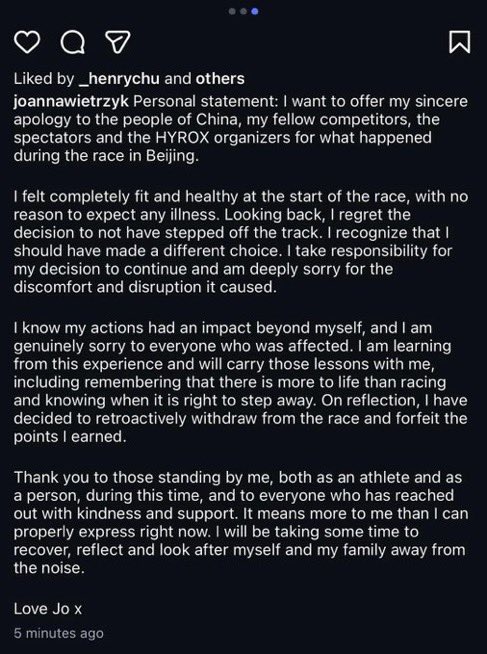
Joanna Wietrzyk apologized after soiling herself during a race in Beijing.
Puma reportedly cancelled her clothing sponsorship after the incident.
But honestly? It’s completely okay.
Athletes push their bodies to the absolute limit. Sometimes the body does things you simply cannot control.
She showed up.
She competed.
She gave everything she had.
One embarrassing moment doesn’t erase an athlete’s dedication, discipline or achievements.
Bodies aren’t machines. Even elite athletes have human moments.
There is nothing shameful about that.
The Girl Who Lived a Thousand Years.
In May 1944, thirteen-year-old Elli Friedmann arrived at Auschwitz with her family. She still wore the long blond braids her mother had braided for her that morning. On the selection ramp, those braids helped create a small illusion, the camp doctor thought she was older and sent her to forced labor instead of the gas chambers.
But childhood ended the moment she stepped into the camp.
She was shaved, tattooed, and reduced to a number. Hunger became constant. Fear became normal. She and her mother worked brutal shifts, moving earth with their bare hands while guards watched. Every day was a quiet battle just to stay alive.
When the camp was liberated in 1945, Elli was only fourteen. Yet she later wrote one of the most haunting lines in Holocaust literature: “I am fourteen, and I have lived a thousand years.”
After the war she moved to America, became a professor, and wrote her memoir so the world would never forget what she and millions of others endured.
Her story is not just about surviving Auschwitz. It’s about a young girl who refused to let the darkness take everything from her, including her voice.
So inspiring to see how love and care helped her thrive after such a rough start 🤍
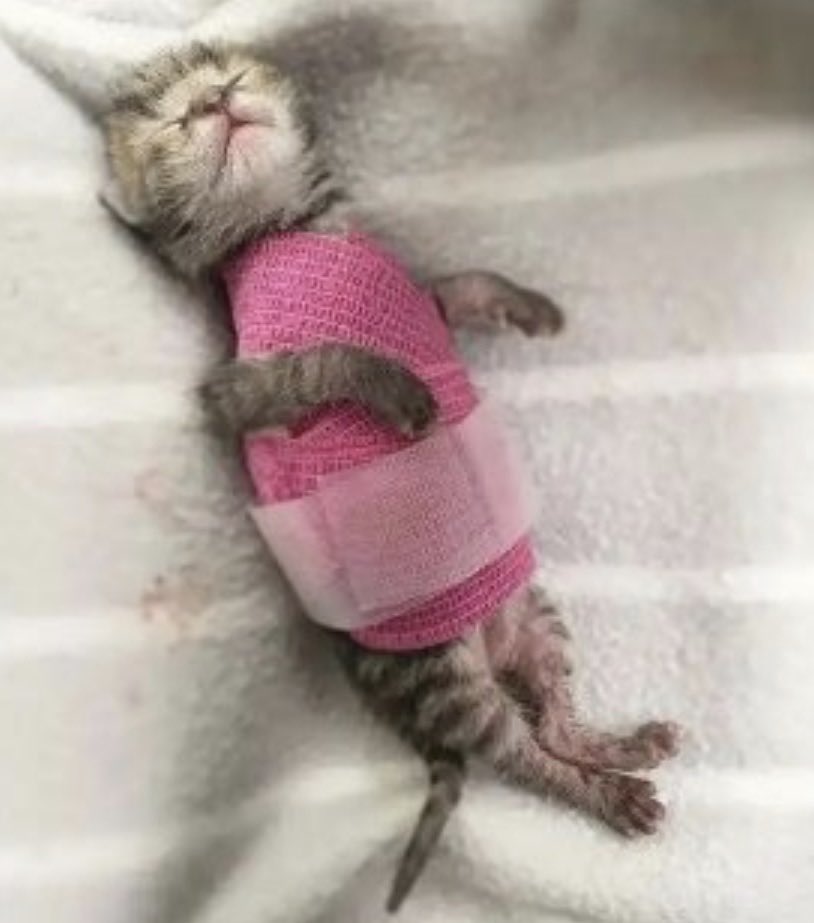
A Tiny Kitten’s Scary Morning Turns Into A Story Of Hope
Early one morning, I went to check on Mama Flandry and her tiny kittens, expecting everything to be normal. Instead, I found one little girl in very bad condition. She was struggling, and the sight was heartbreaking.
It seems her umbilical cord became tangled in the blanket fibers and was pulled off. The scene was upsetting, but there was no time to panic. With the help of an amazing and supportive community, we quickly cleaned her, wrapped her gently, and protected her from further harm. She was scheduled to see the doctor right away.
This moment was a strong reminder that even with experience and preparation, unexpected things can happen. As foster caregivers, it is our duty to stand up for these fragile lives and do everything possible to protect them. This tiny kitten needed all the love and strength she could get.
The little one, later named Princess Olivia, showed incredible courage. Her doctor was pleased with her progress and even smiled at the tiny jumpsuit that helped protect her while healing. Her wound began to scab nicely, which was a hopeful sign
You give love, it comes back to you .
They looked at me and said, 'You're so small... how will you carry a child?' I smiled and said, 'With love!’
In the late '80s, I adopted Marcus. A single man with achondroplasia wasn't who people expected to see leaving an adoption office with a baby. I heard every doubt, every warning-but I signed the papers anyway. I wanted to be a dad, and that little boy needed someone who wouldn't walk away.
I carried him everywhere-on my hip, on my lap, in a carrier l rebuilt three times just to fit my body. He grew into a strong, active kid. Running, sports, lifting-if it involved movement, he loved it.
As the years passed, my legs began to ache. Stairs got harder.
Long walks, grocery runs-everything slowed me down. Marcus noticed before I ever said a word.
Now he just bends down and says, 'Come on, Dad. I've got you!' And he does-steady, confident, proud.
I raised him with love.
Now he carries that same love right back to me
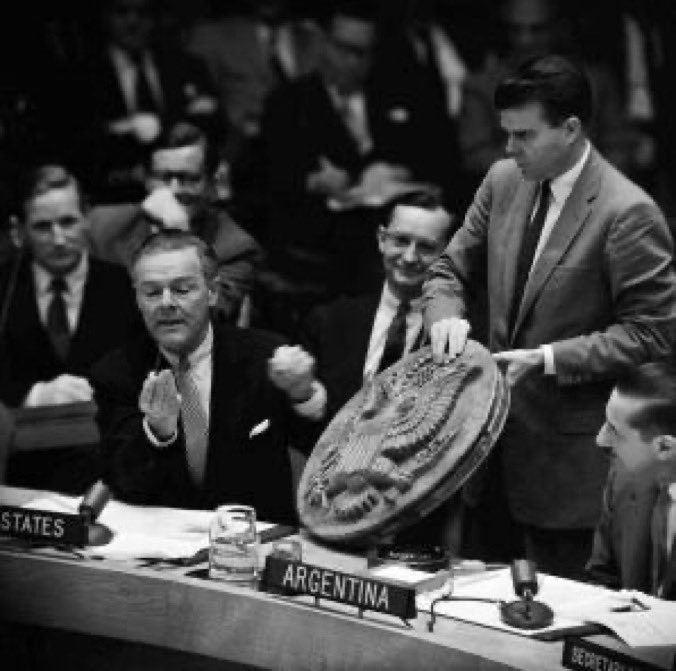
In 1945, the Soviet Union handed the U.S. Ambassador a gift so perfect it hung in his study for seven years before anyone realized it was a masterpiece of psychological warfare.
It was a hand-carved wooden replica of the Great Seal of the United States, presented by Soviet school children as a "gesture of friendship."
The carving was exquisite, solid wood with no wires, no batteries, and no visible electronics. American security teams swept it with every piece of tech they had and found nothing but timber and varnish.
For nearly a decade, the most sensitive conversations in the American Embassy in Moscow—strategy sessions, classified cables, and Cold War secrets—were whispered directly into the beak of that wooden eagle.
The device inside, later dubbed "The Thing," was the brainchild of Leon Theremin, the same genius who invented the eerie electronic instrument used in sci-fi films.
It didn't need power because it was "illuminated" from the outside. A Soviet van parked across the street would aim a high-frequency radio beam at the seal. Inside the carving, a thin membrane and a tiny copper wire acted as a passive microphone.
When someone spoke in the room, the membrane vibrated, modulating the radio beam reflecting back to the Soviets. It was the world's first passive bug—a ghost in the machine that didn't exist until the enemy turned it on.
The Americans only discovered it by accident when a British radio operator overheard the Ambassador's voice on an open frequency.
When they finally cracked the seal open, they found a device so advanced it looked like it belonged in the 21st century.
The CIA was so humiliated they kept the discovery a secret for years, terrified that the Soviets had found a way to make the very air in a room betray its occupants.
We spent the Cold War looking for wires, while the enemy was listening to the vibrations of the wood itself.
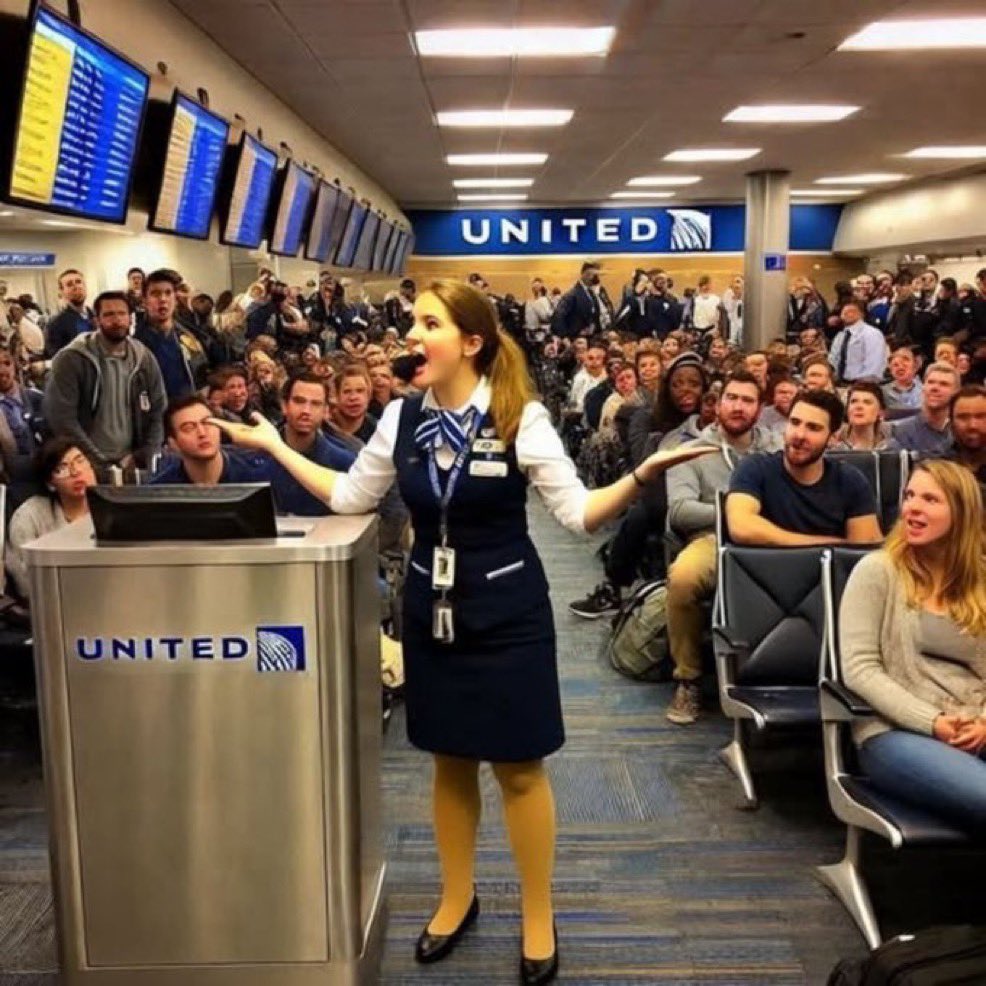
It happened at a Chicago airport, and it’s absolutely hilarious❤️🤪
I wish I had the nerve of this woman. An award should go to the Midwest Airlines gate agent in Chicago for being witty and sharp, while still making her point when confronted by a passenger who probably deserved to ride in the baggage compartment. For anyone who has ever had to deal with a difficult customer, this one’s for you.
A busy Midwest Airlines flight was canceled, and a single agent was left rebooking a long line of frustrated travelers.— feeling blessed.
Out of nowhere, an irate passenger shoved his way to the desk, slapped his ticket down, and barked, “I NEED to be on this flight, and it HAS to be FIRST CLASS!”
The agent remained calm and replied, “I’m sorry, sir. I’ll be happy to assist you, but I need to help these folks first. Once I’ve taken care of them, I’m sure we’ll work something out.”
Not satisfied with her response, the man raised his voice so everyone in the terminal could hear. “DO YOU EVEN KNOW WHO I AM?”
Without missing a beat, the agent picked up the microphone for the public address system. “May I have your attention, please?” she announced, her voice echoing through the terminal. “We have a passenger at Gate 22 who DOES NOT KNOW WHO HE IS. If anyone can assist him in identifying himself, please come to Gate 22 immediately.”
The line of passengers erupted in laughter. The man, now red-faced, leaned in and hissed, “F*** you!”
Still unfazed, the agent smiled sweetly and said, “I’m sorry, sir, but you’ll need to get in line for that as well.”
Sometimes the pet you never planned for is the one that chooses you forever
Parking his work truck in our driveway after a long ride on the Los Angeles freeways, my husband heard a cat crying from somewhere inside his truck. We opened the hood and got a glimpse of her but couldn't grab her. She was frightened and there was no way she was going to come to us. I walked the two blocks over to our local fire station and rang the bell and asked for help. The men had time so they drove over in their enormous fire engine. They had obviously dealt with this problem before because they brought some tools. By this time the kitty was on top of the gas tank, under the truck bed. They got her out and she ran like nobody's business. In case she was still around, we left some cat food outside. Sure enough, she was eating here. I bought a squirrel trap at the hardware store. (She didn't look big enough to spring a cat trap). So my husband found her in the trap at 4 in the morning the next day. She hissed at him, but we kept her inside. We already had a litter box.
It took a little time for her to calm down. She had been through a lot! But now we are owned by Fortune Cookie. She was almost three months old when she rode home to us. She had not been injured or burned by her long ride. She occupies hours on end every day with kitten mischief, and when she is done she is sweet and gentle with us.
The Girl Who Defeated the World's Deadliest Virus.
In 2004, a fifteen-year-old girl named Jeanna Giese picked up a bat she found at church and sustained a tiny bite on her finger. Weeks later, she developed severe neurological symptoms and was admitted to a hospital in Wisconsin.
The diagnosis was rabies, an ancient disease with a terrifying and historically guaranteed mortality rate once clinical symptoms appear. By the time her infection was caught, it was far too late for the standard post-exposure vaccine to save her life.
Refusing to accept a death sentence, her doctor devised a radical, entirely theoretical treatment. He placed Jeanna into a deep medically induced coma, suppressing her brain activity to protect it from the virus while administering a potent cocktail of antiviral drugs.
This desperate gamble was based on a radical hypothesis that the virus does not actually destroy the brain, but instead causes a temporary, fatal dysfunction that the immune system could overcome if given enough time to mount a defense.
After thirty-one grueling days in the intensive care unit, Jeanna miraculously woke up, entirely cleared of the disease. She became the first person in recorded medical history to survive rabies without receiving the vaccine prior to the onset of symptoms, challenging centuries of scientific dogma surrounding the virus.
Turns out, sometimes the best way to fight a relentless killer is just to sleep through the attack.
The Pen That Saved Apollo 11 From Being A Permanent Moon Tomb.
When Neil Armstrong and Buzz Aldrin returned to the lunar module after their historic moonwalk, they realized they had a catastrophic problem. While maneuvering inside the cramped cabin in his bulky spacesuit, Aldrin's life-support backpack had accidentally smashed into the wall.
The impact completely snapped off the vital circuit breaker switch needed to arm the ascent engine. Without that specific switch, the engine could not ignite, meaning the two astronauts would be permanently stranded on the lunar surface with no hope of a rescue mission.
With only hours of oxygen remaining and Houston control scrambling for a workaround, the situation seemed entirely hopeless. The engineers on Earth frantically tried to find a way to bypass the electrical system, but time was rapidly running out.
Exhausted and facing the very real possibility of dying 240,000 miles from home, Aldrin decided to take matters into his own hands. He began looking around the cabin for anything that could safely fit into the broken circuit breaker hole without conducting electricity and sparking a fatal fire in the oxygen-rich environment.
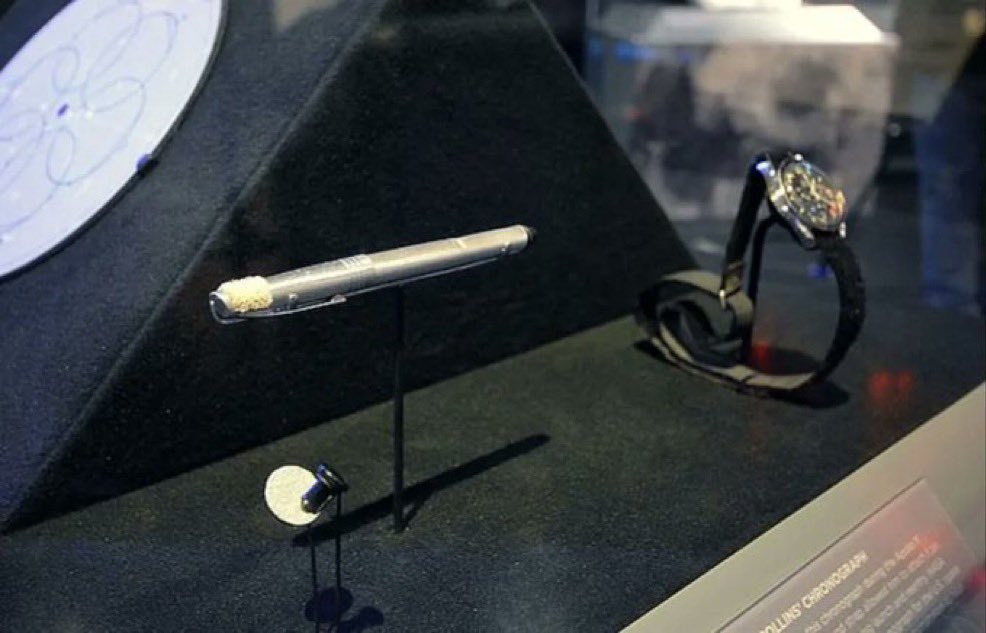
Aldrin reached into his shoulder pocket and pulled out a standard-issue felt-tip marker. Because the pen's casing was made of plastic, it would not short out the electrical contacts. He carefully jammed the end of the marker into the broken switch hole and pushed.
The circuit closed, the engine armed, and the lunar module successfully blasted off the moon's surface to reunite with Michael Collins in orbit. It turns out the greatest technological achievement in human history was ultimately saved by a piece of office stationery.
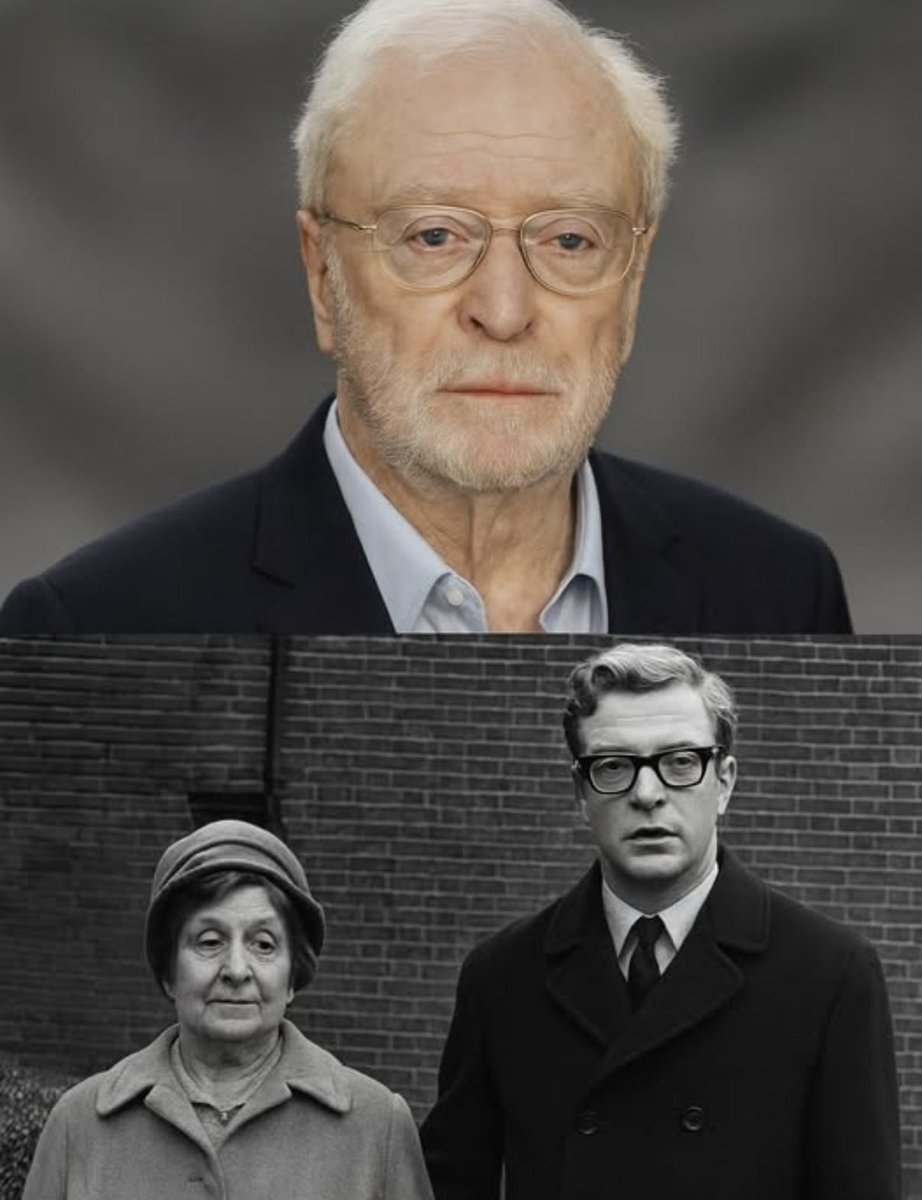
Every Sunday, Michael Caine’s mother would quietly slip away from home, saying she was visiting a relative
In truth, she was going to see her first son, David Burchell—Michael’s half-brother, born before her marriage.
David had suffered a childhood accident that left him with lasting injuries, and later developed epilepsy. He was placed in an institution, where he lived most of his life, far from his family and unknown to his younger brother. Yet their mother never let him feel forgotten. She brought him photos of Michael as he rose to fame, keeping alive a sense of pride and connection for the brother he never met.
When she passed away in 1989, the secret finally came to light. Michael, then sixty, met David for the first time. Sitting across from him, he saw the family resemblance and a lifetime of longing in his brother’s eyes. From that moment, Michael embraced him wholeheartedly, visiting often and giving the affection that had been missing for so many years.
Sadly, fate allowed them only a short time together. In 1991, David passed away. Michael made sure he was laid to rest beside their mother—finally together after decades of separation.
Michael carried no bitterness toward his mother, only compassion for the impossible choices she faced in a difficult time. The story is a moving reminder that behind even the brightest lives, there are hidden sorrows—and that love, once found, has the power to heal even years of silence
7. 8. “Apocalypse Now” (1979) - Real Breakdown
Martin Sheen, grappling with alcoholism, was genuinely inebriated during the filming of this scene. The scene unfolds in a Saigon hotel room, where a nearly nude and drunk Captain Willard, portrayed by Sheen, is seen wrestling with his inner demons. The intensity peaks when Willard punches a mirror, severely injuring his hand and smearing blood all over his face. This moment was not scripted; Sheen’s injury was real, and he insisted on continuing the scene despite the director’s attempts to halt filming.
Sheen’s insistence on capturing this raw moment on film was driven by a desperate need to confront his personal demons. He had experienced similar breakdowns in bars and at home, and saw this scene as an opportunity to exorcise these demons.
The filming of this scene, therefore, served as a cathartic experience for Sheen, allowing him to publicly grapple with issues he had been privately wrestling with for a long time.
The director, Francis Ford Coppola, initially tried to stop the scene due to Sheen’s injury. However, Sheen pleaded with Coppola to keep the cameras rolling. He saw this scene as a chance to capture an authentic moment of struggle and insisted on filming despite the physical pain and emotional turmoil.
Coppola eventually agreed, and the result was a powerful scene that added depth to Captain Willard’s character and set the tone for the rest of the film.
Greatest Unscripted Moments in Cinema History
A THREAD 🧵🧵👇👇
1. The Godfather (1972) - The Cat in Don Vito’s Lap: An Unexpected Icon
In the opening scene of "The Godfather" (1972), Marlon Brando's character, Don Vito Corleone, is seen stroking a cat. This was not scripted but happened when a stray cat wandered onto the set.
Director Francis Ford Coppola placed the cat in Brando's lap, creating an iconic cinematic moment. The cat's loud purring muffled some of Brando's dialogue, requiring it to be looped.
The cat added a layer of calm menace to Don Vito's character, symbolizing the hidden claws beneath his warm facade.
This unexpected detail has become an enduring symbol of the film, contributing to its rich symbolism and character development.
6. Good Will Hunting” (1997) - Farting Wife Story
The scene features a monologue by Robin Williams, who played the character of Sean Maguire, a therapist. In this scene, he shares a humorous anecdote about his late wife’s habit of farting in her sleep. This dialogue was not part of the original script but was improvised on the spot by Williams.
Matt Damon, who played the titular character, Will Hunting, was caught off guard by Williams’ improvisation. His laughter in response to the story was genuine.
The scene was so funny that even the person filming couldn’t help but laugh. This resulted in the camera shaking, which can be noticed in the final cut of the film.