🏛️Prabha Energy Ltd
Prabha Energy Limited (PEL) explores and produces oil and gas onshore in India. It belongs to the Savla family's "Deep" group (Deep Industries). PEL got listed through an amalgamation scheme sanctioned by the NCLT.
The main business is Coal Bed Methane (CBM). CBM is natural gas trapped inside coal seams. It is released by drilling wells, hydro-fracturing the coal and pumping out the water that holds the gas in place.
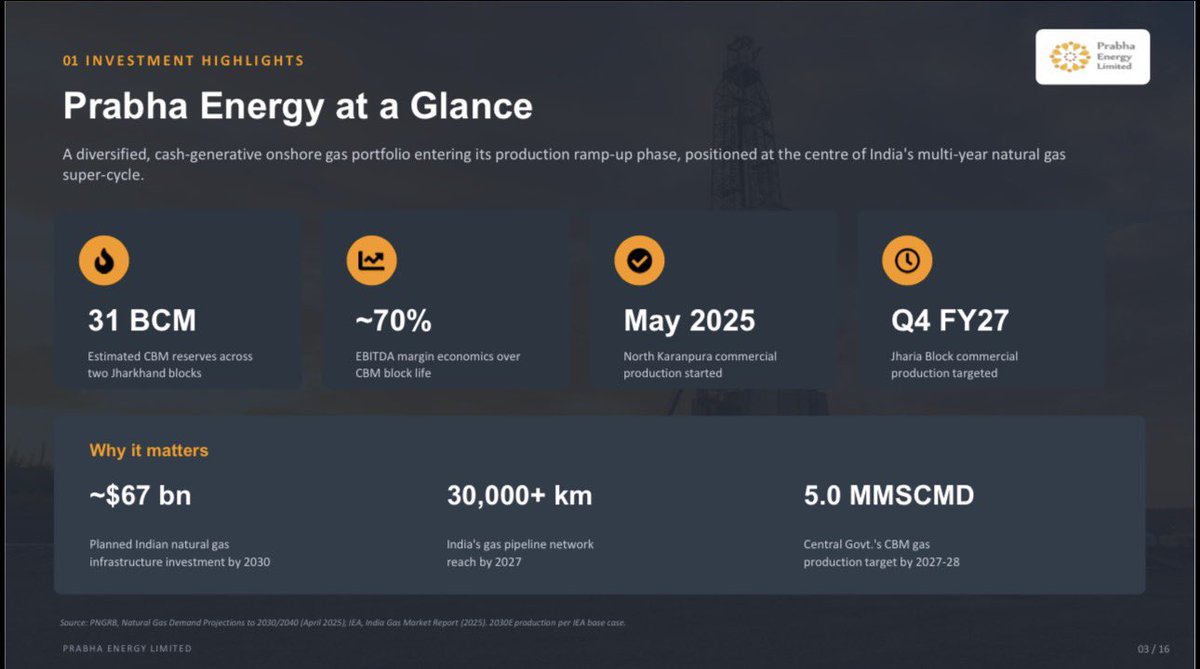
India imports about half the gas it uses. Gas demand is expected to grow from about 188 MMSCMD today to 297–365 MMSCMD by 2030.
The government wants national CBM output to reach 5 MMSCMD by FY28. CBM can be sold at free, market-linked prices.
PEL aims to be among the largest private CBM producers by FY28, alongside the government's target of 5 MMSCMD.
Today the business is very small next to its asset base. FY26 consolidated revenue was ₹6.1 Cr and PAT was ₹0.61 Cr. The balance sheet, however, carries about ₹620 Cr of oil and gas intangibles and capital work-in-progress. Buying PEL is a bet that these assets will start producing at scale.
🔖Growth Triggers
⏺️IOCL Pipeline at North Karanpura
This is the most important near-term trigger. The block has 68 wells drilled but sells gas against a contract of only 20,000 SCMD, far below what those wells could produce. PEL's FY26 standalone revenue of ₹4.5 Cr matches its 25% share of roughly that volume.
The IOCL pipeline and two gas gathering stations (GGS-1 and GGS-2) are still under construction. Once they are commissioned, output from the block can rise several times over.
⏺️Reserve Upgrade and Phase II at North Karanpura
The thicker coal seam supports higher output per well. It also makes the case for drilling 50 more wells in Phase II.
North Karanpura is in commercial production and "on the verge of scaling" within budgeted capex, with an option to drill 50 more wells in Phase II.
⏺️First Gas at Jharia in Q4 FY27
Jharia matters more to PEL than North Karanpura, because PEL owns 90% of Jharia and only 25% of North Karanpura. First gas, followed by the full 55-well programme, would change the company's economics.
Jharia is targeted to start commercial production in Q4 FY27, with 55 wells drilled in phases. CBM economics should deliver an EBITDA margin of about 70% over the life of the blocks.
India has only a few commercial CBM blocks. PEL's partners in its two main blocks are ONGC, IOC and BCCL. Partners of this standing make approvals, land access and overlap with coal mining easier to manage, and these are the real bottlenecks in Jharkhand.
⏺️Capex
PEL has been investing heavily for years. Capital work-in-progress grew from 210 Cr in FY24 to 253 Cr in FY25 and 299 Cr in FY26. Additions were 42.8 Cr in FY25 and 45.7 Cr in FY26.
On top of this, the balance sheet holds about 319 Cr of intangible oil and gas assets. Cash flow from operations has been negative, and free cash flow was about –₹69 Cr in FY24 and –₹51 Cr in FY25.
⏺️Monitor
IOCL pipeline commissioning at North Karanpura - It should show up as a clear jump in quarterly revenue from the current 1.7 Cr level.
New gas sales contracts - Any contract above the existing 20,000 SCMD would confirm the volume ramp-up.
Jharia first gas in Q4 FY27, and the early output per well.
QIP pricing and dilution, and whether the loans from Deep Industries are repaid.
Timing of capitalisation of the old capital work-in-progress, since depletion charges will then start reducing reported profit.
#prabhaenergy
TRAIL
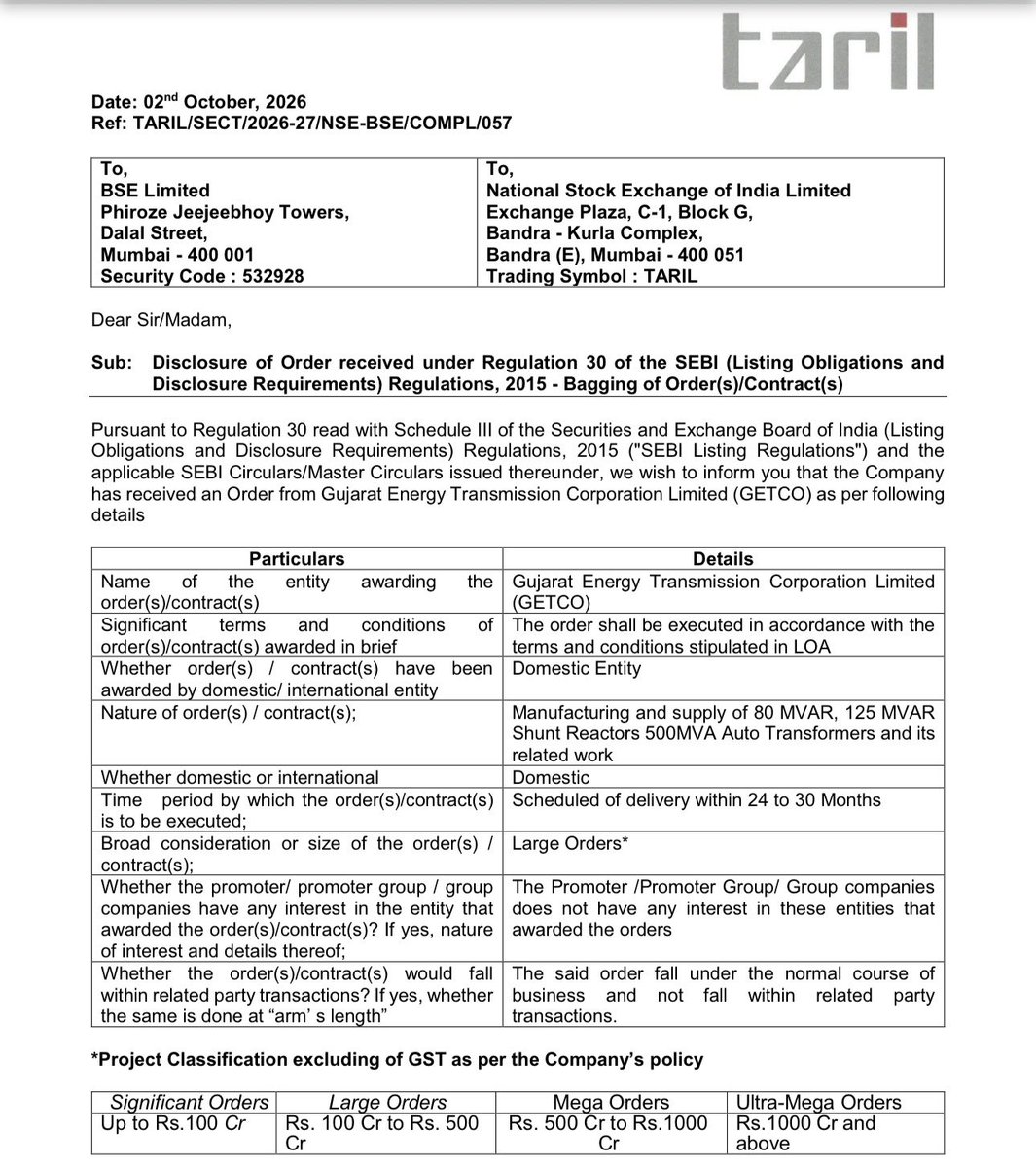
Company secured 2 orders in 1 day
1️⃣
Company secured large order (100 to 500 cr) from Gujarat Energy Transmission Corporation Limited for the manufacturing and supply of reactors and transformers, with execution expected within 24–30 months.
2️⃣
Comapny bagged large orders (not mentioned value) from Damodar Valley Corporation for manufacturing and supply of 500 MVA and 200 MVA Auto Transformers. Delivery is expected within 15 to 28 months.
#TARIL
🏛️SEDEMAC
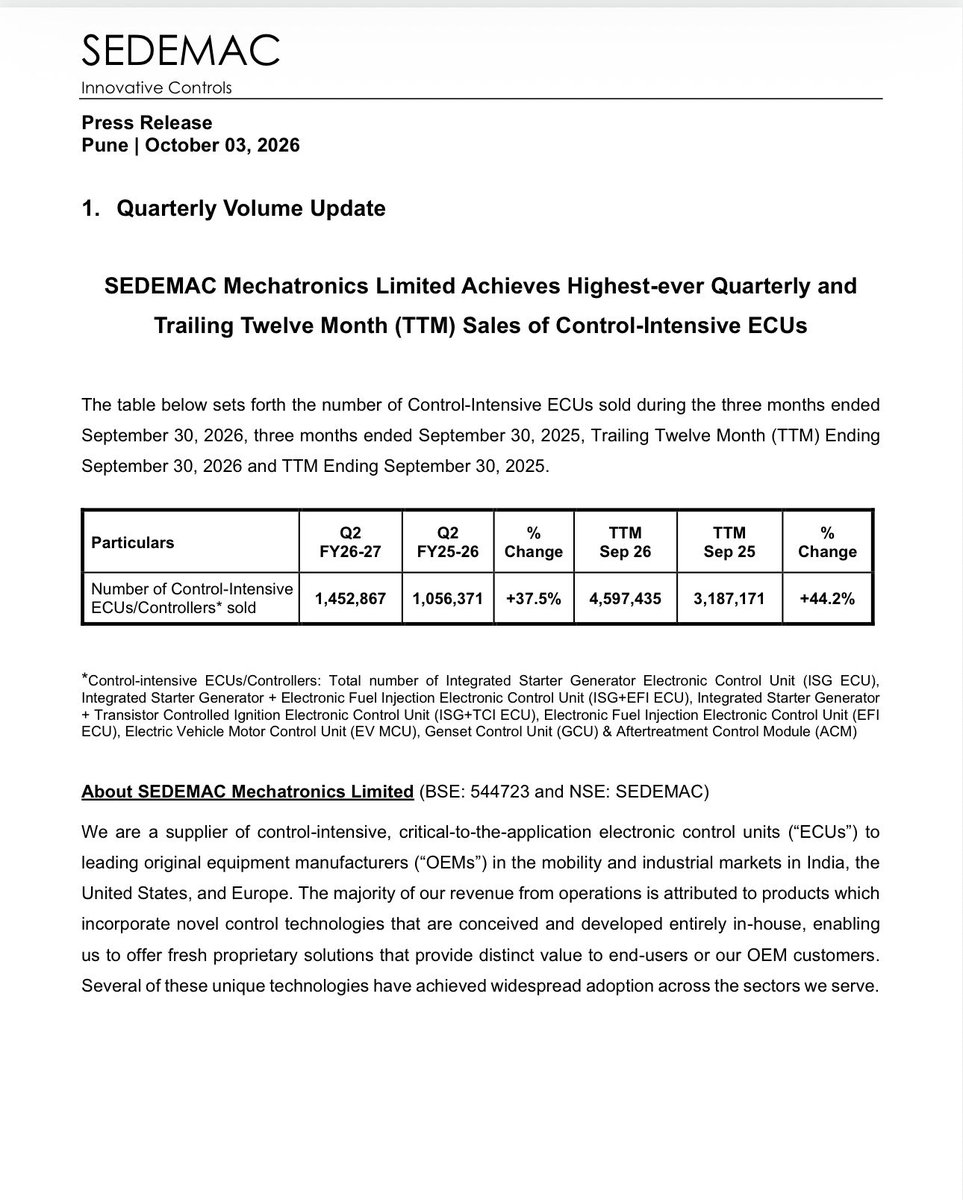
Company posted its highest-ever quarterly and trailing-twelve-month (TTM) ECU volumes in Q2 FY27.
⏺️Control-intensive ECU sales
Q2 FY27 - 1,452,867 units, up 37.5% YoY from 1,056,371. That's about 3.96 lakh extra units.
TTM Sep 2026 - 4,597,435 units, up 44.2% YoY from 3,187,171. That's about 14.1 lakh extra units.
Annualised run-rate - Q2 × 4 gives roughly 5.8M units, well above the 4.6M TTM. Momentum is still building.
Quarterly YoY growth (37.5%) is running below TTM growth (44.2%). Growth is still strong but easing slightly on a larger base.
⏺️ISG+EFI ECU milestone
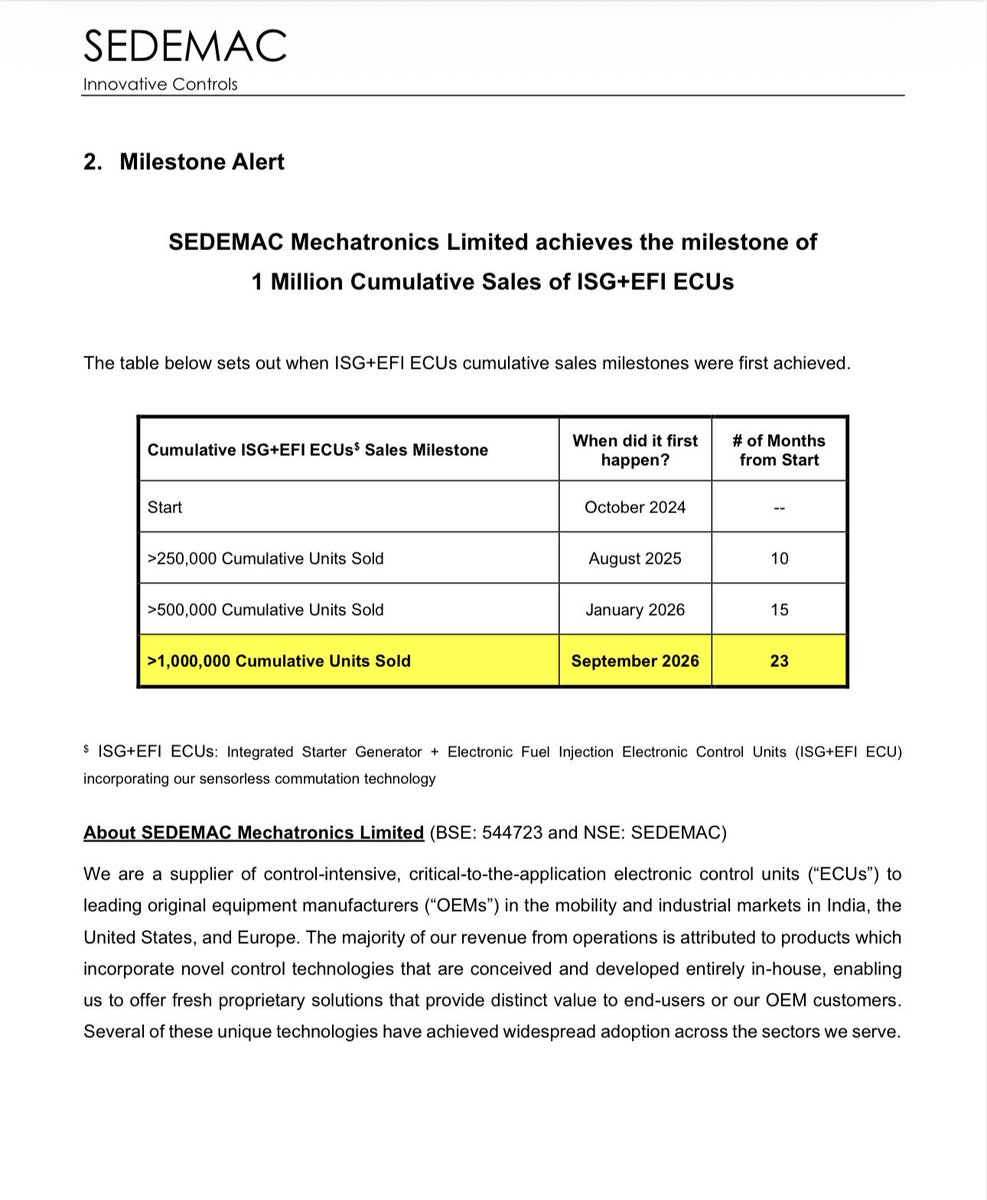
1 million cumulative units in 23 months
Launched in Oct 2024. Reached 250k in 10 months, 500k in 15 months, and 1M in 23 months (Sep 2026).
The monthly pace has roughly 2.5x'd. It went from about 25k/month for the first 250k, to about 50k/month for the next 250k, to about 62k/month for the last 500k.
This is the higher-value combined ISG+EFI product, so the ramp likely helps the product mix and per-unit value.
The ISG+EFI acceleration points to OEM adoption broadening.
⌛️Bottom line
Record volumes, about 40%+ growth, and a fast-ramping premium ISG+EFI product.
The volume story is intact. The Q2 results will show whether it's turning into revenue and margin growth.
#sedemac
Who actually benefits from BESS⁉️ - As an investor's view
Don’t jump on every stock taking the tag of BESS 🏷️
Let’s understand who actually gets benefits in BESS value chain
⏺️ Battery cells
Biggest share of spending, but the weakest pricing power 👎
Cells make up about 25–45% of total project cost, but LFP (Lithium Iron Phosphate) cells have become a commodity.
Chinese makers such as CATL, BYD, EVE Energy and Hithium dominate, and prices have collapsed. Volumes are huge, but margins are thin.
In India, the PLI scheme for ACC (Advanced Chemistry Cell) players such as Reliance, Amara Raja, Exide and Ola is still ramping up.
But these companies will stay import-dependent in the near term.
⏺️ System integrators and developers
Integrators such as Waaree, Tata Power, JSW Energy, ACME Solar and other developers who win VGF (Viability Gap Funding) tenders and tolling tenders earn the project revenue.
A tolling tender is a fixed rental paid for using the storage capacity through
Arbitrage - charging when power is cheap and selling when it is expensive
Peak shaving - cutting demand at peak hours
Grid services - keeping grid frequency and voltage stable
They benefit as cell prices fall, because cheaper cells raise project IRR (Internal Rate of Return).
The risk is margin pressure for pure integrators ⚠️
In China, competition has pushed container prices down to just 25% above cell cost, against roughly 100% in normal conditions
⏺️ EMS (Energy Management System) / controls
It commands Highest margin, but the smallest ticket size 🤙
The EMS is software plus market-trading logic, so its margins are very high.
Its share of total system value is small, and it is mostly captured by integrators.
⏺️ HVAC, fire suppression and the enclosure
Role is Real but it’s minor 🤙
Liquid cooling is a small bonus for thermal-management companies. It is not an investment case on its own.
Treat these as an extra tailwind for companies already in these businesses, not as a standalone investment case.
⏺️ Transformer + switchgear + PCS (Power Conversion System)
This is the real Indian sweet spot and the strongest position in the value chain 👍
Every utility-scale project connecting at 33 kV, 132 kV or 220 kV (kilovolts) needs step-up transformers, switchgear and protection systems.
Every GWh (gigawatt-hour) of storage tendered adds demand for companies like:
✅ Hitachi Energy India ✅ Siemens Energy India ✅ GE Vernova T&D ✅ CG Power
✅ TARIL
These companies already have order-book visibility and pricing power.
BESS adds to their existing demand instead of starting a new price war.
#BESS #vismaya
🧵1
💼 Model Portfolio
These are just my thoughts and if you want you can consider or else leave it
Without reading intro, if u bang on the stock names am not responsible for anything ⚠️
The portfolio is deliberately aggressive. It includes most of mid- and small-cap growth companies, and several are recent listings.
The stocks cover all the emerging themes like - Defence, Space Tech, Aerospace, Data Centres, Semiconductors, EV, EMS and Ports related
All these stocks, high-conviction portfolio built on one idea - backed by India’s growth story.
India is moving from assembling what the world designs to build critical systems for itself and for global OEMs. Every name sits on that curve.
All the stocks have catalysts, growth triggers and scope for further growth - Qualification moats, Capex, Global as well as domestic demand and Policy tailwinds.
Valuations are individual perception, so one can consider or not it’s upto you, as some investors will accept them and others won't.
Some stocks are priced-in and further upside depends on companies beating the guidance, while missing a quarter can bring sharp drawdowns.
Accumulation of stocks in opportunities, Position sizing and patience and exit matters more here than in a conventional portfolio.
🛡️ Defence
⏺️ Astra Microwave ⏺️ Apollo Micro Systems
✈️ Aerospace
⏺️ Aequs ⏺️ PTCIL
🔌 EMS
⏺️ CP Plus (Surveillance) ⏺️ Kaynes Tech (Semicon)
🖥️ AIDC (Proxy)
⏺️ Netweb ⏺️ STL Tech
⚡ Power
⏺️ Quality Power
⏺️ TD Power
🔋BESS
⏺️Acme Solar
⏺️Hitachi Energy (Power House)
⚙️ Capital Goods
⏺️Azad Eng
⏺️ Indo MIM ⏺️ KRN Heat
⏺️ Tempsen
🛵EV
⏺️ Ather ⏺️ Sedemac
⚓ Port Related
⏺️ Aegis Vopak ⏺️ Knowledge Marine & Eng
#vismaya
TD Power Systems Limited
TD Power Systems secured 192 Cr order for TDPS design 2-Pole generators from a multinational corporation.
Deliveries are slated between August 2027 and January 2028.
#tdpower
🏛️Aegis Vopak Terminals (AVTL)
AVTL is India's largest third-party owner and operator of tank storage terminals for LPG and liquid bulk products. It is a joint venture between Aegis Logistics, which holds 44.71%, and Royal Vopak of the Netherlands, which holds 42.23%. Together the promoters own 86.94%.
The business is simple infrastructure. Ships unload at the jetty, and product moves through AVTL's own pipelines into its tanks. It then leaves by road, rail or cross-country pipeline to refineries, oil marketing companies, bottling plants, chemical factories and traders.
AVTL does not take commodity price risk. It earns a fee for storage or throughput, which is why operating margins sit in the mid-70s.
🔖Business Verticals
⏺️Liquid Terminalling
This segment stores petroleum products, chemicals, lubricants and vegetable oils across 22 terminals at six ports: Kandla, Haldia, Pipavav, JNPA, Mangalore and Kochi.
Capacity is about 1.7 million cbm, and Kandla is the anchor with roughly 952k cbm. Customers pay for tank capacity on a per-cbm basis whether they use it or not, so revenue behaves like rent rather than volume.
FY26 liquid revenue was 440 crore, up 27.8%, with segment EBITDA of 314 crore. In Q1 FY27 liquid grew 30.6% to ₹27 crore and made up 54% of revenue. Management said the jump came from the JNPA plot-1 capacity maturing. JNPA earns about 6,000 per cbm per year, against a blended company average of about 3,000.
⏺️Gas (LPG) Terminalling
AVTL runs cryogenic and static LPG terminals at Kandla, Pipavav, Mangalore and Haldia, with 225,800 MT of static capacity. JNPA will add another 129k MT, taking the total to about 355k MT including announced projects. This segment runs on throughput. The tariff is roughly ₹1,175–1,200 per MT across all terminals, and product usually sits in the tank for only three to four days. Volume and the number of tank turns drive earnings.
FY26 gas revenue was 483 crore with EBITDA of 415 crore, which is about 86% of segment revenue. Throughput was 3.9 MMT. In Q1 FY27 gas revenue fell 3.5% to 107 crore on 0.9 MMT of throughput, as the Strait of Hormuz disruption hit national oil company cargoes that use AVTL's terminals. The Haldia terminal came in through the Hindustan Aegis LPG acquisition (75% stake) and has an exclusive terminalling agreement with HPCL until 2038.
⏺️Ammonia (New Vertical)
The 36,000 MT cryogenic ammonia terminal at Pipavav was acquired for 525 crore and became effective on 24 August 2026. It sits in Aegis Terminal (Pipavav) Ltd, where AVTL owns 86% and Itochu owns 10%, with Itochu able to go up to 25% within three years.
Management says the terminal can theoretically handle about 1 MMT a year. It expects 20–25% utilisation in the first full year, at realisations 2.5–3 times those of LPG. A 15-year take-or-pay contract with Hindustan Zinc for its upcoming DAP plant anchors part of the capacity.
#aegisvopack #vismaya
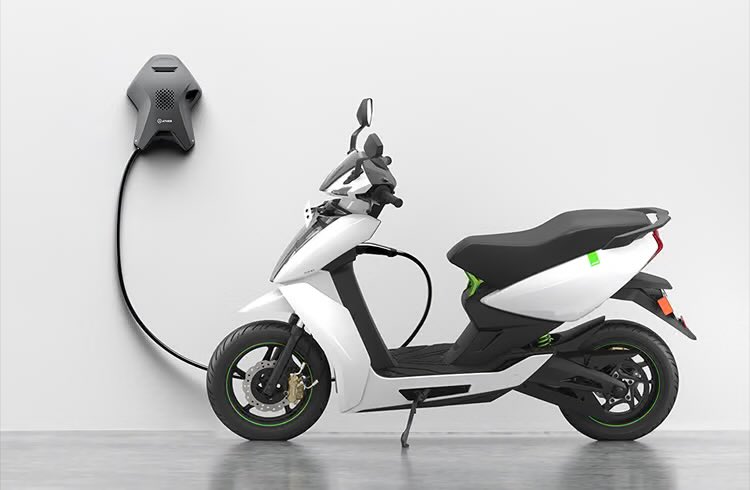
🏛️Ather Energy
Ather Energy, is a pure-play electric two-wheeler (E2W) company.
Ather designs its scooters, battery management systems, power electronics, software and charging network in-house. It assembles vehicles and battery packs at its Hosur, Tamil Nadu plants.
Ather is now India's third-largest E2W maker by volume.
🔖Where it stands today?
FY26 was a breakout year. Volumes grew 69% to 2,62,942 units and revenue grew 63% to 3,672 crore
National market share rose from 11.7% to 17.1%, and operating cash flow turned positive for the first time. Q1 FY27 continued that momentum.
Wholesale volumes rose 81% to about 83,000 units and revenue from operations reached 1,217 crore, up 89%. EBITDA was positive for the first time at 9 crore, a 0.8% margin. The net loss narrowed to 51 crore.
🔖Business Verticals
⏺️Vehicles (about 86% of revenue)
The portfolio has two scooter families.
The Ather 450 series (450S, 450X, 450 Apex) is the performance and premium line. It sold 63,808 units in FY26, and management says it protects brand equity and margins.
The Ather Rizta is the family scooter and the volume engine. It sold 1,99,134 units in FY26, 76% of the total. Its second 1 lakh units took 7 months to sell, against 11 months for the first.
The EL platform is the third leg, aimed at the 1–1.25 lakh mass segment where Ather previously had no product.
The first EL scooter debuted at Community Day on 29 August 2026. Media listings report its name as Konarc with prices starting around 1 lakh ex-showroom, but please confirm the official price before relying on it.
The Zenith motorcycle platform (125–300cc) is in development. Management says a motorcycle launch is probably two-plus years away.
⏺️Software: AtherStack Pro
AtherStack is Ather's in-house vehicle operating system, sold as a paid Pro pack. It covers navigation, crash and pothole alerts, Infinite Cruise, theft protection and over-the-air updates.
The attach rate held at 94% in Q1 FY27 even as volumes surged. It is Ather's largest non-vehicle revenue line and is almost entirely margin-accretive.
⏺️Charging: Ather Grid
Ather runs 6,000+ fast and neighbourhood charging points across India, Nepal and Sri Lanka, based on the LECCS connector standard. That standard is now recognised by BIS and pushed through the LEAF forum Ather co-founded with Hero MotoCorp. The network works as a product enabler rather than a profit centre.
⏺️Accessories, services and allied products
This vertical includes the Halo smart helmet and other accessories, spares and service revenue, and extended warranties such as Eight70 (8 years/80,000 km battery cover). It also covers Battery-as-a-Service, which cuts upfront cost by up to 30%, and assured buyback. A new wholly owned insurance corporate agent was incorporated in May 2026.
Together with software, non-vehicle revenue was 13% in FY26 and 14% in Q1 FY27. Management expects service revenue to be the long-term compounder: it is 2–3% of revenue today, against 10–12% at mature 2W OEMs.
⏺️International
Ather sells in Nepal and Sri Lanka, which brought in 46 crore in FY26. A Hong Kong subsidiary was incorporated in September 2026 for APAC procurement.
#ather #vismaya
🏛️Knowledge Marine & Engineering Works (KMEW)
KMEW is a maritime infrastructure company, it began by managing ship repair and chartering one anchor-handling tug. Over ten years it has become an integrated marine platform.
KMEW operates a fleet of 50+ marine assets: 19 dredging units and 28 port ancillary crafts. It has a workforce of about 550.
Almost all of its customers are central government maritime bodies. These include Major Port Authorities (Deendayal, Visakhapatnam, VOC Tuticorin, Paradip, JNPA, Mumbai, Kolkata, New Mangalore), the Inland Waterways Authority of India (IWAI) and Dredging Corporation of India (DCI). It also works overseas in Myanmar (Sittwe port) and Bahrain (sand mining through two WLL subsidiaries).
🔖Business Verticals
⏺️Dredging (the core engine)
Dredging produced ₹184 Cr of FY26 revenue, about 72%. In Q1 FY27 it was over 80% of the mix.
The company does capital dredging (deepening channels to new design depths), maintenance dredging (clearing recurring siltation), river dredging for IWAI and sand mining in Bahrain.
The dredging fleet is diversified: 3 trailing suction hopper dredgers, 9 cutter suction dredgers, 2 self-propelled grab dredgers, 2 self-propelled backhoe dredgers and 3 hopper barges. This spread lets KMEW bid across seabed types and project formats, from soft silt to hard rock.
Two recent projects show what the fleet can do. At JNPA, the company removed about 10,500 cu.m of rock with strength above 170 MPa, at around 16 m depth, using drilling and controlled blasting next to a live jetty.
Earlier contractors had failed on this job. At Puducherry, River Pearl 18 carried out maintenance dredging worth 24 Cr.
⏺️Charter & Hire of Port Ancillary Crafts
This is the annuity vertical. KMEW owns tugs, pilot boats, mooring boats, speed patrol boats, multicat support vessels and survey vessels. It charters them to ports on multi-year contracts.
FY26 revenue was a small 19 Cr, but this segment holds the largest share of the order book, about 850–865 Cr.
The key development is Green Tugs. KMEW won two 15-year battery-electric tug contracts from VOC Port and Visakhapatnam Port, worth about 690 Cr combined.
In September 2026 it added a third, from Mumbai Port Authority, worth 279 Cr.
Management says these are fixed-charter contracts paid whether or not the port uses the tug, with EBITDA margins around 75%.
⏺️Shipbuilding & Repair
This is the newest vertical, run through Knowledge Shipyard. FY26 shipbuilding revenue was 53 Cr, and the subsidiary's standalone revenue rose tenfold to 28.5 Cr.
The current IWAI order book covers 10 accommodation boats, 10 work boats, 4 cutter suction dredgers and 10 hybrid-electric 20-passenger ferries (62.4 Cr, won in Q1 FY27).
There is also a captive book: 3 tugs and 2 boats for KMEW itself, worth about ₹200 Cr intercompany.
Current capacity is a Taloja workshop that can build hulls up to 22 m. The real scale-up is the Saphale yard: 15 acres on the Vaitarna river near the upcoming Vadhavan Port, with an option on 5 more acres.
#KMEW #vismaya
🏛️TD Power Systems
TD Power Systems makes custom AC generators and electric motors.
It does not make turbines or engines. It makes the generator that sits behind them, so its customers are global OEMs of steam turbines, gas turbines, gas engines, diesel engines and hydro turbines.
These OEMs package the generator with their prime mover and sell the complete set to utilities, industries and data-centre developers.
TDPS has supplied about 8,375 units to 113 countries as of June 2026.
It runs three plants in India (two at Dabaspet and one at Tumkur, commissioned in FY26), a small plant in Turkey, sales subsidiaries in the US and Germany, a sales office in Japan and an R&D centre in the UK.
🔖Business Verticals
⏺️Gas Engine Generators
This is now the largest revenue contributor. TDPS supplies large-volume repeat orders to leading global gas-engine OEMs.
Most of that demand comes from US data-centre projects, where gas-engine gensets provide power on site because the grid cannot connect them fast enough.
⏺️Gas Turbine Generators
This is the fastest-growing vertical. TDPS won significant volume orders from a major US-based gas-turbine OEM in the 14–18 MW range.
A second major global OEM has a large, expected pipeline in the 12–19 MW range. End uses are data centres, oil and gas, and industrial power in the US.
⏺️Steam Turbine Generators
This is the steady second-largest vertical, growing about 10–12% a year. It serves captive power plants, biomass, waste-heat recovery, sugar, cement and steel.
The Indian steel industry is a notable domestic driver. In Q1 FY27 TDPS won a 60 MW, 2-pole generator order, among the largest in the segment. It also won 60 Hz export orders for US waste-heat projects.
⏺️Hydro Generators
Management expects FY27 to be one of its best years ever in hydro.
Q1 brought the segment's largest order: 4 × 16 MW vertical generators for a project in Africa. Refurbishment of old hydro plants in India and abroad is becoming a meaningful sub-vertical.
⏺️Motors
Induction and synchronous motors are the newest growth vertical, started in 2022.
TDPS recently developed API 541-compliant HT motors, which qualifies it for oil and gas work. It is also running customer qualifications in the US and Europe. Motor and generator production lines are being separated to sharpen focus.
⏺️Railways and Traction
TDPS supplies stators and rotors for traction motors, including a large Indian e-locomotive contract.
Management has stopped taking fresh railway orders. Once the current contract ends, that capacity will move to generators and motors.
⏺️Spares, Service and Turkey
Aftermarket revenue stays around 5–6% of sales. Generators need little service in their first ten years, so this is not a near-term margin lever. The Turkey plant does about €3–3.5 million a year. It is kept mainly as a European service backup.
#tdpower #vismaya
🏛️Quality Power Electrical Equipment
Quality Power makes high-voltage electrical equipment and power-electronics systems.
The core product is the "coil": air-core and oil-filled reactors, line traps and related equipment. These sit inside substations and control current, reactive power and harmonics on the grid.
The highest-value use is in HVDC and FACTS projects, which move bulk power over long distances and stabilise grids with high renewable penetration.
Management says Quality Power is the only Indian company making coil products for HVDC and FACTS above 220 kV.
Customers include Hitachi Energy, Siemens, GE Vernova, POWERGRID, Adani and Hyosung.
🔖Business Verticals
⏺️Power Products (about 56% of FY26 revenue)
It makes Coil products and reactors up to 765 kV, made at Sangli and Kochi.
Special-purpose, converter-duty and dry-type transformers up to 170 kV.
Instrument transformers (current transformers, potential transformers and CVTs) up to 500 kV, made by Mehru at Bhiwadi.
Management says Mehru supplies roughly one in every two high-voltage instrument transformers used in India.
Customers are increasingly placing multi-year framework orders with it. Mehru's EBITDA margin was about 18% in Q1, and its guidance was raised from 15% to about 18%.
⏺️Power Electronics (about 43% of FY26 revenue)
It makes STATCOMs, SVCs, active harmonic filters, SCADA systems and, most recently, the Power Conversion System (PCS) used in battery energy storage (BESS).
The key technical point is that a BESS PCS and a STATCOM are both IGBT-based voltage-source converters.
Endoks (acquisition) is extending a platform it already has, not entering a new field. Its legacy products earn around 25% EBITDA.
Endoks held the largest order book in the group at 801 crore as of June 2026.
⏺️Ancillaries and Backward Integration
This vertical supplies the rest of the group:
Sukrut (50:50 JV with Yash Highvoltage) - transformer tanks, fabrications and accessories.
CTC magnet wire facility (under commissioning) - makes a critical input for HVDC coils.
Much of this output is consumed inside the group, so it does not show up fully as reported revenue.
⏺️New Pillars Under Development
GIS components - grading capacitors for circuit breakers, and GIS instrument transformers co-developed with Hyosung. The first type tests are at 220 kV, with 400 and 765 kV to follow over about a year.
Insulators and bushings - porcelain up to 1,200 kV and polymeric up to 400 kV, through the WSIL acquisition.
#qualitypower
🏛️Kaynes Technology India
Kaynes is an electronics manufacturer from Mysuru. For most of its history it built circuit boards and full electronic units to designs that customers handed over. It is now moving towards what it calls an integrated electronics design and manufacturing (ESDM) company. That means doing its own product design, making the bare circuit boards itself, and packaging semiconductor chips, on top of its original assembly work.
The group has 18 factories, 2 service centres and 3 design centres. Most are in India, with one plant in California (Digicom) and one in Canada (August Electronics).
🔖Business Verticals
Kaynes works in four ways. In simple PCB assembly (PCBA), it builds boards to the customer's design. In OEM turnkey work, it also buys all the components.
Box-build means delivering the complete finished product. In ODM and product engineering, Kaynes owns the design. Design-led work is now about 28% of revenue, and the target is 40% by 2030.
⏺️End-market verticals
Industrial is the largest vertical, at about half of revenue, and it now includes smart meters through the GridCrest subsidiary (formerly Iskraemeco India).
Automotive, including EV, is roughly a quarter of sales. Kaynes makes EV powertrain electronics, battery management systems and power distribution units.
Railways brings signalling electronics and the Kavach anti-collision system, where Kaynes owns the hardware design.
Aerospace, space and strategic electronics is small today, but management wants it to reach 10% of revenue. Medical, IT/IoT and consumer electronics make up the rest.
⏺️The new businesses
Kaynes Semicon runs a chip assembly and testing (OSAT) plant at Sanand in Gujarat.
Kaynes Circuits is building a plant in Chennai for high-density bare circuit boards (HDI PCBs) of up to 74 layers. GridCrest supplies smart meters along with the software that runs them.
#kaynes #vismaya
🏛️Netweb Technologies India Ltd
Netweb, designs and builds High-end Computing Solutions (HCS) in India. It calls itself an - Indian-origin, owned and controlled OEM.
It designs the hardware, writes the middleware and software, makes the systems in its own NCR plants, and installs them at the customer. It does not do contract manufacturing and does not sell standalone boxes. It sells complete solutions under its Tyrone brand. The Lodha family promoters hold 66.98%.
🔖Business Verticals
⏺️AI Systems (now the main engine)
These are GPU servers and clusters built on NVIDIA's latest platforms, including GB200 and GB300 (Tyrone CAMARERO), plus AMD, under an OEM partnership.
Key wins include the AI infrastructure for India's foundational LLM (over 5,000 GPUs) and a government-owned on-premise AI cloud for NIC under the IndiaAI Mission.
AI revenue grew about 460% in FY26 to roughly 948 cr, which was 43% of sales. In Q1 FY27 it was 510.6 cr, or 62% of revenue, up 484% YoY.
⏺️High-Performance Computing (Supercomputing)
This is the legacy franchise. Netweb has built systems such as PARAM Yuva II, Airawat (ranked 75th in the world when commissioned) and PARAM Ambar at ISRO, and has 17 listings in the global Top500. HPC revenue was about 531 cr in FY26 (42% CAGR over FY24–26) and 125 cr in Q1 FY27.
⏺️Private Cloud and Hyperconverged Infrastructure (HCI)
This vertical provides on-premise and sovereign cloud stacks, built around the in-house Skylus platform, for enterprises, colocation operators and cloud providers. Revenue was about 517 cr in FY26 (40% CAGR) and 135 cr in Q1 FY27.
⏺️Smaller lines
The remaining lines are high-performance storage (Tyrone ParallelStor VELOX), data-centre servers, and software, spares and services. Together they made up about 188 cr in FY26. Exports are minor at 1.4% of revenue, and management says it is deliberately putting domestic demand first.
#Netweb #vismaya
🏛️Azad Engineering
Azad Engineering makes highly engineered, mission-critical and life-critical precision components for global OEMs.
Its main product is the 3D airfoil or turbine blade, the rotating and stationary blades inside gas, steam and nuclear turbines and aero engines. These parts are made from super-alloys such as titanium, Inconel and Nimonic. Some of them carry a "zero parts per million" defect requirement.
Around the blades, Azad also makes special machined parts, combustion assemblies, APU, hydraulic and actuation sub-systems, and oilfield drilling components. In total it has about 1,700 qualified parts and 45+ specialised processes.
🔖Business verticals
⏺️Energy
This is the core and historically the dominant vertical. At the time of the IPO it was about 88% of revenue, with airfoils alone at about 72%.
Azad supplies blades and machined parts for land-based gas, steam and nuclear turbines used in power plants and industry.
Customers include Mitsubishi Heavy Industries, GE Vernova, Siemens Energy and Baker Hughes. In FY23 its customers controlled about 70% of global gas-turbine orders.
⏺️Aerospace & Defence
This is the smaller but faster-strategic vertical. It covers:
Missile parts
Platforms such as the B737 MAX, B777X and A350 XWB
Aero-engine airfoils, APU parts, hydraulics, flight-control and actuation components
Customers including Honeywell, Eaton, Rolls-Royce, HAL and GTRE/DRDO
⏺️Oil & Gas
This is a marginal contributor today. It covers drill bits, reamers, slips and downhole tools, and it now has a dedicated Baker Hughes plant.
#azad #vismaya
🏛️Indo-MIM Ltd
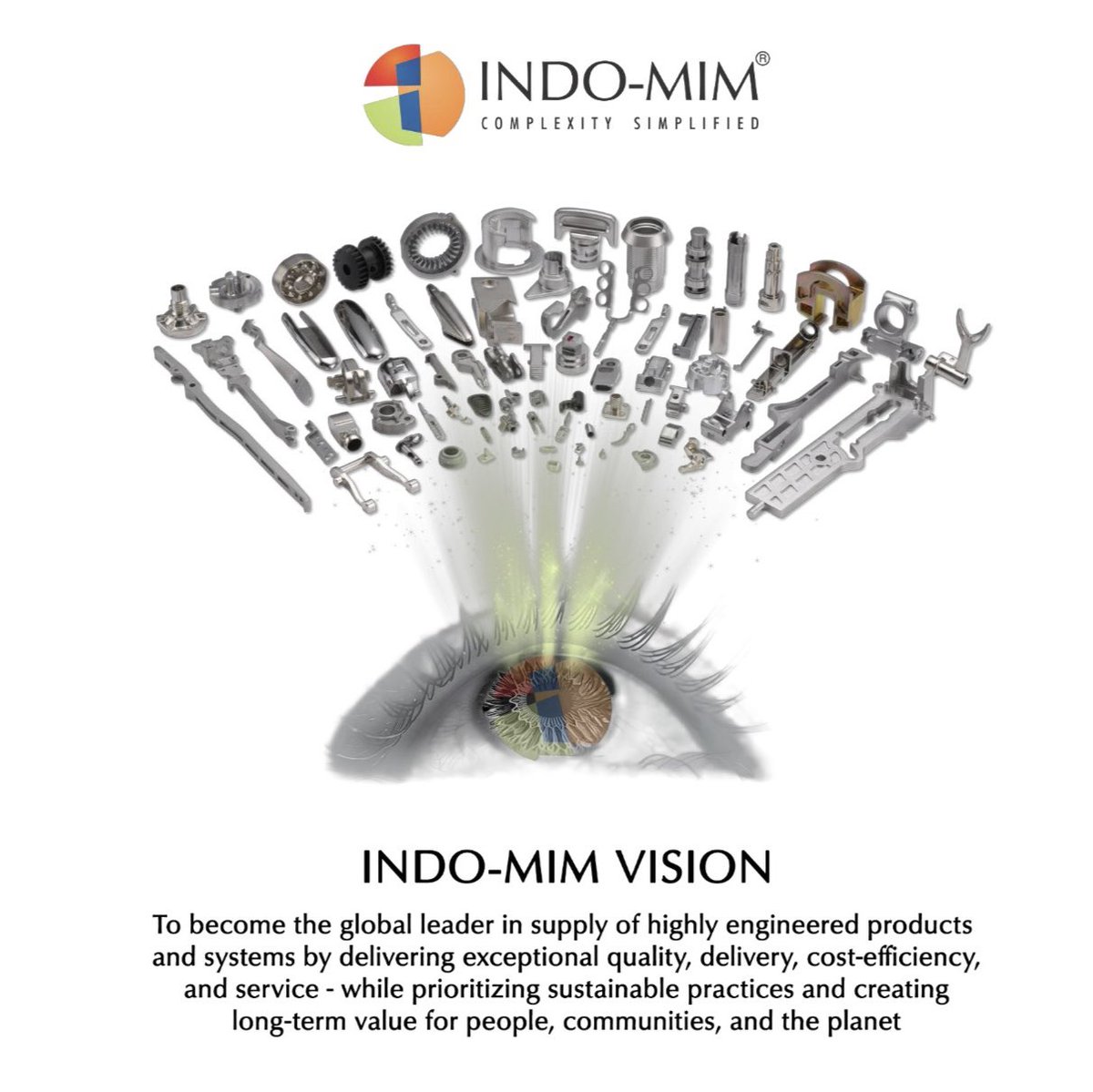
Indo-MIM is the world's largest maker of precision engineering parts using metal injection molding (MIM).
Around this core MIM, the company has added investment casting, precision machining, ceramic injection molding and metal 3D printing, so customers can source a part from it whatever the manufacturing route.
It runs 15 plants - 6 in India, 6 in the US, 2 in the UK and 1 in Mexico. In FY26 it made more than 9,000 types of parts for over 1,100 customers in 55 countries. About 77% of revenue came from outside India.
🔖Business verticals
⏺️Automotive (about 25% of revenue)
This is the largest vertical, at 1,032 crore revenue.
Products include turbocharger vanes, fuel-injection pump gear segments, rocker arms, sensor housings and seat-belt pawls.
The business is steady and grows at a mid-single-digit to high-single-digit pace.
⏺️Defence (about 19% of revenue)
The company makes firearm parts such as triggers, hammers, sears, sights, slide stops and magazine catches, mostly for US gun makers.
This was the only vertical that shrank in FY26, down about 12%, so it needs watching.
⏺️Medical (about 18% of revenue)
The company makes parts go into laparoscopy tools, surgical staplers, endoscopy devices, orthopaedic and spine instruments, and hearing aids.
The 2025 purchase of Phoenix DeVentures (US) added medical device design and prototyping.
⏺️Aerospace (about 12% of revenue)
Products include manifolds, precision housings, servo motor housings, nozzles and engine brackets, plus castings for gas turbines.
Margins here are among the company's best, and management wants this vertical to grow fastest.
⏺️Consumer products (about 11% of revenue)
The segment covers mobile phone parts, tools, hardware, crossbow parts and fashion accessories.
⏺️Others (about 16% of revenue)
Revenue was 665 crore, more than three times last year. It covers sales of metal powder, tools and traded products, including new EMS customers.
Traded goods usually carry lower margins, so this part of the growth is lower quality.
#IndoMIM #vismaya
🏛️KRN Heat Exchanger & Refrigeration Ltd
KRN makes heat exchangers and HVAC&R (heating, ventilation, air conditioning and refrigeration) components for AC, refrigeration and industrial OEMs.
Key customers include Daikin, Carrier, Schneider Electric, Voltas, Blue Star and Knorr-Bremse.
🔖Business Verticals
⏺️Fin & Tube Heat Exchangers (core)
This is the base of the business. It covers condenser coils, chilled-water coils, fluid and steam coils, and heating coils, made with copper or aluminium tubes and aluminium fins.
They go into cassette ACs, AHUs, precision air conditioning for data centres, and industrial HVAC. This vertical is what made KRN a qualified supplier to the large AC OEMs.
⏺️Bar & Plate Heat Exchangers
Charge air coolers, radiators, oil coolers and transformer oil coolers. They serve agriculture equipment, mining, railways, power and aerospace-type applications.
The transformer oil cooler links KRN to spending on power transmission and distribution.
⏺️Complete HVAC Systems
Adiabatic coolers, dry coolers and LT/HT remote radiators. Here KRN sells a full heat-rejection unit rather than a component.
These products serve data centres, power plants and process industries.
⏺️Refrigeration Components
Air cooling units, ammonia evaporators, frost-free evaporators and wire-on-tube condensers.
They go into cold storage, pharma cold chain, commercial display refrigeration and household refrigerators.
⏺️Bus AC (new vertical, acquired in FY26)
KRN bought the bus air-conditioning division of Sphere Refrigeration Systems as an asset-and-team deal in Q2 FY26.
It makes electric-bus and ICE-bus AC systems and supports them through six service centres. This moves KRN from supplying components to assembling complete systems.
⏺️Railway, Sheet Metal, Tubing and Technical Tubes
KRN has vendor approval from Indian Railways for oil cooler radiators.
It also makes headers, copper tubing and inner-grooved tubes, which are mostly used internally but also sold.
#KRN #vismaya
🏛️Aequs Ltd
Aequs is a vertically integrated precision component maker that does every stage of production itself.
🔖Business Verticals
⏺️Aerospace
It is the main business. Aequs makes 5,740 aerospace parts for engines, landing gear, structures, actuation systems, interiors and assemblies.
They go into the Airbus A320, A220, A330 and A350 and the Boeing 737, 787, 777 and 767.
Key customers are Airbus (15 years), Boeing (8 years), Safran, Collins, GKN, Honeywell, Eaton, SAAB and Bombardier.
⏺️Consumers
It makes parts for laptops and smart devices for one of the largest global electronics brands.
It also makes toys for Mattel and Spin Master and non-stick cookware for Tramontina and Wonderchef.
About 88% of revenue is exported. The top 5 customer groups make up 63% of revenue.
#aequs