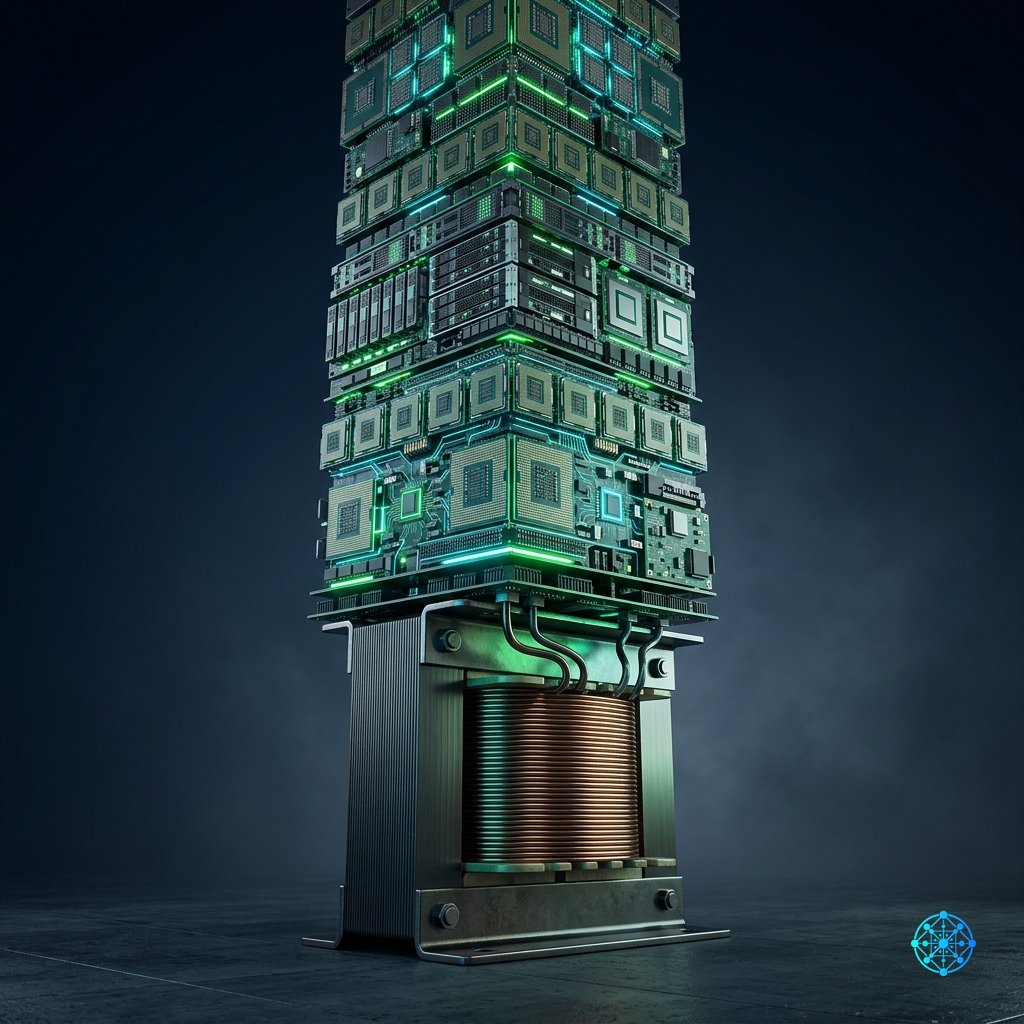
@nvidia 𝗰𝗮𝗹𝗹𝘀 𝗔𝗜 𝗮 𝗽𝗼𝘄𝗲𝗿-𝗹𝗶𝗺𝗶𝘁𝗲𝗱 𝗶𝗻𝗱𝘂𝘀𝘁𝗿𝘆. 𝗧𝗵𝗲 𝗶𝗻𝘁𝗲𝗿𝗰𝗼𝗻𝗻𝗲𝗰𝘁𝗶𝗼𝗻 𝗾𝘂𝗲𝘂𝗲 𝗽𝗿𝗼𝘃𝗲𝘀 𝗶𝘁.
𝗣𝗼𝘄𝗲𝗿, 𝗻𝗼𝘁 𝘀𝗶𝗹𝗶𝗰𝗼𝗻, 𝗻𝗼𝘄 𝘀𝗲𝘁𝘀 𝘁𝗵𝗲 𝗽𝗮𝗰𝗲.
Jensen Huang said it at @NVIDIAAI GTC in March 2025: "𝘞𝘦 𝘢𝘳𝘦 𝘯𝘰𝘸 𝘢 𝘱𝘰𝘸𝘦𝘳-𝘭𝘪𝘮𝘪𝘵𝘦𝘥 𝘪𝘯𝘥𝘶𝘴𝘵𝘳𝘺." The company that sells the chips said the chips are no longer the limit. The evidence is in two datasets.
The queue. @BerkeleyLab counts about 2,061 gigawatts of generation and storage waiting to connect to the US grid. The median project built in 2025 spent over five years in line. Only 13% of capacity requested from 2000 to 2020 ever reached operation.
The price. @pjminterconnect , the grid operator for 67 million Americans, cleared its 2027/28 capacity auction at the legal cap of £250 ($333, €293) per megawatt-day. Second year running at the ceiling. The auction for 2024/25 cleared at £22 ($29, €26).
The cause. Nearly 5,100 MW of @pjminterconnect 's 5,250 MW load increase came from data centres. That is 97% of the growth. The region missed its reliability standard for the first time.
The pattern repeats... Britain has over 100 GW of data centre demand sorted into blocks reaching 2035. China adds capacity fastest and moves its hubs west to find the power. The Gulf skips the queue by building generation with the compute.
Our Economic Analysis series this week, dropping in tomorrow's Briefing: why the binding constraint moved from the fab to the substation, and what capital should price. From Pennsylvania to Britain to China.
@StargateFinance 𝗨𝗔𝗘 𝘀𝘄𝗶𝘁𝗰𝗵𝗲𝘀 𝗼𝗻 𝗶𝘁𝘀 𝗳𝗶𝗿𝘀𝘁 𝟮𝟬𝟬 𝗠𝗪. 𝗧𝗵𝗲 𝗚𝘂𝗹𝗳'𝘀 𝗔𝗜-𝗲𝗻𝗲𝗿𝗴𝘆 𝘁𝗲𝗺𝗽𝗹𝗮𝘁𝗲 𝗴𝗼𝗲𝘀 𝗹𝗶𝘃𝗲.
The Gulf is not choosing between energy and compute. It is building both at once, from mixed sources, on purpose.
Stargate UAE brings its first 200 megawatts online in September 2026. It is the opening slice of a 5 gigawatt campus in Abu Dhabi, led by the Emirati group @G42ai . The site runs on a tri-fuel mix: nuclear from Barakah, utility-scale solar, and gas.
The head start is real. Barakah already runs four reactors at 5.6 gigawatts, near a quarter of UAE electricity. New campuses add dedicated, mixed supply rather than wait on a shared grid.
The play crosses the border. Saudi Arabia's @HUMAIN plans to scale from 1.9 to 6.6 gigawatts by 2034, powered by gas and solar. Same template, different fuel base.
Other regions answer differently. The United States relies on private offtake and behind-the-meter gas. South Korea backs 18.4 gigawatts with state finance.
In Europe, grid queues stall comparable campuses for years.
The lesson for capital is about time, not just cost. Co-locating generation and compute removes the interconnection wait, and that wait is often the scarcest asset.
Our Policy & Regional series this week: why building energy and compute together is the fast path. From Abu Dhabi to Riyadh to Sejong.
the next edition drops tomorrow at https://t.co/EF4eSp8yEt
𝗝𝗮𝗽𝗮𝗻 𝗿𝗲𝘀𝘁𝗮𝗿��𝘀 𝗶𝘁𝘀 𝗯𝗶𝗴𝗴𝗲𝘀𝘁 𝗿𝗲𝗮𝗰𝘁𝗼𝗿. 𝗧𝗵𝗲 𝗰𝗵𝗶𝗽𝗺𝗮𝗸𝗲𝗿𝘀 𝘄𝗲𝗿𝗲 𝗮𝗹𝗿𝗲𝗮𝗱𝘆 𝘄𝗮𝗶𝘁𝗶𝗻𝗴.
The bottleneck for compute is shifting from the chip to the baseload beneath it.
Kashiwazaki-Kariwa Unit 6 resumed commercial operation on 16 April 2026, after more than 14 years offline. It is the first @TEPCO_Nuclear reactor back since 2011. Japan drew just 8.5% of its power from nuclear in 2023, and now targets about 20% by 2040.
The link to compute is direct. Hokkaido Electric Power Company names semiconductor and data centre demand as the reason to restart Tomari 3. On the same island, Rapidus is building a 2 nanometre chip fab at Chitose. The reactor and the fab share one grid.
The pattern is regional. South Korea confirmed two new reactors and is bringing Saeul 3 online. France has just cleared site work at Gravelines for two EPR2 units. @WoodMackenzie expects Japanese data centre demand to triple to 66 terawatt-hours by 2034.
The lesson for capital is simple. Firm, low-carbon baseload now pulls the most valuable industry toward it. A reactor draws a fab. A fab draws the data centres.
Our Technical Integration series this week: why baseload, not silicon, now decides where compute is built. From Niigata to Chitose to Gravelines.
read the full analysis on our site when it lands...https://t.co/vfVfXLoTVP
𝗚𝗮𝘀 𝘁𝘂𝗿𝗯𝗶𝗻𝗲𝘀 𝗮𝗿𝗲 𝘀𝗼𝗹𝗱 𝗼𝘂𝘁 𝘁𝗼 𝟮𝟬𝟯𝟬. 𝗦𝗼 𝗔𝗜 𝗰𝗮𝗺𝗽𝘂𝘀𝗲𝘀 𝗯𝘂𝗶𝗹𝗱 𝘁𝗵𝗲𝗶𝗿 𝗼𝘄𝗻 𝗽𝗼𝘄𝗲𝗿.
The bottleneck for AI is no longer the chip. It is the machine that makes the power.
@GEVernova holds 100 gigawatts of gas turbines under contract, with only about 10 gigawatts of 2029 and 2030 slots left. It is already booking 2031. A new large turbine can take up to seven years to arrive.
So campuses stopped waiting.
In 2025 the United States nearly tripled its gas capacity in development, to 252 gigawatts. More than a third is designed to sit behind the meter, powering data centres on site. @exxonmobil and @nexteraenergy will let a hyperscaler fund its own 1.2 gigawatt plant.
The fuel is expanding to match. Qatar is lifting LNG capacity from 77 to 142 million tonnes a year. Golden Pass LNG (https://t.co/V0KOWqMalS) became the ninth US export terminal in April 2026.
But the queue is real. Backlogs run through 2030, and two-thirds of proposed projects have no named turbine maker. Gas is the bridge. Nuclear is the destination.
Our Cross-Sector Integration series this week: why the turbine, not the chip, now sets the pace. From Qatar to Texas to the Rhine.
𝗥𝗲𝗮𝗱 𝘁𝗵𝗲 𝗳𝘂𝗹𝗹 𝗮𝗻𝗮𝗹𝘆𝘀𝗶𝘀: when it drops tomorrow!
AI Data centre build costs hit £8m ($10.7m, €9.4m) a megawatt in 2025. The chips are the cheap part.
Look inside that megawatt. Electrical and mechanical work is 76% of the build cost. The processors arrive later, installed by the tenant as fit-out.
So the megawatt price is a labour and equipment price. It is not a chip price. And the scarcest input is not compute. It is the transformer.
High-power transformers that once took two years can now take five. Of 16 gigawatts planned globally for 2026, only about 5 gigawatts is under construction. The rest waits on power and parts.
The same megawatt costs £11.4m in Tokyo, £9.0m in London and £7.5m in Dublin. Silicon costs the same everywhere. People, permits and power do not.
At £8m a megawatt, a finished hall that cannot be energised is dead capital. The build is the visible cost. The wait between finished and working is the hidden one.
𝗢𝘂𝗿 𝗘𝗰𝗼𝗻𝗼𝗺𝗶𝗰 𝗔𝗻𝗮𝗹𝘆𝘀𝗶𝘀 𝘀𝗲𝗿𝗶𝗲𝘀 𝘁𝗵𝗶𝘀 𝘄𝗲𝗲𝗸: why labour, not silicon, sets the price of a data centre. From Australia to Japan to Ireland to the UAE, the wall is the same.
𝗠𝘆𝘁𝗵: the constraint on AI infrastructure is chips.
𝗥𝗲𝗮𝗹𝗶𝘁𝘆: it is the electrician, and then the person qualified to sign the build off.
Microsoft's president Brad Smith has named the electrician shortage as AI's number one build problem in the US. Some of the company's electricians commute more than 75 miles to site. The chips arrive, the power deal is signed, and then the build waits on people.
Follow the money and it points the same way. McKinsey & Company sees data-centre investment reaching £5trn ($6.7trn, €5.9trn) by 2030. Yet electrical work is 45% to 70% of a data centre's construction cost. Nearly 30% of union electricians are aged 50 to 70.
This is not an American story... Ireland's data centres now draw 23% of national electricity. Japan cannot fill night shifts, and it takes one to two years to bring an operations engineer to proficiency.
The gate is commissioning. It is the phase that proves the plant works before it opens. In the UK a high-voltage authorisation is granted per site and does not travel to the next one.
Artificial intelligence can schedule the labour and flag the gaps. The competent person still signs the safety case.
Which milestone does your organisation treat as a formality when it is really the schedule?
Full analysis: https://t.co/LKW1k2nh67
#DataCentres #Commissioning #SkilledTrades #AI #Infrastructure #Workforce
@Microsoft 𝗰𝗮𝗹𝗹𝘀 𝘁𝗵𝗲 𝗲𝗹𝗲𝗰𝘁𝗿𝗶𝗰𝗶𝗮𝗻 𝘀𝗵𝗼𝗿𝘁𝗮𝗴𝗲 𝗔𝗜'𝘀 𝗻𝘂𝗺𝗯𝗲𝗿 𝗼𝗻𝗲 𝗽𝗿𝗼𝗯𝗹𝗲𝗺...
@Microsoft 's president @BradSmi has named the electrician shortage as the number one problem slowing US data-centre expansion. Some of the company's electricians commute more than 75 miles to site. The chips arrive, the power deal is signed, and then the build waits on people.
This is not only an American problem. In Ireland, data centres now draw 23% of national electricity. But the pool that builds and signs off those sites is thin. In Japan, operators cannot fill night shifts, and it takes one to two years to bring an engineer to proficiency.
Electrical work is 45% to 70% of a data centre's construction cost. Nearly 30% of union electricians are aged 50 to 70. Hyperscalers pledge more than £451bn ($600bn, €528bn) in 2026. The Uptime Institute finds nearly two-thirds of operators cannot find or keep qualified staff.
Our new analysis argues the binding constraint is not silicon or power. It is the competent person who commissions the plant and signs it off.
Full analysis: https://t.co/LKW1k2nh67
𝗠𝘆𝘁𝗵: data centres follow cheap power and cheap land.
𝗥𝗲𝗮𝗹𝗶𝘁𝘆: they follow grid headroom at a specific node, on a specific date.
Johor now draws about 3.8 GW of data-centre demand. That is roughly one and a half times the entire state's electricity demand. It is about 51% of all data-centre demand in Peninsular Malaysia.
Everyone credits the land beside Singapore. Look at the engineering instead. Johor is not short of power. It has 6.8 GW installed against 2.6 GW of demand, with network utilisation near 30%.
What it lacks is 132 kV main intake substations at the clusters where developers want to build.
Singapore did not lose that demand by accident. It rationed, offering at least 200 MW in a call that closed on 31 March 2026. @WoodMackenzie put the rule plainly. The issue is where power is available, not whether it is available.
The same rule is now written into law elsewhere. In Ireland, @EirGrid and @ESBNetworks can reject a proposed site outright. In Malaysia, approval is granted only where a project aligns with local grid capacity planning.
Meanwhile @Tenaga_Nasional cut data-centre connection from 36 months to as little as 12. US interconnection commonly runs four to five years.
Johor's £31.6bn ($42bn, €36.9bn) did not chase a tariff. It chased a connection date.
Which variable does your site selection actually rank first?
Full analysis: https://t.co/yLPDhz2yBk
#DataCentres #GridInfrastructure #Johor #Singapore #EnergyStrategy
𝗝𝗼𝗵𝗼𝗿'𝘀 𝗱𝗮𝘁𝗮-𝗰𝗲𝗻𝘁𝗿𝗲 𝗱𝗲𝗺𝗮𝗻𝗱 𝗵𝗶𝘁 𝟯.𝟴 𝗚𝗪. 𝗦𝗶𝗻𝗴𝗮𝗽𝗼𝗿𝗲'𝘀 𝗰𝗮𝗽 𝘀𝗲𝗻𝘁 𝗶𝘁 𝘁𝗵𝗲𝗿𝗲
Data centres in Johor now draw about 3.8 GW at maximum demand. That is roughly one and a half times the whole state's electricity demand. The load more than doubled between 2024 and 2025. Johor has attracted £31.6bn ($42bn, ��36.9bn) from hyperscalers and technology firms.
The usual explanation is cheap land next to Singapore. The engineering explanation is grid headroom. Singapore rationed capacity, offering at least 200 MW in a call that closed on 31 March 2026. Demand that could not win a slot crossed the strait.
Malaysia is not taking it unconditionally. Approval is granted only where a project aligns with local grid capacity planning. And the binding constraint in Johor is not generation. The state has 6.8 GW installed against 2.6 GW of demand. It is short of 132 kV main intake substations.
Connection speed is now the real competitive instrument. Tenaga Nasional cut data-centre connection from 36 months to as little as 12. In the United States, interconnection commonly takes four to five years. Ireland's regulator now lets EirGrid reject sites outright.
Full analysis drops tomorrow: https://t.co/xiUC512Oan
#DataCentres #GridInfrastructure #Johor #Singapore #EnergyStrategy
𝗠𝘆𝘁𝗵: a nuclear build is gated by steel, concrete and money.
𝗥𝗲𝗮𝗹𝗶𝘁𝘆: it is gated by assurance, the cyber and standards evidence a regulator can audit.
Britain signed three @RollsRoyce SMR reactors at Wylfa in April. Look at the sequence. @GBEgovuk - Nuclear bought £300m ($399m, €351m) of independent assurance twelve days before it signed the reactor contract.
𝗧𝗵𝗲 𝗿𝗲𝗴𝘂𝗹𝗮𝘁𝗼𝗿 𝗵𝗮𝘀 𝘁𝗲𝗲𝘁𝗵.
The @The_ONR fined @SellafieldLtd £332,500 ($442,000, €389,000) for cyber failures in 2024. No attacker was involved. The company still pleaded guilty.
The design must clear the Generic Design Assessment, due to conclude around December 2026. No amount of factory output moves that gate.
𝗙𝗿𝗮𝗻𝗰𝗲 𝗽𝗿𝗼𝘃𝗲𝘀 𝘁𝗵𝗲 𝗺𝗼𝗱𝗲𝗹 𝘁𝗼𝗼.
@EDFofficiel and @Assystem build @sizewellc on documented, auditable engineering. In the UAE, Barakah reached full operation on the same discipline. In Canada, the regulator now treats data quality as a safety requirement.
𝗖𝘆𝗯𝗲𝗿 𝗮𝗻𝗱 𝘀𝘁𝗮𝗻𝗱𝗮𝗿𝗱𝘀 𝗮𝘀𝘀𝘂𝗿𝗮𝗻𝗰𝗲 are engineering problems, not paperwork. The competent engineer still signs the safety case.
Which milestone does your organisation still treat as admin when it is really the schedule?
Full analysis: https://t.co/1K6tQh0LdZ
#Nuclear #SMR #CyberSecurity #Standards #InfrastructureAssurance
@Avencys , @SAGroupUK , @IBM , AEROSPACE DESIGN LIMITED (ADL)
𝗢𝗻 𝟭𝟯 𝗔𝗽𝗿𝗶𝗹, @GBEgovuk 𝘀𝗶𝗴𝗻𝗲𝗱 𝗮 𝗰𝗼𝗻𝘁𝗿𝗮𝗰𝘁 𝗳𝗼𝗿 𝘁𝗵𝗿𝗲𝗲 𝘀𝗺𝗮𝗹𝗹 𝗺𝗼𝗱𝘂𝗹𝗮𝗿 𝗿𝗲𝗮𝗰𝘁𝗼𝗿𝘀 𝗮𝘁 𝗪𝘆𝗹𝗳𝗮 𝗶𝗻 𝗡𝗼𝗿𝘁𝗵 𝗪𝗮𝗹𝗲𝘀. The National Wealth Fund committed up to £599m ($797m, €701m). The steel and the money are the straightforward part.
𝗧𝗵𝗶𝘀 𝘄𝗲𝗲𝗸 𝗼𝗻 @Vistergy: 𝗕𝗿𝗶𝘁𝗮𝗶𝗻 𝘀𝗶𝗴𝗻𝘀 𝘁𝗵𝗿𝗲𝗲 @RollsRoyce -SMR𝘀 𝗮𝘁 𝗪𝘆𝗹𝗳𝗮. 𝗖𝘆𝗯𝗲𝗿 𝗮𝗻𝗱 𝘀𝘁𝗮𝗻𝗱𝗮𝗿𝗱𝘀 𝗮𝘀𝘀𝘂𝗿𝗮𝗻𝗰𝗲 𝗱𝗲𝗰𝗶𝗱𝗲 𝘁𝗵𝗲 𝘀𝗰𝗵𝗲𝗱𝘂𝗹𝗲.
The real schedule is set elsewhere. Twelve days earlier, the programme bought £300m ($399m, €351m) of independent assurance before it signed the reactor deal. The design now sits in the final stage of the regulator's Generic Design Assessment, due to conclude around December 2026.
This is not soft process. In 2024 the Office for Nuclear Regulation fined @SellafieldLtd £332,500 ($442,000, €389,000) for cyber failures, with no attack. On 3 July, five European regulators completed a joint review of one SMR design. Assurance is now cross-border, and it is the gate.
Our new analysis reads the standards that decide a regulated build: IEC 62443 for control-system cyber security and ISO 19650 for information management. The same discipline governs data centres and LNG.
Could you hand a regulator the digital evidence for your last project without a scramble?
Full analysis later today: https://t.co/xiUC512gkP
#Nuclear #SMR #CyberSecurity #InfrastructureAssurance #Standards
𝗠𝘆𝘁𝗵: a finished building is a working building.
𝗥𝗲𝗮𝗹𝗶𝘁𝘆: in the first half of 2026, five separate markets priced the weeks in between.
Our Tuesday analysis traced the handover gap. That is the stretch between construction-complete and revenue-ready. It now carries a price tag.
The proof is not opinion.
@Aon expanded its lifecycle insurance to £2.6bn ($3.5bn, €3.1bn) from Dublin. It underwrites construction, commissioning and first-year operations as one product.
@autodesk then paid £2.7bn ($3.6bn, €3.2bn) for MaintainX to own the operations data after handover.
Germany's Nemetschek Group and Trimble Inc. made the same bet, buying data that survives the builder-to-operator handover.
Most operators still book commissioning as an admin milestone at the end of the schedule. Singapore does not. Its regulator rationed 200 MW of new capacity on proof of performance, not speed of build.
Commissioning is a systems-integration problem, not a formality. When the integration fails, Delay in Start-Up cover pays and the asset earns nothing.
𝗧𝗵𝗲 𝗲𝗻𝗴𝗶𝗻𝗲𝗲𝗿𝗶𝗻𝗴 𝗿𝗲𝗮𝗹𝗶𝘁𝘆: the risk never moved. The market finally learned to see it.
Which milestone does your organisation still treat as paperwork when it is really a balance-sheet event?
Full analysis: https://t.co/ZuzwxhRSfc
𝗜𝗻 𝗝𝗮𝗻𝘂𝗮𝗿𝘆 𝟮𝟬𝟮𝟲, 𝘁𝗵𝗲 𝗴𝗮𝗽 𝗯𝗲𝘁𝘄𝗲𝗲𝗻 𝘄𝗵𝗲𝗻 𝗶𝗻𝗳𝗿𝗮𝘀𝘁𝗿𝘂𝗰𝘁𝘂𝗿𝗲 𝗶𝘀 𝗯𝘂𝗶𝗹𝘁 𝗮𝗻𝗱 𝘄𝗵𝗲𝗻 𝗶𝘁 𝘄𝗼𝗿𝗸𝘀 𝗹𝗼𝗼𝗸𝗲𝗱 𝗹𝗶𝗸𝗲 𝗮 𝘁𝗵𝗲𝘀𝗶𝘀.
By 30 June, five separate markets had priced it...
Aon now underwrites construction, commissioning and first-year operations as one product, up to £2.6bn ($3.5bn, €3.1bn). @autodesk paid £2.7bn ($3.6bn, €3.2bn) for @maintainx and the operational data it captures. @procoretech , @TrimbleCorpNews and @nemetschekgroup each bought firms that hold data past handover.
Contech funding fell 33% in Q1 2026. The capital that stayed chased execution, not experiments. Recruiters now rank commissioning among the hardest data-centre roles to fill, in a market short 439,000 workers. Singapore rationed 200 MW to operators who can prove performance, not just build.
𝗧𝗵𝗶𝘀 𝘄𝗲𝗲𝗸 𝗼𝗻 @vistergy : 𝗤𝟮 𝗰𝗹𝗼𝘀𝗲𝘀. 𝗧𝗵𝗲 𝗵𝗮𝗻𝗱𝗼𝘃𝗲𝗿 𝗴𝗮𝗽 𝗶𝘀 𝗮 𝗰𝗮𝘁𝗲𝗴𝗼𝗿𝘆 𝗻𝗼𝘄
A category forms when independent actors price the same risk without coordinating. Underwriters, acquirers, investors, recruiters and regulators did exactly that in the first half of 2026.
Our new analysis reads the half-year evidence and the narrowing third-quarter window.
Full analysis drops tomorrow...
#DataCentres #Commissioning #ConstructionTech #InfrastructureInvestment #DigitalHandover
In October 2025, a quiet standard was published by an international committee. Following last week's piece on reality capture, our research turns to the rule that decides whether AI can work inside a regulated nuclear plant at all.
AI cannot operate in a nuclear facility on trust alone. A regulator must be able to check the data a model reads and the answers it gives. A conformant digital ecosystem is what makes that check possible.
𝗧𝗵𝗶𝘀 𝘄𝗲𝗲𝗸 𝗼𝗻 @vistergy : 𝗜𝗦𝗢 𝟭𝟴𝟭𝟯𝟲 𝗷𝘂𝘀𝘁 𝗯𝗲𝗰𝗮𝗺𝗲 𝘁𝗵𝗲 𝗽𝗮𝘀𝘀𝗽𝗼𝗿𝘁 𝗳𝗼𝗿 𝗔𝗜 𝗶𝗻 𝗻𝘂𝗰𝗹𝗲𝗮𝗿 𝗳𝗮𝗰𝗶𝗹𝗶𝘁𝗶𝗲𝘀.
𝗧𝗵𝗲 𝗿𝗲𝗮𝗹𝗶𝘁𝘆 𝗰𝗵𝗲𝗰𝗸:
@ISO 18136-1, published in October 2025, defines a shared framework for the nuclear digital ecosystem across every reactor-related facility.
The @CNSC_CCSN , the @GovNuclear@UKNuclearEnergy have already published joint principles for AI in nuclear.
Nuclear investment runs at over £51bn ($70bn, €60bn) today and would peak near £154bn ($210bn, €179bn) around 2035 to triple capacity by 2050, per the @IEA Agency.
𝗧𝗵𝗲 𝗱𝗶𝘀𝗰𝗼𝗻𝗻𝗲𝗰𝘁:
The standard exists, the regulators are aligned, and the building blocks (CFIHOS, ISO 55000, ISO 19650) are familiar. The practical window opens around 2027 to 2028. Most operators have not applied.
Full analysis publishes tomorrow.
#NuclearEnergy #ISO18136 #DigitalTwin #AIGovernance #CriticalInfrastructure
Builders have never rated site technology more highly. Yet fewer of them use it.
Industry benchmarking puts positive evaluations of innovative equipment above 95%, while active robotics use has fallen to 46%. Following last week's LNG timing analysis, our research turns to a capability that already ships, and the operators who meet it too late.
𝐓𝐡𝐢𝐬 𝐰𝐞𝐞𝐤 𝐨𝐧 @vistergy : 𝐂𝐨𝐧𝐬𝐭𝐫𝐮𝐜𝐭𝐢𝐨𝐧 𝐫𝐞𝐚𝐥𝐢𝐭𝐲 𝐜𝐚𝐩𝐭𝐮𝐫𝐞 𝐰𝐨𝐫𝐤𝐬. 𝐓𝐡𝐞 𝐨𝐩𝐞𝐫𝐚𝐭𝐨𝐫𝐬 𝐝𝐢𝐬𝐜𝐨𝐯𝐞𝐫 𝐢𝐭 𝟏𝟖 𝐦𝐨𝐧𝐭𝐡𝐬 𝐥𝐚𝐭𝐞.
Reality capture means scanning what was built and checking it against the design. It catches errors while they are still cheap to fix. It is now a category, not a product.
𝐓𝐡𝐞 𝐫𝐞𝐚𝐥𝐢𝐭𝐲 𝐜𝐡𝐞𝐜𝐤:
A site can be captured three ways: a laser scanner, a 360 camera with no laser scan needed, or an autonomous robot.
@fieldai_ raised £298m ($405m, €345m) at a £1.5bn ($2bn, €1.7bn) valuation.
Its robots scan the site and compare it to the BIM model with no GPS or map.
Iowa is building the Black Hawk Bridge twice. Reviewing the 3D model caught a flaw before any steel was cut, saving £2.4m ($3.2m, €2.8m).
𝐓𝐡𝐞 𝐝𝐢𝐬𝐜𝐨𝐧𝐧𝐞𝐜𝐭:
Rework still runs 5 to 15% of project cost. The @FL3DMS specification and an operator-led open digital twin standard, backed by @bp_America , @Chevron , @Shell , and @exxonmobil , are codifying the data. The tools are loved more and used less.
Full analysis publishes tomorrow.
#RealityCapture #DigitalTwin #Construction #BIM #ScanToBIM
This month, the IMO warned that no safe passage exists through the Strait of Hormuz, even as traffic tentatively recovers. About 20% of the world's LNG normally passes through it, almost all from Qatar. Following last week's @vistergy analysis of the commissioning gap, our research turns to a harder timing problem.
𝗧𝗵𝗶𝘀 𝘄𝗲𝗲𝗸 𝗼𝗻 𝗩𝗶𝘀𝘁𝗲𝗿𝗴𝘆: "𝗟𝗡𝗚 𝗽𝗲𝗮𝗸𝘀 𝗶𝗻 𝟮𝟬𝟯𝟬. 𝗧𝗵𝗲 𝗴𝗿𝗶𝗱 𝗺𝘂𝘀𝘁 𝗯𝗲 𝗿𝗲𝗮𝗱𝘆 𝗯𝘆 𝟮𝟬𝟮𝟳."
The world is building toward an LNG supply peak around 2030. The grids that AI needs must be ready by 2027. Supply peaks three years after demand binds.
𝗧𝗵𝗲 𝗿𝗲𝗮𝗹𝗶𝘁𝘆 𝗰𝗵𝗲𝗰𝗸:
@qatarenergy is raising capacity to 142 MTPA by 2030, but 93% of its exports cross one strait.
North American LNG capacity will more than double to 28.7 Bcf/d by 2029, per the U.S. Energy Information Administration, with US exporters adding 13.9 Bcf/d.
@ERCOT_ISO took 225 large-load grid requests in one year. Transmission, not gas, is the wall.
DELFIN LNG LLC reached a £3.7bn ($5bn, €4.3bn) final investment decision off Louisiana. First gas is targeted for 2030, with offtake locked to @centricaplc , SEFE Energy UK, Vitol, and Gunvor Group.
𝗧𝗵𝗲 𝗱𝗶𝘀𝗰𝗼𝗻𝗻𝗲𝗰𝘁: LNG export, power grids, and AI compute now share one timeline and no coordinator. Gas peakers can bridge to 2028. Nuclear baseload carries 2028 to 2035. Only firm, domestic power is supply no strait can close.
Our analysis sets out the three-year gap and what it does to project finance, offtake, and commissioning.
Full analysis publishes today...
#LNG #EnergyInfrastructure #DataCentres #GridCapacity #NuclearEnergy
The GIRI (Get it Right Initiative) has been making this case for years. They reckon avoidable error costs UK construction roughly seven times the industry's annual profit...Most of it hides in records that say complete.
In the latest Permit to Operate (https://t.co/2nzHyDf9s7), I make the operator's version of that case. Complete is a paperwork state. It is not the same as correct. The field is where you find out.
Credit to @GIRI for the number, and for the decade of work behind it!
This week on @vistergy : "𝙏𝙝𝙚 𝙘𝙤𝙢𝙢𝙞𝙨𝙨𝙞𝙤𝙣𝙞𝙣𝙜 𝙝𝙚𝙙𝙜𝙚. 𝙒𝙝𝙮 𝙤𝙥𝙚𝙧𝙖𝙩𝙤𝙧𝙨 𝙨𝙝𝙤𝙪𝙡𝙙 𝙞𝙣𝙨𝙪𝙧𝙚 𝙖𝙜𝙖𝙞𝙣𝙨𝙩 18 𝙢𝙤𝙣𝙩𝙝𝙨 𝙤𝙛 𝙙𝙖𝙧𝙠"
As Data Centre World London opens this week, the talk is of delay. Following last week's analysis of the Gulf's power-first advantage, our research turns to the risk nobody prices: the gap between built and operational.
A project can finish construction and still not run. The carrying cost does not pause. Lenders charge interest, staff draw salary, and the asset sits dark. No insurer sells cover for that.
𝗧𝗵𝗲 𝗿𝗲𝗮𝗹𝗶𝘁𝘆 𝗰𝗵𝗲𝗰𝗸:
@Georgia Power's Plant Vogtle opened more than seven years late. Financing cost £283m ($385m, €329m) in 2017 alone.
@EDF's Hinkley Point C now costs £31bn to £34bn in 2015 prices ($42bn to $46bn, €36bn to €39bn).
Delay in start-up insurance exists, but @Swiss Re and the engineering market only pay when physical damage causes the delay.
𝗧𝗵𝗲 𝗱𝗶𝘀𝗰𝗼𝗻𝗻𝗲𝗰𝘁:
The most common cause of the dark, slow commissioning, is the one cause the existing product excludes. LNG sponsors in Qatar and Texas absorb the gap with completion guarantees. Most operators have no such backstop.
Our analysis sets out how insurers could price 18 months of dark, and why @Lloyd's of London has not built the product yet.
Full analysis publishes tomorrow.
#EnergyInfrastructure #ProjectFinance #Insurance #DataCentres #NuclearEnergy
𝗕𝗮𝗿𝗮𝗸𝗮𝗵 𝗽𝗼𝘄𝗲𝗿𝘀 𝗮 ����𝘂𝗮𝗿𝘁𝗲𝗿 𝗼𝗳 𝗮 𝗻𝗮𝘁𝗶𝗼𝗻. 𝗧𝗵𝗲 𝗔𝗜 𝗶𝘁 𝗳𝗲𝗲𝗱𝘀 𝗵𝗮𝘀 𝗻𝗼𝘁 𝗯𝗲𝗲𝗻 𝗯𝘂𝗶𝗹𝘁 𝘆𝗲𝘁.
On 17 May, a drone struck @ENEC_UAE 's Barakah plant. The reactors never stopped. The Gulf's largest power base absorbed an attack and held.
Following last week's look at what satellites can and cannot see, our analysis turns to a quieter signal. Gulf generation now runs ahead of Gulf compute. That inverts the Western pattern, where AI demand outruns power.
𝗧𝗵𝗲 𝗿𝗲𝗮𝗹𝗶𝘁𝘆 𝗰𝗵𝗲𝗰𝗸:
• Barakah supplies 5.6 GW, about 25% of UAE electricity
• Built by a Korea Electric Power Corporation (@iamkepco )-led consortium in roughly a decade
• The reactors exist before the data centres that want them
Three sovereign models, one ordering: Drawing on public @ENEC_UAE , @Microsoft , and @WorldNuclear data, our analysis covers:
• UAE equity through G42 and MGX, with £11.2bn ($15.2bn, €13bn) pledged to 2029
• Saudi Arabia's @HUMAIN programme under the Public Investment Fund
• Qatar's sovereign AI cloud, around £740m ($1bn, €850m)
The window: Reactors take a decade. Data halls take 18 months. The slow asset is finished. The fast one has barely started.
Full analysis publishes tomorrow, with Saudi Vision 2030 and Qatar as comparators.
#NuclearEnergy #AIInfrastructure #MiddleEast #SovereignCapital #EnergyTransition