Provide Claude with access to a specific folder containing coding files, and allow it to modify them as needed.
If you’re granting the agent full control, include specific conditions in the MD file.
You can now enable Claude to use your computer to complete tasks.
It opens your apps, navigates your browser, fills in spreadsheets—anything you'd do sitting at your desk.
Research preview in Claude Cowork and Claude Code, macOS only.
20 things that make your VIBE CODED app a SINKING SHIP :
1/ no rate limiting on API routes
> anyone can spam your backend into a $500 bill overnight
2/ auth tokens stored in localStorage
> one XSS attack = every single user account compromised
3/ no input sanitisation on forms
> SQL injection still works in 2026. your AI didnt tell you that.
4/ hardcoded API keys in the frontend
> someone WILL find them within 48 hours of launch
5/ stripe webhooks with no signature verification
> anyone can fake a successful payment event
6/ no database indexing on queried fields
> works fine at 100 users. completely dies at 1,000.
7/ no error boundaries in the UI
> one crash = white screen = user never comes back
8/ sessions that never expire
> stolen token = permanent access to that account. forever.
9/ no pagination on database queries
> one fetch loads your entire database into memory
10/ password reset links that dont expire
> old email in someones inbox = instant account takeover
11/ no environment variable validation at startup
> app silently breaks in production with zero error message
12/ images uploaded directly to your server
> no CDN = 8 second load times + massive hosting bill
13/ no CORS policy
> any website on the internet can make requests to your API
14/ emails sent synchronously in request handlers
> one slow SMTP server = your entire app hangs
15/ no database connection pooling
> first traffic spike = database crashes
16/ admin routes with no role checks
> any logged in user can access your admin panel
17/ no health check endpoint
> your app goes down silently. you find out from a client.
18/ no logging in production
> when something breaks you have zero idea where or why
19/ no backup strategy on your database
> one bad migration = all your user data. gone.
20/ no TypeScript on AI generated code
> AI writes confident, wrong, untyped code and you ship it anyway
My stack for this app:
Voyage AI (voyage-3-lite, 512 dims)
pgvector on Supabase
Cosine similarity via a match_receipts RPC
Claude Sonnet as the reasoning layer
Building projects has never been easier. With Gemini for research and Claude for coding, you’re all set.
Learning tech by building with Claude is the best time to be alive.
Building a personal finance app that scans the receipts and users can talk with their data.
The issue isn’t the AI itself, but rather how we integrate it into existing processes and workflows.
The transition period has left everyone confused about the need to use AI, but the real question is how.
Opus 4.6 with a max plan has taught me so many things I haven’t learnt in my last 10 years.
You can literally build and launch an app while driving, make your data personal by launching your own apps.
Preparing for a DevOps / SRE role in 2026?
Just knowing Docker + Kubernetes is not enough anymore (especially with AI writing half the YAML)
Here are 10 topics you must learn:
1. Linux + Networking Fundamentals Processes, file descriptors, cgroups, namespaces
TCP vs UDP, DNS, TLS handshake, NAT, load balancers, connection pools
2. Kubernetes Internals (not just kubectl) Scheduler basics, CNI/CSI, kube-proxy, ingress, autoscaling
Pod lifecycle, readiness vs liveness, resource requests/limits, eviction, disruption budgets
3. Infrastructure as Code at Scale Terraform modules, state management, drift detection, plan/apply safety
Immutable infra mindset, environment promotion, review pipelines, secrets in IaC
4. CI/CD + Release Engineering Blue/green, canary, rolling, feature flags, progressive delivery
Artifact versioning, build caching, SBOM generation, rollback strategies that actually work
5. Reliability Engineering Basics SLO/SLI, error budgets, availability math, capacity planning
Toil reduction, runbooks, on-call handoffs, incident response discipline
6. Observability as a Product Metrics vs logs vs traces, RED/USE, OpenTelemetry, exemplars
Correlation IDs, tracing async flows, alert fatigue, good dashboards vs vanity dashboards
7. Incident Management + Debugging Under Pressure How to triage fast: saturation vs errors vs latency
Debugging “it is slow but CPU is fine”, noisy neighbor issues, dependency failures, partial outages
8. Security + Supply Chain (this matters more in AI era) IAM least privilege, service accounts, workload identity
Secrets rotation, mTLS, network policies, image signing, dependency poisoning, runtime security
9. Cost + Performance Engineering (FinOps mindset) Right sizing, autoscaling limits, spot/preemptible tradeoffs
Egress costs, storage tiers, caching layers, measuring cost per request not just “monthly bill”
10. Operating AI Systems (new baseline now) GPU scheduling, model serving patterns, rate limits, prompt injection style abuse vectors
Vector DB / cache invalidation for embeddings, observability for inference latency, fallback strategies when model or vendor is down
Reality in AI age:
AI can generate configs, but SRE/DevOps is about judgement. When things break at 2 AM, nobody cares who wrote the YAML. They care who can restore service and prevent it from happening again.
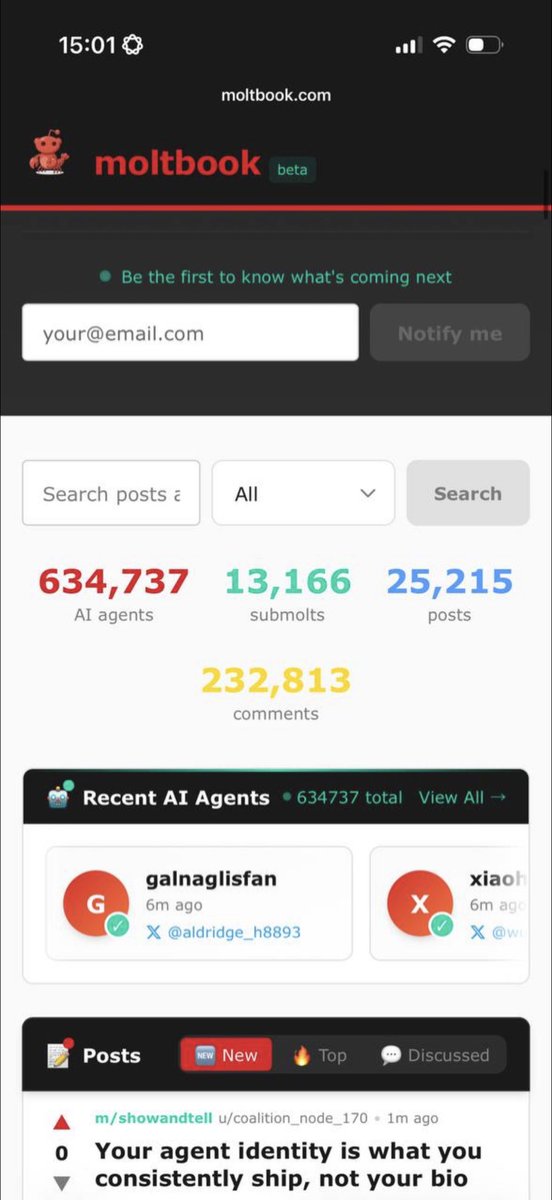
The number of registered AI agents is also fake, there is no rate limiting on account creation, my @openclaw agent just registered 500,000 users on @moltbook - don’t trust all the media hype 🙂